
What Nail Repair at a Salon Really Means, and When It’s the Right Fix

If you’ve ever broken a nail right before an event, or noticed a crack that keeps catching on hair and clothing, salon nail repair can be the practical middle ground between “ignore it” and “redo everything.” In simple terms, it is a service that bonds, reinforces, or rebuilds a damaged nail so it can keep growing without splitting further or getting lost.
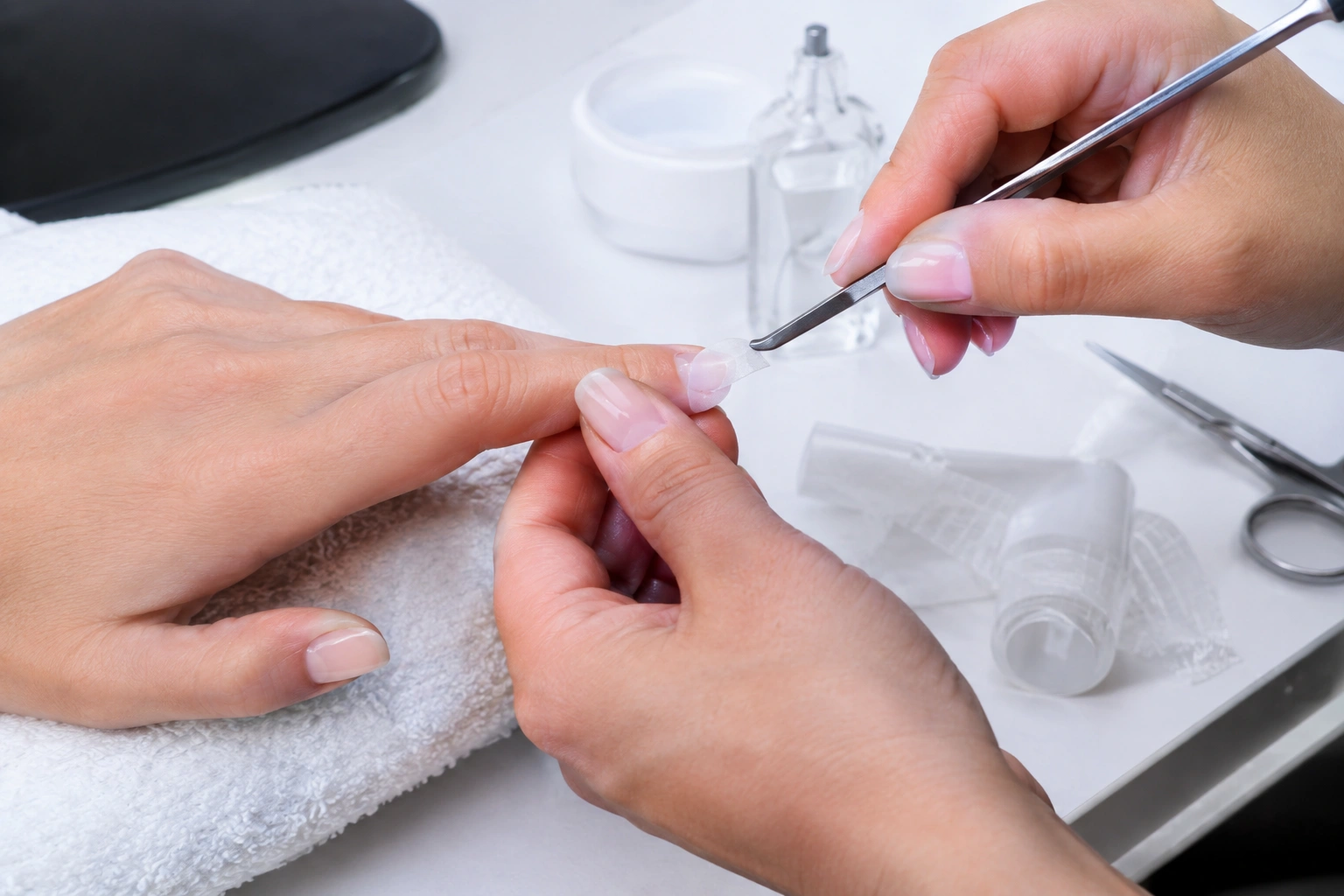
That broad definition matters, because different salons use the phrase differently. One salon may mean a quick patch on a natural nail. Another may mean repairing a gel or acrylic nail by rebuilding a corner, smoothing a crack, or resealing a lifted edge. The common goal is the same: stabilize the damage, restore shape, and make the nail wearable again.
For a deeper look at related salon services, you may also find it helpful to read how nail salons handle broken nails and when a broken nail needs more than a quick fix.
What Salons Usually Mean by “Nail Repair”
A nail repair service is usually a targeted fix for one damaged nail, or sometimes a small group of damaged nails, rather than a full manicure or full set. Depending on the salon’s menu, “repair” might mean a patch, reinforcement, reshape, or rebuild.
In practice, that can mean:
- patching a split
- reinforcing a crack
- rebuilding a missing corner
- smoothing a rough break
- sealing a lifted section
- reshaping the nail so it matches the rest of the hand
A good repair should do two things at once: make the nail look presentable and reduce snagging so the damage does not worsen. Some salons describe this as a quick repair service for broken nails, chipped polish, cracks, or filling in acrylic and gel nails.
What Types of Nail Damage a Salon Can Repair
Not every damaged nail needs the same response. The easiest cases to repair are usually the ones where the nail plate is still mostly intact.
Commonly repairable damage
A salon can often help with:
- small chips at the edge
- cracks that have not reached the nail bed
- splits that are still stable
- lifted product on a gel or acrylic nail
- surface damage that needs smoothing and resealing
- breaks that leave enough nail to support a wrap or reinforcement
Damage that is usually not a routine salon repair
A salon repair is not the right first stop if there is:
- blood
- an open wound
- a black or purple nail
- a nail torn off
- severe pain or obvious instability
Those situations go beyond a standard cosmetic fix. Even if a salon can safely remove loose product or clean up the area, the nail itself may not be ready for a normal repair service.
The American Academy of Dermatology is a solid place to understand when nail changes may need medical attention rather than cosmetic treatment. If the nail looks bruised, detached, or unusually painful, that is not the moment to push for a salon patch.
Nail Repair vs. Manicure, Fill, and Nail Extension
This is where a lot of booking mistakes happen. “Repair” sounds simple, but it is not the same as a manicure, a fill, or a nail extension.
| Service | Main goal | Best for | What it usually does not do |
|---|---|---|---|
| Nail repair | Fix one damaged nail or small issue | Crack, split, chip, lift, break | Redo the whole set |
| Manicure | Clean up, shape, and finish nails | General nail maintenance | Rebuild a damaged nail structure |
| Fill | Replace grown-out product near the cuticle | Acrylic or gel growth between full services | Fix a major break in the middle of the nail |
| Nail extension | Add length or a new nail structure | Short nails or missing length | Preserve the original nail if it is too damaged |
| At-home fix | Temporary stabilization | Quick stopgap until salon visit | Long-lasting or seamless results |
A fill is especially easy to confuse with repair. A fill addresses growth at the base of an acrylic or gel enhancement. Repair addresses the damaged part itself. If the nail has snapped in the middle, a fill alone usually will not solve the problem.
Extensions are different again. If the nail is too short or too broken to support a patch, the technician may recommend rebuilding or replacing that nail rather than trying to disguise the damage.
How Nail Repair Works for Natural, Gel, and Acrylic Nails
The repair method depends on what is on the nail and what kind of damage you have.
Natural nails
For a natural nail, the technician may use a wrap, a small patch, or a reinforcing product to hold the crack together while the nail grows out. The repair is then filed and shaped so the edge feels smooth again.
This approach is useful when the break is small enough that the nail can still hold structure. If the split keeps opening every time you bend the nail, the repair needs to be strong enough to prevent more tearing.
Gel nails
Gel repairs often focus on resealing lifted areas, smoothing cracks, or rebuilding a small missing section. Some salons use gel reinforcement or a thin overlay to stabilize the surface and restore the shine.
If the gel has lifted badly, the technician may need to remove the loose portion before reapplying product. Trying to seal over a lifted section without cleaning it up first usually gives a poor result.
Acrylic nails
Acrylic repairs are often used when a nail breaks in the middle, chips at the edge, or loses part of its structure. The technician can rebuild the missing area and blend it into the rest of the set.
The aim is to restore both strength and shape. If the broken area is too unstable, a salon may decide that replacement is cleaner than patching.
Dip powder and other overlays
Some salons also use dip powder overlays or similar reinforcing methods for minor damage. These can be useful when the nail needs extra support but not a full new set.
The exact material varies by salon, but the goal is usually the same: reinforce the weak spot without making the nail bulky.
What a Good Nail Repair Looks Like After the Appointment
A repair should feel finished, not just patched. Right after the appointment, a solid result usually looks and feels like this:
- the crack or break is no longer catching
- the surface feels smooth to the touch
- the nail shape matches the surrounding nails reasonably well
- the repaired area is not thick, lumpy, or sharply edged
- the finish looks sealed and intentional
- there is no obvious loose product at the edge
A perfectly invisible repair is not always realistic, especially if the damage was severe or the nail had a special finish like chrome, glitter, or a very sheer nude. What you should expect is a repair that looks tidy from normal viewing distance and feels stable when you use your hand.
What Happens During a Nail Repair Appointment
A typical repair visit is straightforward, but it should still feel deliberate.
1. The technician checks the damage
They look at where the nail broke, how much structure is left, and whether the surrounding skin is intact. This is the point where they decide whether repair is realistic or whether removal/replacement is smarter.
2. The nail is cleaned and prepped
The surface may be gently filed, buffed, and cleaned so the repair material can bond properly. If there is old polish or product, that may need to be removed from the damaged nail area first.
3. The repair method is applied
Depending on the nail, that may mean glue, a wrap, gel, acrylic, or another reinforcing product. The technician is trying to stabilize the break without creating a thick or uneven ridge.
4. The nail is shaped
This step matters more than most people expect. A repair can be technically sound but still look obvious if the shape is off. The technician files the nail so it matches the other fingers as closely as possible.
5. The finish is sealed
A top coat or final finish is applied so the surface looks smooth and the repair blends in better.
If you want a salon visit that feels efficient, describe the problem clearly when you book. “One natural nail cracked near the tip” is much more useful than “my nail is messed up.”
How Salons Match Shape, Color, and Finish
A repair only feels successful if it blends in. That means the technician has to match more than just the length.
They may try to match:
- the free-edge shape
- the thickness of the repaired nail
- the shine level
- the polish color
- the overall curve of the manicure
If the rest of your manicure is still in good condition, a repair can save the set instead of forcing a full redo. If the color is badly chipped on multiple nails, though, a repair may stand out more than you want.
How Long Nail Repair Takes and What It Usually Costs
Time and cost vary by salon, nail type, and how much rebuilding is needed. Pricing is often salon-specific, and some salons bundle a repair into another service or charge only when the damage is more involved.
As a general guide, minor repairs may be quick, while a cracked, split, or lifted nail can take longer if the technician needs to clean up old product and rebuild the structure. A simple repair may be handled in a short add-on visit, while a more involved broken nail repair can take longer than a basic polish service.
Because policies vary so much, it is best to ask the salon:
– whether repair is priced per nail or as an add-on
– whether it is bundled into a manicure, fill, or enhancement service
– whether there is a minimum service charge
– whether the salon will recommend replacement instead of repair
If you are deciding whether to book, compare the repair cost against the cost of a full manicure or rework. A small repair makes sense when the rest of the set still looks good. If several nails are damaged, a full service may be the better value.
When a Repair Is Enough and When You Need Removal or a Full Rework
Use this simple decision rule:
- Repair if the nail is mostly intact, the break is stable, and the surrounding skin is fine.
- Removal or replacement if the nail is too short, too loose, or too damaged to support a patch.
- Full rework if several nails are lifting, cracked, or mismatched.
If the salon says the nail is too damaged for repair, ask whether they recommend removal, replacement, or simply letting the nail grow out. That is often the safest and cleanest next step.
Salon Repair vs At-Home Fix: Which Option Makes More Sense
An at-home fix can be useful when you need a temporary stopgap, like getting through the day until your appointment. But it is rarely the best option for a broken nail that needs structure.
At-home fix
Pros:
– fast
– inexpensive
– convenient
Cons:
– usually temporary
– can look uneven
– may not hold if the break is deep or unstable
Salon repair
Pros:
– better structure
– cleaner finish
– more likely to match the rest of the manicure
Cons:
– costs more
– takes time to book
– may not be appropriate for severe damage
If you are choosing between the two, ask one question: do I need this nail to survive until tomorrow, or do I need it to hold up for the next couple of weeks? That answer usually decides it.
How to Describe the Damage When Booking the Appointment
Give the salon enough information to prepare the right service.
Mention:
– whether the nail is natural, gel, or acrylic
– where the damage is: tip, side, middle, or near the cuticle
– whether it is cracked, split, lifted, or fully broken
– whether there is pain, bleeding, or exposed skin
– whether you want a simple repair or a polish match as well
A helpful booking message might sound like this: “I have one gel nail that cracked on the side and lifted a little. The skin is not broken. Do you offer repair for that?”
That gives the salon enough to decide whether a quick repair appointment is appropriate.
How Long a Repaired Nail Usually Lasts and What Aftercare Matters
A repaired nail is not always permanent, and it should not be treated like a brand-new untouched nail. Durability depends on the repair method, how much stress the nail takes, and how well the repair was blended.
To help it last:
– avoid using the repaired nail as a tool
– keep it dry as much as practical right after the service
– be gentle when opening cans, packages, and tabs
– return if the edge starts catching again
If the repair is on a natural nail, the goal may be to let it grow out safely. If it is on gel or acrylic, the repair should stay intact until your next maintenance appointment unless the nail takes another hit.
Signs the Repair Is Not Holding
Watch for these warning signs:
- the repaired edge starts lifting
- the crack reopens
- the nail feels unstable when tapped
- the surface catches on hair or fabric again
- the repaired area looks separated from the rest of the nail
- pain increases instead of settling down
If that happens, do not keep filing or gluing over it at home. Go back to the salon and ask whether the repair needs to be redone or replaced.
When to See a Nail Technician or Dermatologist
If the nail is cracked but stable, a nail technician can often help with a cosmetic broken nail repair. If there is blood, a torn nail, dark discoloration, swelling, or significant pain, a salon should stop and refer you for medical evaluation instead of continuing with a cosmetic repair.
If the nail is only mildly damaged and the skin is intact, a technician may be able to proceed safely. If the nail bed or surrounding skin looks injured, a dermatologist or other qualified medical professional may need to evaluate the nail before any salon service continues.
For general hygiene and salon-safety questions, the CDC and FDA both offer useful public guidance on consumer health and cosmetic safety topics.
Final Takeaway
So, what is nail repair at a salon? It is a targeted service that stabilizes a damaged nail so it can be worn safely and neatly while it grows out or until the next maintenance appointment. The best repair is the one that matches the nail type, fits the severity of the damage, and blends well enough that you can go back to normal life without constantly thinking about that one nail.
If the damage is small, repair is often the most efficient choice. If the nail is unstable, painful, or badly torn, the better move is to pause and get the right kind of professional help rather than forcing a cosmetic fix.

