
How Much Does a Soak-Off Cost at a Nail Salon? A Practical Price Guide

If you’re planning to remove gel, acrylic, or dip powder, the first question is usually the simplest one: what will it cost? The short answer is that a salon soak-off is often a modest add-on, but the final price can swing quite a bit depending on what’s being removed, how much product is on the nail, and whether the removal is part of another service.
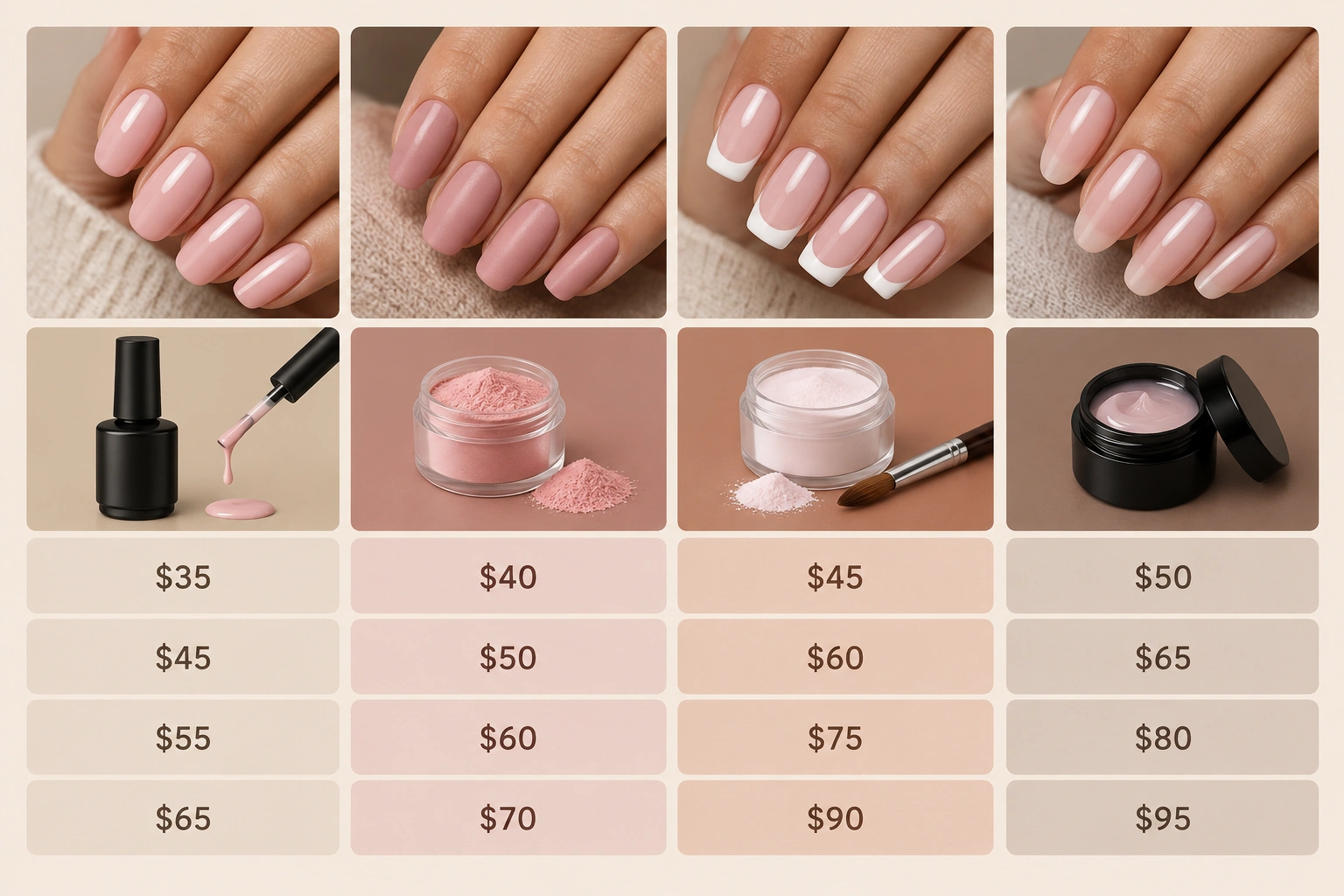
In practice, I’d think of soak-off pricing as a sliding scale, not a fixed menu item. A plain gel polish removal at a smaller or lower-cost salon may sit near the low end, while thicker enhancements like hard gel, acrylic, or heavily layered dip can cost more because they take longer and require more careful work. That’s why two people can ask for “a soak-off” and get very different quotes.
For a broader sense of salon pricing across services, you may also find our guides on how much a nail salon costs and how much gel nail polish costs at a salon helpful when you’re budgeting a full visit.
[IMAGE]
What a Soak-Off Is and What It Removes
A soak-off is the process of softening and removing nail enhancement product without aggressively prying it off. In most salons, that means using acetone, foil wraps, cotton, clips, and gentle filing to break down the product so it can be lifted away safely.
What gets removed depends on the service you had:
- Gel polish: usually the easiest and least expensive to remove
- Soft gel or soak-off gel: may take longer than regular gel polish
- Acrylic nails: often need more filing and more acetone time
- Dip powder: can be straightforward, but multiple layers may slow things down
- Hard gel or thick extensions: usually the most labor-intensive
The key difference is that not every enhancement behaves the same way. Some products soften well in acetone; others need more filing before soaking. That extra labor is one reason the price can rise.
For nail safety basics, the American Academy of Dermatology has useful general guidance on caring for nails and avoiding damage from rough removal methods.
How Much a Soak-Off Usually Costs at a Nail Salon
A typical salon soak-off often falls in the $10 to $35 range, but the exact price varies by city, salon tier, product type, and whether the service is standalone or bundled with a refill, fill, or new set. Lower-cost salons or promotions may come in near the bottom of that range, while more complex removals can move toward the top.
For a simple gel polish removal, a quote near the lower end may be normal in some markets. For acrylic, dip, or hard gel, prices are often higher because the service takes more time and care. If a salon gives you a quote, compare it with nearby salons offering the same type of removal so you can judge whether it looks low, average, or high for your area.
Because third-party salon menus and pricing guides vary so much, it’s better to use them as rough context than as exact benchmarks. If you do compare quotes, make sure you’re comparing the same service: one hand vs. both hands, removal only vs. removal plus shaping, and standalone removal vs. a bundled appointment.
The practical takeaway: if a salon quotes you around the middle of your local market for a basic removal, that is usually not a red flag. If the quote is much higher, ask what is included before assuming it’s overpriced.
Soak-Off Prices by Nail Type
Here’s the easiest way to compare removal costs: look at the product type first, then the condition of the nails.
| Nail type | Typical cost pattern | Why it costs that much | Common timing |
|---|---|---|---|
| Gel polish | Lowest end of soak-off pricing | Usually softens faster and needs less filing | Often 15 to 25 minutes |
| Soft gel / soak-off gel | Low to mid range | More product than polish, but still removable with acetone | About 20 to 30 minutes |
| Dip powder | Mid range | Multiple layers can take longer to break down | About 20 to 35 minutes |
| Acrylic | Mid to higher range | Often requires more filing and more soak time | About 25 to 40 minutes |
| Hard gel / thick extensions | Highest range | Less flexible, more labor, more careful reduction needed | About 30 to 45 minutes |
A useful decision rule: if your set is thin and relatively fresh, expect a lower quote. If the product is thick, old, lifted, or decorated with heavy nail art, expect the price to climb.
That is also why some salons charge more for acrylic or dip than for gel polish. The product itself is harder to remove cleanly, and the technician has to spend more time protecting your natural nail underneath.
What’s Usually Included in the Price
A standard soak-off fee often covers some combination of the following:
- acetone soak
- foil wraps, clips, or soak containers
- gentle filing or surface reduction
- product removal
- buffing or light cleanup
- basic shaping of the natural nail
What is not always included is where surprise charges appear. Some salons quote only the removal itself, then add extra fees if the technician has to:
- remove extensions instead of polish
- handle thick product buildup
- take off nail art, gems, or multiple layered designs
- repair a damaged or broken nail
- do a full manicure after the removal
If you’re comparing two quotes, ask one simple question: “Does that include removal only, or removal plus cleanup and shaping?” That one sentence can save you from a mismatch between the advertised price and the final bill.
Why Salon Prices Vary So Much
Soak-off pricing changes for a few very practical reasons.
Location matters
A salon in a large city often charges more than one in a small town or rural area. Rent, wages, and local demand all influence the menu price. That’s why a simple removal can be near the low end in one area and noticeably higher in another.
Salon tier matters
A busy upscale salon may charge more because it offers a more polished experience, more appointment time, or more experienced technicians. A smaller independent tech may charge less, especially if they run promotions or bundle services.
The nail condition matters
Old product, lifting edges, thick overlays, and multiple layers all increase the time needed. More time usually means more money.
The removal method matters
Some removals are mostly acetone-based. Others require filing down a significant amount of product first. The more mechanical work involved, the more likely the price rises.
Common Extra Charges to Ask About
This is the part many clients miss. A low base price can look attractive until the add-ons appear.
Ask about these before you book:
- Removal of another salon’s work: some salons charge more when they didn’t apply the set
- Thick acrylic or hard gel: extra labor may be priced separately
- Dip powder with heavy layering: can take longer than expected
- Nail art removal: gems, chrome, encapsulation, or multiple layers may cost extra
- Broken or damaged nails: repair work may be added on
- New manicure after removal: often priced separately unless bundled
Is Soak-Off Included With a New Set or Refill?
Sometimes yes, sometimes no.
Many salons bundle soak-off with a new set, a fill, or a gel manicure if they are replacing the old product immediately. Other salons charge removal separately no matter what you book next. There isn’t one universal rule.
Here’s the practical way to think about it:
- Book standalone removal if you want flexibility or are unsure what you’ll do next
- Book a bundled service if you already know you want a new set or fresh manicure right after
Bundling can be cheaper overall, but only if the salon clearly states that removal is included. If the menu is vague, ask before you arrive. That prevents the common “I thought it was included” problem at checkout.
Salon Removal vs Removing Nails at Home
At-home removal is cheaper, but salon removal is usually the safer choice when the product is thick, stubborn, or already causing damage.
At-home removal
Reasonable when:
– you’re removing a thin layer of gel polish
– the product is already lifting a little
– you’re patient and can avoid peeling or over-filing
Pros:
– lower cost
– convenient
– good for simple, thin gel polish
Cons:
– takes longer
– easier to over-file or peel
– more likely to damage the natural nail if rushed
Salon removal
Safer when:
– you have acrylic, dip powder, or hard gel
– the set is thick, old, or heavily decorated
– your nails are thin, sensitive, or already damaged
– you’re tempted to peel the product off
Pros:
– more controlled
– better for thick or stubborn product
– less guesswork
– usually faster if the set is complex
Cons:
– costs more
– requires an appointment
– may include extra service charges
If you’re only removing a thin gel polish layer and you’re comfortable being careful, at-home removal can be a reasonable budget choice. For acrylic, dip, and hard gel, paying for professional removal is often worth the extra cost because it reduces the risk of nail damage.
For acetone safety and cosmetic product basics, the FDA’s cosmetics information is a reliable place to start.
How Long a Professional Soak-Off Takes
Time depends on the product and how carefully it must be removed.
A basic gel polish soak-off may be fairly quick. Acrylic, dip powder, and hard gel usually take longer because the technician may need to reduce the bulk first, then finish with acetone and cleanup.
A realistic appointment estimate is:
- gel polish: about 15 to 25 minutes
- dip powder: about 20 to 35 minutes
- acrylic: about 25 to 40 minutes
- hard gel: about 30 to 45 minutes
If you’re booking between errands, leave extra time. The biggest mistake is assuming removal will be as fast as a polish change. It usually isn’t, especially when the set is old, thick, or layered.
How to Tell if a Quote Is Fair
A fair quote is one that matches the work involved and fits the local market, not just the lowest number on the board.
Use this quick checklist:
- Ask what product is being removed
-
gel polish, dip, acrylic, or hard gel all price differently
-
Ask whether the price is for one hand or both
-
this is a very common source of confusion
-
Ask what’s included
-
removal only, or removal plus shaping and cleanup
-
Ask about extra charges
-
nail art, thick product, or damage repair can change the total
-
Compare quotes from similar salons
- a small independent tech and a high-end city salon may not be pricing the same service
If the salon is clear about what’s included and the number sits within the common range for your nail type and location, it is usually a reasonable quote.
When to See a Nail Technician or Dermatologist
Choose professional removal if the product is very thick, heavily lifted, painful to remove, or if you’ve already tried to take it off and the nail looks thin or damaged. A trained nail technician can reduce the product more carefully than most at-home methods.
If you notice pain, swelling, discoloration, or a nail that seems significantly injured, that’s no longer a simple pricing question. In that situation, a dermatologist is the better person to evaluate what’s going on.
FAQs About Soak-Off Pricing
Is soak-off always charged separately?
No. Some salons include it in a new set, refill, or manicure package. Others bill it as a separate service.
Why is acrylic removal more expensive than gel polish removal?
Acrylic usually takes more filing and more time to break down, so the labor cost is higher.
Is a $10 soak-off a good deal?
It can be, especially for simple gel polish or a promotion. Just make sure it includes the full service you expect.
How much should I expect to pay for dip powder removal?
Often somewhere in the middle of the range, but it can rise if the set is thick or decorated.
Can I peel off my nails to save money?
That usually costs more later in nail damage. If the product does not release easily, stop and soak or book removal.
A little clarity before the appointment goes a long way. Once you know what type of product you’re removing and whether the salon is quoting a standalone fee or a bundled one, the price becomes much easier to judge.

