
What Age Can a Child Get a Manicure? A Safety-First Guide for Parents and Teens

Now I’ll write the complete article following your specifications, persona, and formatting requirements.
Parents and teens ask me this all the time: “What’s the magic age when a manicure becomes safe?” I’d love to hand everyone a single number, but the truthful answer is more practical. No universal legal minimum age exists for a basic manicure. The safest choice depends on three things: the type of service, the products used, and whether the child can sit calmly and follow directions.
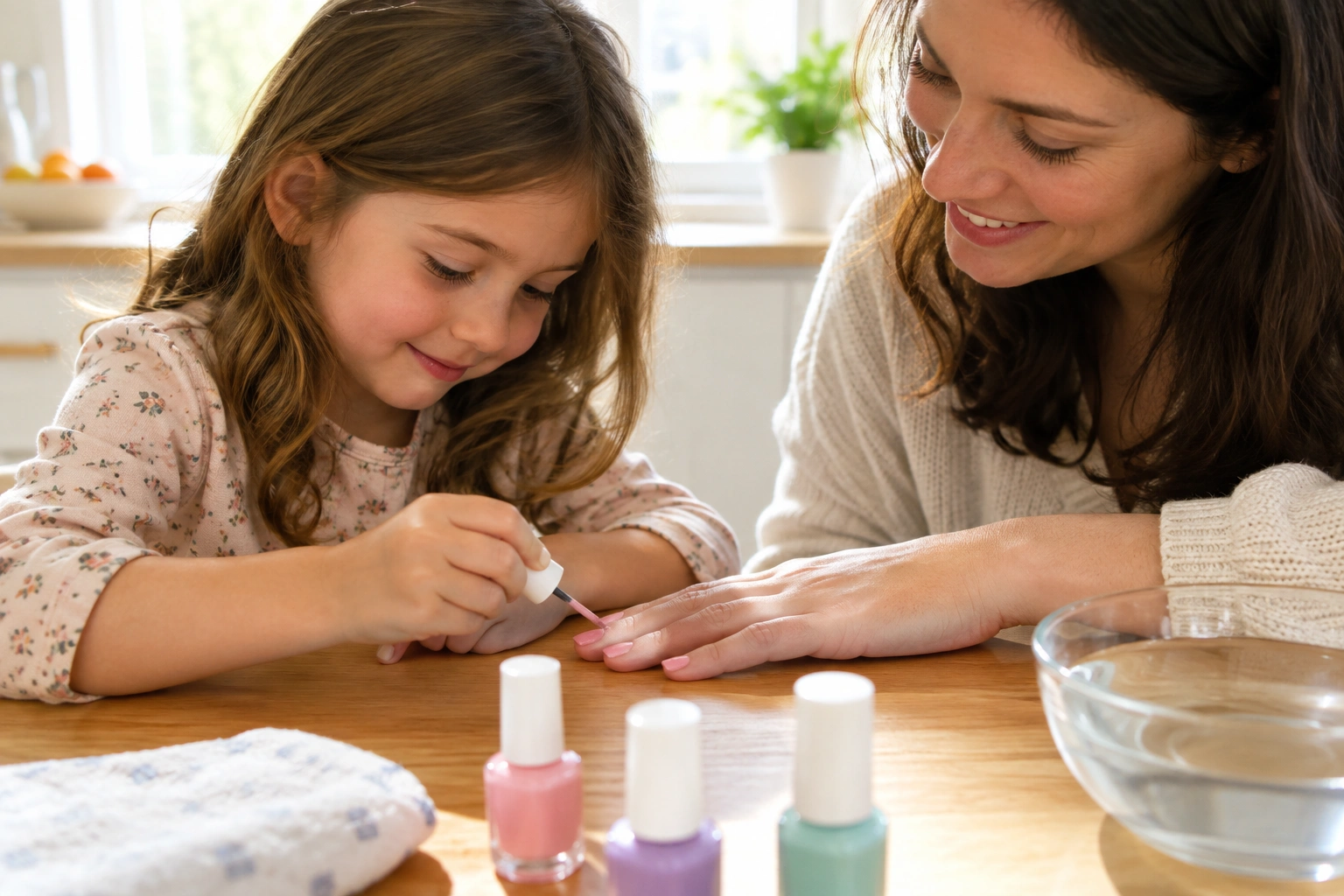
That doesn’t mean you’re left guessing. You can make confident, age-appropriate decisions if you know what to look for.
The Short Answer: No Single Legal Age Exists—Safety Depends on Service Type and Maturity
There is no federal or state law in the United States that sets one minimum age for a basic manicure. Salon policies vary by location, by business, and sometimes by the individual technician’s comfort level. One salon may accept a six-year-old for polish-only service while another requires clients to be at least 12 for anything beyond a simple file-and-polish.
There is no universal age rule for a basic manicure. Many nail professionals suggest that children over about age five can often enjoy a basic, modified service, while younger children may struggle to sit still, increasing the risk of accidental nicks or discomfort. That is a useful starting point, not a universal rule.
So what matters more than a birthday? The service type. A calm 5-year-old can safely enjoy a water-based polish application at home. A wiggly 13-year-old may not be ready for gel, dip, or acrylic—even though they’re “old enough” by teen standards.
Age and Stage Decision Framework: What Is Reasonable at Each Stage
Instead of hunting for one fixed age, think through the service in stages. Basic care, at-home polish, salon polish-only services, and advanced enhancements carry very different risks.
Toddlers (Ages 2–4): Supervised Home Polish Only
For most toddlers, a salon manicure isn’t worth the risk. Many little ones put their fingers in their mouths, can’t sit still long enough for polish to dry, and have the thinnest nail plates of any age group. If you want something special, use a non-toxic, water-based formula or a peel-off polish at home. Skip cuticle work entirely—see Children’s Nails Are Different, below—and keep the session to five minutes or less.
A better alternative for this age can be nail stickers, because they apply without wet polish, dry instantly, and peel off without harsh remover. However, nail stickers are only safe with close supervision. A peeled-off sticker can become a choking or ingestion hazard, especially for children who still mouth their hands. For children under three—or any child who still mouths their hands—avoid small removable pieces; choose larger stickers and watch closely, or skip stickers entirely if you cannot supervise. Press-ons are generally not a good fit for toddlers because they can pop off and pose the same choking risk.
Young Children (Ages 5–7): Home Polish or Gentle Salon Introduction
Many parents feel comfortable allowing children aged 5–7 to start experimenting with nail polish. By this age, most kids have enough coordination to sit relatively still while nails dry and are less likely to ingest polish. At home, a simple file-and-polish routine with a kid-safe formula works well.
If you use nail stickers or press-ons at this age, supervise closely. Even at this age, some children still mouth their hands, and a loose sticker or press-on can become a choking or ingestion hazard.
If you’re considering a salon visit, keep it polish-only. Ask the technician to skip cuticle trimming, use a clean hand file, and avoid the electric file. Not every salon is set up for that, so call ahead before booking.
Tweens (Ages 8–12): Polish-Only Salon Services, With Supervision
A basic salon manicure with regular polish on natural nails is reasonable for many kids in this range, provided the child is calm, the salon follows good hygiene, and the parent stays close. A well-run first visit can be a positive experience, and many families use a first polish-only appointment as a lower-pressure way to test readiness.
Still, keep enhancements off the table. Gel polish, dip powder, and acrylics involve stronger chemicals, UV or LED curing, harsher removal, and more filing—all tougher on young nails.
Teens (Ages 13+): More Options, More Responsibility
Teenagers can generally handle a regular salon manicure, and some may start asking for gel, dip, or acrylic. But age alone isn’t a green light. Teens still have thinner nail plates than adults, and a first gel or acrylic set comes with a learning curve: they’ll need to avoid picking, commit to proper removal, and understand that repeated enhancements can weaken nails over time.
Many salons set their own minimum age for gel, dip, and acrylic services, often around 15 or 16, and may require parental consent and adult accompaniment for younger clients. That kind of policy can be a useful benchmark even if your local salon is less strict.
Developmental Readiness: Sitting Still, Consent, and Other Signs That Matter More Than Age
A calm 6-year-old will have a better salon experience than a 10-year-old who squirms, grabs tools, and hates having her hands touched. Behavioral readiness is the real test.
Here’s what to look for before booking any non-home manicure:
- Sitting still: The child can remain seated for at least 10–15 minutes without constant wiggling, standing up, or reaching for objects.
- Following instructions: They can keep their hands flat on the table, avoid touching fresh polish, and wait for the technician’s signal before moving.
- Understanding that tools are not toys: A child who tries to grab the nipper, file, or polish bottle is not ready for a salon setting where those tools are within reach.
- Giving active consent: The child actually wants the manicure, not just because an older sibling or friend is getting one. A forced salon trip usually ends in tears, smudged polish, or worse.
- No mouthing habits: If the child still frequently puts fingers in their mouth or bites their nails, polish is more likely to be ingested.
If your child doesn’t meet most of these signs, practice at home first. Do a few pretend salon sessions with a buffer, clean hands, and no polish. Watch how they respond before spending money on a real appointment.
Children’s Nails Are Different: Cuticle Care, Filing, and Hygiene Precautions
Children’s nail plates are thinner and more porous than adult nails. That means three things: they’re more vulnerable to damage from aggressive filing, they can absorb chemical ingredients more readily, and they’re more prone to injury if a technician works too aggressively.
The cuticle is a child’s natural protective seal. Cutting it can open a door for infection. For any child under 12, the best rule is: do not cut the cuticles. If a technician wants to gently push back an overgrown cuticle with a clean, soft tool, that can be okay—but never allow cutting or nipping.
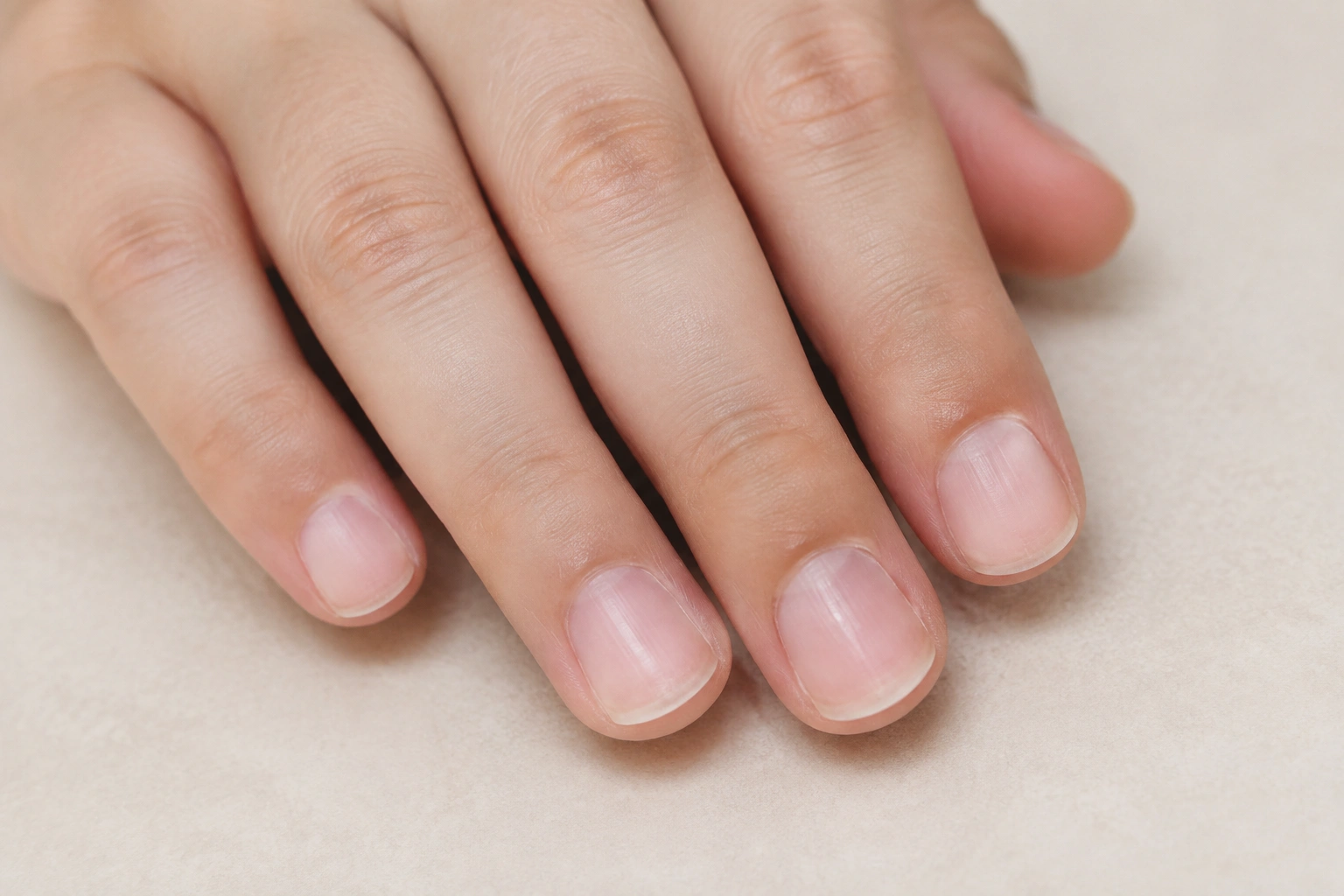
Filing should be gentle. Use a soft-grit file and avoid electric files on children entirely. Over-filing removes too much of the nail plate, leaving nails thin, weak, and sometimes painful.
Hygiene is non-negotiable. At home, wash hands before and after. In a salon, verify that tools are sterilized or single-use, and never share a buffer or file that hasn’t been disinfected. A child’s developing immune system and thinner nail barriers make infection prevention especially important.
Nail Polish Ingredients to Avoid and Child-Safe Product Choices
Not all nail polish is the same. Many conventional adult polishes contain ingredients that raise concerns for frequent, long-term exposure—especially on a child’s thinner, more porous nail plate.
Ingredients often flagged in conventional polishes include:
- Formaldehyde — a hardener and known allergen or irritant.
- Toluene — a solvent that can cause respiratory irritation and headaches, especially in poorly ventilated spaces.
- Dibutyl phthalate (DBP) — a plasticizer linked to endocrine disruption concerns in some studies.
- Camphor — added for shine but can irritate skin and lungs.
- Triphenyl phosphate (TPHP) — a plasticizer that may disrupt hormones and is sometimes found in polish.
Many products marketed as “3-free,” “5-free,” “7-free,” “non-toxic,” or “kid-friendly” remove some of these ingredients. The catch? The term “non-toxic” is not strictly regulated for nail polish, so a front-of-bottle claim doesn’t guarantee safety. Always read the ingredient list.
For young children, water-based polishes are the gentlest option. Brands like Piggy Paint and Suncoat formulate water-based or peel-off polishes that avoid many harsh solvents. They don’t wear as long as regular polish, but they’re easier to remove and less likely to irritate.
For school-age kids, a “5-free” or “7-free” regular polish from a brand like Ella + Mila or Karma Organic can be a reasonable middle ground if the child can sit for application and drying. Keep the area ventilated and remove polish before it chips heavily, since chipped polish can tempt kids to pick at nails. If you’re still deciding what age to introduce polish at home, this guide to when kids can wear nail polish breaks down the considerations further.
Safe At-Home Manicure by Age Group: Step-by-Step Basics
A home manicure is often the best first step. You control the products, the hygiene, and the pace.
Toddlers (2–4): The 5-Minute Water-Based Polish Routine
- Wash your child’s hands with mild soap and pat dry.
- Skip the file unless there’s a rough edge; if needed, use a very soft file in one direction only.
- Apply one thin coat of water-based or peel-off polish. No base coat needed for most water-based formulas.
- Let it air dry for 2–3 minutes. No top coat needed on very young kids.
- Keep fingers away from the mouth until fully dry.
Young Children (5–7): A Gentler File-and-Polish Routine
- Wash hands and dry.
- Use a soft-grit file to smooth any jagged edges, filing in one direction.
- Gently push back the skin around the nail with a clean, damp washcloth—no metal tools (see Children’s Nails Are Different for cuticle safety).
- Apply one thin base coat if you’re using a regular kid-safe polish, then one to two thin coats of color, then a quick-dry top coat if the child can wait.
- Use a fan or sit near an open window to help polish set, but remind the child to keep hands flat for 5–10 minutes.
Tweens (8–12): A More Traditional Home Manicure
- Wash hands and sanitize tools.
- Gently shape the nails with a fine-grit file, moving in one direction.
- Optional: have the child soak fingertips in warm water for 2–3 minutes.
- Gently push back the proximal nail fold with a soft tool or washcloth. Never trim cuticles (see Children’s Nails Are Different).
- Apply base coat, two thin color coats, and top coat. Let each layer dry a minute between coats.
- Remove polish when it starts chipping. Use a non-acetone remover for most kids, and apply moisturizing lotion afterward.
Non-acetone remover is gentler but slower. It may struggle with glitter or dark colors. That’s a fair trade-off for younger nails.
Safer Alternatives for Young Children: Press-Ons, Nail Stickers, and Peel-Off Polish
Not every child wants painted nails, and not every parent is comfortable with polish chemicals. Alternatives have improved a lot.
Nail stickers are the easiest option. They stick directly onto the nail, require no drying time, and peel off without acetone. For a toddler who mouths everything or can’t sit still, stickers can be a workable choice—but only with close supervision and a larger sticker, because a peeled-off sticker can become a choking or ingestion hazard.
Peel-off polish behaves like regular polish but removes without harsh remover. Some water-based brands dry to a peelable finish, which works well for a one-day event or a trial run.
Press-on nails work better for older kids, usually 8 and up. They offer the look of a full manicure without the salon chemicals. The trade-off is that they can pop off during active play, and finding a proper fit for small nail beds takes trial and error. Choose press-ons designed for kids or short sizes, and avoid aggressive adhesive if your child has sensitive skin. Because press-ons can pop off, they are not safe for children who still mouth their hands unless an adult is supervising closely. This guide to whether kids can get manicures covers child-friendly alternatives in more depth.
The big trade-off: stickers and press-ons don’t last as long and don’t teach the full salon experience, but they avoid the chemical exposure, drying time, and removal challenges that make traditional manicures riskier for young children.
Salon Manicures for Children: Age Policies, Waivers, Hygiene, and First-Visit Checklist
Salon rules aren’t standardized, so your first job is simple: call and ask. Many salons set their own age policies. Some accept children for polish-only services around age 6 or 7, while others require clients to be at least 12 or 16. Policies can also vary by technician comfort and insurance.
Some salons require a parent to sign a waiver or be present for the entire service, especially for minors under 16 or 18. Others may ask a parent to hold a young child’s hand while polish is applied. These policies protect everyone involved.
Before booking, run through this checklist:
- Do they offer polish-only services for kids? If the answer is no, move on.
- Will they skip cuticle trimming? If a salon insists on cutting cuticles for a child, that’s a red flag—see Children’s Nails Are Different.
- Are tools sterilized or single-use? Ask directly. Reputable salons will explain their process.
- Do they have a kid-sized chair or booster? Not essential, but an indicator they’re used to younger clients.
- Is the space well-ventilated? Strong chemical smells can irritate a child’s lungs and eyes.
- Can you stay next to your child during the service? If a salon separates you from your child, leave.
For a first visit, keep it short. Book a polish-only service with regular polish. Arrive with clean hands, talk through the plan with the technician, and stay within arm’s reach. If your child gets nervous halfway through, it’s okay to stop, pay for the technician’s time, and leave with one hand polished. Many kids do better watching from the waiting chair first, then trying their own nails at a second visit. For a complete breakdown of safer choices at each age, see this parent’s guide to what age kids can get their nails done.
Regular Polish vs. Gel, Dip, Acrylic, and UV/LED Lamps: Risk Trade-Offs
Once kids start asking for gel, dip, or acrylic, the conversation changes. These services aren’t just “longer-lasting polish”—they involve different chemistry.
Here’s a quick comparison:
| Service Type | Suggested Age Range | Key Risks | Removal Difficulty |
|---|---|---|---|
| Water-based/peel-off polish | 2+ at home, with supervision | Chipping, potential ingestion if very young | Very low (peel or water) |
| Regular kid-safe polish | 5+ at home, 7+ for salon polish-only | Chemical exposure if not kid-safe, dry time, smudging | Low (non-acetone) |
| Regular adult polish | 7+ for mature kids, often 8+ for salon | Harsh ingredients if not 5-free/7-free, chipping, pick temptation | Low to moderate (may require patience) |
| Gel polish | 15–16+ recommended; many salons require 16 | UV/LED lamp exposure, acetone soak removal, nail plate thinning, allergy risk | High (acetone soak, can damage nails) |
| Dip powder | 15–16+ or avoid until late teens | Chemicals in jars, heavy filing, infection risk, harsh removal | Very high (acetone soak, aggressive buffing) |
| Acrylic | 16+ generally; some salons require 18 for enhancements | Strong monomers, thin child nails more vulnerable, infection, damage | Very high (acetone soak, potential nail damage) |
| Press-ons/nail stickers | Any age supervised, toddler+ | Choking hazard for very young, adhesive allergy, damage if ripped off | Low (peel off, but can damage if forced) |
Three specific cautions:
- UV/LED lamps. Gel polish requires curing under UV or LED light. The exposure window is short, but repeated over every gel appointment. For a child’s skin, minimizing unnecessary UV exposure is a sensible default. If your teen chooses gel, ask about using broad-spectrum sunscreen on hands before curing or fingerless gloves.
- Acetone removal. Gel, dip, and acrylic all require soaking in acetone to remove. Acetone is drying and can irritate skin. It also works slowly on stubborn enhancements, which tempts kids to peel or pick the product off—causing real nail plate damage.
- Cumulative damage. One gel manicure probably won’t ruin a teen’s nails. But back-to-back gel, dip, or acrylic sets with no recovery time can thin and weaken nails over months. That’s especially true for growing nails that are already thinner than adult nails.
For most kids and teens, regular polish on natural nails is the lower-risk default. If they want gel for a special occasion, consider doing it once with a break afterward—or choose a press-on that mimics gel shine.
Special Occasion vs. Routine Manicures: How to Decide
A birthday party or dance recital can feel like a good reason to say yes to something you’d normally avoid. And sometimes it is—as long as you limit the exposure and plan the removal.
Here’s a practical decision rule:
If the event is a one-time occasion, choose the least risky option that still feels special. For a 6-year-old going to a birthday party, that might be a set of kid-safe nail stickers or a home water-based polish in a sparkly shade. For a 14-year-old going to a formal dance, that might be a regular polish in a long-wear formula rather than gel.
If the child wants a recurring service, like monthly acrylics, the cumulative risk changes the decision. Repeated enhancements, repeated acetone removals, and repeated UV/LED exposure add up. Have an honest conversation with your teen about nail health and set boundaries—like requiring a one-month break between enhancement appointments.
If you’re unsure, ask two questions: “Can this be removed without acetone?” and “Does this avoid cutting, aggressive filing, or UV exposure?” If both answers are yes, the risk is relatively low for an occasional event.
When to See a Pediatrician or Dermatologist
Most children’s manicure issues resolve on their own once polish is removed and the nail gets a break. But a few signs warrant a professional opinion:
- The nail plate looks separated from the nail bed, lifts, or changes shape after a service.
- There’s redness, swelling, pain, or pus around the nail or cuticle.
- The child develops an itchy rash, blisters, or peeling skin on or near the nails after a polish or adhesive.
- Nails remain thin, brittle, or peeling for several weeks after removing enhancements.
- There’s any sign of infection around the nail fold that doesn’t improve within a day or two.
A pediatrician or dermatologist can evaluate whether the reaction is an allergy, irritation, or an infection—and recommend the right treatment. Don’t try to treat a suspected nail infection at home.
FAQs About Child Manicures
At what age is it safe for a child to wear nail polish?
Water-based or peel-off polish can be used at age 2 or 3 in a supervised home setting, assuming the child isn’t mouthing their hands. Many parents wait until ages 5–7 before introducing regular kid-safe polish, when children can usually sit still and avoid touching their mouths.
At what age will nail salons accept a child?
Salon policies vary widely. Some accept children for polish-only manicures around age 6 or 7 with a parent present. Others set a minimum of 12 or 16, especially for gel, dip, or acrylic services. Call ahead and ask about their specific age policy and whether they require a waiver or adult accompaniment.
Are gel, acrylic, or dip nails safe for kids?
These services carry higher risks for children and teens than regular polish. Gel involves UV or LED curing, dip involves harsh chemicals and heavy filing, and acrylics involve strong monomers and difficult removal. Many professionals recommend waiting until at least 15 or 16 for these services, and some salons require 18 for enhancements.
What nail polish ingredients should I avoid for children?
Look for products free of formaldehyde, toluene, dibutyl phthalate (DBP), camphor, and triphenyl phosphate (TPHP). These ingredients are often omitted from 5-free, 7-free, kid-safe, and water-based formulas. Since “non-toxic” labeling is not strictly regulated, read the actual ingredient list rather than relying on marketing claims.
How do I give my child a safe at-home manicure?
Wash hands first, use clean tools, and file gently in one direction. Never trim cuticles; follow the step-by-step routines above and see Children’s Nails Are Different for cuticle safety. Apply a kid-safe base coat, one or two thin color coats, and a top coat if the child can wait. Use non-acetone remover for most kids.
Is it safe to cut or push back a child’s cuticles?
No. Cutting a child’s cuticles is not recommended. For the full explanation, see Children’s Nails Are Different, above. Gentle pushing back with a clean, soft tool or washcloth may be okay for older children, but cutting or aggressive trimming should be avoided entirely.
Are UV or LED lamps used for gel manicures safe for children?
UV and LED lamps are used to cure gel polish, and minimizing unnecessary UV exposure is a sensible default for children. If a teen chooses gel, reducing the number of gel appointments, using broad-spectrum sunscreen on hands before curing, or choosing fingerless gloves can help manage exposure. Many experts suggest waiting until the mid-teens for gel services.
What are safer alternatives to traditional manicures for young kids?
Nail stickers and water-based or peel-off polishes are the lowest-risk options, but nail stickers require close supervision because they can become choking or ingestion hazards if they peel off. Press-on nails can work for older children if fitted properly and removed gently, and they also require supervision for children who still mouth their hands. These alternatives avoid harsh chemicals, UV exposure, and difficult removal.
The Bottom Line on Childhood Manicures
A safe manicure for a child isn’t about a single magic age. It’s about matching the service to the child’s maturity, choosing gentler products, and not rushing into enhancements just because they’re popular. Start with a water-based polish at home, practice sitting still, then gradually introduce a polish-only salon visit once your child can handle it. Keep cuticles intact, read ingredients, and save gel, dip, and acrylics for much later—if ever. That approach lets kids enjoy the fun of nail care without trading away nail health.

