
How to Remove Dirt From Under Toenails Safely at Home

Noticing dark dirt, lint, dead skin, or other buildup under your toenails can make your feet feel less than fresh—even when you shower regularly. Closed shoes, sweaty socks, walking barefoot, exercise, and everyday skin shedding can all contribute to debris collecting beneath the nail edge.
Learning how to remove dirt from under toenails safely is important because more aggressive cleaning is not necessarily better. Digging deeply under the nail with sharp tools can irritate the skin, lift the nail from the nail bed, or create a small opening where bacteria or fungi can enter.
Fortunately, most ordinary toenail dirt can be removed with warm water, mild soap, a soft nail brush, careful trimming, and thorough drying.
This guide explains exactly how to clean beneath your toenails, which tools are safest, what stubborn buildup may actually be, and when you should stop cleaning and get professional advice instead.
Quick Answer
To remove dirt from under toenails, soften your feet with warm water, wash them with mild soap, and gently clean beneath the visible free edge using a soft nail brush. Rinse and dry thoroughly. Never dig deeply under the attached nail with sharp metal tools, especially if the area is painful, swollen, or discolored.
Why Does Dirt Collect Under Toenails?
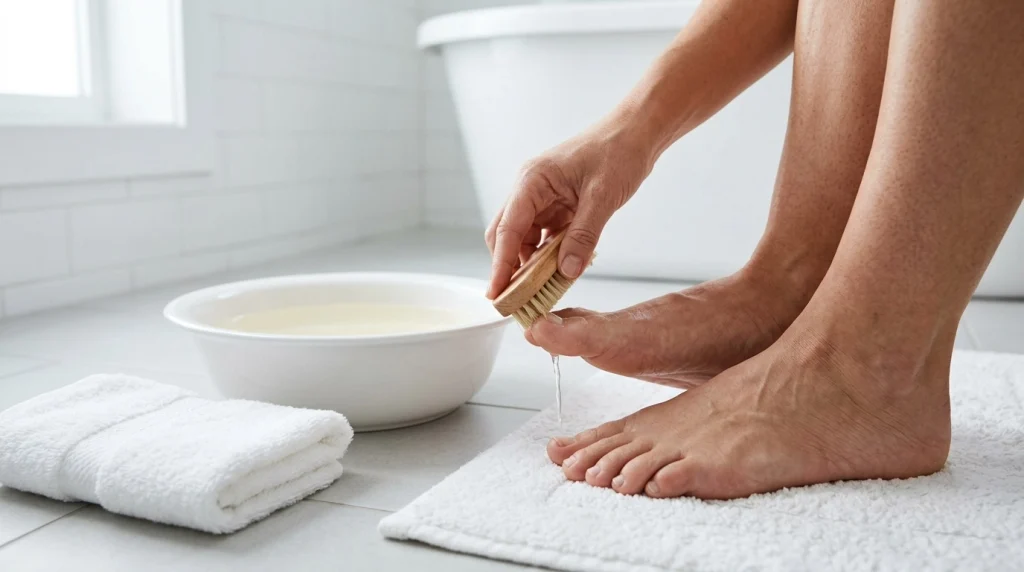
Toenails sit in an environment where heat, moisture, friction, and everyday debris can easily accumulate.
What looks like “dirt” may include:
- Dead skin cells
- Sock lint
- Dust or soil
- Sweat residue
- Dried lotion
- Soap or body-product residue
- Nail polish remnants
- Small particles from shoes or sandals
The space beneath the free edge—the white or lighter part extending past the toe—can naturally catch some of this material.
The problem becomes more noticeable when toenails are long because there is more space for debris to collect.
The American Academy of Dermatology’s healthy nail advice recommends keeping nails clean and dry because moist environments can encourage bacterial and fungal growth.
Is the Material Under Your Toenail Really Dirt?
Before trying to scrape anything out, take a closer look.
Not everything beneath a toenail is ordinary dirt.
Normal Everyday Debris
Ordinary debris usually:
- Appears near the free edge
- Comes away after washing
- Does not cause pain
- Does not change the nail’s thickness
- Does not create persistent odor
- Returns mainly after wearing shoes, exercising, gardening, or walking barefoot
That is generally suitable for gentle home cleaning.
Dead Skin or Keratin Buildup
Keratin is the tough protein that makes up your nails. Dead skin and keratin can sometimes collect underneath the nail and look white, yellowish, or chalky.
Trying to forcefully scrape this material away can injure the sensitive skin underneath.
Possible Fungal Changes
Material under a nail can sometimes accompany a fungal infection rather than simple dirt.
According to the NHS guidance on fungal nail infections, affected nails may become thicker, discolored, brittle, crumbly, or partially lifted.
If your toenail is becoming noticeably yellow, white, thick, crumbly, or misshapen, repeatedly cleaning underneath it will not necessarily solve the underlying problem.
What You Need to Clean Under Your Toenails
You do not need a professional pedicure kit.
For ordinary home cleaning, gather:
| Tool | What It Does | Best Choice |
|---|---|---|
| Warm water | Softens dirt and nails | Comfortably warm, not very hot |
| Mild soap | Loosens sweat and debris | Gentle, non-irritating cleanser |
| Soft nail brush | Removes surface debris | Soft or medium-soft bristles |
| Toenail clippers | Shortens excess nail | Clean, sharp clippers |
| Nail file | Smooths rough edges | Fine or medium grit |
| Clean towel | Removes moisture | Fresh, dry towel |
| Moisturizer | Helps dry skin around nails | Fragrance-free if sensitive |
Avoid using sewing needles, safety pins, knives, scissors, toothpicks, cuticle nippers, or other sharp household objects beneath your toenails.
They can easily puncture the skin.
How to Remove Dirt From Under Toenails Step by Step
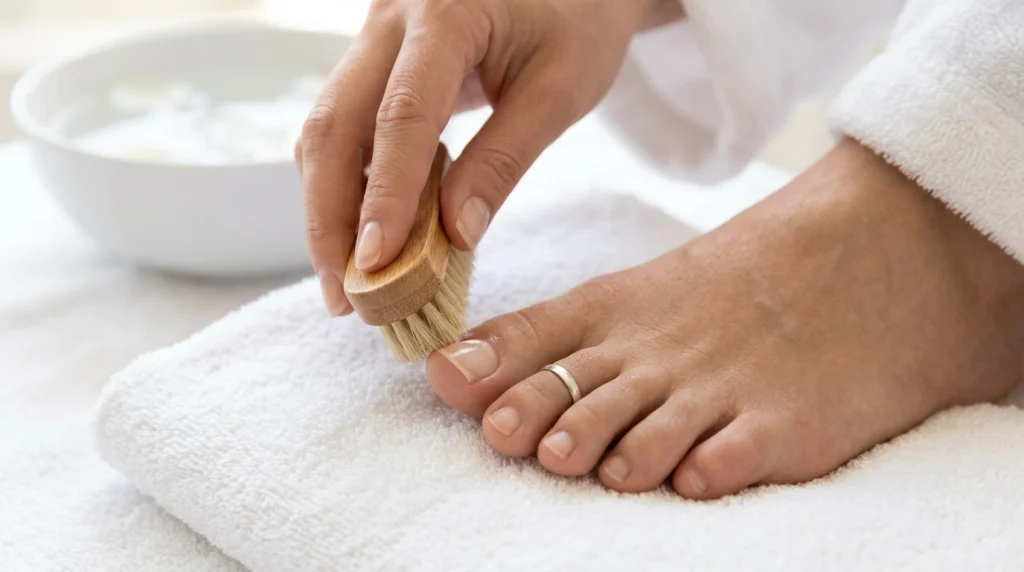
For healthy toenails without pain, swelling, drainage, or obvious infection, this simple routine is usually enough.
1. Wash Your Hands First
Clean hands reduce the chance of transferring additional bacteria to your toes.
If you are using clippers or another reusable nail tool, make sure it is clean too.
The American Academy of Dermatology recommends using properly maintained nail tools and periodically disinfecting clippers. Their guide to trimming nails safely also recommends softening nails before trimming.
2. Soften Your Toenails With Warm Water
Clean your feet during or immediately after a shower, or place them in comfortably warm water for several minutes.
Softening the debris first makes cleaning much easier.
You do not need extremely hot water or a long soak.
If you have diabetes, poor circulation, reduced sensation in your feet, or another medical condition affecting foot health, follow your healthcare provider’s foot-care recommendations rather than starting an extended soaking routine.
3. Apply Mild Soap
Wash the top, sides, and ends of your toes with a gentle soap.
Do not focus only on the nail itself.
Dirt, sweat, and bacteria can also collect:
- Between the toes
- Along the nail folds
- At the tip of the toe
- Around the cuticle area
The CDC recommends washing feet every day and drying them completely as part of basic foot hygiene.
4. Use a Soft Nail Brush
Wet a soft nail brush and gently brush:
- Across the top of the nail
- Around the sides
- Across the tip
- Beneath the visible free edge
Use light strokes rather than aggressive pressure.
Only clean beneath the portion of nail that has naturally grown beyond the skin.
You should not force a brush or tool far underneath the attached nail plate.
If something does not come out easily after soaking and gentle brushing, do not keep digging.
5. Rinse Thoroughly
Rinse away soap and loosened debris with clean water.
Check the nail again.
A small amount of naturally attached material underneath the nail does not necessarily need to be removed.
Your goal is cleanliness—not making the underside of the nail look perfectly empty.
6. Trim Long Toenails if Needed
Long nails provide more room for debris to collect.
Trim toenails using clean toenail clippers after they have softened.
Cut mostly straight across rather than deeply rounding the corners. The AAD recommends straight-across toenail trimming to help reduce the likelihood of ingrown toenails.
Avoid cutting nails extremely short.
The edge should still provide some protection for the tip of the toe.
7. Smooth Rough Edges
If trimming leaves a sharp or snagged edge, gently smooth it with a nail file.
Do not aggressively file the surface of a healthy toenail simply because it looks slightly uneven.
8. Dry Your Feet Completely
This step matters more than many people realize.
Dry:
- The toenails
- Nail edges
- Tips of the toes
- Between each toe
Fungi thrive particularly well in warm, damp environments. The CDC recommends keeping feet and toes clean and dry and regularly changing shoes and socks to help prevent or control fungal foot problems.
9. Moisturize Dry Skin—But Not Between the Toes
If the skin around your nails feels dry, apply a small amount of moisturizer to the tops and bottoms of your feet.
Avoid leaving thick lotion packed around or between the toes.
The goal is comfortable skin without creating an unnecessarily damp environment.
Expert Tip
Expert Tip: Clean beneath your toenails after showering rather than trying to scrape away dry debris. Warm water softens buildup naturally, which means you can use much less pressure and reduce the chance of irritating the skin beneath the nail.
What If the Dirt Will Not Come Out?
Do not immediately reach for something sharp.
First, repeat the gentle washing process during your next shower.
Persistent material might be:
- Hardened dead skin
- Keratin buildup
- Dried blood after minor trauma
- Nail discoloration
- Fungal debris
- Material beneath a partially lifted nail
If the buildup keeps returning despite regular hygiene, look at the entire nail rather than treating the debris by itself.
Changes in color, thickness, texture, shape, smell, attachment, or surrounding skin provide useful clues that something more than dirt may be happening.
Can You Use a Nail Cleaner or Pedicure Tool?
A rounded nail-cleaning tool may be used very gently along the accessible free edge of a healthy nail.
However, it should never be used to probe deeply beneath the attached nail.
Stop immediately if you feel:
- Pain
- Tenderness
- Resistance
- Bleeding
- Burning
- Sharp sensitivity
A professional nail technician can help with cosmetic cleaning and routine grooming, but suspected infections or unusual nail changes belong with a healthcare professional such as a dermatologist or podiatrist.
How Often Should You Clean Under Your Toenails?
You generally do not need to scrape beneath your toenails every day.
Instead:
- Wash your feet daily.
- Dry them carefully.
- Brush visible debris away when needed.
- Trim nails regularly as they grow.
- Change socks after they become damp or sweaty.
- Allow footwear to dry between uses.
People who exercise frequently, work outdoors, wear work boots, or regularly walk barefoot may notice debris more often.
The CDC advises washing feet daily and changing socks at least once a day as part of basic foot hygiene.
How to Keep Dirt From Building Up Under Toenails
Prevention can make cleaning much easier.
Keep Toenails at a Practical Length
You do not have to cut them extremely short.
Keeping them neatly trimmed simply reduces the pocket where lint and debris can accumulate.
Change Socks Regularly
Fresh socks help reduce the combination of moisture, sweat, skin cells, and lint surrounding the nail.
Change them sooner after exercise or whenever they become damp.
Rotate Your Shoes
A pair of shoes that stays damp can create a warm environment around the toes.
Give frequently worn shoes time to dry.
Wear Protective Footwear
If you garden, work outdoors, or walk through dusty areas, shoes can keep much of that material from reaching your nails.
In public showers, locker rooms, and similar damp shared spaces, sandals or shower shoes can also reduce exposure to fungi. The CDC specifically recommends protective footwear in these environments.
Clean Nail Tools
Do not repeatedly use dirty clippers, files, brushes, or pedicure tools.
And avoid sharing clippers or other personal nail tools with other people.
Common Mistakes to Avoid
A simple cleaning routine becomes risky when you become too aggressive.
Avoid these common mistakes:
- Digging deeply with sharp objects. You can puncture delicate skin beneath the nail.
- Trying to remove every bit of material. Some attached keratin is normal and does not need scraping.
- Cutting toenails extremely short. This can make the surrounding skin more vulnerable and may contribute to ingrown nails.
- Rounding deeply into nail corners. Toenails are generally safer trimmed straight across.
- Using dirty tools. Nail clippers and brushes should be kept clean.
- Ignoring persistent discoloration. Yellow, white, green, brown, or dark changes are not automatically dirt.
- Ignoring pain or drainage. Dirt removal should not hurt.
- Leaving feet damp after cleaning. Moisture can encourage fungal growth.
- Sharing pedicure tools. Personal nail-care tools should remain personal.
- Picking beneath lifted nails. A nail that is separating from the skin needs gentle care and sometimes medical evaluation.
When to See a Nail Technician or Dermatologist
There is an important difference between a nail that needs grooming and a nail that may have a health problem.
A Nail Technician May Help When
Consider a reputable nail technician if your toenails are basically healthy but you need help with:
- Routine trimming
- Cosmetic shaping
- Removing surface polish
- Basic pedicure hygiene
- Managing hard-to-reach nails
Choose a salon that follows proper tool sanitation and hygiene practices.
The AAD’s manicure and pedicure safety guidance recommends paying attention to cleanliness and avoiding unnecessary cutting or forceful manipulation of the cuticle.
See a Dermatologist, Podiatrist, or Other Healthcare Professional When
Get medical advice if you notice:
- Persistent nail thickening
- Crumbling or brittle nail texture
- Yellow or white discoloration that does not wash away
- Green or unusual dark discoloration
- Nail lifting
- Increasing pain
- Swelling
- Redness spreading around the toe
- Pus or drainage
- Bleeding without an obvious minor cause
- Persistent strong odor with visible nail changes
Fungal nail infections can cause toenails to become discolored, thick, cracked, or brittle rather than simply dirty.
Mayo Clinic also advises seeking medical care for severe discomfort, pus, or spreading inflammation around an ingrown toenail.
If you have diabetes, poor blood flow, reduced feeling in your feet, or a weakened immune system, be especially cautious about treating foot or nail problems yourself.
The CDC recommends that people with diabetes regularly inspect their feet and seek medical attention for problems such as sores, infections, thickened yellow nails, fungal infections, or ingrown toenails.
DIY Cleaning vs. Professional Help
| Situation | DIY Cleaning | Nail Technician | Medical Professional |
|---|---|---|---|
| Light dirt near nail edge | Yes | Optional | Usually unnecessary |
| Sock lint or surface debris | Yes | Optional | Usually unnecessary |
| Long but healthy toenails | Yes, if safely reachable | Helpful | Usually unnecessary |
| Cosmetic pedicure cleanup | Yes | Yes | Usually unnecessary |
| Thick or crumbly nail | Limited | Not for diagnosis | Recommended |
| Persistent discoloration | Do not aggressively scrape | Not for diagnosis | Recommended |
| Pain or swelling | Stop DIY cleaning | Avoid cosmetic treatment | Recommended |
| Pus or drainage | No | No | Recommended promptly |
| Diabetes with foot/nail problem | Extra caution | Ask healthcare provider | Medical guidance advised |
FAQs
Why do I keep getting dirt under my toenails?
Long toenails, closed shoes, sock lint, sweat, dead skin, outdoor activities, and walking barefoot can all increase debris under the nail edge. Keeping nails neatly trimmed and washing and drying your feet regularly usually reduces buildup.
Can I use a toothpick to remove dirt under my toenails?
It is better not to. A toothpick can slip underneath the attached nail and scratch or puncture the sensitive skin. Warm water and a soft nail brush are safer for routine cleaning.
Why is there black material under my toenail?
Black or dark material may sometimes be dirt, but it can also come from dried blood after trauma, discoloration, or another nail problem. If it does not wash away or appeared without an obvious reason, avoid scraping it aggressively and consider professional evaluation.
Why is there white stuff underneath my toenail?
White material may be dead skin or keratin, but persistent white buildup can also occur with nail changes such as fungal infection. Look for additional symptoms including thickening, crumbling, discoloration, or nail lifting.
Should I clean underneath my toenails every day?
Daily foot washing is a good hygiene habit, but you do not need to dig beneath your toenails every day. Gently brushing visible debris when needed is enough for most healthy nails.
Can dirt under toenails cause an infection?
Ordinary dirt does not automatically mean you will develop an infection. However, moist environments, skin injuries, and poor foot hygiene can make it easier for microorganisms to grow. Clean and dry feet are an important part of prevention.
Why does the dirt under my toenails smell?
Odor often comes from a combination of sweat, bacteria, dead skin, damp footwear, and trapped debris. Persistent smell combined with thickening, discoloration, crumbling, itching, or skin changes may deserve professional evaluation.
Conclusion
Learning how to remove dirt from under toenails is mostly about being gentle.
Start with warm water and mild soap, loosen visible buildup with a soft nail brush, trim long nails straight across, rinse thoroughly, and dry your feet completely. You do not need to scrape deeply beneath the nail or use sharp metal tools to get your toenails clean.
Most everyday dirt and lint will come away with regular hygiene. Material that repeatedly returns, refuses to wash away, or appears alongside thickening, discoloration, pain, swelling, odor, drainage, or nail lifting may not be ordinary dirt.
In that situation, stop digging and have the nail evaluated instead.
Keep your routine simple: clean, trim, dry, inspect, and protect your feet. That approach is safer—and usually far more effective—than aggressive cleaning.

