
How Often Should You Clean Your Toenails? A Simple Hygiene Routine

Toenails are easy to overlook until you notice dirt underneath them, an unpleasant smell, or a nail that suddenly looks different. Because your feet spend so much time inside socks and shoes, they can collect sweat, dead skin, sock fibers, and everyday debris surprisingly quickly.
So, how often should you clean your toenails? For most people, gently washing the feet and toenails once every day is a good routine. You may need a little extra cleaning if you exercise, sweat heavily, wear closed shoes for long periods, or notice visible buildup under the nail edges.
The important part is being gentle. Healthy toenail hygiene does not mean scraping underneath your nails every day. In this guide, you’ll learn how often to clean your toenails, which tools are useful, what your weekly routine can look like, and when a nail change needs professional attention instead of more cleaning.
Quick Answer
For most people, toenails should be gently cleaned every day when washing the feet. Use warm water, mild soap, and a soft nail brush if needed. Clean visible debris around the nail edges without digging underneath the nail. Dry your feet thoroughly afterward and trim toenails regularly with clean tools.
Why Regular Toenail Cleaning Matters
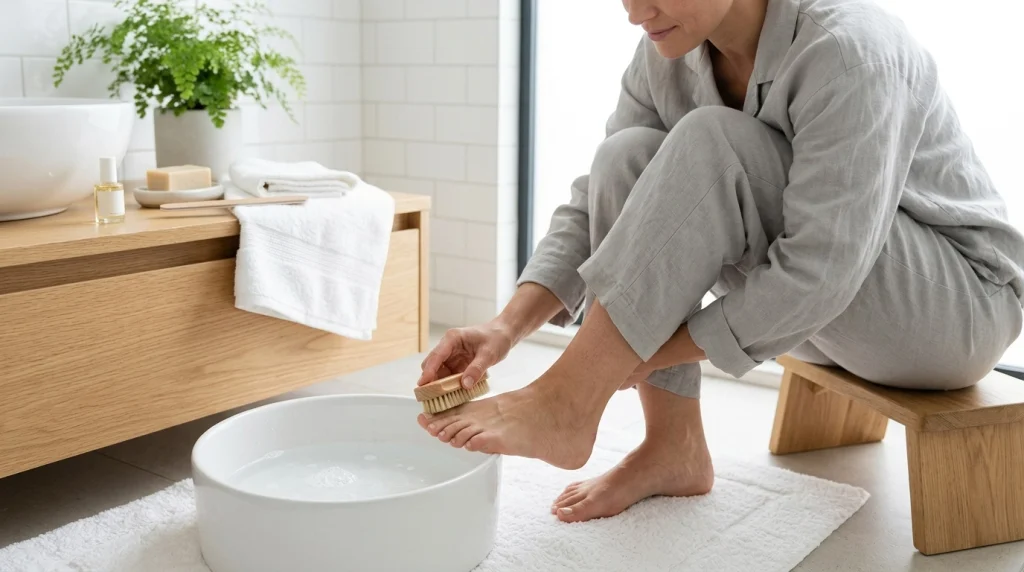
Toenail cleaning is about more than making your feet look nice before wearing sandals.
Feet can spend many hours in warm, enclosed shoes where moisture builds up. Dirt, sweat, dead skin, lint, and microorganisms can accumulate around the nail folds and beneath the free edge of the nail.
The CDC recommends washing the feet every day, drying them completely, clipping toenails short, and keeping them clean as part of basic foot hygiene. CDC guidance on healthy foot hygiene
Regular cleaning can help remove:
- Sweat and surface oils
- Sock fibers and lint
- Dirt around the nail edges
- Dead skin around the toes
- Residue from foot-care products
- Debris that may contribute to odor
However, cleaning does not treat a fungal infection, an ingrown toenail, or another medical nail condition. If a nail remains thick, discolored, painful, crumbly, or separated from the nail bed after cleaning, something besides ordinary dirt may be responsible.
How Often Should You Clean Your Toenails?
For most healthy adults, a simple schedule works well.
Daily: Wash Your Feet and Toenails
Wash your feet once a day with warm water and mild soap.
During your shower or bath, gently wash:
- Around each toenail
- The tops and bottoms of your feet
- Between the toes
- Around the nail folds
- Beneath the exposed free edge if debris is visible
You normally do not need to spend several minutes scrubbing each toenail.
The goal is regular gentle hygiene, not deep cleaning every day.
Afterward, rinse away the soap and dry your feet thoroughly, especially between your toes.
As Needed: Clean Visible Dirt Under the Nail Edge
Sometimes dirt or lint collects under the visible edge of a toenail even when you wash your feet regularly.
When that happens, soften the area with water first and use a soft nail brush rather than immediately reaching for a sharp tool.
You can gently brush underneath the free edge—the white part extending beyond the skin—but avoid pushing anything deeply underneath the attached nail.
Aggressive scraping can irritate the sensitive skin beneath the nail and may encourage the nail to lift away from its nail bed.
Every Few Weeks: Trim Your Toenails
Toenails grow more slowly than fingernails, so they generally do not need frequent clipping.
Trim them when they become long enough to catch on socks, press against your shoes, or extend noticeably beyond your toe.
The American Academy of Dermatology recommends cutting toenails straight across, which may help reduce the chance of an ingrown toenail. AAD dermatologist guidance for trimming nails safely
Your exact trimming schedule depends on how quickly your nails grow.
A Simple Toenail-Cleaning Schedule
| Task | Suggested Frequency | What to Do |
|---|---|---|
| Wash feet and toenails | Daily | Use warm water and mild soap |
| Dry feet thoroughly | After every wash | Pay special attention between toes |
| Remove visible debris | As needed | Use water and a soft nail brush |
| Change socks | Daily or when sweaty | Use a clean, dry pair |
| Trim toenails | When needed | Cut straight across |
| Clean nail tools | Before/after use as appropriate | Wash and disinfect grooming tools |
| Inspect natural nails | Regularly | Look for color, shape, texture, or skin changes |
| Professional pedicure | Optional | Choose a salon with good hygiene practices |
This does not have to become a complicated beauty routine. A few minutes of consistent care is usually more useful than an aggressive monthly deep-cleaning session.
How to Clean Your Toenails Safely
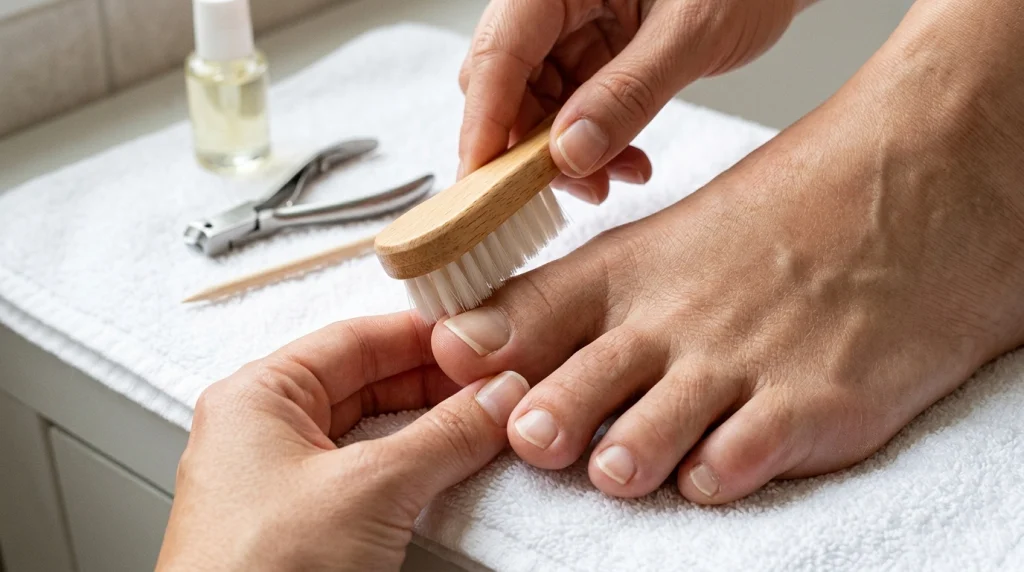
You only need a few basic supplies:
- Mild soap
- Warm water
- Clean towel
- Soft nail brush
- Toenail clippers
- Nail file if needed
Expensive pedicure tools are not necessary for everyday cleaning.
1. Wash or Briefly Soak Your Feet
Start by washing your feet during a shower or bath.
If your toenails are particularly dirty or difficult to trim, you can let them soften in warm water for a few minutes.
Avoid extremely hot water, especially if your skin is dry or sensitive.
2. Apply Mild Soap
Gently wash around each toe and nail.
You do not need harsh disinfectants, bleach, strong acids, or other aggressive chemicals for routine foot hygiene.
For healthy feet, ordinary soap and water are generally the practical starting point.
3. Use a Soft Brush for Visible Buildup
If debris remains under the exposed nail edge, use a clean, soft nail brush.
Brush gently rather than digging upward underneath the nail.
Stop if cleaning causes pain, bleeding, or significant tenderness.
If something appears stuck deep underneath an attached nail, repeatedly scraping at it can cause more harm than simply leaving it alone and monitoring the area.
4. Rinse Thoroughly
Rinse away soap and loosened debris.
Check that no cleaning product remains trapped between the toes or around the nail folds.
5. Dry Your Feet Completely
Drying is an important part of the routine.
The American Academy of Dermatology recommends keeping feet clean and dry because fungi thrive in warm, damp environments. AAD advice for helping prevent nail fungus
Pat your feet dry rather than aggressively rubbing irritated skin.
Remember the areas between your toes.
6. Trim Only When Necessary
If your nails need trimming, use clean toenail clippers.
Cut mostly straight across rather than dramatically rounding the corners.
Avoid cutting extremely short. Leaving a small visible nail edge can help prevent accidentally cutting the skin underneath.
7. Smooth Sharp Edges
If a freshly cut nail has a sharp corner or rough edge, gently smooth it with a nail file.
Do not aggressively thin the entire toenail surface unless there is a specific reason to do so.
Expert Tip
Expert Tip: Keep a separate clean nail brush and toenail clipper for personal foot care. Gentle, consistent cleaning with clean tools is safer than waiting for heavy buildup and then aggressively scraping underneath the nails.
Do You Need to Scrub Under Your Toenails Every Day?
Usually, no.
Daily washing does not mean you need to insert a tool beneath every toenail each morning or evening.
If the visible nail edge is clean, normal washing may be enough.
Overcleaning can create its own problems. The tissue under the attached portion of your toenail is not an empty space that needs to be cleaned out.
Repeatedly pushing tools beneath the nail can irritate that tissue.
The American Academy of Dermatology notes that injury from cleaning beneath nails with a sharp object can contribute to nail lifting.
A useful rule is:
Clean what you can easily reach. Do not force your way farther underneath an attached nail.
When You May Need to Clean Your Feet More Often
Once-daily washing works for many people, but lifestyle matters.
You may benefit from washing or rinsing your feet again after:
- A sweaty workout
- Running or hiking
- Working outside in dusty conditions
- Wearing heavy work boots for hours
- Walking barefoot outdoors
- Visiting a pool or communal shower
- Spending a hot day in closed shoes
If your socks become damp with sweat, changing into a clean, dry pair is also useful.
You generally do not need to scrub aggressively twice a day. A simple wash, rinse, and thorough drying is enough for routine hygiene.
What If You Wear Nail Polish?
Toenail polish does not mean you can skip normal foot hygiene.
Continue washing the toes and surrounding skin daily.
Polish can make it harder to see the natural nail underneath, however. Consider leaving your toenails bare occasionally so you can inspect their normal color, thickness, and texture.
Removing polish is especially useful if:
- One toenail begins hurting
- The nail seems unusually thick
- You notice a new dark area
- The nail appears to be lifting
- There is persistent odor
- The surrounding skin becomes red or swollen
Polish can hide changes, but it does not cause every change you see after removal.
Keeping Nail Tools Clean
Toenail hygiene also includes the tools touching your nails.
The CDC recommends cleaning nail-grooming tools such as clippers and files before use. CDC nail hygiene recommendations
Do not casually share personal clippers or other grooming tools.
Before clipping your nails:
- Remove visible nail debris from the tool.
- Wash it if needed.
- Follow appropriate disinfection instructions for the tool.
- Allow it to dry completely.
- Store it somewhere clean and dry.
If a tool is rusty, damaged, or difficult to clean properly, replacing it may be the smarter choice.
Basic toenail clippers and nail brushes are inexpensive, so safe foot care does not require an elaborate pedicure kit.
Common Mistakes to Avoid
A good toenail routine should be simple. Avoid turning routine cleaning into an aggressive procedure.
- Digging deeply under the nail with metal tools: This can irritate or injure the tissue beneath the nail.
- Using sharp household objects: Pins, needles, scissors, and similar objects are not appropriate cleaning tools.
- Scraping beneath the nail every day: Daily washing is useful; aggressive daily scraping is not.
- Cutting nails extremely short: Very short trimming can irritate the toe and make nail corners harder to manage.
- Rounding toenail corners deeply: Straight-across trimming is generally recommended for toenails.
- Cutting the cuticle: The cuticle helps protect the nail area from outside germs.
- Putting socks on damp feet: Dry your skin thoroughly first.
- Using dirty clippers: Nail tools can collect debris and microorganisms between uses.
- Assuming discoloration is dirt: A nail that stays yellow, brown, white, dark, or greenish after cleaning may need closer evaluation.
- Covering a suspicious nail with polish: Hiding a nail change does not address its cause.
Dirt Under the Nail vs. a Nail Problem
Ordinary dirt usually comes away after washing and gentle brushing.
A nail condition may not.
Mayo Clinic lists thickening, discoloration, brittleness, crumbling, misshapen nails, nail separation, and odor among possible signs of nail fungus. Mayo Clinic overview of nail fungus symptoms
That does not mean every yellow or thick toenail is fungal. Injury, pressure from shoes, skin conditions, aging, polish staining, and other problems can also change how a nail looks.
The important point is not to keep scrubbing a nail that does not become normal-looking after ordinary cleaning.
DIY Care vs. a Professional Pedicure
Routine hygiene can normally be handled at home.
DIY care works well for:
- Daily washing
- Gentle brushing
- Drying
- Normal trimming
- Filing small rough edges
- Routine nail inspection
A nail technician can help with:
- Cosmetic nail shaping
- Polish application or removal
- Routine pedicure maintenance
- Managing nails that are awkward for you to reach, provided no medical problem is suspected
Choose a salon that appears clean and follows appropriate tool and foot-bath hygiene procedures.
A nail technician can improve the cosmetic appearance of healthy nails, but a nail technician should not replace a healthcare professional when infection, injury, persistent pain, or unexplained nail changes are present.
When to See a Nail Technician or Dermatologist
A routine pedicure may be appropriate when your nails are healthy and you simply want cosmetic maintenance.
A dermatologist, podiatrist, or other healthcare professional is more appropriate when you notice possible signs of a health problem.
Seek professional advice if you have:
- Increasing pain around a toenail
- Redness or swelling
- Bleeding around the nail
- Drainage or pus
- A nail that is becoming increasingly thick
- Persistent yellow, white, brown, green, or dark discoloration
- A nail lifting away from the nail bed
- A nail that is becoming misshapen
- Significant crumbling or brittleness
- Repeated ingrown toenails
- Difficulty walking because of the nail
- A nail change that does not improve
Mayo Clinic also advises contacting a healthcare professional for suspected nail fungus when symptoms worsen despite self-care, and specifically highlights concerns such as bleeding, swelling, pain, and difficulty walking.
Do not repeatedly scrape, cut, or buff a suspicious nail in an attempt to make it look normal.
You may only damage the nail further while delaying the correct diagnosis.
People with diabetes, poor circulation, reduced sensation in their feet, or other conditions that make foot injuries higher-risk should be especially cautious about DIY cutting and treatment.
FAQs
Should I clean my toenails every day?
For most people, yes. Gently wash your feet and toenails once a day with warm water and mild soap. You do not need to aggressively scrape underneath the nails every day.
How often should I clean under my toenails?
Clean underneath the visible free edge when you notice debris. If your nails are already clean, there is no reason to push a tool deeply underneath them just because another day has passed.
Can I use a toothbrush to clean my toenails?
A dedicated soft brush may work for gentle cleaning, but do not use the same toothbrush you use in your mouth. Keep your foot-care brush clean, allow it to dry thoroughly, and replace it when worn.
Why do my toenails still look dirty after washing?
The color may not actually be dirt. Nail polish staining, previous injury, thickened nail material, or a nail condition can alter the nail’s appearance. Persistent discoloration should not be aggressively scraped away.
How often should I trim my toenails?
Trim them when they become noticeably long rather than following a strict number of days. Toenails grow slowly, and growth speed differs from person to person. Cut them straight across using clean toenail clippers.
Should I soak my feet before cleaning my toenails?
You do not have to soak healthy feet every day. A brief warm-water soak can help soften dirt or thick nails before gentle cleaning and trimming. Avoid excessively hot water and long soaks if they irritate your skin.
Can dirty toenails cause an infection?
Poor hygiene may contribute to conditions that allow microorganisms to collect around nails, but infection has many possible causes. Cuts, nail injuries, damp footwear, fungal exposure, and underlying health conditions can also matter. Keep feet clean and dry, and seek professional care for signs of infection.
Conclusion
So, how often should you clean your toenails? For most people, the simplest answer is every day as part of normal foot washing, with extra gentle cleaning only when visible debris collects beneath the free nail edge.
Use mild soap, warm water, a soft brush when necessary, and clean nail tools. Dry your feet thoroughly, trim toenails straight across when they become long, and avoid digging underneath the nail with sharp objects.
Most importantly, pay attention to what your nails are telling you. Dirt should normally wash away. Persistent discoloration, thickening, pain, swelling, odor, crumbling, or nail lifting may need more than a pedicure.
Make gentle daily hygiene your routine, inspect your toenails regularly, and get professional advice when a nail change looks unusual or does not improve.

