
How to Keep Your Toenails Clean Between Pedicures

Freshly pedicured toes look smooth, clean, and polished, but that fresh-from-the-salon feeling rarely lasts until your next appointment. Sweat, sock lint, dead skin, polish residue, and everyday dirt can collect around your toenails surprisingly quickly.
Fortunately, learning how to keep your toenails clean between pedicures does not require aggressive scrubbing or a drawer full of special tools. A simple routine of washing, gentle brushing, careful drying, regular trimming, and keeping your footwear clean can make a noticeable difference.
The most important part is knowing what you can safely handle at home—and recognizing when discoloration, odor, pain, thickening, or other changes may be more than an ordinary hygiene issue.
Quick Answer
To keep your toenails clean between pedicures, wash your feet daily with mild soap and warm water, gently brush around and beneath the exposed nail edge, dry your feet completely, trim toenails straight across when needed, and wear clean socks and dry shoes. Avoid digging under your nails with sharp tools.
Why Toenails Get Dirty Between Pedicures
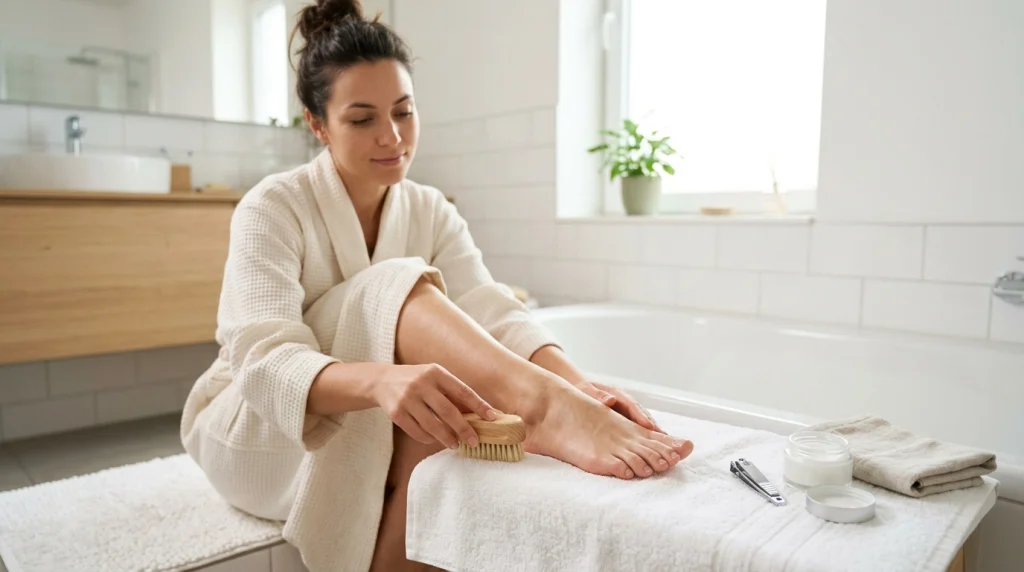
Even when you shower every day, your toenails can collect debris.
Closed-toe shoes create a warm environment around the feet. Add perspiration, dead skin cells, lotion, sock fibers, and ordinary dust, and buildup can form around or beneath the nail edges.
This does not automatically mean your feet are unhygienic. Toenails simply need regular maintenance in the same way fingernails do.
The CDC recommends washing feet daily, drying them thoroughly, keeping toenails clean and trimmed, and regularly checking the feet for problems.
A few habits make buildup more likely:
- Wearing closed shoes for long periods
- Exercising or sweating heavily
- Rewearing damp socks
- Leaving old polish on for extended periods
- Using thick foot creams around the toes
- Walking barefoot outdoors
- Allowing toenails to grow very long
- Not drying carefully after bathing
You do not need perfectly spotless-looking nails every minute of the day. The goal is clean, comfortable, healthy-looking toenails without damaging the nail or surrounding skin.
A Simple Routine for Clean Toenails Between Pedicures
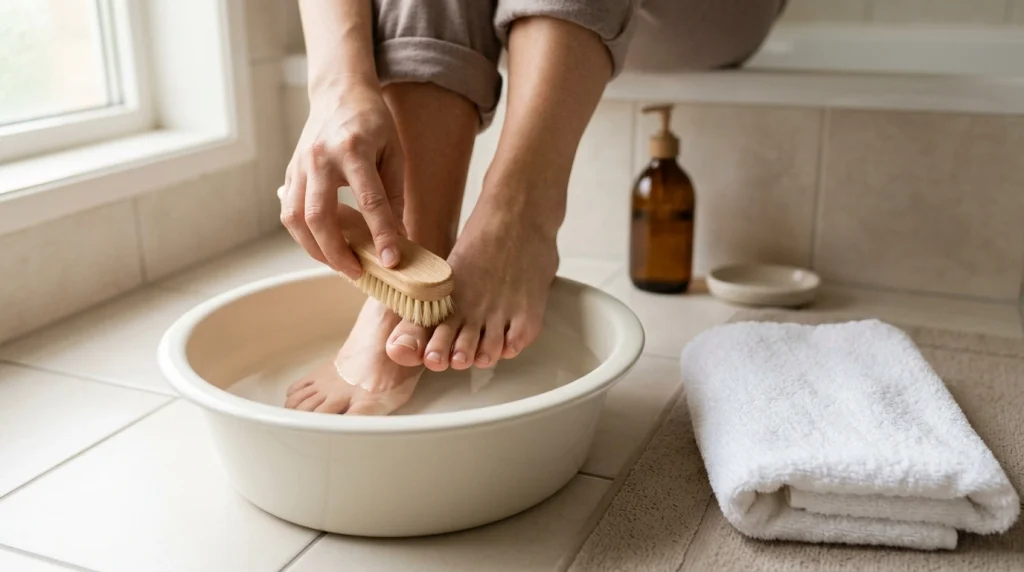
Consistency is more useful than aggressive once-a-week cleaning.
1. Wash Your Feet Every Day
During your shower or bath, wash your toes and toenails with warm water and mild soap.
Spend a little extra time around:
- The top of each toenail
- The side edges
- The skin around the nail
- Between the toes
- The exposed free edge of the nail
If your feet are visibly dirty, letting them sit in warm water for a few minutes can soften debris before cleaning.
Avoid extremely hot water, especially if your skin is dry or sensitive.
2. Use a Soft Nail Brush
A small, soft nail brush can help remove debris without requiring you to scrape beneath the nail.
Apply a little mild soap and gently brush across the nail surface and around the exposed edges.
If you can see dirt underneath the free edge—the white portion extending beyond the attached nail—angle the brush gently toward it.
Do not force the brush deeply beneath the nail.
For a more detailed cleaning routine, NailPrime’s guide to cleaning your toenails properly explains how to clean the nail surface and edges without aggressive scraping.
3. Rinse Away Soap and Loosened Debris
Rinse your feet thoroughly after brushing.
Leaving soap, cleanser, or exfoliating products around the nail folds can irritate sensitive skin.
If some debris remains beneath a nail after one gentle cleaning, do not immediately increase the pressure. Try again after your next shower instead.
Persistent dark material that does not wash away may not be ordinary dirt.
4. Dry Your Feet Completely
Drying is one of the easiest steps to overlook.
Use a clean towel and carefully dry:
- The nail surfaces
- Around each toenail
- Between every toe
- The soles of your feet
Moisture trapped inside shoes can create conditions where fungi thrive. The American Academy of Dermatology recommends keeping feet clean and dry as part of reducing the risk of fungal nail infections.
Allow your feet to air-dry briefly before putting on socks if they still feel damp.
5. Moisturize Dry Skin Carefully
Clean feet do not have to mean dry feet.
If the skin around your toes becomes rough or flaky, apply a small amount of moisturizer after washing and drying.
Focus on the tops of your feet, heels, and dry areas around the toes.
If the spaces between your toes already stay moist, avoid coating them with heavy creams.
Choose a fragrance-free moisturizer if scented products tend to irritate your skin.
How to Safely Remove Dirt From Under Toenails
Dark debris underneath a toenail can be frustrating, especially when you want your toes sandal-ready.
The biggest mistake is trying to dig it out.
Instead:
- Wash or soak your feet in warm water.
- Apply mild soap.
- Brush the top and visible nail edges.
- Gently brush underneath the accessible free edge.
- Rinse thoroughly.
- Dry your feet completely.
- Repeat during a later wash if stubborn material remains.
NailPrime’s guide to removing dirt from under toenails safely covers this technique in greater detail.
Avoid using:
- Needles
- Pins
- Toothpicks
- Scissors tips
- Pointed metal cuticle tools
- Other sharp household objects
The skin underneath your nail is delicate. Digging beneath the attached portion of the nail can cause pain, small injuries, or separation between the nail and nail bed.
If dirt will not come out with gentle washing, more force is usually not the answer.
Expert Tip: Clean beneath your toenails immediately after showering. Warm water softens the nail and debris, so you can usually clean the exposed edge using much less pressure.
Keep Your Toenails Trimmed—but Not Too Short
Longer nails provide more space for debris to collect underneath them.
Regular trimming makes cleaning easier, but cutting toenails extremely short can create a different problem.
The American Academy of Dermatology recommends trimming toenails straight across to help reduce the chance of ingrown nails.
For a comfortable trim:
- Trim after bathing when the nail is softer.
- Use a clean toenail clipper.
- Cut mostly straight across.
- Leave a small amount of visible nail rather than cutting into the skin.
- Smooth sharp edges gently with a nail file.
Do not repeatedly cut deep into the corners in an attempt to make the toenail look narrower.
If a corner is painful or appears to be growing into the skin, aggressive DIY cutting can make the irritation worse.
Your Between-Pedicure Toenail Maintenance Checklist
| Habit | How Often | Why It Helps |
|---|---|---|
| Wash feet with mild soap | Daily | Removes sweat, surface dirt, and debris |
| Dry between toes | After every wash | Reduces prolonged moisture |
| Gently brush nail edges | As needed | Loosens visible buildup |
| Put on clean socks | Daily or after heavy sweating | Reduces moisture and odor |
| Rotate or dry shoes | Regularly | Helps prevent a constantly damp environment |
| Trim toenails straight across | When needed | Keeps nails manageable and easier to clean |
| Clean nail tools | Before and after use | Reduces contamination |
| Inspect toenails | Weekly | Helps you notice changes early |
Keep Socks and Shoes Clean Too
You can clean your toenails perfectly and still end up with sweaty feet again an hour later if your socks and shoes stay damp.
Wear a clean pair of socks each day. Change them sooner if they become wet from exercise, hot weather, or heavy perspiration.
Moisture-wicking socks may be useful if your feet sweat heavily.
Give damp shoes time to dry before wearing them again. Alternating between pairs can help if possible.
The CDC specifically advises changing socks regularly and keeping feet and toes clean and dry to help prevent foot problems associated with moisture.
Shoes should also fit comfortably. Repeated pressure from tight footwear can irritate toes and potentially contribute to nail damage.
Keep Your Nail Tools Clean
Your toenail clipper, nail file, and other grooming tools touch skin and nail debris every time you use them.
Do not simply toss them back into a cosmetic bag covered in clippings.
Remove visible debris and clean your reusable tools before storing them.
The American Academy of Dermatology advises cleaning grooming tools and recommends disinfecting nail clippers; it also warns against sharing personal nail-grooming tools.
Ideally, keep your personal foot-care tools separate from tools used by other members of your household.
Do not share:
- Nail clippers
- Files
- Cuticle tools
- Foot files
- Towels used for infected or suspicious nails
If you suspect a fungal or other nail infection, follow professional guidance for cleaning or replacing contaminated tools.
What About Nail Polish Between Pedicures?
Polish can make it harder to see what’s happening underneath your pedicure.
You do not necessarily have to remove perfectly intact polish simply to inspect your toenails every few days. However, if the polish becomes heavily chipped, lifted, or damaged, removing it can make cleaning and checking the nail easier.
Once the polish is removed, look at the actual nail.
Temporary staining can happen with some darker polish shades. But persistent discoloration, increasing thickness, crumbling, lifting, pain, or a changing nail shape deserves closer attention.
NailPrime’s guide to toenail changes worth paying attention to can help you distinguish routine cosmetic changes from warning signs.
If your nails become brittle or begin splitting between pedicures, the related guide to common causes of weak toenails is also useful.
Common Mistakes to Avoid
A good between-pedicure routine should be gentle. More scrubbing does not automatically mean cleaner or healthier nails.
Avoid these common mistakes:
- Digging beneath attached nail tissue. Only clean the exposed area you can reach comfortably.
- Using sharp objects. Needles, scissors, pins, and pointed metal tools can injure the skin.
- Cutting toenails extremely short. This may irritate the surrounding skin.
- Rounding deeply into nail corners. Straight-across trimming is generally preferred for toenails.
- Cutting the cuticles. Cuticles help protect the nail root from germs; the AAD advises leaving them alone.
- Putting socks on wet feet. Dry your skin and nails first.
- Reusing sweaty socks. Fresh socks help keep newly cleaned feet dry.
- Sharing pedicure tools. Personal grooming tools should remain personal.
- Assuming every dark or yellow area is dirt. Nail infections and nail injuries can also change color.
- Trying to scrub away a nail problem. Thickening, crumbling, lifting, or persistent discoloration may require professional evaluation.
DIY Care vs. a Professional Pedicure
Routine cleaning between appointments is usually inexpensive and straightforward.
A basic home kit may include:
- Mild soap
- Soft nail brush
- Toenail clipper
- Nail file
- Clean towel
- Gentle moisturizer
There is no need to buy expensive electric tools simply for ordinary hygiene.
A professional pedicure can be useful when you want cosmetic shaping, polishing, callus care within safe limits, or help maintaining nails that are difficult for you to reach.
However, a nail technician is not a substitute for a medical professional when you have signs of infection, unexplained nail changes, or significant pain.
When choosing a salon, look for clean workstations and properly sanitized equipment. The CDC advises using clean, licensed salons and making sure instruments are appropriately sterilized between clients.
When to See a Nail Technician or Dermatologist
Some problems should not be treated as ordinary dirt or cosmetic buildup.
Consider professional evaluation if you notice:
- Increasing yellow, brown, white, or unusual discoloration
- A nail becoming noticeably thicker
- Crumbling or ragged nail edges
- Nail separation from the nail bed
- Persistent unpleasant odor from the nail
- Redness or swelling around the nail
- Bleeding
- Drainage or pus
- Increasing pain
- Difficulty walking
- A nail change that keeps worsening
- A dark streak or unusual pigmentation that is new or changing
Mayo Clinic notes that nail fungus can cause thickening, discoloration, crumbling, misshapen nails, separation from the nail bed, and sometimes odor.
A nail technician may help with normal cosmetic maintenance, but suspected infections or unexplained changes are better evaluated by a dermatologist, podiatrist, or other qualified healthcare professional.
People with diabetes, poor circulation, reduced sensation in their feet, or other medical conditions affecting foot health should be especially cautious about cutting, digging, or treating foot problems themselves.
FAQs
How often should I clean my toenails between pedicures?
Wash your feet daily and gently clean around your toenails as part of your normal bathing routine. You do not need to scrub aggressively every day. A more detailed inspection once or twice a week is usually enough for otherwise healthy nails.
Is it safe to clean underneath my toenails every day?
Gentle cleaning around the exposed free edge is fine when needed. Avoid repeatedly pushing brushes or tools deep under the attached part of the nail, because this can irritate or injure the tissue beneath it.
Why do my toenails still look dirty after washing?
What appears to be dirt may sometimes be staining, dried skin, nail thickening, old polish residue, injury-related discoloration, or another nail change. If the color does not improve with gentle cleaning, do not keep scraping it.
Can I use a toothbrush to clean my toenails?
A clean, soft-bristled toothbrush reserved exclusively for foot care may work in a pinch. A small soft nail brush is often easier to control. Whichever you use, keep it clean and allow it to dry completely between uses.
Should I soak my feet every day?
A separate daily foot soak is usually unnecessary for routine hygiene. Washing your feet during a normal shower or bath is typically enough. Short soaking can help soften stubborn debris or thick nails, but prolonged moisture is not necessarily better.
How can I keep my toenails smelling fresh?
Wash and dry your feet thoroughly, change socks regularly, and avoid repeatedly wearing damp shoes. Persistent odor accompanied by nail thickening, crumbling, discoloration, itching, or peeling skin may deserve professional evaluation rather than stronger fragrances or more scrubbing.
How long should I go between professional pedicures?
There is no single schedule that suits everyone. How quickly your nails grow, the type of pedicure you get, your footwear, and your personal preferences all matter. What is more important is maintaining basic hygiene between appointments instead of relying on salon visits as your only toenail-care routine.
Conclusion
Knowing how to keep your toenails clean between pedicures is mostly about simple habits rather than aggressive cleaning.
Wash your feet regularly, gently brush visible buildup, dry carefully, trim toenails straight across, wear clean socks, let damp shoes dry, and keep your grooming tools clean.
Most importantly, know when to stop treating something as a cosmetic issue. Dirt should generally improve with gentle cleaning. Persistent discoloration, thickening, crumbling, lifting, pain, swelling, or unusual odor may point to a problem that needs professional attention.
Keep your routine gentle and consistent, and check your toenails regularly. That small amount of maintenance can help your feet stay cleaner, more comfortable, and ready for your next pedicure.

