
What Are the Best Nail Oils for Dry, Brittle, and Peeling Nails?

If your nails are dry, brittle, peeling, or just hard to keep in good shape, nail oil can make a noticeable difference in how they look and feel day to day. The best nail oils soften the skin around the nail, reduce dryness, and help the nail area stay more flexible without leaving a heavy greasy film.
For most people, the best starting point is a jojoba-based nail oil, often paired with vitamin E. Jojoba is commonly used because it is lightweight, spreads easily, and is often considered one of the better options for daily use when you want something that absorbs well.
A simple way to think about it:
- Best overall: jojoba-based oil, ideally with vitamin E
- Best for very dry cuticles: a richer blend with almond, argan, or a little coconut oil
- Best for sensitive users: fragrance-free, short ingredient list, no essential-oil-heavy formula
- Best budget option: pure jojoba or sweet almond oil in a stable, well-sealed bottle
The biggest mistake is choosing by scent or packaging alone. A pretty bottle does not tell you whether the oil will absorb well, stay stable, or irritate your skin.
What Nail Oil Actually Does for Nails and Cuticles
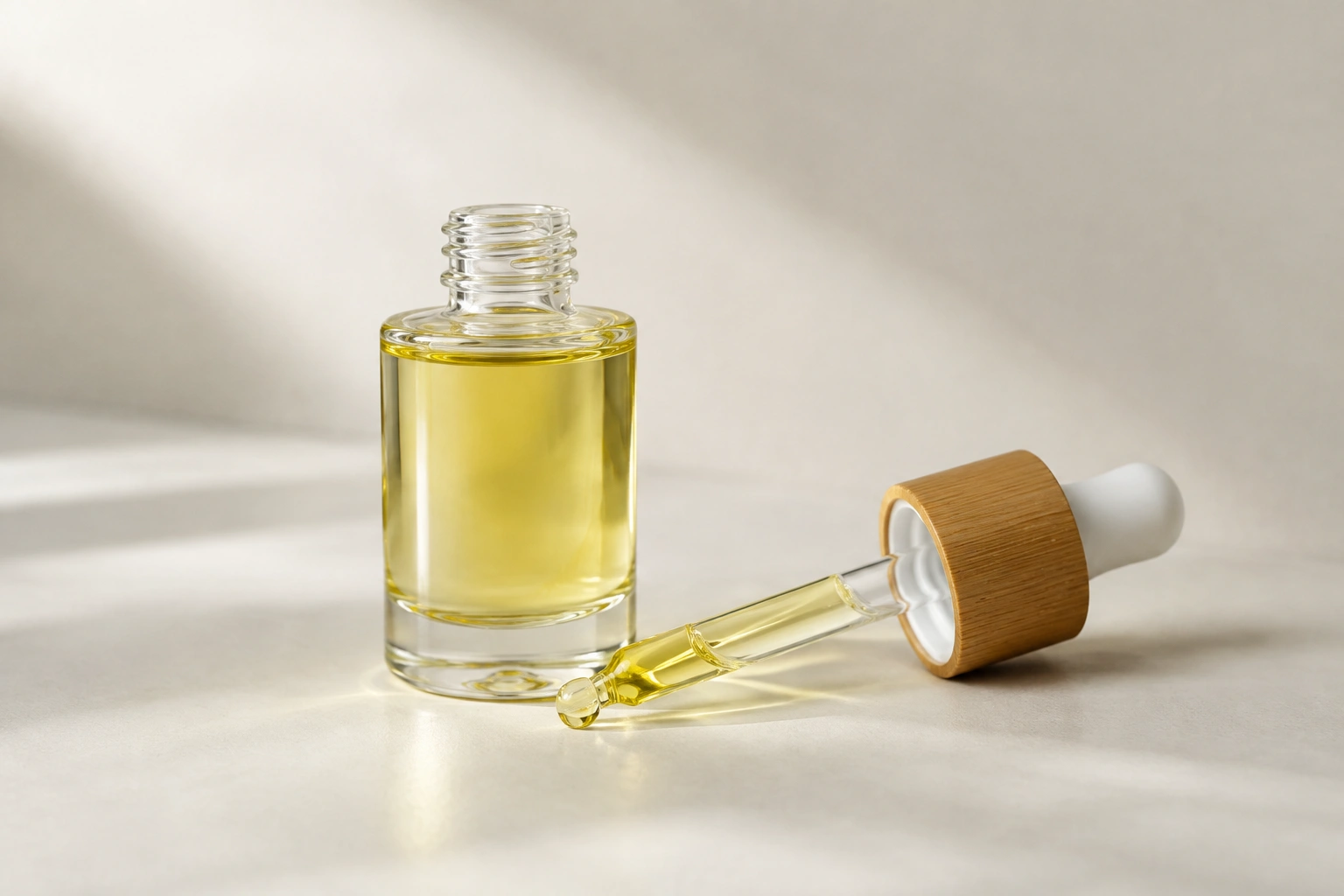
Nail oil is not a repair treatment, but it is one of the most useful everyday products for dry or brittle nails. Its main job is to condition the skin around the nail, reduce dryness, and help the nail area stay more flexible.
That flexibility matters. Dry nails tend to split, peel, and snag more easily. When the surrounding skin is better moisturized, nails often look smoother and feel less fragile.
A good nail oil can help with:
- Dry cuticles and rough nail folds
- Peeling or splitting at the free edge
- A dull, dehydrated-looking nail surface
- Post-handwashing dryness
- General maintenance between manicures
Jojoba, almond, argan, coconut, and vitamin E are all commonly used because they bring different benefits. Some are better at softening and sealing in moisture, while others are better at spreading quickly and feeling light enough for daily use.
The key point is this: nail oil helps with hydration and flexibility, but it does not strengthen the nail plate in the same way a strengthening treatment does. If your nails are severely weak, soft, or damaged, a strengthening treatment may be the better choice. Nail oil is best for dryness, peeling, and ongoing maintenance; strengthening products are better when the nail itself needs reinforcement.
Best Ingredients to Look For in a Nail Oil
When you compare products, ingredients matter more than claims on the front label. The most useful formulas are usually built around a small number of functional oils.
Jojoba oil
Jojoba is the ingredient I most often recommend as the best starting point. It is lightweight, spreads easily, and is widely valued because it is often considered one of the closest matches to the skin’s natural lipids. That is one reason it is commonly used in nail and cuticle oils: it tends to feel less heavy, and it usually absorbs more comfortably than richer plant oils.
If you want one oil that is easy to wear under hand cream or before bed, jojoba is hard to beat.
Vitamin E
Vitamin E is often included in nail and cuticle oils for antioxidant support. It is not a miracle ingredient, but it can be a useful companion to carrier oils like jojoba or almond. In practice, it is most helpful in formulas designed for dry, stressed-looking nails.
Sweet almond oil
Almond oil is a classic cuticle oil ingredient because it feels nourishing and gives a softer, more emollient finish than very light oils. It can be a good fit if your cuticles are rough or your hands feel dry after frequent washing.
Argan oil
Argan oil is another good conditioning oil, especially in blends. It tends to feel a little richer than jojoba, which can be useful at night or when nails and cuticles are especially dry.
Coconut oil
Coconut oil is heavier and more occlusive. That means it can help seal moisture in, but it may not be the best choice if you want something fast-absorbing for daytime use. It can work well in richer overnight products.
Squalane and sunflower-seed oil
A dermatologist quoted in The Cut recommends lightweight carrier oils that mimic skin’s natural lipids and provide barrier support, including jojoba, squalane, and sunflower-seed oil. That is a useful clue if you want something that feels light but still conditions well. You can read that guidance here.
Jojoba Oil vs Other Common Nail Oils
If you are trying to decide between the most common oils, the main differences are texture, absorption, and how they feel on daily use.
| Oil | Best for | Texture | Trade-off |
|---|---|---|---|
| Jojoba | Daily use, dry nails, cuticle maintenance | Light, fast-spreading | Less rich than heavier oils |
| Vitamin E blend | Dry, stressed-looking nail area | Medium to rich | Usually works best in a blend, not alone |
| Almond | Dry cuticles and softening | Smooth, nourishing | Can feel heavier than jojoba |
| Argan | Night use, extra conditioning | Medium | Often pricier in branded formulas |
| Coconut | Very dry skin, sealing in moisture | Rich, heavier | Can feel greasy and less elegant for daytime use |
For most readers, jojoba is the most practical all-around pick because it is easy to apply consistently. That consistency matters more than choosing the richest oil available.
If your nails feel dry but your routine is busy, choose the oil you will actually use every day. If a product feels too greasy, it usually gets abandoned.
Cuticle Oil vs Nail Oil vs Strengthening Treatments: Which One Do You Need?
These products overlap, but they are not interchangeable.
- Cuticle oil focuses on the skin around the nail and is best for dryness, roughness, and hangnail-prone cuticles.
- Nail oil is usually marketed for both the nail plate and surrounding skin, so it is a good all-around option for hydration and maintenance.
- Strengthening treatments are better when the nail itself is soft, weak, or prone to bending and breaking, especially if you need a more structural fix than moisture alone can provide.
A simple rule: if the problem is dryness, use nail oil. If the problem is weakness, splitting from softness, or a need for reinforcement, a strengthening treatment may be more useful. If you have both issues, you may need both products in a routine.
A convenient example: if you want one product for desk use, a jojoba-based cuticle oil pen is often easier than a thick balm. If you want overnight moisture, a richer oil blend may be more comfortable.
How to Choose the Best Nail Oil for Dry, Brittle, or Peeling Nails
Your nail concern should guide the formula you pick.
For dry nails
Choose a lightweight oil that absorbs well, especially jojoba or a jojoba-based blend. Dry nails usually need frequent conditioning more than heavy coating.
For brittle or peeling nails
Look for a formula that combines absorption and softness. Jojoba plus vitamin E is a strong choice. If your nails peel easily, avoid very fragranced oils that you will not want to use often.
For very dry cuticles
A richer blend with almond or argan can be helpful, especially at night. These oils can make the surrounding skin feel more comfortable and less tight.
For slow-growing nails
Be cautious with growth claims. Nail oil may help nails stay in better condition so they break less, which can make growth more noticeable over time. That is different from making nails grow faster in a direct way.
For sensitive skin
Choose fragrance-free formulas with a short ingredient list. The dermatologist guidance from The Cut also notes caution with formulas that rely heavily on essential oils or are overly fragrant, since they may irritate the skin around the nails.
Natural Oils vs Formulated Nail Oils: Which Is Better?
This is one of the most common buying decisions. Both can work, but they serve slightly different needs.
Single-ingredient oils
These are best if you want simplicity, fewer additives, and control over what touches your skin. Pure jojoba or sweet almond oil is often enough for basic nail care.
Best for: sensitive users, budget shoppers, ingredient minimalists
Trade-off: no added convenience features like pens, fragrance, or blended textures
Formulated nail oils
These often combine several oils and sometimes include vitamin E or other conditioning ingredients. They are convenient and can feel more polished in daily use.
Best for: people who want a ready-made routine, easier application, or a more luxurious feel
Trade-off: some formulas add fragrance or filler ingredients that do not improve performance
For dry, brittle, or peeling nails, a simple jojoba-based formula is usually the better choice because it is easy to use consistently and tends to feel comfortable on damaged-feeling nails. For maintenance use, either a single oil or a well-made blend can work, so the better option is the one you will apply regularly.
A practical middle ground is a short-ingredient blend built around jojoba and vitamin E. That gives you convenience without a lot of unnecessary extras.
What to Avoid in a Nail Oil
Not every oil marketed for nails is worth buying. These are the warning signs I look for:
- Heavy fragrance if your skin is sensitive
- Too many essential oils in a product meant for daily use
- Long ingredient lists full of extras that do not clearly support nail care
- Claims that sound too strong, such as instant repair, guaranteed growth, or “heals” damaged nails
- Very sticky or very greasy textures that make regular use unpleasant
- Clear or unstable packaging that lets light in, which can increase oxidation risk
- Loose caps, flimsy droppers, or leaky tops that suggest the formula may not stay fresh or easy to use
- Overly diluted formulas where the first ingredients are mostly filler oils, fragrance, or solvents rather than the oils doing the actual conditioning
A formula can smell nice and still be a poor fit if it irritates your cuticles or leaves you avoiding it. The best product is the one you can comfortably use every day.
How to Apply Nail Oil for Best Results
Application is simple, but technique matters.
- Put a small amount on each nail and the surrounding skin.
- Massage it into the cuticle area, sidewalls, and nail plate.
- Let it sit for a few minutes before washing your hands or applying lotion.
- If your nails are very dry, follow with hand cream to help seal in moisture.
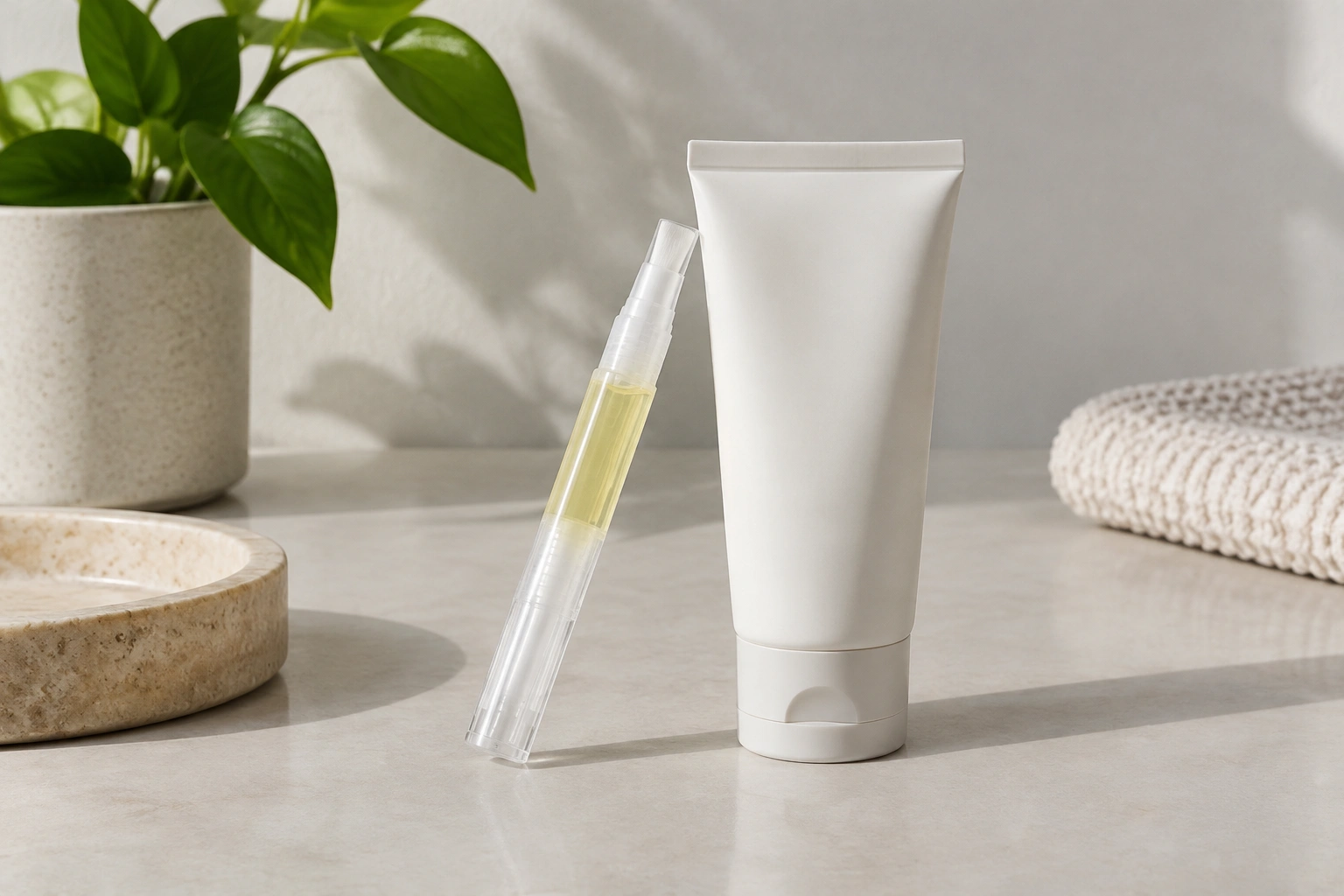
A pen applicator is useful during the day because it is quick and tidy. A dropper bottle works well at night when you can take a little more time.
If you plan to apply polish, use nail oil after the polish has fully dried rather than right before painting. If you are using it as a prep step, wipe away any excess oil first so the polish can adhere properly.
The goal is not to soak the nail. A thin, even layer used consistently is more effective than occasional heavy application.
How Often to Use Nail Oil and How Long Results Take
For dry or brittle nails, once a day is the minimum I would suggest. Twice a day is often better, especially if you wash your hands frequently or use hand sanitizer a lot.
A simple schedule:
- Morning: light application after washing hands
- Night: richer application before bed
- After handwashing: optional touch-up if your nails feel tight or rough
As for results, you may notice softer cuticles and less dryness fairly quickly, sometimes within days of consistent use. Changes in nail appearance usually take longer because nails grow slowly. The improvement is gradual: less peeling, less snagging, and a more flexible feel over time.
What Nail Oil Can and Cannot Do
Nail oil can make dry nails look healthier, help cuticles feel softer, and reduce the brittle feeling that leads to breakage. It can also support a better environment for nail growth by keeping the surrounding skin and nail plate conditioned.
What it cannot do is:
- instantly repair severe damage
- treat fungal or medical nail conditions
- permanently change your nail type
- force fast growth on its own
Think of nail oil as maintenance and support, not a cure-all. If your nails are improving, you will usually see it in fewer snags, less peeling, and a better-looking nail edge rather than dramatic overnight change.
When to See a Nail Technician or Dermatologist
If your nails are painful, discolored, separating from the nail bed, or changing in a way that does not fit ordinary dryness, it is time to get them checked. Nail oil is useful for everyday care, but persistent changes deserve professional evaluation.
That is especially true if you notice:
- sudden thickening or crumbling
- green, yellow, or dark discoloration
- ongoing tenderness
- nail lifting or separation
- changes affecting several nails without an obvious cause
A nail technician can help with routine care and product selection, but a dermatologist is the right person if the change looks medical rather than cosmetic.
Final Take: Which Nail Oil Should You Buy?
If you want the most reliable all-around answer to what are the best nail oils, start with a jojoba-based formula, ideally with vitamin E and a fragrance-free finish. That combination gives you the best balance of absorption, daily comfort, and practical use for dry, weak, brittle, or peeling nails.
If your nails are extremely dry, a richer almond- or argan-based blend can be helpful at night. If your main goal is simple maintenance, pure jojoba is a very solid place to start. And if your nails are soft or structurally weak rather than just dry, consider a strengthening treatment instead of relying on oil alone.

