
Gel nails are a type of nail polish that hardens under a UV or LED light, creating a strong, shiny finish that lasts much longer than regular polish. They are known for being chip-resistant and can keep nails looking fresh for up to two or three weeks. This makes them a popular choice for people who want a durable manicure without frequent touch-ups.
The process uses a special gel formula that cures instantly under light, unlike traditional polish that air-dries. This curing technique gives gel nails their signature shine and strength. Many people choose gel nails because they combine the look of a salon manicure with added durability.
However, gel nails require specific care during and after application to avoid damage to the natural nail. Knowing how they work, their benefits, and how to properly remove them helps people enjoy gel nails safely and effectively.
Key Takeaways
- Gel nails last longer and resist chipping better than regular polish.
- They cure quickly under UV or LED light for a shiny, durable finish.
- Proper care and removal are important to protect natural nails.
What Are Gel Nails?
Gel nails are a popular nail treatment known for their shiny and durable finish. They involve special formulas cured under UV or LED light to harden and last longer than regular polish. The types, benefits, and history of gel nails show why they are widely preferred.
Definition of Gel Nails
Gel nails are a type of nail polish made from a gel-based formula. Unlike regular nail polish, gel nails harden only when exposed to UV or LED light. This process is called curing. The curing makes the gel dry quickly and create a strong, shiny layer that resists chipping.
Gel polish can be applied to natural nails or over artificial nails. It lasts about two to three weeks without peeling, which is longer than standard nail polish. Removal requires soaking nails in acetone or professional techniques to avoid damaging the natural nail.
Types of Gel Nails
Gel nails come in different forms to suit varying needs. The main types include:
| Type | Description | Common Uses |
|---|---|---|
| Traditional Gel | Applied like polish and cured under light. | Long-lasting color on natural nails. |
| Hard Gel | Thick formula that can sculpt nail extensions. | Building nail length or shapes. |
| Soak-Off Gel | Gel polish that can be removed with acetone soak. | Easy removal and reapplication. |
Each type varies in thickness, hardness, and removal process. Choosing the right one depends on intended use, longevity, and ease of removal.
History and Evolution
Gel nails first appeared in the 1980s but became widely popular in the 2000s. Early versions were less flexible and could cause damage if not applied properly. Technology improvements led to safer, more flexible gels that cure faster and protect natural nails.
The growth of LED lamps reduced curing time from minutes to seconds. Innovations introduced gel polishes with better colors and formulas that are easier to remove. Gel nails evolved from a niche salon service to a common beauty treatment globally.
How Gel Nails Work
Gel nails involve a special process that builds a strong and shiny finish. This process includes applying layers of gel polish, curing them with light to harden, and using a different formula than acrylic nails. Each step affects how long the manicure lasts and how it looks.
Gel Nail Application Process
The application starts by cleaning and shaping the natural nails. Then, a base gel coat is carefully brushed onto each nail. This base helps the gel polish stick better and prevents chipping.
After the base coat, colored gel polish is applied in thin layers. Each layer is spread evenly to avoid lumps. Usually, two or three coats are applied for full color and depth. Finally, a top coat seals everything in, adding extra shine and protection.
The key is applying thin layers to allow even curing and to avoid peeling or lifting.
Curing with UV or LED Light
After each gel layer is painted on, the nails must be cured under a UV or LED lamp. This light activates chemicals called photoinitiators in the gel polish.
These chemicals cause a reaction called polymerization. During polymerization, liquid gel turns into a hard, solid layer that sticks tightly to the nail. The curing time varies but often lasts 30 seconds to 2 minutes per layer, depending on the lamp type.
Curing is essential because it locks the gel into place and gives the nails their long-lasting durability and glossy finish.
Main Differences from Acrylic Nails
Gel nails are made from a liquid gel that hardens under light, while acrylic nails use a mix of liquid monomer and powder polymer that hardens through air drying. This difference affects texture and flexibility.
Gel nails generally feel lighter and more natural because of their thinner layers. Acrylics tend to be thicker and stronger but can feel heavier on the nails.
Another difference is removal: gel nails require soaking in acetone to break down the hardened gel, while acrylics often need filing or soaking. Gel nails also usually have a shinier finish right after curing without extra polish.
Benefits of Gel Nails
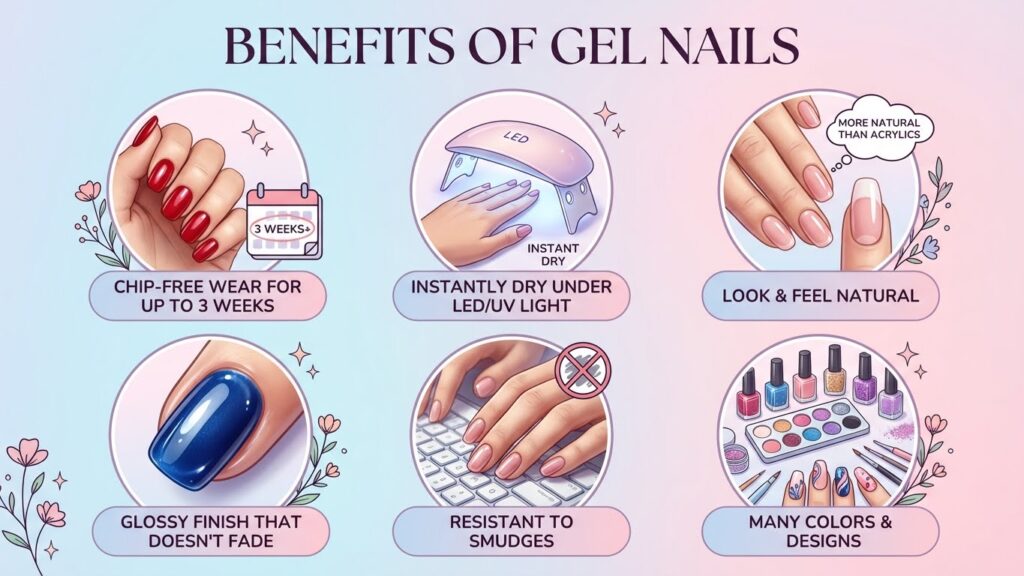
Gel nails offer distinct advantages that make them a popular choice. They provide strong wear, a polished look, and can be gentler on natural nails than some alternatives. These benefits combine to give a practical and attractive nail option.
Durability and Longevity
Gel nails are known for their durability. Once cured under UV or LED light, the gel hardens into a tough layer that resists chipping and cracking much longer than regular polish. This means they can last up to two weeks or more without needing a touch-up.
They also stay shiny throughout their wear time. Unlike traditional nail polish, gel nails do not lose their gloss or dull quickly. This long-lasting shine keeps nails looking freshly done for days.
The drying process is another advantage. Gel nails cure quickly under the light, eliminating the long wait for polish to dry and reducing the chance of smudges.
Aesthetic Versatility
Gel nails come in a wide range of colors and finishes. The gel formula holds pigments well, allowing for vibrant, true-to-color results that stay consistent.
They also support different nail art techniques. From simple solid colors to intricate designs, gels provide a smooth base that holds decorations in place better than many other types of polish.
The flexibility of gel nails lets them move with the natural nail. This property helps prevent early breakage and allows for more creative shaping and styling.
Less Damage Compared to Other Methods
Compared to acrylics or hard gels used for extensions, gel polish is generally less damaging. It bonds directly to the natural nail without requiring heavy filing or harsh chemicals.
However, care during application and removal is crucial. Improper removal, such as peeling or aggressive filing, can weaken nails over time. When done correctly, gel nails protect the natural nail beneath by adding a strong, flexible shield.
Comparison Table: Gel Nails vs. Acrylics
| Feature | Gel Nails | Acrylic Nails |
|---|---|---|
| Application | Cured with UV/LED light | Mixed chemicals applied |
| Flexibility | Flexible, moves with nail | Harder, less flexible |
| Nail Damage Risk | Low if removed properly | Higher due to filing |
| Longevity | 2+ weeks | Can last up to a month |
| Shine | High, long-lasting | Can dull over time |
Potential Drawbacks
Gel nails can offer a shiny, long-lasting look, but they come with certain risks. These include harm to the natural nails, the difficulty of safe removal, and chances of skin reactions. Knowing these details helps in making better choices about gel manicures.
Possible Nail Damage
Gel polish may cause dryness and brittleness in nails. This happens because the gel and the removal process can strip away natural oils and moisture. Over time, nails can become weak and start peeling or cracking.
Repeated gel manicures without breaks can worsen nail damage. Nails need time to recover between treatments to avoid becoming fragile. Improper curing under UV or LED lights may also weaken nails and cause peeling.
Signs of damage include:
| Sign | Description |
|---|---|
| Brittleness | Nails break easily or split |
| Thinning | Nails look thinner than usual |
| Peeling | Layers of the nail surface lift |
| Discoloration | Nails turn yellow or dull |
Removal Process
Removing gel polish requires soaking nails in 100% acetone for 10-15 minutes or longer. This strong chemical can dry out nails and skin.
Many people peel off gel polish without soaking. This peeling can strip the nail’s top layers, which weakens the nail.
The removal process also often involves gently scraping, which can damage the nail if done incorrectly. Overuse of acetone and harsh removal methods raises the risk of nail thinning and brittleness.
Safe removal steps include:
- Soak nails in acetone with cotton balls wrapped in foil
- Gently push off polish after softening
- Moisturize nails and cuticles after removal
Allergic Reactions
Some people develop allergic reactions to ingredients in gel polish. Chemicals like methacrylates can cause skin irritation or allergic contact dermatitis.
Symptoms often include:
- Redness
- Itching
- Swelling around the nails or fingers
- Rash or blistering
These reactions may worsen with repeated exposure. If a person notices irritation after a gel manicure, they should avoid the product and consult a dermatologist.
A patch test before using gel polish can help identify allergies early. Using hypoallergenic products reduces the chance of skin problems.
Popular Gel Nail Styles
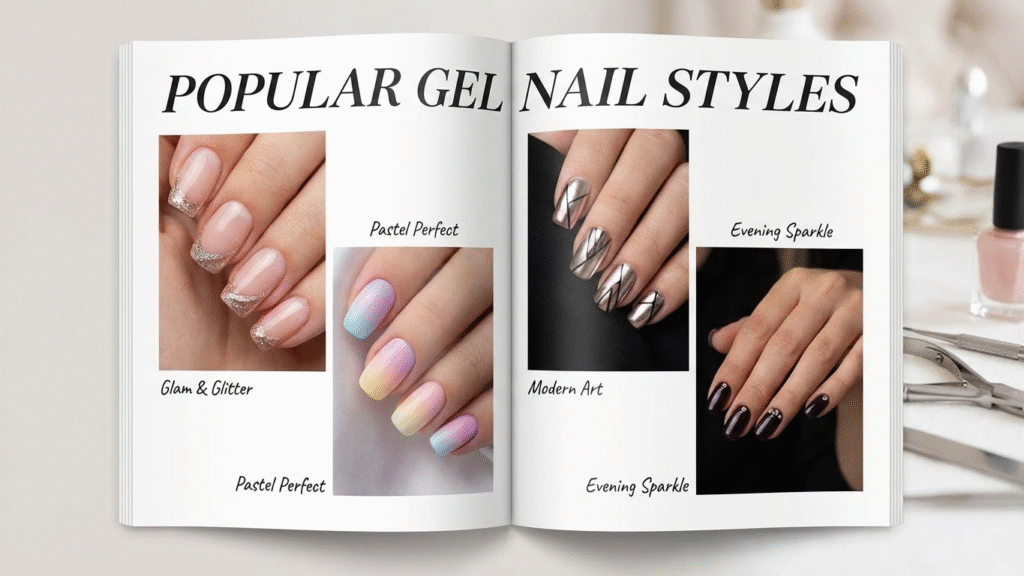
Gel nails come in different forms, each offering unique benefits and looks. Some focus on adding color and shine, while others enhance nail length or strength. These styles suit various preferences and needs.
Classic Gel Polish
Classic gel polish is the most common gel nail style. It is applied like regular nail polish but cured under a UV or LED lamp. This curing process hardens the polish, creating a glossy, smooth finish that resists chips and lasts for about 3-4 weeks.
This style is ideal for those who want a durable manicure without changing their natural nail length. Classic gel polish comes in many colors, from soft neutrals to bold shades. It is also a good base for simple nail art or decorations since it holds design well and keeps nails looking fresh longer.
Gel Extensions
Gel extensions increase the length and shape of the nails using a gel overlay on forms or tips. They provide a natural look with added durability, offering more strength than regular fake nails. Extensions allow for custom nail shapes like square, almond, or stiletto.
This style is popular for people with weak or short nails who want a longer, polished look. The gel material is flexible but tough, reducing the chance of cracks or breaks. Gel extensions require filling or touch-ups every 2-3 weeks to maintain shape and prevent lifting.
Gel Overlays
Gel overlays are applied over the natural nails as a strengthening layer. The gel coats the entire nail and hardens under light, reinforcing weak or brittle nails. Unlike extensions, overlays do not change nail length but improve nail health and durability.
People who want a protective, glossy finish often choose gel overlays. They can also be combined with classic gel polish or nail art for a polished appearance. Overlays maintain a natural look while preventing chips, cracks, and peeling, lasting up to several weeks with proper care.
Maintenance and Aftercare
Maintaining gel nails requires attention to both daily care and quick fixes when damage occurs. Proper steps help keep the nails strong, shiny, and chip-free for weeks. Quick and safe repairs prevent further problems like lifting or infections.
Best Practices for Longevity
To keep gel nails looking good longer, avoid prolonged water exposure. Water can weaken the bond between the gel and natural nail, causing lifting or chipping. Wearing gloves while doing chores like washing dishes or cleaning helps protect the manicure.
Moisturizing the cuticles and surrounding skin daily with cuticle oil or hand cream prevents dryness. Dry nails can become brittle, increasing the risk of cracks. Avoid using nails as tools to open things or pick at objects, as this stresses the gel polish.
Regularly applying a clear top coat every few days refreshes shine and adds an extra layer of protection. If any lifting appears, avoid peeling or picking the gel off. This can damage the natural nail and increases infection risk. Instead, book a professional touch-up or follow safe removal methods.
Repairing Chipped Gel Nails
Small chips can be fixed at home with a few simple steps, but deep chips need professional attention. For minor chips, lightly buff the area to smooth edges without filing off too much gel. Then, clean the nail with alcohol to remove oils.
Apply a thin layer of gel polish matching the manicure color over the chip. Cure it under a UV or LED lamp according to the product’s instructions. Finally, seal with a top coat and cure again.
Avoid trying to peel off chipped gel. This can strip layers from the natural nail and cause pain or damage. If the damage is severe or the gel is lifting across the nail, it is safer to have a technician soak the nails off and reapply the gel polish. This prevents infection and preserves nail health.
Considerations Before Getting Gel Nails
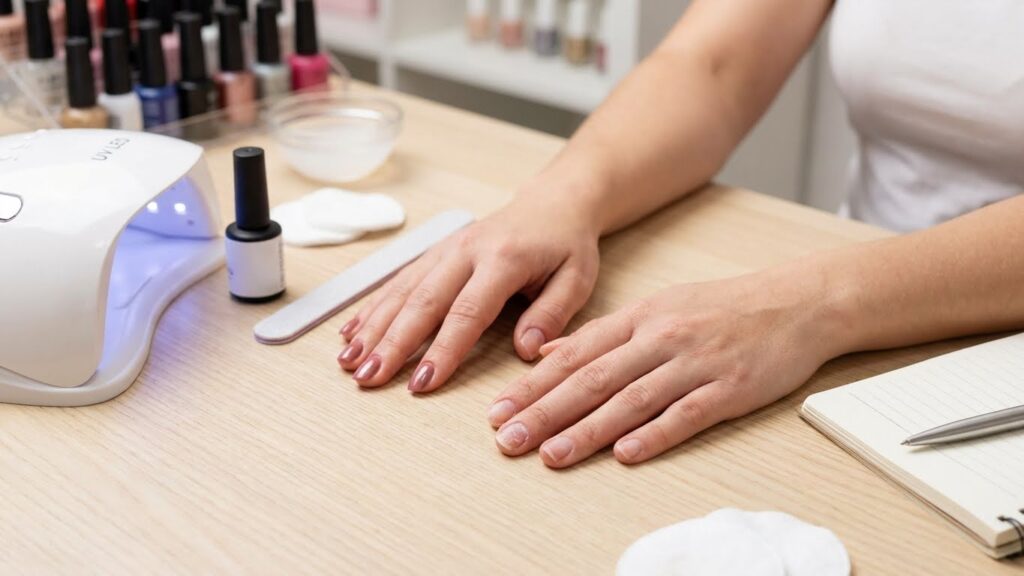
Gel nails offer a long-lasting, glossy finish but require careful thought before getting them. Factors like nail health and the choice between professional or DIY application impact both results and nail condition.
Suitability for Different Nail Types
Gel nails work well on strong, healthy natural nails. Nails that are brittle, peeling, or damaged may worsen with gel. The gel curing process can dry out nails, making them more prone to cracking and splitting.
People with very thin or weak nails should avoid frequent gel manicures. Continuous gel use can lead to nail brittleness and peeling. It is best to give nails time to repair between sessions or choose gentle products.
Artificial nails or extensions can also use gel, but the natural nail underneath must be in good condition to avoid damage. Those with sensitive skin should also consider possible reactions to the chemicals used in gels or UV light used for curing.
Professional vs. At-Home Application
Getting gel nails done by a trained technician ensures proper preparation, application, and removal. Professionals use high-quality products and equipment, reducing risks like uneven curing or damage.
At-home gel kits are cheaper and convenient but require knowledge. Improper curing or removal can lead to nail damage or infections. Users must follow instructions carefully and avoid peeling off gel.
Removal is crucial; professionals use acetone wraps and proper techniques to avoid harming the nail bed. Removing gel at home without care may cause peeling and weakening of nails. Choosing between salon and home depends on skill level and nail condition.
Removal Methods
Gel nail removal requires care to avoid damage to natural nails. Options range from professional salon services to at-home techniques using common supplies. Each method has its own steps, time requirements, and tools.
Salon Gel Nail Removal
In salons, trained technicians use professional tools and methods to remove gel nails safely. They usually start by gently filing the shiny top layer to break the gel’s seal. After this, they soak the nails in pure acetone or wrap them with acetone-soaked pads covered in foil.
| Step | Description | Approximate Time |
|---|---|---|
| Filing | Buffing off the gel’s sealed outer layer. | 5-10 minutes |
| Acetone Soak | Wrapping nails with acetone-soaked pads wrapped in foil to dissolve gel. | 10-20 minutes |
| Gel Removal | Gently pushing off softened gel with a wooden stick or metal pusher. | 5-10 minutes |
| Nail Aftercare | Applying oils or creams to hydrate nails and cuticles. | 5 minutes |
Technicians avoid scraping or peeling gel off hard as this can harm the natural nail. Professional removal is quicker but costs more than at-home options.
At-Home Gel Removal Techniques
Removing gel nails at home is possible with patience and the right supplies. The most common method is the acetone soak-off. First, the nail surface is lightly filed to break the seal. Next, acetone is applied using cotton balls placed on nails and wrapped with aluminum foil or plastic wrap.
| Supplies Needed | Purpose |
|---|---|
| Nail file or buffer | To break the gel seal |
| Cotton balls or pads | Hold acetone against nails |
| Aluminum foil or plastic wrap | Secures the cotton in place |
| Acetone | Dissolves gel polish |
| Wooden stick or cuticle pusher | Removes softened gel |
| Cuticle oil or moisturizer | Repairs nails after removal |
Soaking usually takes 10-20 minutes. After the gel softens, it can be gently pushed off. Filing or peeling gel prematurely can cause nails to peel or thin. Aftercare is important to restore moisture and strengthen nails. Some prefer acetone-free removers, but these may take longer and are less effective.
Trends in Gel Nails
Gel nails continue to be popular for their long-lasting shine and durability. In 2025, trends show a mix of classic and bold styles, offering options for different tastes.
Color trends include:
- Soft pastels for a subtle, elegant look
- Vibrant shades like cranberry and bold reds for a statement
- Neutral tones for everyday wear
Designs are moving towards both minimalist and intricate patterns. Some popular styles are chrome finishes and cat-eye effects. These add a modern touch without being too flashy.
Seasonal trends also influence gel nails. For winter, colors like deep reds and icy blues become common. Festive accents and glitter are rising in popularity for special occasions.
New product innovations focus on sustainability and easy application. Many brands are creating gel options that are less damaging to nails yet maintain strength. This allows for longer wear with proper care.
Durability and style remain key reasons for gel nails’ popularity. They provide a polished look that often lasts 3-4 weeks without chipping. This makes gel nails a practical choice for those who want a low-maintenance but stylish manicure.
Overall, the mix of versatile colors, creative designs, and product improvements makes gel nails a leading trend in nail fashion for 2025.
FAQs
What are gel nails?
Gel nails are a type of nail polish that is cured under a special UV or LED light. This process hardens the polish, making it more durable and shiny than regular nail polish.
How long do gel nails last?
Gel nails typically last between two to three weeks without chipping. This is longer than regular polish, which tends to chip in just a few days.
Is applying gel nails harmful?
When done correctly, gel nails are safe. However, improper removal or frequent use without breaks can weaken natural nails.
How do you remove gel nails?
Professional removal is recommended. If done at home, acetone-soaked cotton balls wrapped in foil can be used to gently dissolve the gel polish. Peeling or scraping off gel nails can damage natural nails.
Are gel nails more expensive than regular polish?
Gel manicures generally cost more due to the special polish and curing process. Prices vary depending on salons and locations.
Can gel nails be done at home?
Yes, with the right kit including UV or LED light, gel polish, and remover, people can do them at home. Beginners should follow instructions carefully to avoid mistakes.
| Key Points | Details |
|---|---|
| Wear Time | 2-3 weeks without chipping |
| Removal Method | Professional or acetone soak |
| Main Benefit | Long-lasting, high-shine finish |
| Cost Comparison | Higher than regular polish |
| Application Setting | Salon or home with proper tools |
Conclusion
Gel nails offer a durable and shiny finish that lasts longer than regular nail polish. They are cured under UV or LED light, which hardens the gel and helps prevent chipping for up to two or three weeks. This makes them a popular choice for people who want a low-maintenance, polished look.
The process works well on natural nails and can also be applied to artificial nails, such as acrylics. However, proper application and removal are important to avoid damage. Nails that are not cared for properly may weaken or peel.
Some key points to consider:
- Long-lasting, chip-resistant finish
- Requires curing with UV or LED light
- Works on natural and artificial nails
- Needs careful removal to protect nail health
Gel nails combine style with strength, offering an improvement over traditional polish. They are best suited for those who prefer a neat, lasting manicure without frequent touch-ups. Proper technique and aftercare help balance durability and nail wellness.
