
Acrylic and gel nails are two popular options for enhancing natural nails, but they work in different ways and offer unique benefits. Acrylic nails use a mix of liquid and powder that hardens in the air, creating a strong, durable coating. Gel nails start as a gel-like liquid or semi-solid and must be cured under a UV or LED light, resulting in a glossy and flexible finish.
These differences affect more than just appearance. They change how each type is applied, how long they last, and what kind of care they need. Knowing these key facts helps people choose the option that fits their lifestyle, budget, and nail health best.
Understanding how acrylics and gels differ can save time, money, and frustration when picking the right manicure. This article breaks down the main contrasts clearly and simply so readers can make a good choice.
Key Takeaways
- Acrylic nails are strong and air-dry, while gel nails need light curing and have a shiny, flexible finish.
- Each type requires different application and removal methods that impact nail health.
- The best choice depends on durability preferences, maintenance willingness, and personal style.
Basic Differences Between Acrylic and Gel Nails
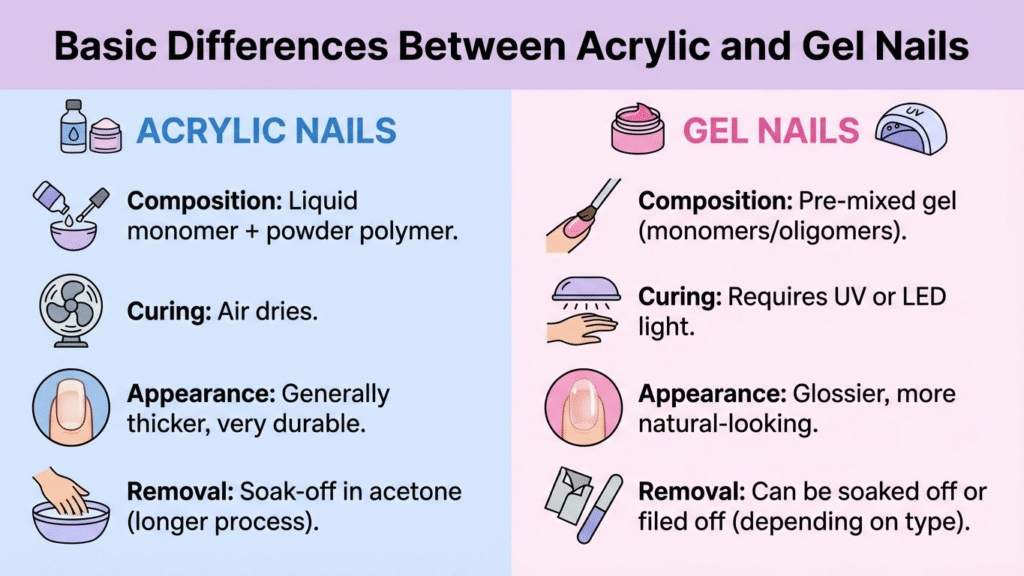
Acrylic and gel nails differ mainly in their formulas, how they are applied, and how they look after being set. Each type has unique strengths based on these differences. Understanding these can help decide which option suits different needs and preferences.
Definition of Acrylic Nails
Acrylic nails are artificial nail extensions made by mixing a liquid monomer and a powdered polymer. This mix creates a hard substance that is applied over the natural nail or a nail tip. Once exposed to air, it quickly dries and hardens without needing extra tools.
Acrylics are known for their strength and durability. They can be shaped and filed easily after curing. Because of their toughness, acrylic nails are favored by people who need long-lasting nail covers. However, the application usually involves stronger chemicals and a slight odor during the process.
Definition of Gel Nails
Gel nails use a pre-mixed gel formula that stays soft until it is exposed to UV or LED light. The gel is brushed onto the nails and then cured under the light to harden. This process creates a shiny and flexible finish that looks more natural than acrylics.
Gel nails tend to be lighter and less thick than acrylic nails. They are better known for their glossy look and smooth texture. Removing gel nails usually requires soaking in acetone, but they are less prone to chipping compared to regular polish.
Core Composition and Application Process
Acrylic nails are based on a chemical reaction between liquid and powder components. This reaction happens in air, so no special light or machine is needed to harden the nails. The technician mixes these two parts during the application and sculpts the nail with the thick paste. It cures by drying out when exposed to air.
Gel nails are made from pre-mixed gels that must be cured using UV or LED lamps. This means the application involves applying thin layers and hardening each under the light. The process takes longer but offers a smoother and more flexible end result.
| Feature | Acrylic Nails | Gel Nails |
|---|---|---|
| Composition | Liquid monomer + powder polymer | Pre-mixed gel formula |
| Curing Method | Air dries | Cured under UV/LED light |
| Finish | Hard, durable, thick | Glossy, flexible, natural look |
| Removal | Acetone soak with cotton wrap | Acetone soak |
| Application Time | Faster due to air drying | Slower due to multiple curing steps |
Appearance and Finish
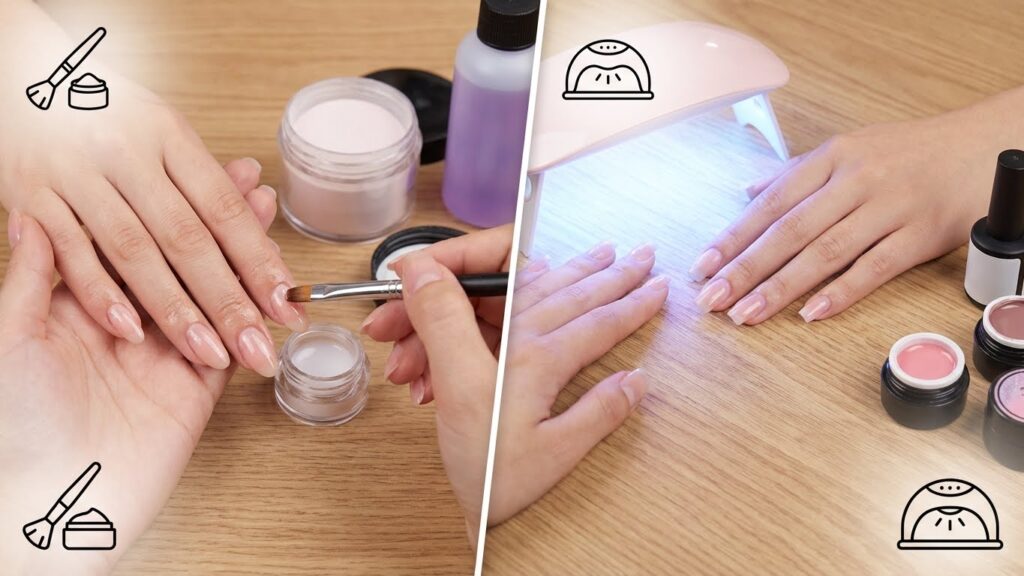
The look and feel of acrylic and gel nails differ in ways that affect comfort and style. Their finish and shine also vary, with gel nails generally offering a glossier appearance. Both types come in many color choices, but their application affects how those colors appear and last.
Look and Feel
Acrylic nails are thicker and harder than gel nails. They provide a strong, bold look which some prefer for dramatic styles. Because of their rigidity, acrylics may feel less natural and heavier on the fingers.
Gel nails are thinner and more flexible. They closely mimic natural nail texture and fit more comfortably. This makes gel nails good for those who want a subtle, lightweight enhancement.
| Feature | Acrylic Nails | Gel Nails |
|---|---|---|
| Thickness | Thicker, sturdy | Thinner, flexible |
| Comfort | Heavier, less natural | Lighter, more natural |
| Suitability | Dramatic styles | Natural look |
Finish and Shine
Acrylics have a solid, matte to semi-gloss finish before polish is applied. They do not hold shine as well over time and may yellow. They can appear less reflective unless polished regularly.
Gel nails offer a shiny, glass-like finish right after curing. This glossy surface resists dulling and yellowing, keeping nails bright longer. The shine of gel nails gives a wet, fresh look without extra polish.
| Feature | Acrylic Nails | Gel Nails |
|---|---|---|
| Initial Finish | Matte or semi-gloss | High-gloss, reflective |
| Long-Term Shine | Dulls, may yellow | Maintains shine well |
| Gloss Maintenance | Needs regular polishing | Stays glossy naturally |
Color Options
Both acrylic and gel nails come in a wide range of colors, including neutrals, bold shades, and custom designs.
Gel nails tend to have more vibrant, lasting colors because the curing process locks in pigment. This prevents fading better than acrylics.
Acrylic nails allow layering of colors and designs due to their thicker base, making them popular for intricate art. However, acrylic pigments can fade or chip faster.
| Aspect | Acrylic Nails | Gel Nails |
|---|---|---|
| Color Range | Wide | Wide |
| Color Vibrancy | Good initially | More vibrant, longer-lasting |
| Artistic Designs | Suitable, thicker base | Possible but thinner |
Durability and Longevity
Acrylic and gel nails both offer ways to enhance strength and appearance. Their durability varies by material properties and care. Important factors include how tough they are, how long they last, and how well they resist damage like chipping.
Strength and Flexibility
Acrylic nails are known for their hard, strong finish. They are made from a liquid and powder mixture that creates a thick, sturdy layer. This makes them better suited for people who do manual work or use their hands frequently. Acrylic nails are less flexible, which can make them prone to cracking if bent too far.
Gel nails are more flexible and bend with the natural nail. This flexibility helps them avoid breaking under moderate stress. However, they are generally not as tough as acrylics when it comes to heavy impact. Gel nails feel lighter and more natural, but their strength may not match that of acrylics.
Wear Time Comparison
Acrylic nails usually last longer than gel nails before needing a refill or touch-up. They can stay intact for 6 to 8 weeks, depending on proper care and nail growth. Acrylics can handle wear and tear for a longer period.
Gel nails typically require maintenance every 3 to 4 weeks. The polish layer can start peeling or lifting sooner due to their softer composition. Gel nails dry quickly under UV light, but this doesn’t increase their overall lifespan as much as acrylic nails’ solid structure does.
Resilience to Chipping
Gel nails have a smoother, glossy finish that resists minor chipping because of their flexible surface. This makes them ideal for people wanting a shiny, chip-free look during the first few weeks.
Acrylic nails resist chipping better over time because of their hardness. They are less likely to chip or break during hard activities. However, acrylic nails can suffer from cracking if struck or bent sharply, unlike gel nails that absorb some pressure by bending.
| Factor | Acrylic Nails | Gel Nails |
|---|---|---|
| Strength | Hard, very strong | Flexible, less hard |
| Typical Wear Time | 6-8 weeks | 3-4 weeks |
| Chipping | Low chip risk, may crack | Resistant to chipping, may peel |
Application Process and Techniques
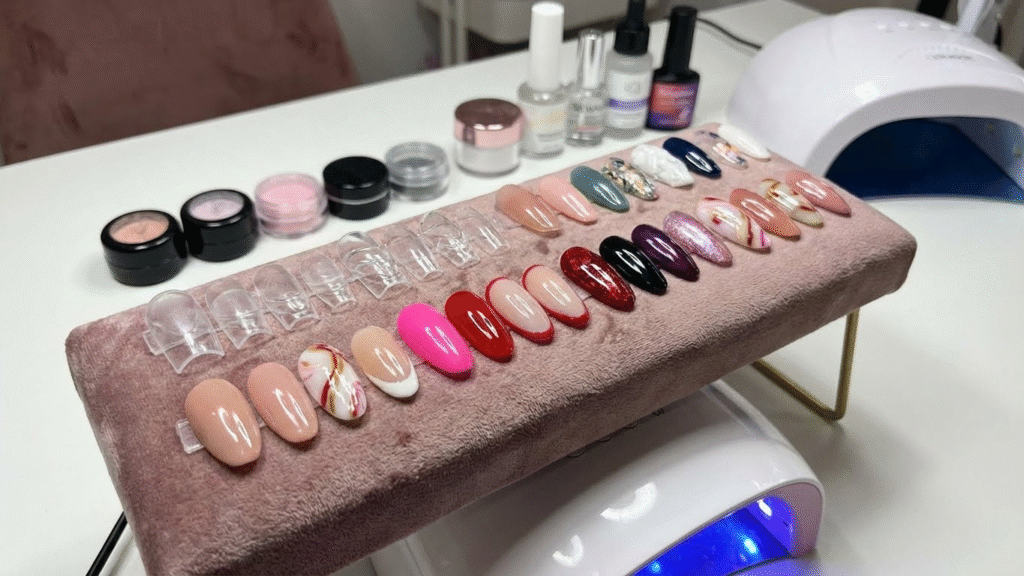
The way acrylic and gel nails are applied differs a lot. Acrylic nails use a mix of powder and liquid to create a hard layer, while gel nails rely on curing under special lights. Each method has steps that affect how long the whole process takes and what tools are needed.
Steps for Acrylic Application
Acrylic nails start by mixing a liquid monomer with a powder polymer. This forms a thick paste. The technician quickly shapes this paste onto the natural nail or nail tip.
They use a brush to mold and smooth the acrylic before it hardens. The mixture dries in open air, so no special light is needed. After hardening, the nails are filed and shaped to the desired look.
Acrylic nails require skill to get the right consistency and shape. They can be sculpted directly on the nail or built over tips.
Steps for Gel Nail Application
Gel nail application begins with preparing the natural nail by cleaning and buffing it. The technician applies a base gel coat, which is then cured under a UV or LED lamp for 30-60 seconds.
Next, they add one or more layers of colored gel. Each layer is cured under the light before the next is applied. Finally, a top coat is added and cured to seal the nail.
The curing process hardens the gel and sets its shine. Gel nails stay flexible yet strong due to this technique.
Time Required for Each Method
Acrylic nails usually take about 45 minutes to 1.5 hours to apply. The timing depends on the skill of the technician and nail complexity.
Gel nails generally take between 30 minutes and 1 hour. The curing time under lamps adds steps but overall speeds up drying compared to acrylic.
Both methods require time for shaping and finishing. Removal times vary, with acrylic often needing soaking and filing, while gel nails involve softening with a special remover.
Removal Methods and Aftercare
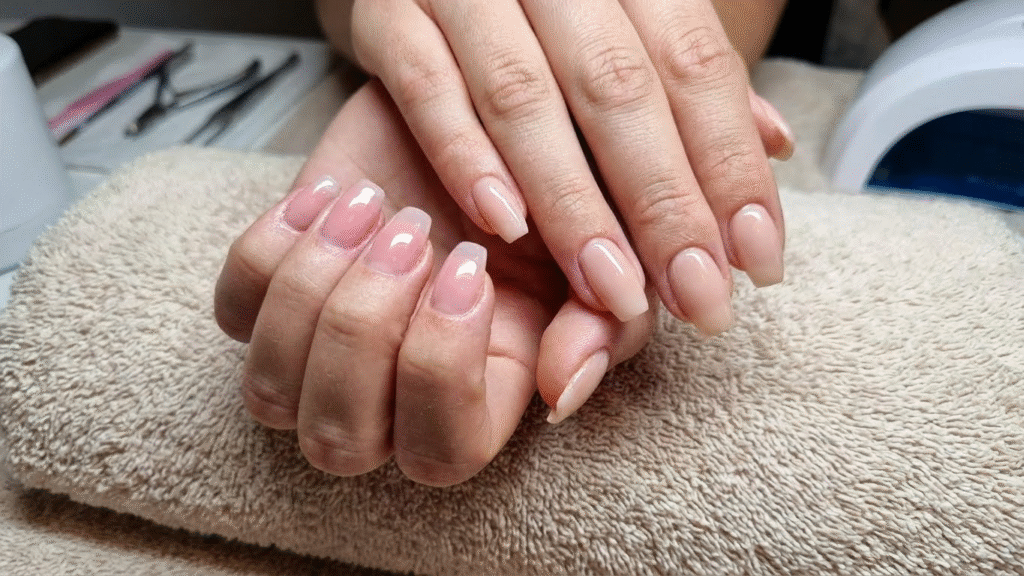
Removing acrylic and gel nails requires care to avoid damage. Different techniques are used for each type, and proper aftercare supports nail recovery and health after removal.
Acrylic Nail Removal
Acrylic nails are removed by soaking the nails in acetone. The process usually starts with filing the top layer of the acrylic to break the seal. Then, cotton balls soaked in acetone are placed on the nails and wrapped with foil to keep the acetone in place. This is left for about 15-30 minutes to soften the acrylic.
After soaking, the softened acrylic can be gently pushed off using a wooden stick or cuticle pusher. Force should be avoided to prevent natural nail damage. If acrylic remains, the soaking step is repeated. Professional removal is recommended to avoid scraping or peeling, which can weaken nails.
Gel Nail Removal
Gel nails need to be softened with acetone but usually require less filing than acrylics. The common method involves filing the shiny surface to break the seal, then wrapping acetone-soaked cotton and foil around each nail.
Gel polish softens faster than acrylics, so 10-15 minutes of soaking is often enough. After soaking, the gel polish is gently pushed off with a cuticle stick. If gel is hard to remove, it should be soaked longer rather than scraped.
In salons, UV or LED lamps cure the gel, so removal must be patient and careful to avoid damage.
Nail Health After Removal
After removing acrylic or gel nails, nails may be weak or dry. Moisturizing cuticle oil and hand lotion helps restore moisture. Avoid using nails as tools to prevent breakage.
It is important to give nails time to recover before applying another set of acrylic or gel nails. Switching between types too quickly can cause extra stress.
| Aftercare Tips | Reason |
|---|---|
| Use cuticle oil daily | Keeps nails hydrated and flexible |
| Avoid harsh chemicals | Prevents further drying and damage |
| Give nails 1-2 weeks rest | Allows natural growth and strength recovery |
| File nails gently | Prevents peeling and splitting |
Safety and Potential Risks
Acrylic and gel nails both have safety considerations. Issues can include allergic reactions, damage to the natural nail, and exposure to chemicals. Understanding these risks helps users make informed choices and take care of their nails properly.
Possible Allergic Reactions
Both acrylic and gel nails contain chemicals that can cause allergic reactions in some people. Common symptoms include redness, itching, swelling, and irritation around the nail or on the skin. These reactions often come from ingredients like methacrylates, found in both nail types.
Some people develop allergies after repeated exposure, so reactions may not appear the first time. Manicurists recommend doing a patch test before full application, especially for first-time users. If symptoms occur, it is important to remove the nails and avoid further exposure.
People with sensitive skin or a history of allergies should inform their nail technician. Using hypoallergenic products or choosing natural nail care can reduce risk.
Damage to Natural Nails
Acrylic nails use a liquid monomer and powder polymer that harden over the nail. Gel nails cure under UV or LED light, creating a flexible surface. Both can cause damage if not applied or removed properly.
Common problems include thinning, peeling, and weakening of the natural nail. Acrylic nails tend to be harder and may cause more stress if the nail is filed too aggressively. Gel nails, while more flexible, can still cause peeling if removed by force.
Moisture trapped between the nail and enhancement can lead to fungal infections. Giving nails time to recover between applications helps prevent damage and maintain nail health.
Odor and Chemical Exposure
Acrylic nails often produce a strong chemical smell during application. This odor comes from the liquid monomer, which contains solvents and volatile organic compounds (VOCs). Gel nails emit little to no odor since they are cured with light rather than air-dried.
Exposure to these chemicals can irritate the eyes, nose, and lungs, especially in poorly ventilated spaces. Prolonged inhalation may cause headaches or dizziness in sensitive people.
Using nail salons with proper ventilation and protective measures reduces risks. Some salons use gentler formulas that lower chemical exposure without sacrificing quality.
Cost and Maintenance Considerations
The costs and maintenance for acrylic and gel nails differ in key ways. Acrylics usually require less frequent visits but involve harsher removal. Gel nails often cost more upfront and need regular upkeep to maintain their appearance. Understanding these differences helps manage time and budget effectively.
Initial Application Costs
Acrylic nails typically cost between $35 and $65 for a full set. The price depends on salon location and nail design complexity. Gel nails start slightly higher, with basic soft gel manicures at about $35 and gel extensions reaching up to $100.
| Nail Type | Price Range | Notes |
|---|---|---|
| Acrylic Nails | $35 – $65 | Full set price |
| Gel Nails | $35 – $100+ | Soft gel or gel extensions vary |
Gel nails often involve more equipment like UV or LED lamps, which adds to their initial cost. Acrylics use liquid and powder applied manually. Clients choosing gel nails often pay more upfront.
Upkeep and Refill Requirements
Acrylic nails last about 6-8 weeks before needing a refill. The refilling process is necessary to maintain durability and cover nail growth, costing around $20 to $40 depending on the salon.
Gel nails usually need maintenance every 3-4 weeks as they wear down faster. The cost per refill for gel nails is similar or slightly higher than acrylics due to their flexible nature and glossy finish.
| Nail Type | Refill Interval | Refill Cost |
|---|---|---|
| Acrylic Nails | 6 – 8 weeks | $20 – $40 |
| Gel Nails | 3 – 4 weeks | $20 – $50 |
Gels require more frequent visits but often have shorter session times. The maintenance method for gels involves careful buffing and reapplication of the gel layer.
Long-Term Maintenance
Removal of acrylic nails requires aggressive buffing or soaking in acetone, which can weaken natural nails. It usually costs extra if done professionally.
Gel nail removal is gentler but still requires soaking under acetone or an in-salon removal process. Frequent gel use may dry out nails due to UV/LED exposure and chemical ingredients.
| Nail Type | Removal Process | Nail Health Impact |
|---|---|---|
| Acrylic Nails | Buffing or acetone soak | Can cause nail thinning |
| Gel Nails | Acetone soak or filing | May dry nails, less harsh |
Both types need proper care after removal to keep natural nails healthy, like moisturizing and nail strengthening treatments. The long-term cost depends on the frequency of salon visits and care routine.
Suitability for Different Lifestyles
Acrylic and gel nails serve different needs depending on how nails will be used daily. Factors like hand strength, manicure frequency, and type of work affect which nail type works best for someone.
Ideal Candidates for Acrylic Nails
Acrylic nails suit people who need durable, hard nails that hold up well under pressure. They are ideal for those who use their hands a lot, such as in manual labor or activities that involve heavy lifting. These nails are thicker and tougher, making them less likely to break for people who apply a lot of force with their hands.
People who want longer-lasting results without frequent salon visits often choose acrylics. They can last several weeks before needing fills or repairs. Acrylic nails are also a common choice for individuals who want more dramatic length and shape options. However, they require proper care to avoid damage to the natural nails underneath.
Ideal Candidates for Gel Nails
Gel nails appeal to those who want a flexible, natural feel with a shiny finish. They are good for people who prefer lighter, more comfortable nails. Gel nails bend slightly, making them less likely to crack or chip during daily tasks.
Those who enjoy changing their nail color often prefer gels because they are easier to remove and replace. Gel nails solidify under UV or LED light, so drying time is quick, and they are less harsh on the natural nails if done properly. They are well-suited for people who want a blend of strength and style without the bulkiness of acrylics.
Activity and Lifestyle Factors
People with active lifestyles must consider how their nails will perform during sports, typing, or work involving hands. Acrylic nails support high-impact activities but may feel heavier or require more maintenance. Conversely, gel nails allow for more flexibility, which suits frequent hand use but may not last as long under hard stress.
Daily habits like frequent washing or exposure to chemicals also affect nail choice. Acrylic nails are more resistant to water and harsh substances, while gels may need extra care to prevent lifting. Budget and time for regular salon visits also play roles—acrylics typically last longer, reducing touch-up visits, while gels need more frequent sessions for upkeep.
Summary of Key Differences
Acrylic nails use a two-part system made of liquid monomer and powder polymer. When combined, they harden in open air, creating a strong, durable layer. Gel nails come as a pre-mixed gel that requires curing under UV or LED light to set. This process gives gel nails a flexible, glossy finish.
In terms of appearance, gel nails often look more natural and shiny. Acrylics tend to be thicker and can feel heavier. Both offer long-lasting results, but acrylics are usually tougher and better for those needing strong nail extensions.
Application time varies: acrylics dry faster since they air harden, while gel nails need light curing, which can take longer. Removal is also different. Acrylics are soaked off with acetone, which can take time and may affect the natural nail. Gel nails require soaking but often need gentle filing to break the seal before removal.
Maintenance depends on lifestyle. Acrylics may chip less and hold up well under stress. Gels are more flexible and less prone to lifting but might need more frequent fills. Both types require professional care to avoid damaging the natural nails.
| Feature | Acrylic Nails | Gel Nails |
|---|---|---|
| Composition | Liquid + powder | Pre-mixed gel |
| Application | Air dry | UV/LED light cure |
| Finish | Thick, durable | Flexible, glossy |
| Removal | Soak off with acetone | Soak off + filing |
| Durability | Very strong | Flexible, less prone to lift |
FAQs
What is the main difference between acrylic and gel nails?
Acrylic nails are made from a liquid monomer and powder polymer that hardens in the air. Gel nails are a pre-mixed gel that cures under UV or LED light. Acrylics tend to be harder and thicker, while gels offer a more natural, flexible finish.
Which lasts longer, acrylic or gel nails?
Acrylic nails generally last 6-8 weeks before needing a fill. Gel nails usually need maintenance every 3-4 weeks but keep a glossier look during that time. The choice depends on lifestyle and how often someone wants to visit the salon.
Are gel nails healthier than acrylics?
Gel nails are often seen as less damaging because they are more flexible and do not use harsh chemicals that emit strong odors. However, improper removal of either type can harm natural nails.
Is the application time different?
Yes. Acrylic nails involve mixing and air-drying, taking about 30 minutes or more. Gel nails require curing under light, which can be faster but sometimes needs more precision.
Do gel nails cost more than acrylics?
Gel nails usually cost $5-$15 more upfront. This is because of the specialized curing process and materials. Maintenance costs can vary based on how often fills or touch-ups are done.
Can you use both types together?
Some salons offer gel-overlay on acrylic nails. This can combine acrylic’s strength with gel’s shine, though it may require careful removal to avoid damage.
Conclusion
Acrylic and gel nails both offer unique benefits and some drawbacks. Acrylic nails are strong, durable, and usually last longer between fills. They are made from a liquid and powder mix that air-dries hard.
Gel nails provide a glossy, natural look with more flexibility. They cure under UV or LED light, which makes the application process different from acrylics. Gel nails tend to need more frequent maintenance but resist yellowing better than acrylics.
When choosing between the two, factors like lifestyle, nail health, budget, and desired appearance play important roles. Acrylics might suit those who want tougher nails that last longer. Gels work well for people who prefer a shinier finish and more natural feel.
| Feature | Acrylic Nails | Gel Nails |
|---|---|---|
| Application | Liquid + powder, air-dries | Pre-mixed gel, UV/LED cure |
| Durability | Lasts 6-8 weeks | Lasts 3-4 weeks |
| Finish | Hard, less glossy | Flexible, glossy |
| Maintenance | Less frequent fills required | Requires regular fills |
| Cost | Usually less expensive | Generally costs more upfront |
Both types require proper care. Switching between them needs time for natural nails to recover. Consulting a nail technician helps ensure the healthiest results.
