
Are Press-On Nails Safe: Expert Insights on Risks and Benefits

Press-on nails offer a quick and affordable way to achieve a polished look without going to a salon. They have grown in popularity because they are easy to apply and come in many styles. However, many wonder if they are safe for natural nails.
Press-on nails can be safe if used properly, but improper use or frequent application may cause damage or infections. The risk often comes from how nails are prepared, the glue used, and how the nails are removed. When applied and taken off carefully, press-ons can be a gentle alternative to acrylics or gels.
Understanding the potential risks and following safe practices is key to protecting nail health. This article will explore how to enjoy press-on nails without harming natural nails.
Key Takeways
- Press-on nails are safe when applied and removed carefully.
- Using the right products and hygiene helps prevent nail damage.
- Avoid frequent use to keep nails healthy over time.
Understanding Press-On Nails
Press-on nails are a popular choice for people who want a quick and easy way to improve the look of their nails without visiting a salon. They come in various designs and forms, each with unique features. How they attach to the natural nail and the materials used affect both their convenience and impact on nail health.
What Are Press-On Nails
Press-on nails are artificial nails that people apply directly to their natural nails. They are usually made from plastic and come pre-shaped and decorated. People use them as a simple alternative to salon manicures, saving time and money.
Unlike acrylics or gels, press-on nails don’t require curing under UV light or harsh chemicals. They can be removed easily, usually by peeling or soaking in warm water, reducing damage risks when done correctly. However, improper application or removal can cause harm to the natural nail.
Types of Press-On Nails
Press-on nails come in a few main types, including:
- Full-Coverage Nails: These cover the entire natural nail and can be plain or decorated.
- Tips: These attach only to the upper part of the nail, often used for added length.
- Glue-On Nails: These use nail glue for a stronger hold.
- Adhesive Tabs: These have sticky tabs for easier removal.
Brands differ in length, shape, and design variety. Some specialize in reusable nails, while others focus on disposable styles.
How Press-On Nails Work
Press-on nails attach by using either glue or adhesive tabs. Glue offers a stronger bond but can be harder to remove and may cause nail damage if misused. Adhesive tabs are safer and easier to remove but might not last as long.
Before application, the natural nails should be clean and dry to help the press-ons stick better and reduce infection risk. The user presses the fake nail onto their natural nail, holding it firmly for a few seconds.
Proper removal is key. Peeling press-ons off too quickly can damage the nail surface. Soaking in warm water or using an adhesive remover helps avoid harm. Maintaining nail health means not wearing press-ons continuously for long periods.
Are Press-On Nails Safe
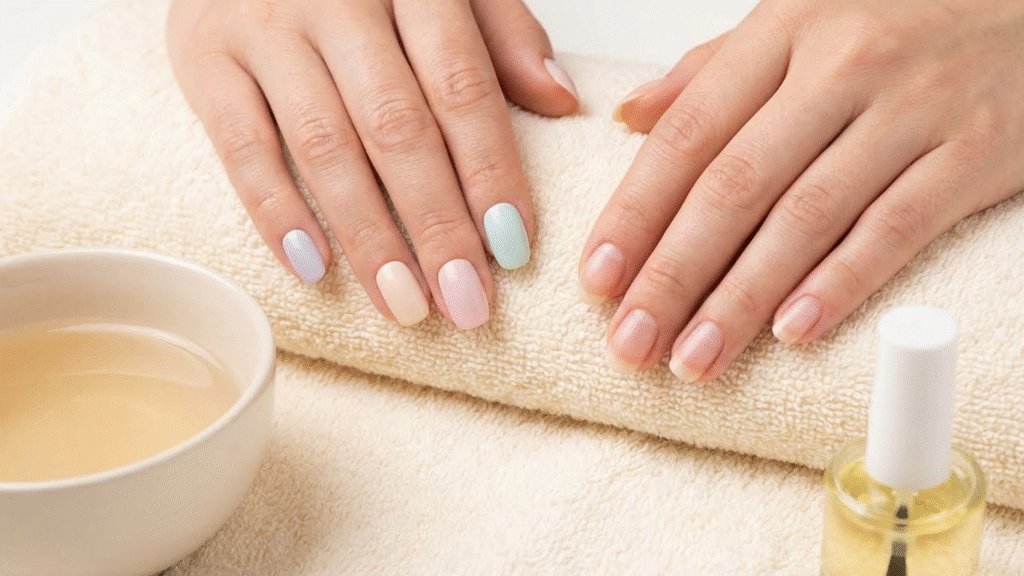
Press-on nails offer a quick and easy way to get a manicured look without visiting a salon. However, they come with some safety concerns and differences compared to acrylic or gel nails. How long they are worn also affects their impact on nail health.
Potential Safety Concerns
Press-on nails may cause infections, allergic reactions, and damage to the natural nail if not used properly. The glue used to attach press-ons can irritate the skin or nails, especially if it contains strong chemicals like cyanoacrylate. Removing nails too quickly or roughly can peel or weaken the natural nail underneath.
People with sensitive skin or allergies should test the glue first. Keeping nails clean and dry is important to prevent fungal or bacterial growth under press-ons. Using lower-odor, less harsh adhesives can reduce risks.
| Risk Type | Cause | Prevention |
|---|---|---|
| Infection | Moisture trapped under nails | Keep nails dry, remove if wet |
| Allergic Reaction | Glue ingredients | Patch test before use |
| Nail Damage | Rough removal or prolonged wear | Remove gently, limit continuous use |
Differences From Acrylic and Gel Nails
Press-on nails differ from acrylic and gel nails mainly in application and chemical exposure. Acrylic and gel nails use strong chemicals and curing with UV light, which can weaken or burn the natural nail.
Press-ons are applied with adhesive and do not require harmful chemicals or UV light. This makes them a safer option for those wanting to avoid the damage linked to acrylic or gel treatments.
| Feature | Press-On Nails | Acrylic/Gel Nails |
|---|---|---|
| Application Method | Adhesive glue, no UV curing | Chemical liquids + UV curing |
| Chemicals Used | Minimal, mostly glue | Strong monomers and solvents |
| Nail Health Impact | Lower risk if used right | Can cause thinning and damage |
| Removal | Peel off or glue remover | Filing or soaking required |
Short-Term vs Long-Term Use
Short-term use of press-on nails, such as a few days for an event, is mostly safe with proper care. They give nails a break from harsh chemicals present in acrylic or gel nails.
Long-term or continuous use can increase the chance of nail damage. Nails may become weak if press-ons are worn without breaks or removed improperly. Regularly allowing nails to breathe and moisturizing can help maintain nail health.
Wearing press-ons continuously for weeks can trap moisture and debris underneath, raising infection risk. It’s best to limit wear time and carefully remove press-ons to avoid pain or nail peeling.
Health Risks and Side Effects
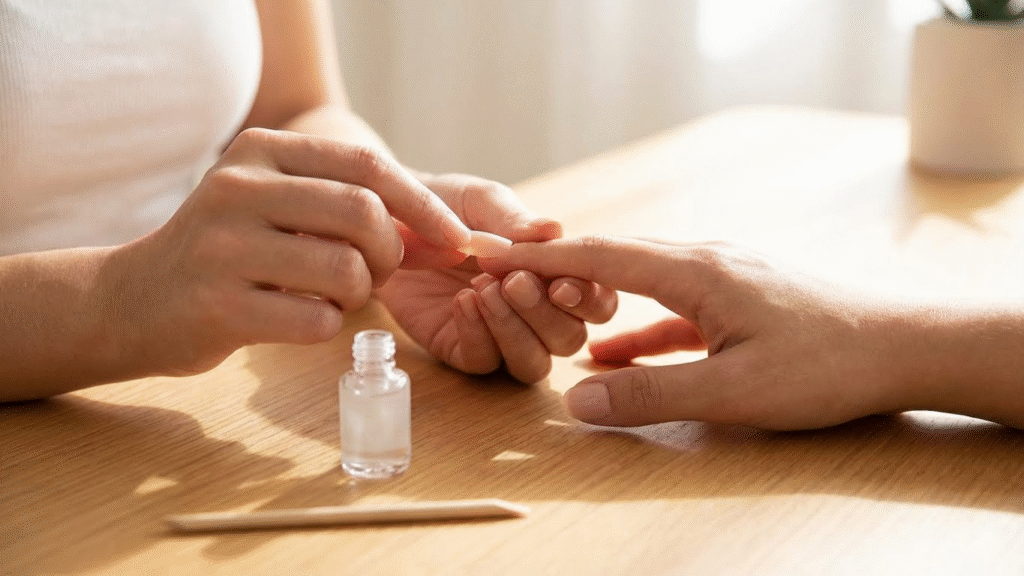
Press-on nails can cause different health issues, mainly affecting the nail area and nearby skin. These problems include allergic reactions, damage to natural nails, and skin irritation. Understanding these risks can help manage and reduce potential harm.
Allergic Reactions
Some people may react to the glue or materials used in press-on nails. These allergic reactions can cause redness, itching, swelling, or even pain around the nail or fingers. The glue often contains chemicals like cyanoacrylate, which is known to trigger allergies in sensitive individuals.
If someone has a history of skin allergies, they should be especially careful. Signs of an allergic reaction can start within minutes or take a few days to appear. Avoiding prolonged use or switching brands can reduce the risk. In severe cases, a doctor might recommend treatments like antihistamines or topical creams.
Nail Damage and Weakness
Press-on nails can weaken natural nails if not used properly. The glue can stick strongly to the nail surface, and removing the nails incorrectly may peel layers off the true nail bed. This can cause thinning, cracks, and long-term brittleness.
Repeated use without breaks prevents nails from “breathing” and recovering. Over time, nails may grow slower or look rough and uneven. To help protect nails:
| Tip | Explanation |
|---|---|
| Use gentle glue removers | Avoid harsh chemicals that dry out nails |
| Limit continuous wear | Give nails time to rest between applications |
| Follow proper removal steps | Prevent peeling or splintering of natural nails |
Skin Irritation
The skin around the nails can become irritated from press-on nail glue or from tight, poorly fitting nails. Irritation shows as redness, dryness, or flaking skin. Sometimes small cuts or lifting of the skin near the nail can occur.
Repeated skin irritation may allow infections to develop if bacteria enter those small openings. It is important to keep the skin moisturized and avoid reapplying nails on irritated or broken skin. Washing hands regularly after nail removal also helps reduce irritation and infection risk.
Safe Application Practices
Using press-on nails safely depends on how the natural nails are prepared, the type of adhesive chosen, and the way the nails are removed. Each step plays a key role in preventing damage, infections, or allergic reactions. Attention to detail helps keep nails healthy while enjoying the look of press-ons.
Proper Preparation of Natural Nails
Before applying press-on nails, the natural nails must be clean and dry. Any oils, dirt, or old polish should be removed using nail polish remover or alcohol wipes. This step improves adhesive strength and prevents lifting.
Next, gently push back cuticles with a soft tool. Cutting cuticles can cause injury and open the skin to infections. Lightly buffing the surface of the natural nails creates texture, allowing the press-ons to stick better.
It is important not to file the nails too thin or damage the nail bed during preparation. Let the nails breathe for a few days between applications to reduce dryness and weakening.
Selecting the Right Adhesive
Choosing a good quality adhesive is crucial to avoid skin reactions and nail damage. Some glues contain strong chemicals that can cause allergies or burns on sensitive skin.
For longer wear, cyanoacrylate-based glue is common. Those with sensitive skin can try gentle glue versions or adhesive tabs, which are reusable and less harsh.
Users should apply glue sparingly to avoid overflow onto skin and cuticles. Too much adhesive increases infection risk and peeling. Following the glue manufacturer’s instructions ensures safer bonding and an even finish.
Correct Removal Methods
Removing press-on nails carefully is as important as proper application. Pulling them off forcefully can strip natural nails, cause pain, and increase the chance of infection.
The safest way is to soak nails in warm, soapy water for 10 to 15 minutes. This softens the adhesive, making nails easier to lift. Using an orange stick or cuticle pusher gently helps lift the edges without damaging skin or nails.
If glue remains, it can be softened further with nail polish remover or acetone. After removal, washing hands and moisturizing helps restore nail health and prevent dryness.
Taking breaks of at least one to two weeks between press-on nail applications supports natural nail recovery.
Choosing Safe Press-On Nail Products
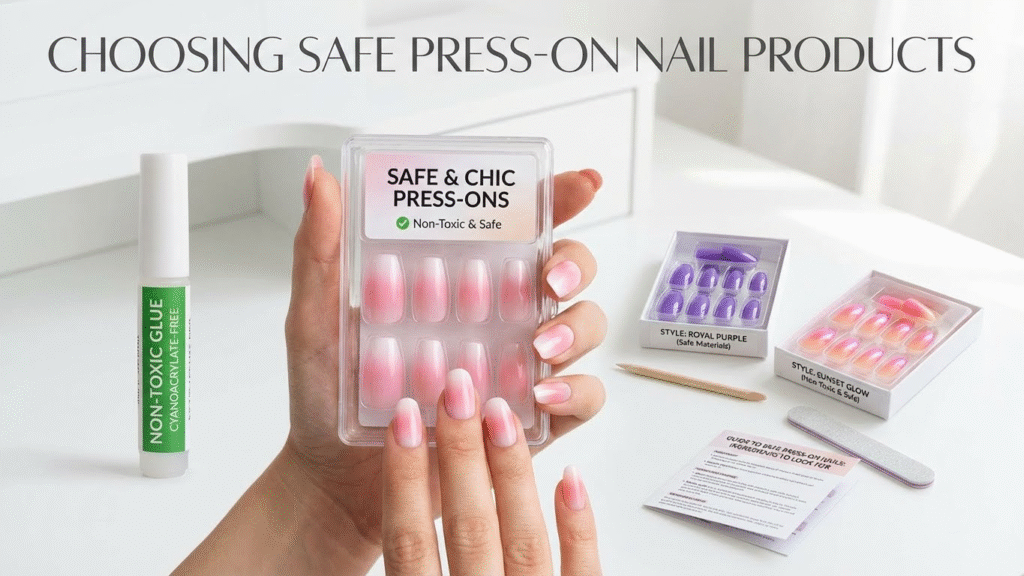
Selecting the right press-on nails involves paying close attention to the materials, adhesive types, and the reliability of the brand. These factors help protect the natural nails and reduce risks like allergies or infections.
Materials to Look For
Materials used in press-on nails affect both comfort and nail health. Acrylic and ABS plastic are common, but ABS plastic is generally safer because it is less likely to cause damage or allergic reactions. Some press-on nails use gel-like materials, but these may require more caution.
It is important to choose nails that are smooth and well-shaped to avoid injury. Lightweight materials reduce strain on natural nails and help the nails feel more natural. Avoid nails that are overly thick or heavy, as they might cause nails to weaken or lift.
Checking if the nails are flexible can also be valuable. Flexible nails tend to bend with natural movements, lowering the chance of lifting or breaking.
Non-Toxic Adhesives
The glue used to attach press-on nails plays a major role in their safety. Non-toxic adhesives usually have fewer harsh chemicals, reducing the chance of skin reactions or nail damage. Many safe glues avoid ingredients like formaldehyde, toluene, and dibutyl phthalate, which can irritate the skin.
Some users prefer medical-grade or latex-free adhesives, especially if they have sensitive skin or allergies. It is crucial to follow application instructions carefully and avoid using excessive glue, as that can cause infections or nail damage.
For easier removal, users should pick glues designed to peel off gently, not those that require harsh scraping or strong solvents. This approach protects nail health.
Trusted Brands and Certifications
Choosing reputable brands helps ensure better product safety and quality. Well-known brands often conduct testing to reduce risks like allergic reactions or poor adhesion.
Look for products approved by cosmetic safety authorities or that meet certain certifications. These might include labels for cruelty-free testing, dermatological testing, or compliance with standards set by agencies like the FDA or the EU.
Reading reviews and checking brand transparency about ingredients is also helpful. Brands that list all ingredients clearly and offer guidance for safe use tend to be more reliable.
Using trusted brands lowers the risk of buying poor-quality or unsafe press-on nails that could harm natural nails over time.
Hygiene and Maintenance
Proper care of press-on nails helps prevent infections and keeps natural nails healthy. Cleaning and storing nails correctly reduces the risk of bacteria or fungus buildup. Knowing how to treat press-ons safely extends their usability and protects skin and nails.
Cleaning and Disinfecting Press-On Nails
Before applying press-on nails, users should clean their natural nails with soap and water, then dry them completely. The press-ons themselves must be wiped with rubbing alcohol or an antibacterial solution to remove dirt and germs.
After removal, nails can be gently scrubbed with a soft brush and warm soapy water to clear off glue residue. Soaking the press-ons in a disinfectant solution for a few minutes is recommended to kill any lingering bacteria or fungus.
Avoid harsh chemicals or abrasive scrubbing, as they can damage the press-ons. It’s important to allow both natural nails and press-ons to dry fully before reuse. This careful cleaning routine helps minimize infection risks and keeps nails safe.
Storage and Reuse Guidelines
Press-on nails should be stored in a clean, dry container to prevent dust and moisture from affecting their condition. A small plastic box or sealed bag works well for keeping them organized.
Reusing press-ons is possible but only recommended if adhesive residue is completely removed. Used nails should be inspected for cracks or warping before storing. Damaged nails may cause injury or fall off prematurely.
Users should avoid sharing press-on nails to reduce the chance of transferring infections. Keeping nails separate from other personal care items maintains hygiene. Following these storage and reuse tips maintains nail quality and protects natural nail health.
When to Avoid Press-On Nails
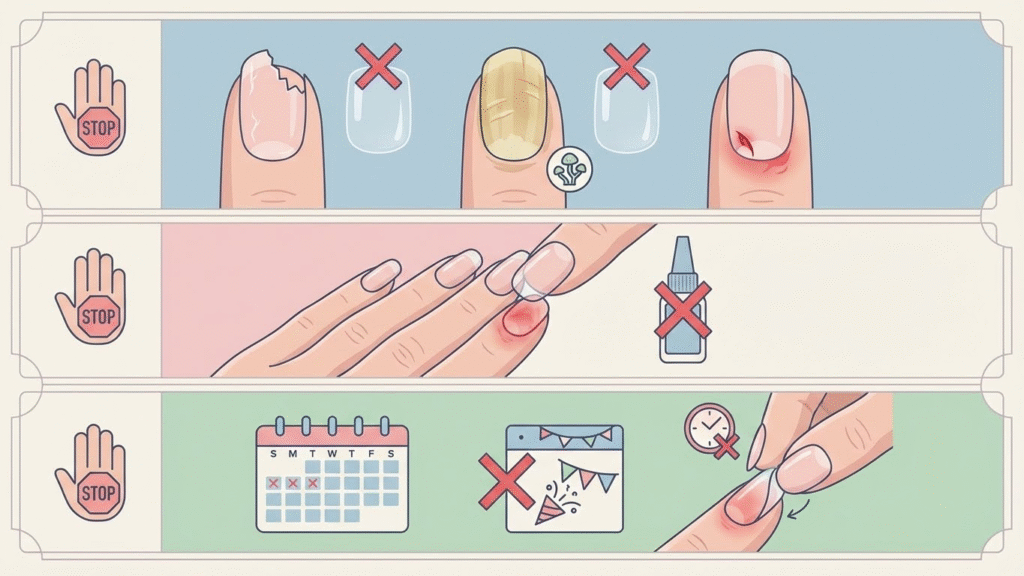
Certain situations increase the risk of harm from press-on nails. It is important to recognize when using them can worsen existing problems or create new ones. Careful consideration helps avoid infections, allergic reactions, and long-term damage.
Existing Nail Conditions
People with nail problems like brittleness, peeling, or infections should avoid press-on nails. Gluing artificial nails over weakened natural nails can trap moisture, leading to fungal or bacterial infections. This can make the nail condition worse instead of improving it.
If the nail bed is damaged or inflamed, press-ons may cause pain or delay healing. Applying and removing press-ons incorrectly can peel layers off the natural nail, increasing thinning and breakage. It is best to let nails fully heal and strengthen before using any artificial enhancements.
Sensitive Skin Concerns
Those with sensitive or allergy-prone skin should be cautious with press-on nails. The glue often contains chemicals like cyanoacrylate, which can cause redness, itching, or swelling around the nail or cuticle.
An allergic reaction may not appear immediately but develop after several uses. Testing the glue on a small skin patch before full application can help identify sensitivity. People with eczema or other skin conditions near the nails should avoid press-on nails to prevent flare-ups.
Pediatric and Elderly Use
Children and older adults may be more vulnerable to problems from press-on nails. Children’s nails are softer and still growing, so adhesives can cause damage or infections more easily.
Older adults often have thinner, drier nails and slower healing rates. They may experience pain or injury during removal. Both groups should use press-on nails only under supervision and limit wear time to reduce risks.
| Group | Risks | Advice |
|---|---|---|
| Children | Nail damage, infection risk | Avoid or use very cautiously |
| Older Adults | Thinning nails, slow healing, injury | Limit use, gentle removal needed |
Press-on nails are not always safe and should be avoided when any of these concerns are present.
Tips for Minimizing Risks
Using press-on nails safely involves managing how long they stay on and watching for any problems with the natural nails. Proper care and attention can reduce damage and health issues.
Limiting Wear Time
Press-on nails should not be worn for extended periods. Experts suggest wearing them for no more than one to two weeks at a time. This helps prevent weakening of the natural nail, which can happen if nails are covered without breaks.
Between applications, nails need time to breathe and recover. Removing press-ons carefully and leaving nails bare for at least a week before applying a new set can reduce risks like brittleness and peeling. Using gentle glue designed for press-on nails instead of harsh adhesives also lowers chances of damage.
Avoid wearing press-ons during activities that put extra stress on nails, like heavy lifting or frequent water exposure. These factors can cause the artificial nails to lift or damage the natural nail underneath.
Monitoring for Signs of Infection
Watching for infection is crucial when using press-on nails. Signs to look out for include redness, swelling, pain, or unusual discharge around the nail bed. If any of these appear, it is important to remove the nails immediately and consult a healthcare provider.
Allergic reactions can also occur, especially from certain glue ingredients. Symptoms such as itching, rash, or burning sensations should not be ignored. Using hypoallergenic glue and testing on a small skin patch before full application can help prevent these issues.
Keeping nails clean and dry supports nail health. Proper removal techniques reduce trauma to the nail, lowering the risk of infection. Nails that lift or separate from the skin provide a place for bacteria to enter, so this must be checked regularly.
FAQs
How long do press-on nails last?
Press-on nails typically last from a few days up to two weeks. Their durability depends on how well they are applied and the activities a person does while wearing them.
Can press-on nails damage natural nails?
If applied and removed properly, press-on nails usually do not cause damage. Problems arise when nails are pulled off forcefully or worn too long without breaks.
Are press-on nails safer than acrylic or gel nails?
Yes. Press-ons do not require harsh chemicals or curing with UV light, making them generally safer for nail health compared to acrylics or gels.
What are common risks with press-on nails?
Risks include allergic reactions to glue, infections if dirt gets trapped, and damage from improper removal.
How should someone remove press-on nails?
They should be soaked in warm, soapy water or use nail adhesive remover to gently lift them. Peeling off nails without care can harm the natural nail.
Is any glue safer than others?
Glues labeled for use with press-on nails are safer. It’s important to avoid super strong adhesives that can cause skin irritation or nail damage.
Conclusion
Press-on nails can be a safe option when used properly. They offer a quick, affordable way to achieve polished nails without the chemicals and damage often linked to acrylic or gel nails. However, their safety depends heavily on correct application and removal.
Key points to keep in mind:
- Proper Application: Clean nails before applying and avoid using press-ons on damaged or weak nails.
- Gentle Removal: Peel or soak nails off slowly to prevent natural nail peeling or injury.
- Hygiene: Avoid sharing press-ons to reduce risks of infection or allergic reactions.
- Nail Care: Moisturize nails and cuticles regularly to maintain nail health.
Using press-on nails too often, or leaving them on for too long, can increase the chance of damage. It is important to watch for signs of irritation, such as redness or pain. If these occur, stopping use and consulting a healthcare professional is advised.
In summary, press-on nails offer a convenient and stylish alternative when used with care. They are less harmful than some other nail treatments if users follow recommended practices to protect their natural nails.

