
Nails can break easily for several reasons, including dryness, frequent exposure to water or chemicals, and lack of key nutrients. A common cause is a deficiency in vitamins or minerals such as biotin, iron, and zinc, which are essential for strong nails. Environmental factors and daily habits also play a big role in weakening nails over time.
Sometimes, brittle nails may point to health issues like thyroid problems or skin conditions. Taking care of nails by moisturizing and protecting them can help, but if breakage continues, it might signal something more serious that needs medical attention. Understanding why nails break helps people take the right steps to improve nail health and prevent further damage.
Key Takeways
- Nails break easily due to dryness, nutrient shortages, and frequent exposure to harsh conditions.
- Health issues can cause brittle nails and may need professional evaluation.
- Protecting and caring for nails regularly supports stronger, less breakable nails.
Common Causes of Easily Broken Nails
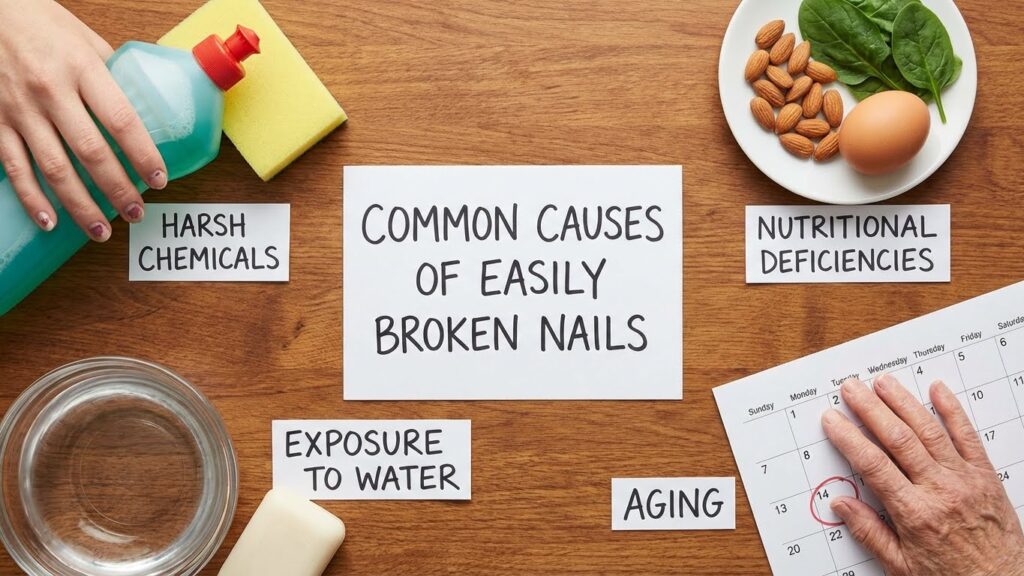
Nails can become weak and break easily due to a variety of reasons. Some causes involve habits and environmental factors, while others result from changes in the body. Understanding these causes helps in preventing damage and promoting stronger nails.
Physical Trauma
Physical trauma is a leading cause of nails breaking quickly. Frequent tapping, banging fingers on hard surfaces, or accidental hitting can cause cracks or splits. Repetitive motions, like typing or playing certain instruments, may also stress the nails over time.
Nails can chip or peel when they experience constant pressure or impact. Using nails to open packages or scratch surfaces puts added strain that damages the nail structure.
Protecting nails from injury by wearing gloves during manual work reduces the risk of physical trauma. Careful handling of nails during daily activities is key to avoiding breaks caused by force or pressure.
Moisture Imbalance
Both excessive moisture and dryness can weaken nails. Wet-dry cycles, like frequent hand washing followed by drying, cause nails to expand and contract, leading to peeling or splitting. Constant exposure to water also softens nails, making them more prone to breakage.
On the other hand, dry nails become brittle and more likely to crack. Dry weather, low humidity, or not using moisturizers can strip oils from the nails. This lack of moisture reduces nail flexibility.
Regular application of moisturizers or oils helps maintain a proper balance. Gloves can protect nails from frequent water exposure, reducing damage from repeated wetting.
Prolonged Chemical Exposure
Chemicals found in cleaning products, nail polish removers, and some cosmetics can damage nails. Harsh substances strip away natural oils and weaken the nail plate. Frequent use of acetone-based removers dries out nails and causes brittleness.
Work environments involving detergents or solvents increase chemical exposure to nails. These substances can make nails thin and fragile if protection is not used.
Wearing gloves while handling chemicals and limiting polish remover use to once a week helps prevent chemical damage. Choosing gentler, non-acetone removers supports nail health.
Age-Related Changes
Nail strength often declines with age. As people grow older, natural oil production decreases, causing nails to dry out and become brittle. Growth rate also slows, which affects how quickly damaged nails heal and renew.
Older nails may show ridges or splits more easily. The nail bed weakens, increasing the chances of breaks or cracks from simple daily tasks.
Maintaining good nail care routines and moisturizing regularly can slow down age-related weakening. Supplements like biotin may support nail strength, but results vary by individual.
Nutritional Deficiencies and Nail Strength
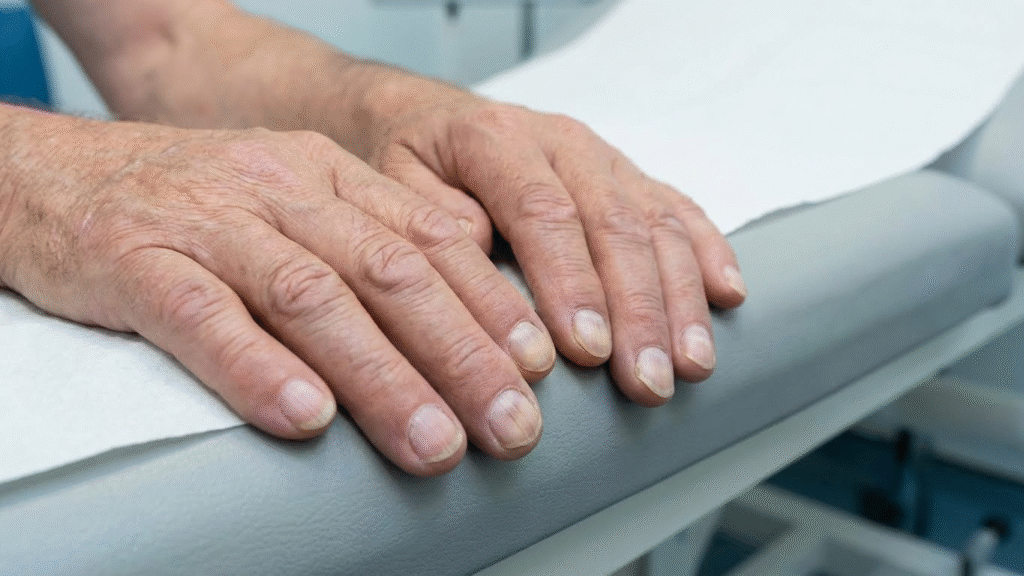
Certain nutrients are crucial for keeping nails strong and healthy. Missing key vitamins or minerals can cause nails to weaken, split, or break more easily. Protein also plays an important role because nails are made mostly of keratin, a type of protein.
Lack of Biotin
Biotin, or vitamin B7, is essential for nail health. It helps the body produce keratin, the protein that nails are made of. Without enough biotin, nails can become brittle and prone to breaking.
People who take biotin supplements often see improved nail strength within a few months. Biotin is found in foods like eggs, nuts, and seeds. A deficiency is rare but can happen with poor diet or certain medical conditions.
| Biotin Role | Effects of Deficiency | Food Sources |
|---|---|---|
| Supports keratin | Brittle, splitting nails | Eggs, nuts, seeds |
| Boosts nail growth | Slow growth, weak nail structure | Whole grains, bananas |
Insufficient Iron Levels
Iron is important for healthy nails because it helps carry oxygen in the blood, including to nail tissues. Low iron, or anemia, can cause nails to become pale, thin, or spoon-shaped.
Iron deficiency can weaken the nail’s structure, making it easier to break. Common causes include poor diet, blood loss, or absorption issues. Red meat, beans, spinach, and fortified cereals are good iron sources.
| Iron’s Function | Nail Problems from Deficiency | Dietary Sources |
|---|---|---|
| Transports oxygen | Pale, thin, spoon-shaped nails | Red meat, spinach, beans |
| Supports cell growth | Slower nail growth, weakness | Fortified cereals, lentils |
Protein Deficiency
Protein is a primary building block of nails. Without enough protein, the body struggles to produce strong keratin. Nails may become thin, soft, or break easily.
People with very low protein intake can see a drop in nail quality. This often occurs with restrictive diets or illness. Good protein sources include meat, dairy, legumes, and nuts.
| Protein Role | Effects on Nails | Food Sources |
|---|---|---|
| Builds keratin structure | Thin, soft, easily broken nails | Meat, dairy, legumes |
| Supports nail growth | Slow growth, fragile nails | Nuts, seeds, tofu |
Underlying Health Conditions Impacting Nail Health
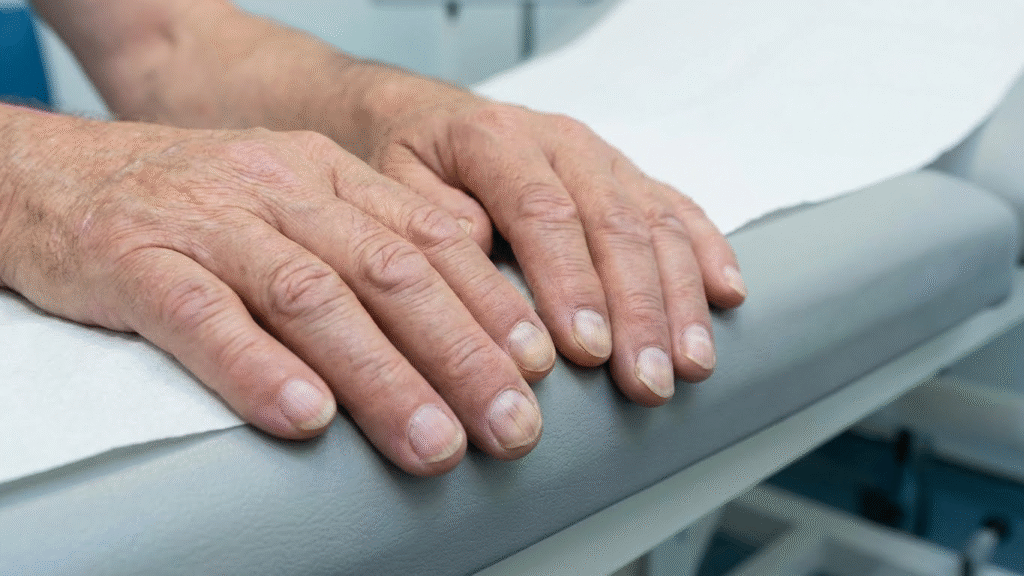
Several health issues can cause nails to become brittle and break easily. These conditions affect how nails grow and their overall strength. Addressing these problems can improve nail health and prevent damage.
Thyroid Disorders
Thyroid problems, like hypothyroidism or hyperthyroidism, can directly affect nail growth and texture. When the thyroid gland doesn’t produce the right hormones, nails may become weak, dry, or brittle.
People with hypothyroidism often notice nails that break easily and grow slowly. This happens because low thyroid hormone levels slow down metabolism, which affects nail cell production. On the other hand, hyperthyroidism can cause nails to thin and separate from the nail bed.
Thyroid-related nail changes often accompany other symptoms, such as fatigue or hair loss. Testing thyroid hormone levels helps diagnose issues early, allowing for treatment that can improve nail strength over time.
Skin Diseases
Certain skin conditions, including eczema and psoriasis, can lead to nail fragility. Both diseases cause inflammation and damage to the skin around the nails and nail matrix, where nails are formed.
Psoriasis often causes pitting, splitting, and thickening of nails. Eczema may cause dryness and peeling, making nails more prone to breakage. These conditions disrupt normal nail growth and reduce moisture, leading to increased brittleness.
Managing skin diseases with proper medication and skin care routines helps protect nails. Moisturizing and avoiding irritants are important steps to reduce damage caused by these disorders.
Hormonal Imbalances
Hormonal changes, especially during pregnancy, menopause, or due to stress, can impact nail health. Fluctuations in hormones like estrogen and progesterone influence nail growth cycles and strength.
During menopause, lower estrogen levels can cause nails to become dry and brittle. Pregnancy may also affect nail health due to shifts in hormone levels, often improving nail strength for some but weakening it for others.
Stress-related hormone changes increase the risk of nail problems by affecting blood flow and nutrient delivery to the nail matrix. Balancing hormones through medical care and lifestyle adjustments can reduce nail breakage linked to these imbalances.
Lifestyle Habits That Affect Nail Integrity
Certain daily habits can weaken nails by removing natural oils, causing dryness, or damaging the nail surface. These actions make nails more prone to breaking, peeling, or splitting.
Frequent Hand Washing
Washing hands often removes oils that keep nails moisturized. This can lead to dry, brittle nails that crack easily. Soaps and sanitizers with harsh chemicals increase this effect.
| Effect | Description |
|---|---|
| Oil removal | Strips natural oils, drying nails |
| Chemical exposure | Soaps and sanitizers may contain irritants |
| Wet-dry cycles | Causes nails to swell and shrink, leading to damage |
Using gloves during chores or applying moisturizer after washing can protect nail health. Limiting harsh soaps also helps maintain strength.
Use of Harsh Nail Products
Nail polish removers, especially those with acetone, strip away oils and proteins essential for nail strength. Frequent use thins the nail plate, making it more fragile.
Other products like artificial nails or frequent polishing can cause physical damage. Overusing these treatments can result in peeling, splitting, or permanent weakening.
| Product Type | Impact on Nails |
|---|---|
| Acetone removers | Dries nails, removes natural oils |
| Nail polish | Can cause dryness if left on too long |
| Artificial nails | May damage nail surface when removed |
Reducing use and choosing gentler products can restore nail durability over time.
Nail Biting
Nail biting causes physical trauma to the nail and surrounding skin. The pressure can deform nail shape and lead to splitting or uneven growth.
Bacteria from biting may cause infections, further weakening nails. This habit also prevents nails from growing long and healthy.
Breaking this habit often requires behavioral strategies. Keeping nails trimmed and using bitter-tasting nail treatments can help reduce biting.
Environmental Factors Influencing Nail Breakage
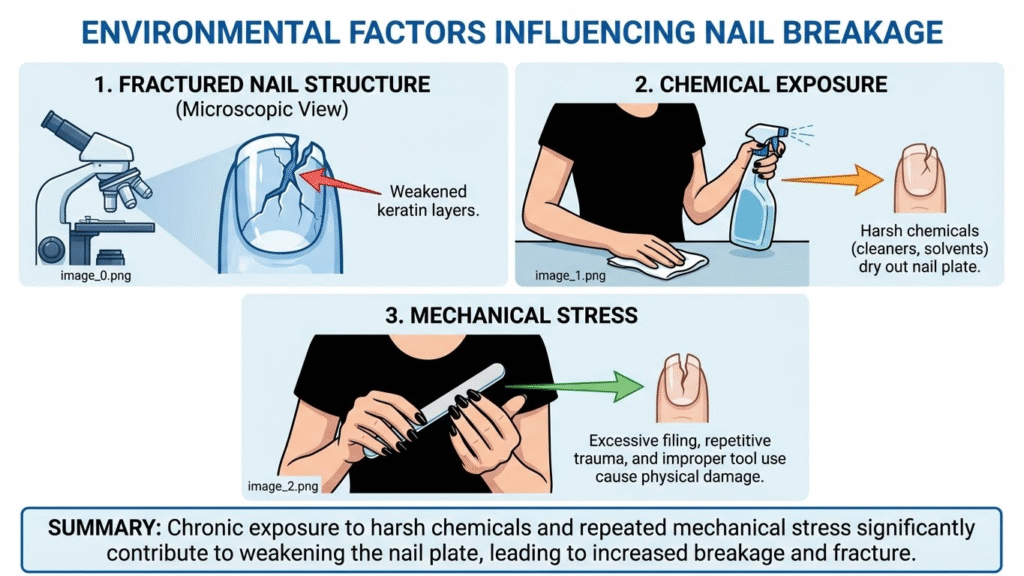
Nails can weaken and break due to many environmental reasons. Changes in weather, frequent contact with water, and exposure to cleaning chemicals often affect nail strength. These factors reduce moisture and damage the nail surface, which makes nails fragile.
Seasonal Climates
Cold and dry weather causes nails to lose moisture. When nails become dry, they grow brittle and are more likely to crack or split. In winter, the air often has lower humidity, which pulls moisture from nails and skin.
People in cold climates may notice their nails breaking more often. Avoiding long exposure to cold air and using moisturizers can help protect nails. Wearing gloves outside during cold months also limits damage from harsh weather.
Daily Exposure to Water
Repeated handwashing or long contact with water causes nails to swell and shrink. This constant change weakens the nail layers. Over time, nails become soft but also brittle, leading to breakage.
Water alone is not the only problem; hot water and soaps strip oils from nails. People who wash their hands many times daily or do chores involving water should dry nails well and apply nail oils or lotions often.
Contact With Cleaning Agents
Cleaning chemicals, such as bleach or detergents, contain harsh substances that damage nails. These agents strip natural oils and keratin, making nails thin and prone to breaks.
Frequent use of gloves during cleaning protects nails from direct contact with chemicals. Using milder cleaning products and moisturizing after exposure also helps maintain nail strength.
Proper Nail Care to Prevent Breakage
Maintaining healthy nails requires careful attention to how they are groomed, keeping them properly hydrated, and protecting them from damage. These steps help reduce the risk of nails breaking or splitting and support stronger growth.
Gentle Nail Grooming
Nails should be trimmed regularly with a sharp nail clipper to avoid rough edges that catch and break. Using a fine-grit nail file in one direction, rather than back and forth, smooths edges without causing splits.
Avoid over-filing or aggressive buffing, which can thin nails and weaken their structure. Harsh manicures, frequent use of nail polish remover, especially those with acetone, strip nails of natural oils and increase brittleness.
It is important to keep nails at a manageable length. Very long nails are more prone to bending and breaking. Keeping them short and neat reduces stress on the nail plate.
Hydration Techniques
Dry nails break more easily. Applying moisturizing cream or oils daily helps maintain nail flexibility. Ingredients like vitamin E, jojoba oil, or shea butter are effective for hydration.
Regularly soaking hands in warm water for a few minutes followed by applying lotion can improve moisture absorption. However, prolonged exposure to water weakens nails, so bathing time should be limited.
Using a cuticle oil helps keep the skin around the nail healthy and prevents lifting or cracking that leads to nail breakage. Hydration supports the nail’s natural keratin protein, making nails more resilient.
Protective Practices
Wearing gloves during chores like washing dishes or gardening prevents nails from getting wet and exposed to harsh chemicals, which strip moisture.
Avoiding frequent contact with cleaning products and detergents reduces chemical damage. Using gentle, moisturizing hand soaps minimizes drying effects.
A table below shows key protective tips:
| Action | Reason | Result |
|---|---|---|
| Wear gloves for chores | Protect from water and chemicals | Nails stay hydrated and strong |
| Use mild hand soap | Prevents drying | Maintains skin & nail health |
| Limit polish remover use | Avoids stripping oils | Keeps nails flexible |
These practices reduce nail stress and help keep nails stronger and less likely to break.
When to Seek Professional Advice
If nails break easily for a short time and improve with care, medical help may not be needed. However, if the problem lasts longer than a few months or gets worse, it is wise to see a doctor.
Professional advice is important when brittle nails come with other symptoms like pain, redness, swelling, or changes in color. These signs might indicate an infection or a skin condition that needs treatment.
People with brittle nails and known health issues, such as thyroid problems or iron deficiency, should consult a healthcare provider. Tests like iron studies or thyroid panels can help find hidden causes and guide proper treatment.
If nails split deeply or show unusual patterns, a doctor or dermatologist may check for conditions like onychorrhexis or onychoschizia. These nail disorders often require specific care or medication.
Nail biting or repeated exposure to harsh chemicals could worsen the condition. If behavioral habits or work-related factors cause damage, a professional can advise on protective measures.
In short, see a healthcare provider if:
- Brittleness does not improve in 3-6 months
- Nails change in color, shape, or texture
- You have pain, swelling, or signs of infection
- You have an underlying health condition affecting nails
- Nail damage affects daily activities or causes discomfort
Early medical advice helps find the cause and prevents further damage.
Long-Term Strategies for Stronger Nails
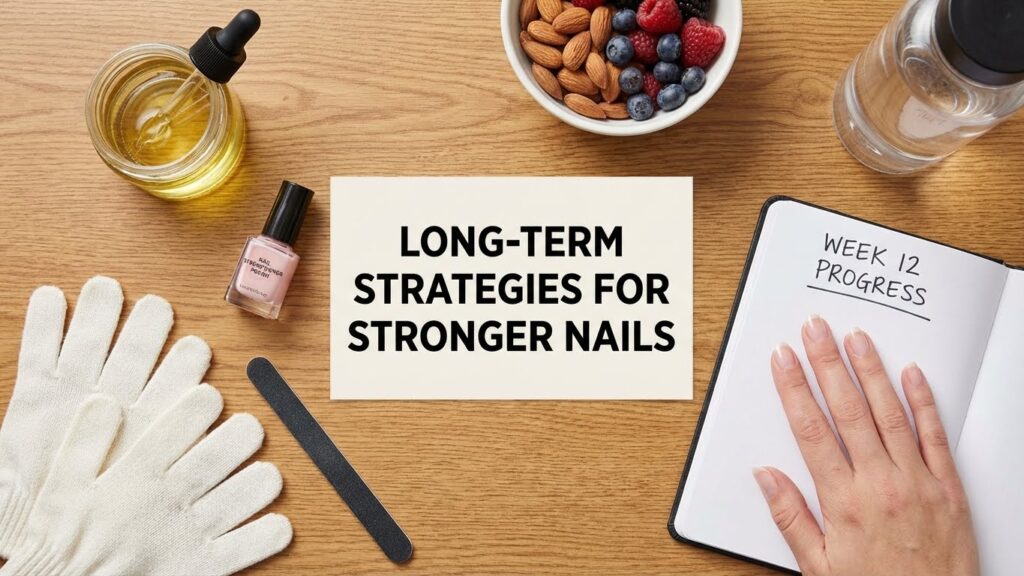
To build stronger nails over time, consistent care and good habits are essential. Nails reflect overall health and can show signs of nutritional gaps. A well-balanced diet rich in vitamins like biotin, zinc, and iron supports nail strength from within. Supplements may help if nutritional intake is low, but consulting a healthcare provider first is a good idea.
Moisturizing nails regularly helps prevent dryness and brittleness. Applying a hand cream or nail oil, especially after washing hands, keeps nails hydrated. Frequent exposure to water and harsh chemicals weakens nails. Wearing gloves while cleaning or doing dishes protects them from damage.
Using nail hardeners can provide short-term protection, but some products contain harsh chemicals like formaldehyde that may dry nails over time. It is better to choose products with gentle ingredients and avoid overuse.
Keeping nails clean and dry prevents infections that can weaken the nail bed. After washing, thoroughly drying nails and fingers reduces the risk of fungal growth. Trimming nails regularly and filing edges smoothly limits peeling and splitting.
The growth cycle of nails is slow; it takes months to see noticeable improvements. Patience and steady care will lead to stronger, healthier nails over time.
FAQs
Why do nails break easily?
Nails break easily due to a mix of factors. These include low iron or protein levels, frequent exposure to water, harsh chemicals, or nail polish remover. Health issues like thyroid problems or skin conditions can also weaken nails.
Can biting nails cause them to break?
Yes, nail biting makes nails weaker and more likely to split or crack. It also increases the risk of infections around the nail.
How long does it take to fix brittle nails?
With proper care, nails usually improve in 3 to 6 months. This includes protecting nails from water and chemicals, improving diet, and treating any underlying health problems.
Are vitamins helpful for nail strength?
Certain vitamins, like biotin and iron, can support stronger nails. Nutrient deficiencies often cause brittleness, so a balanced diet or supplements may help.
What daily habits harm nails?
Washing hands often without drying them well, using nail polish remover too much, and not wearing gloves during chores can all cause nails to dry out and break easily.
Conclusion
Nails break easily for many reasons. These include dryness, frequent exposure to water or chemicals, low levels of key nutrients like protein and iron, and health issues such as thyroid imbalances. Some habits, such as nail biting, also weaken nails and increase the chance of breakage.
Proper care is important to keep nails strong. This includes moisturizing regularly, using gentle nail products, and protecting hands with gloves during chores. Eating a balanced diet rich in vitamins and minerals can help nails grow healthier.
If nails remain brittle despite good care, it may be wise to consult a healthcare provider. Tests like iron studies or thyroid panels can find underlying health problems. Treating these can improve nail strength over time.
Key tips to reduce nail breakage:
- Keep nails dry but avoid frequent wet-dry cycles
- Use a moisturizer daily to prevent dryness
- Protect nails from harsh chemicals with gloves
- Avoid nail biting or picking
- Eat foods with protein, iron, and vitamins A, C, and E
Following these steps offers the best chance to improve nail health. It takes time, but consistent care often leads to stronger, less breakable nails within a few months.
