
Are Baby Nail Files HSA Eligible? Your Complete Guide to Infant Nail Care

As a new parent, keeping your baby’s rapidly growing nails short and smooth is a constant, nerve-wracking chore. Those tiny fingernails are razor-sharp, and infants are prone to scratching their own faces. Because specialized infant grooming tools can be expensive, many parents naturally wonder: are baby nail files HSA eligible?
Managing health care expenses can be tricky, especially when you are buying supplies for a newborn. In this comprehensive guide, we will break down everything you need to know about Health Savings Accounts (HSA) and Flexible Spending Accounts (FSA) regarding infant nail care. We will also dive into practical, safe techniques for maintaining your baby’s nails to prevent accidental scratches, painful snags, and dangerous skin infections.
Quick Answer
Generally, standard baby nail files and infant electric trimmers are not HSA or FSA eligible. The IRS classifies basic nail files and clippers as general grooming and personal hygiene products rather than medical necessities. However, if a pediatrician prescribes a specific nail care tool to manage a medical condition like severe eczema, it may be eligible with a Letter of Medical Necessity (LMN).
Understanding HSA Eligibility for Baby Care Products
Health Savings Accounts (HSAs) and Flexible Spending Accounts (FSAs) are excellent tools for saving money on medical expenses. They allow you to use pre-tax dollars to pay for qualifying health-related products and services.
However, the rules regarding what qualifies as a “medical expense” are very strict.
Grooming vs. Medical Necessity
According to the IRS guidelines on medical and dental expenses, eligible items must be specifically used for the diagnosis, cure, mitigation, treatment, or prevention of disease.
Unfortunately, routine nail care falls under the category of general grooming. Just like shampoo, standard toothpaste, and adult nail clippers, baby nail files are considered everyday hygiene items. Because they are not inherently designed to treat a medical illness, your HSA or FSA administrator will usually deny the claim if you try to purchase a standard infant grooming kit with your card.
Dual-Purpose Items and The LMN Exception
There is a small loophole known as a Letter of Medical Necessity (LMN). Some products are considered “dual-purpose,” meaning they can be used for general grooming but might also be required to treat a specific medical issue.
For example, if your baby suffers from severe atopic dermatitis (eczema), scratching can lead to open wounds, severe bleeding, and secondary bacterial infections. In this specific scenario, a pediatrician might determine that an ultra-gentle electric baby nail file is a medical necessity to prevent the baby from tearing their skin.
If your doctor writes an LMN detailing why the specific nail file is required for the child’s medical treatment, you might be able to submit the receipt to your HSA provider for reimbursement. Always check with your specific plan administrator before making a purchase.
Why You Need a Specific File for Baby Nails
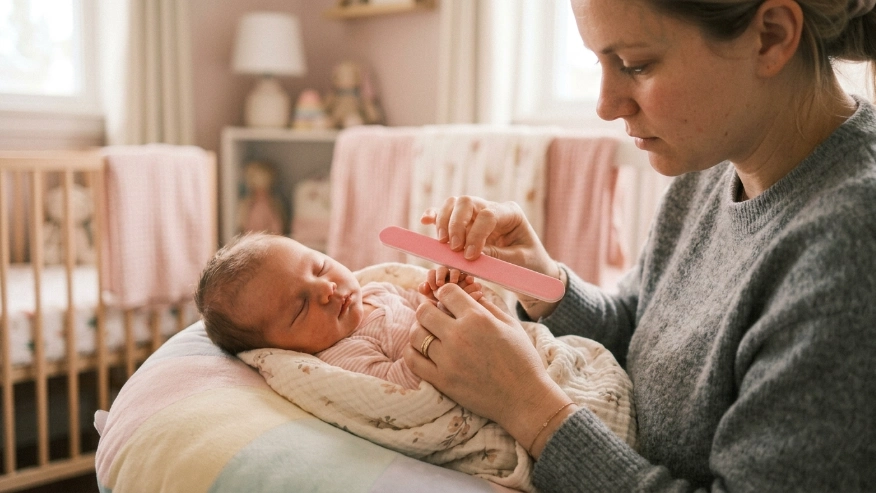
You might be tempted to use your own emery board or metal file on your baby, but this is a major mistake. Infant nails are incredibly thin, soft, and flexible. They tear easily, and the skin surrounding their nail beds is highly sensitive.
Using adult nail tools on an infant can cause:
- Micro-tears: Coarse grit files can shred the delicate nail plate.
- Skin abrasions: Adult files can easily sand down the baby’s soft fingertips.
- Painful snags: Standard clippers can catch the skin, causing bleeding and trauma.
Because babies lack motor control, their erratic arm movements mean they frequently scratch their cheeks and eyes. A dedicated baby nail file smooths out the sharp, jagged edges safely without risking damage to the surrounding cuticle.
Comparing Baby Nail Care Tools
When shopping for infant nail tools—whether you pay out-of-pocket or manage to use an HSA with an LMN—it is important to choose the right style. Here is a breakdown of the most common options available to parents.
| Tool Type | Pros | Cons | Best For |
|---|---|---|---|
| Infant Emery Boards | Very cheap, flexible, soft grit | Wear out quickly, can be hard to hold | Newborns, quick touch-ups |
| Glass Baby Nail Files | Washable, sanitizable, smooths edges perfectly | Can break if dropped on a hard surface | Babies aged 1–12 months, preventing jagged edges |
| Baby Nail Clippers | Fast, usually come with a spy-hole to see the nail | High risk of snipping the fingertip skin | Older babies, toddlers |
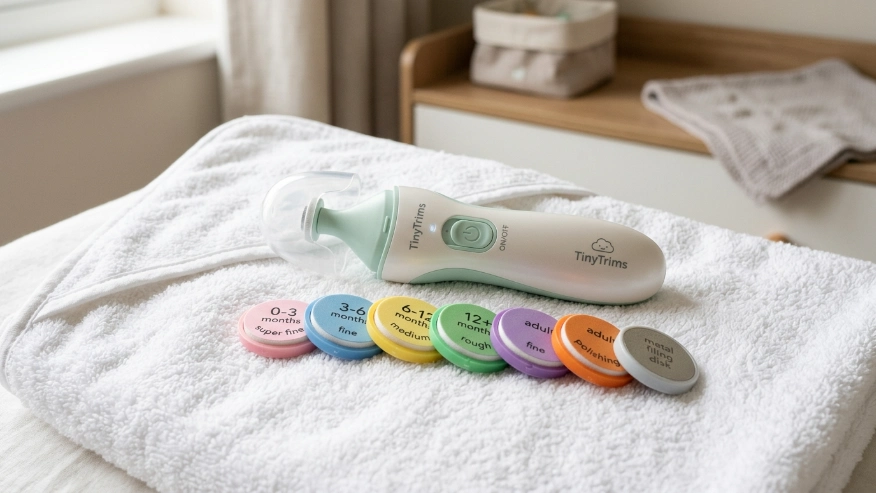
| Electric Trimmers | Extremely safe, stops when touching skin, quiet | More expensive, requires batteries/charging | Wiggling babies, nervous parents |
How to Safely File Your Baby’s Nails
Trimming a newborn’s nails can feel like defusing a tiny bomb. However, a proper technique minimizes stress for both you and the baby.
Follow these steps for safe filing:
- Choose the Right Time: The best time to file your baby’s nails is when they are completely relaxed. Deep sleep, during a feeding, or right after a warm bath (when nails are softest) are the ideal windows.
- Ensure Proper Lighting: Never attempt nail care in the dark. Sit near a bright window or use a well-lit lamp so you can clearly see the distinction between the nail plate and the nail bed (the pink part attached to the skin).
- Hold the Finger Securely: Gently press the baby’s finger pad away from the nail. This pushes the skin down and exposes the overhanging nail, reducing the risk of filing the fingertip.
- File in One Direction: Avoid aggressively sawing back and forth. Instead, file in one fluid motion from the side of the nail to the center.
- Round the Edges: Pay special attention to the corners. Square corners act like tiny hooks on your baby’s face, so gently round them off.
- Clean Up: Wipe the baby’s hands with a damp washcloth to remove any microscopic nail dust so it doesn’t end up in their eyes or mouth.
Expert Tip:
If you accidentally nick your baby’s skin and it begins to bleed, do not panic. Apply gentle pressure with a clean piece of gauze or a soft cloth for a few minutes until the bleeding stops. Never put a bandage on a baby’s finger, as it is a severe choking hazard if they put their hand in their mouth.
Preventing Nail Infections in Babies
Good nail hygiene isn’t just about preventing scratches; it is crucial for your baby’s overall health. Babies constantly put their hands in their mouths, meaning dirty, jagged nails can introduce bacteria into their system.
Furthermore, improper filing can cause paronychia, which is an infection of the tissue adjacent to the nail. According to the American Academy of Dermatology’s advice on infant nail care, parents should keep baby nails short and clean to prevent bacteria from accumulating.
Signs of a nail infection include:
- Redness or swelling around the cuticle.
- The fingertip feels warm to the touch.
- A small blister or pus-filled bump near the edge of the nail.
- Your baby cries out in pain when that specific finger is touched.
To prevent infections, always wash your hands before doing your baby’s nails, and sanitize glass files or clippers with rubbing alcohol between uses. Do not share infant files with adults.
When to See a Nail Technician or Dermatologist
While adults frequently visit a nail technician for issues like severe ingrown toenails, damaged cuticles, or persistent hangnails, infant nail issues should always be evaluated by a pediatrician or a pediatric dermatologist.
A professional nail technician is highly trained in cosmetic anatomy, but infant skin and immune systems require specialized medical care.
You should contact a doctor if:
- You notice any signs of infection (pus, severe redness, swelling).
- The baby has a deep, bleeding cut that won’t stop with gentle pressure.
- The nail appears to be growing directly into the skin (an ingrown toenail), which is common in chubby baby toes.
- The baby’s nails appear unusually thick, discolored, or brittle, which could indicate a fungal infection or nutritional deficiency.
Do not attempt to perform “bathroom surgery” by digging out an infant’s ingrown toenail with adult tools. A doctor can safely relieve the pressure and prescribe a baby-safe antibiotic ointment if necessary.
Common Mistakes to Avoid When Filing Baby Nails
Even the most well-meaning parents make errors when managing newborn grooming. Avoid these frequent pitfalls:
- Biting the baby’s nails: This is an old wives’ tale that needs to stop. Biting your baby’s nails introduces dangerous bacteria from your mouth into any micro-tears in their skin, drastically increasing the risk of infection.
- Filing too short: Leave a tiny sliver of the white nail growth. Filing all the way down to the pink nail bed can cause pain and increase the risk of ingrown nails.
- Using adult clippers: Standard adult clippers are too large and lack the necessary visibility, making it incredibly easy to accidentally snip off a tiny piece of the baby’s fingertip.
- Forgetting the toes: While fingernails grow incredibly fast and need attention weekly (or even twice a week), toenails grow slower. Still, they must be checked and filed monthly to prevent them from catching on socks and tearing.
- Peeling torn nails: If you see a snagged nail, never peel or rip it off with your fingers. This can tear the nail right down the middle of the nail bed. Always use a soft emery board to smooth the snag.
Proper tool selection is critical for safety. The CDC guidelines on personal nail hygiene emphasize that all nail equipment should be properly cleaned and maintained to prevent the spread of germs, and this applies heavily to infant care tools.
FAQs
Are baby electric nail trimmers FSA eligible?
No, electric baby nail trimmers are generally not FSA or HSA eligible. Because they are classified as general grooming tools rather than medical devices, standard plans will not cover them without a Letter of Medical Necessity from a doctor.
Can I use a glass nail file on my newborn?
Yes, glass nail files are an excellent choice for newborns. They feature an ultra-fine, etched grit that gently smooths the nail without shredding it. They are also easy to wash and sanitize with soap and warm water.
What grit nail file is safe for babies?
You should always look for an ultra-fine or extra-fine grit file. Coarse emery boards designed for adult acrylics or thick toenails will cause severe damage to infant nails. If purchasing an electric trimmer, always use the softest pad designated for newborns (usually labeled for ages 0-3 months).
How often should I file my newborn’s nails?
Newborn fingernails grow incredibly fast. You will likely need to file or trim them once or twice a week to keep them smooth and prevent facial scratching. Toenails grow much slower and usually only need attention once a month.
Is biting my baby’s nails safer than filing?
Absolutely not. Biting your baby’s nails is dangerous. The human mouth harbors thousands of bacteria. If you accidentally tear the baby’s skin with your teeth, you risk transmitting an infection directly into their bloodstream. Always use a clean file or infant clipper instead.
Are baby grooming kits tax deductible?
General infant grooming kits (which include items like combs, standard nail clippers, and nasal aspirators) are not tax-deductible medical expenses. Only specialized items prescribed by a doctor for a diagnosed illness qualify.
Conclusion
Understanding the rules around health accounts can be confusing, but the short answer to the question—are baby nail files HSA eligible?—is generally no. Because the IRS views nail tools as standard personal hygiene items, you will likely have to pay out-of-pocket for your baby’s grooming kit unless you have a specific medical exemption from your pediatrician.
Fortunately, manual emery boards, washable glass files, and even high-quality electric infant trimmers are relatively inexpensive and accessible.
Investing in a dedicated, high-quality baby nail file is one of the best decisions you can make for your infant’s safety. It will protect their delicate skin from sharp scratches, keep their nail beds healthy, and give you peace of mind during grooming time. Remember to file gently, use proper lighting, and always consult a doctor if you spot any signs of redness or infection around those tiny fingers!

