
Are Japonesque Nail Files Good? A Practical Guide Before You Buy

If you keep seeing Japonesque nail files while shopping for manicure tools, you may be wondering: are Japonesque nail files good, or are they just another basic beauty tool?
The short answer is that they can be a good choice, especially if you want an affordable, easy-to-use file for everyday nail shaping. But Japonesque sells more than one style, and the best option depends on whether you have natural nails, artificial nails, thin nails, or thicker tips.
The brand currently offers medium-grit salon boards as well as a stainless-steel Nail Shaper. Those tools do similar jobs, but they do not feel the same on the nail. Japonesque also includes a medium-grit stainless-steel file in its manicure kits.
Here is what you should know before choosing one.
Quick Answer
Are Japonesque nail files good? Yes, they are a solid budget-friendly option for routine shaping and smoothing. Their medium-grit files work well for reducing length, fixing rough edges, and cleaning up snags. The Salon Boards suit natural and artificial nails, while the stainless-steel Nail Shaper is better suited to everyday natural-nail maintenance.
What Kind of Nail Files Does Japonesque Make?
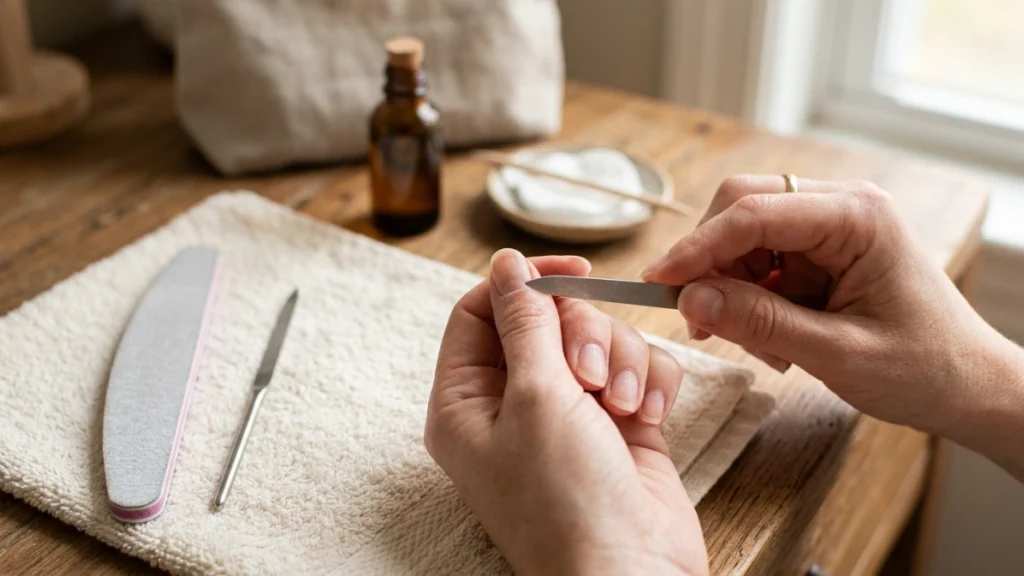
The biggest mistake is assuming every Japonesque file is the same.
Two common styles currently available are very different.
Japonesque Salon Boards
Japonesque Salon Boards are traditional padded nail-file boards sold in a multipack.
The current Target listing describes them as having:
- A medium-grit surface
- A sturdy core that resists bending
- A padded filing surface
- Enough texture for reducing nail length
- The ability to smooth broken or snagged edges
- Compatibility with natural and artificial nails
The five-pack is positioned as an at-home salon-style manicure tool.
These are probably the more familiar choice if you normally use emery boards.
Japonesque Stainless-Steel Nail Shaper
The stainless-steel Nail Shaper is reusable and more rigid.
Its current product listing describes a medium-grit filing surface designed to reduce length, shape edges, smooth snags, and tidy broken nails. It also has a pointed end intended for cleaning beneath the nail.
Japonesque describes this version primarily for natural nails.
That difference matters.
If you regularly reshape acrylic, gel, or press-on enhancements, you may prefer the broader Salon Boards or a file made specifically for artificial nails rather than relying on the metal Nail Shaper.
Are Japonesque Nail Files Good for Natural Nails?
For normal, healthy natural nails, yes, they should work well for basic maintenance.
Medium grit gives you enough filing power to correct a rough corner or shorten the free edge without requiring excessive work.
The free edge is simply the part of your nail that extends beyond your fingertip.
Japonesque’s instructions for its stainless-steel file recommend using it when nails are dry and filing from the corner toward the center in one direction. The company gives similar instructions with its manicure kit.
That technique also lines up with guidance from the American Academy of Dermatology. Its guide to trimming and filing nails recommends smoothing rough edges with a nail file or emery board and filing in the same direction rather than repeatedly sawing backward and forward.
For a simple weekly manicure, that makes Japonesque’s medium-grit options practical.
What About Thin, Peeling, or Brittle Nails?
This is where I would be more careful.
A medium-grit file can feel perfectly comfortable on strong natural nails but more aggressive on nails that are already thin, peeling, or flexible.
The file itself is not automatically harmful. Pressure and technique matter just as much as the tool.
If your nails peel easily:
- Use very light pressure.
- Remove only as much length as necessary.
- Avoid aggressive back-and-forth filing.
- Do not keep filing after the edge already feels smooth.
- Stop if the nail begins flexing noticeably while you file.
You may also prefer a very fine file if your main goal is simply smoothing tiny snags.
A rigid stainless-steel file gives excellent control, but that firmness can also make it easier to use too much pressure if you are accustomed to a padded board.
Are Japonesque Nail Files Good for Acrylic or Gel Nails?
It depends on which file you choose.
Japonesque’s Salon Boards are currently described as suitable for both natural and artificial nails, so they are the more logical option if you wear acrylics, gel extensions, or press-ons.
The stainless Nail Shaper is described primarily as a natural-nail tool.
For small corrections to an enhancement, such as smoothing a sharp corner, a medium-grit board may be enough.
For major reshaping or removing a lot of product, however, a standard medium-grit home file may feel slow. Professional enhancement work often requires different grit levels and more precise technique.
Also remember that repeated filing of the natural nail plate during artificial-nail preparation can make the nail thinner. The American Academy of Dermatology notes that roughening natural nails to help acrylic products adhere can weaken them.
That is one reason I would not aggressively file the natural nail simply because an artificial-nail service normally includes filing.
Japonesque Nail File Pros and Cons
| Feature | What I Like | Possible Limitation |
|---|---|---|
| Medium grit | Useful for normal shaping and smoothing | May feel strong on very thin nails |
| Salon Board design | Familiar and easy to control | Eventually wears down |
| Stainless-steel Nail Shaper | Rigid, reusable, and easy to grip | Less forgiving if you press too hard |
| Salon Board multipack | Convenient for purse, desk, or manicure kit | Disposable boards create more waste |
| Natural nail use | Good for normal maintenance | Damaged nails require gentler care |
| Artificial nail use | Salon Boards can handle routine shaping | Heavy enhancement filing may need a different grit |
| Price | Generally inexpensive | Price and availability can change |
How Well Do They Hold Up?
Durability depends heavily on which version you buy.
The Salon Boards have a sturdy core designed to resist bending, but their abrasive surface will naturally wear with repeated filing.
The stainless-steel Nail Shaper is intended as a longer-lasting reusable tool. Its rigid construction is one of its main advantages over a disposable board.
For someone who files their nails often, reusable metal may therefore offer better long-term value.
If you prefer having files everywhere—in a handbag, bathroom, desk, and travel bag—the multipack boards may be more convenient.
How Much Do Japonesque Nail Files Cost?
They sit toward the affordable end of the manicure-tool market.
At the time of this review, Target listed the five-pack of Japonesque Salon Boards at $6.99, while Walmart listed the stainless-steel Nail Shaper at about $2.98. Retail prices and availability can change.
That makes them easy to try without spending much.
Still, cost should not be the only factor.
A cheap file that matches your nail type is a better purchase than an expensive file used with the wrong technique.
How to Use a Japonesque Nail File Safely
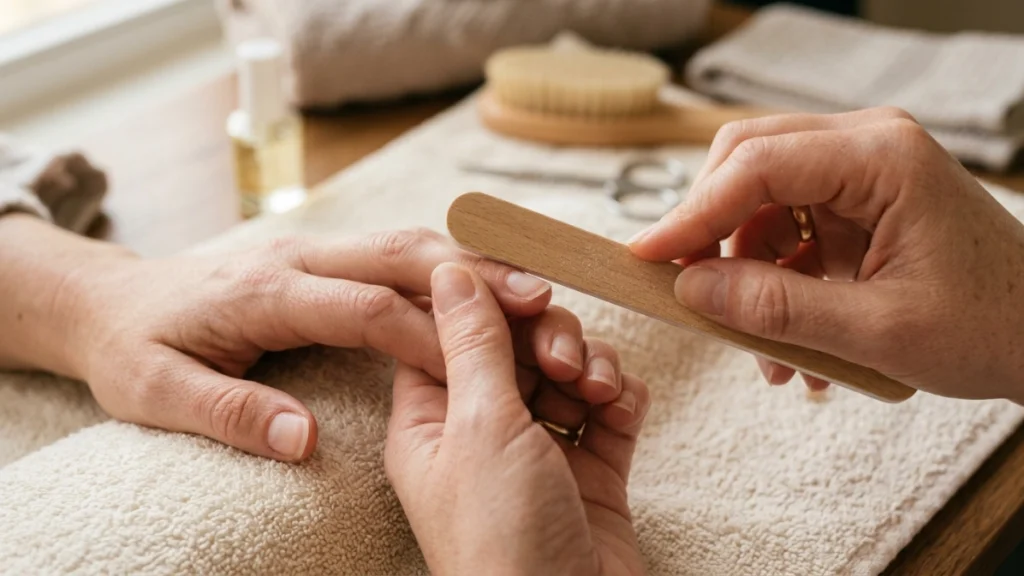
A nail file seems almost impossible to misuse, but aggressive filing can leave nails thinner, rougher, or more prone to splitting.
Here is a simple approach.
1. Start With Dry Nails
For filing, Japonesque recommends working on dry nails.
Dry nails also make it easier to see the final shape and notice uneven corners.
2. Decide How Much Length You Actually Need to Remove
Do not automatically file for several minutes.
If you only have a snag, concentrate on that spot.
If your nails are much longer than you want, using nail clippers first and then filing the edge may be faster.
The American Academy of Dermatology recommends trimming fingernails almost straight across and then gently rounding the corners with a file.
3. File From the Corner Toward the Center
Use controlled strokes.
Avoid rapid sawing motions.
The goal is to shape the edge, not grind away the nail plate.
4. Check Your Shape Often
After a few strokes, stop.
Look at the nail from the front and from above.
This keeps you from accidentally making one side much shorter than the other.
5. Smooth, Don’t Over-File
Once the edge no longer catches on clothing or hair, you are usually finished.
More filing does not automatically create a better manicure.
6. Moisturize Afterward
Hand lotion or cuticle oil can help keep the surrounding skin comfortable.
Mayo Clinic’s healthy fingernail care guidance also recommends moisturizing the nails and cuticles as part of routine nail care.
Expert Tip: Use the lightest pressure that still removes material. If you can see the whole fingertip moving every time you make a filing stroke, you are probably pressing harder than necessary.
Hygiene: Can You Share a Nail File?
I would keep your personal nail tools personal whenever possible.
This is especially important when there is broken skin, irritation, or a suspected nail infection.
Reusable tools also need regular cleaning.
The American Academy of Dermatology recommends disinfecting manicure clippers and scissors regularly and emphasizes keeping grooming tools clean.
A stainless-steel Japonesque file is easier to treat as a reusable personal grooming tool than a worn padded board.
For disposable or semi-disposable boards, replacement is often simpler once the surface becomes dirty, damaged, or heavily worn.
Do not file over an open cut, bleeding skin, or a painful infected area.
Japonesque Salon Board vs. Stainless-Steel Nail Shaper
If you are deciding between the two, use your nail type and routine.
Choose the Salon Boards If:
- You prefer traditional nail files.
- You want a padded filing surface.
- You wear natural and artificial nails.
- You like keeping spare files in different places.
- You want a multipack.
- You occasionally need more surface area for shaping.
Choose the Stainless-Steel Nail Shaper If:
- You mostly maintain natural nails.
- You want a rigid reusable tool.
- You dislike flexible emery boards.
- You mainly smooth snags and maintain shape.
- You want something compact for a manicure kit.
Neither is automatically better.
They simply serve slightly different users.
Are Japonesque Files Better Than Glass Nail Files?
Not necessarily.
They are different tools.
Glass files are popular among people who prefer a very smooth filing sensation, especially for natural nails. A medium-grit Japonesque file tends to feel more traditional and direct.
If you have healthy, fairly strong nails and want to shorten them quickly, medium grit can be convenient.
If your nails are very thin and your main goal is delicate edge smoothing, you may prefer a finer-feeling file.
The better choice is the file that lets you shape your nails without excessive pressure or repeated passes.
Common Mistakes to Avoid
Even a good nail file can give poor results when technique is wrong.
Avoid these common mistakes:
- Filing aggressively back and forth. Controlled strokes are kinder to the edge.
- Using too much pressure. Let the abrasive surface do the work.
- Filing the top of healthy natural nails unnecessarily. This can thin the nail plate.
- Trying to remove huge amounts of length with a fine or medium file. Clip excess length first when appropriate.
- Using a worn-out board. You may compensate by pressing harder.
- Sharing dirty manicure tools. Keep personal nail-care items clean.
- Filing painful or infected nails. Cosmetic filing does not treat a medical problem.
- Digging deeply beneath nails with a pointed file tip. Gentle surface cleaning is very different from scraping beneath the nail.
When to See a Nail Technician or Dermatologist
A nail file should solve cosmetic shaping problems.
It should not be used to diagnose or treat nail disease.
A licensed nail technician may be useful when you need help shaping thick artificial enhancements, correcting an uneven manicure, or safely maintaining acrylic or gel nails.
A dermatologist is more appropriate when the problem involves the nail or surrounding skin itself.
The American Academy of Dermatology recommends medical evaluation for changes such as a new dark streak, a nail lifting away from the nail bed, redness and swelling, unusual discoloration, significant thickening, or other persistent changes.
Seek professional medical advice if you notice:
- Pain that does not improve
- Swelling or warmth around the nail
- Pus or drainage
- Green, black, or unusual discoloration
- A new or changing dark streak
- A nail separating from the skin
- Bleeding without an obvious minor cause
- Major changes in nail thickness or shape
The AAD guide to nail changes that deserve a dermatologist’s attention explains why some changes should not simply be covered with polish or filed away.
Are Japonesque Nail Files Worth Buying?
For most people looking for a basic manicure file, I think the answer is yes—with the right expectations.
You are not buying a specialized professional electric filing system.
You are buying a straightforward hand tool for shaping nails, shortening free edges, and smoothing rough spots.
The main advantages are:
- Moderate filing power
- Simple design
- Affordable pricing
- Options for reusable or disposable-style filing
- Easy availability
- Versions for both natural and artificial nail routines
The limitations are equally simple.
Medium grit may not be the gentlest possible choice for extremely fragile nails, and it may not be aggressive enough for major acrylic or gel reshaping.
That is normal.
No single nail file is ideal for every nail type.
FAQs
Are Japonesque nail files good for natural nails?
Yes. Japonesque’s stainless-steel Nail Shaper is specifically positioned for natural nails, and its medium grit is designed for shaping, reducing length, and smoothing rough edges.
Are Japonesque nail files good for acrylic nails?
The Salon Boards are currently described as suitable for natural and artificial nails. For substantial acrylic reshaping or product removal, however, you may need a file with a grit better suited to enhancement work.
What grit are Japonesque nail files?
The Salon Boards and stainless-steel Nail Shaper discussed here use a medium-grit surface.
Can I use a Japonesque nail file every week?
Yes, routine filing is reasonable when your nails are healthy and you use gentle pressure. Avoid repeatedly removing more nail than necessary.
Should I file my nails wet or dry?
Japonesque’s instructions for its stainless-steel manicure file recommend shaping nails when they are dry.
Is a metal Japonesque nail file better than an emery board?
It depends on your preference. The metal version is rigid and reusable, while the Salon Boards offer a padded traditional filing surface. Neither design is universally better.
When should I replace a Japonesque Salon Board?
Replace it when the abrasive surface becomes noticeably smooth, dirty, peeling, damaged, or difficult to use. Do not compensate for a worn surface by pressing harder.
Final Verdict: Are Japonesque Nail Files Good?
So, are Japonesque nail files good?
For routine home manicures, yes. They are affordable, straightforward tools that make sense for smoothing snags, maintaining nail shape, and reducing moderate amounts of length.
The Salon Boards are the more versatile choice if you switch between natural and artificial nails. The stainless-steel Nail Shaper makes more sense for natural nails if you want something rigid and reusable.
Just remember that nail health matters more than the brand printed on the tool.
File gently. Keep your tools clean. Stop when the edge is smooth. And if your nail is painful, swollen, discolored, lifting, or otherwise abnormal, treat that as a health question rather than something to file away.
Choose the version that matches your nail type, use light pressure, and your nail file should make your manicure easier—not harder.

