
Are Nail Files Toxic to Cats? What Pet Owners Should Know

If your cat just grabbed your nail file, chewed the end, or carried an emery board across the room, it is natural to worry. You may be wondering: are nail files toxic to cats, or is the bigger concern that your cat could swallow part of the file?
For most ordinary nail files, poisoning is not the main danger. The bigger concerns are chewing injuries, broken pieces, choking, and gastrointestinal blockage if part of the file is swallowed. A file may also become more concerning if it has nail polish, remover, glue, gel residue, or another chemical on it.
This guide explains which nail files are riskier, what signs to watch for, what to do if your cat chews or swallows one, and how to keep manicure tools safely away from curious pets.
Quick Answer
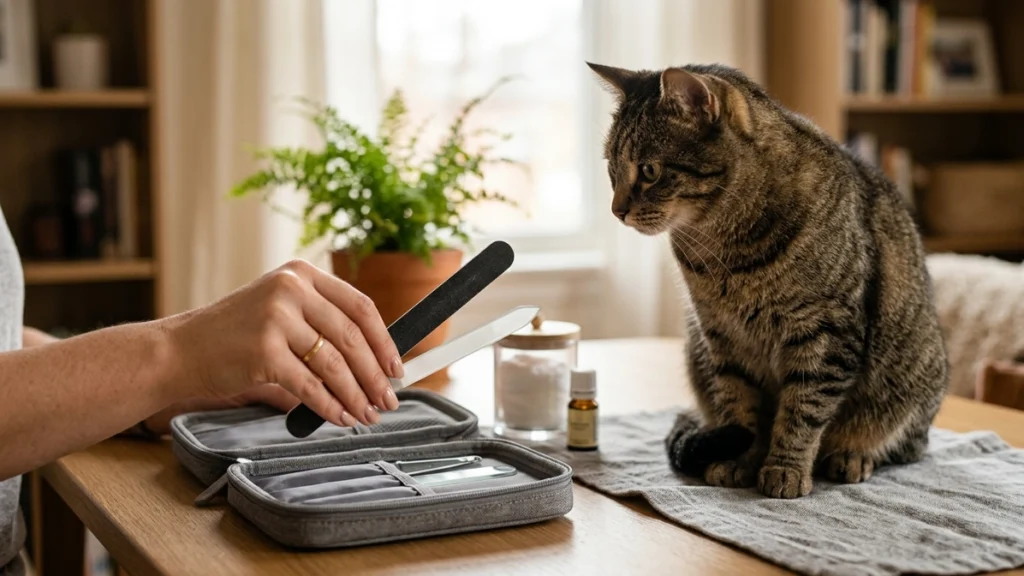
Are nail files toxic to cats? Usually, a clean, ordinary nail file is not considered a typical poisoning hazard. However, chewing or swallowing pieces can be dangerous. Broken glass, metal, wood, foam, or abrasive material may injure the mouth or digestive tract, while contaminated files may expose your cat to nail-care chemicals.
Are Nail Files Poisonous to Cats?
There is no single material used for every nail file, so there is no simple toxic-versus-nontoxic answer that applies to every product.
Common nail files include:
- Disposable emery boards
- Foam or cushioned files
- Glass or crystal files
- Metal files
- Ceramic files
- Electric nail-file attachments
A plain file that your cat briefly licks is very different from a file that has been chewed into pieces or coated with nail glue, polish, gel, acrylic residue, or remover.
In most situations, the physical object deserves more attention than the abrasive filing surface itself.
Veterinary guidance on foreign-object ingestion explains that cats can develop potentially serious digestive problems when they swallow nondigestible objects. Some objects pass without trouble, while others become lodged and require veterinary treatment. VCA Animal Hospitals’ guide to foreign-body ingestion in cats lists vomiting, decreased appetite, abdominal discomfort, lethargy, and changes in bowel movements among possible signs.
Why a Nail File Can Still Be Dangerous
Calling a nail file “not usually poisonous” does not mean it is safe for a cat to chew.
There are several ways a manicure tool can cause trouble.
Swallowed Pieces Can Become Foreign Bodies
A cat’s digestive system cannot simply dissolve every piece of cardboard, foam, plastic, wood, glass, or metal.
If a fragment becomes stuck in the stomach or intestines, it can create a partial or complete obstruction. Veterinary references describe gastrointestinal obstruction as potentially life-threatening, particularly when an object cannot move normally through the digestive tract.
Possible warning signs include:
- Repeated vomiting
- Refusing food
- Unusual tiredness
- Abdominal pain or sensitivity
- Diarrhea
- Straining to defecate
- Passing very little stool
- Hiding or acting unusually
- Weakness or worsening illness
Do not wait for every symptom to appear if you know your cat swallowed a significant or sharp piece.
Sharp Edges Can Injure the Mouth
A chewed file may develop rough or sharp edges.
Wooden or cardboard-centered files can split. Glass files can chip or break. Metal files may have pointed tips or rigid edges.
Check your cat’s mouth only if you can do so safely. Look for obvious bleeding, excessive drooling, pawing at the mouth, or difficulty eating.
Do not force your fingers deep into a frightened cat’s mouth.
Nail Product Residue Changes the Risk
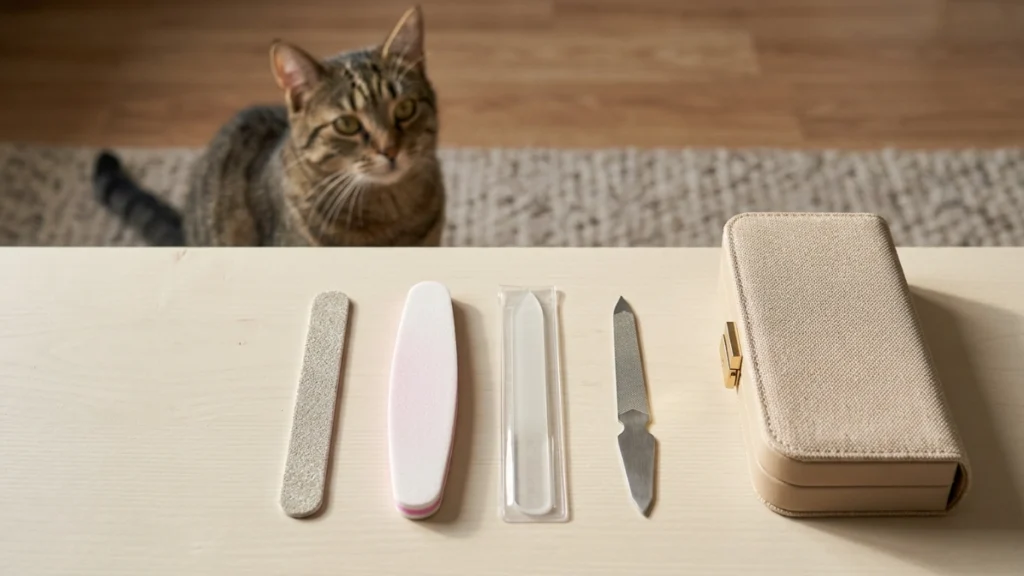
A clean file and a chemically contaminated file should not be treated exactly the same.
For example, a nail file may have residue from:
- Nail polish
- Gel products
- Acrylic products
- Nail glue
- Polish remover
- Acetone
- Primers or dehydrators
- Cuticle treatments
- Cleaning or disinfecting products
The ASPCA advises contacting a veterinarian or animal poison-control service when a pet may have been exposed to a potentially toxic substance because the actual risk depends on the substance, concentration, quantity, and animal involved. The ASPCA’s household-product safety guidance also notes that packaging and other swallowed objects can create foreign-body problems even when the cosmetic itself produces only mild effects.
Nail File Types and Their Risks for Cats
| Nail File Type | Main Concern if Chewed | Relative Concern |
|---|---|---|
| Emery board | Torn backing, abrasive particles, swallowed pieces | Moderate |
| Foam/cushioned file | Foam or plastic fragments swallowed | Moderate |
| Glass/crystal file | Chipping, sharp fragments, cuts | Higher if broken |
| Metal file | Mouth injury, rigid swallowed piece | Higher |
| Ceramic file | Broken sharp fragments | Higher if damaged |
| Electric file | Cord chewing, attachments, small parts | Higher |
| File with nail-product residue | Chemical exposure plus foreign-body risk | Depends on product |
The exact risk depends on how much was damaged, whether anything was swallowed, your cat’s size, and what substances were on the file.
A full-size intact emery board your cat carried around is usually less concerning than half of a file suddenly missing.
What Should You Do if Your Cat Chews a Nail File?
Start by taking the file away and checking what actually happened.
1. Examine the Nail File
Look at both ends and both surfaces.
Ask yourself:
- Is anything missing?
- Is the file shredded?
- Did a glass file chip?
- Is the metal tip bent or broken?
- Are pieces visible on the floor?
- Was the file coated in nail product?
If you can account for every missing fragment, that information can help your veterinarian assess the situation.
2. Check Your Cat’s Behavior
Watch for:
- Drooling
- Coughing or gagging
- Repeated swallowing
- Pawing at the face
- Bleeding from the mouth
- Vomiting
- Loss of appetite
- Lethargy
- Abdominal sensitivity
- Trouble passing stool
Foreign-body symptoms can vary depending on where an object is located and whether the blockage is partial or complete.
3. Identify Anything That Was on the File
If the nail file had polish, glue, acrylic, gel, remover, disinfectant, or another product on it, keep the product bottle or packaging.
Your veterinarian may want:
- Brand or product name
- Ingredient list
- Approximate amount involved
- Time of exposure
- Your cat’s weight
- Symptoms you have noticed
This information is much more useful than simply saying your cat “ate a nail file.”
4. Call Your Veterinarian When Ingestion Is Possible
If a piece is missing and you cannot find it, contact your veterinary clinic for guidance.
Foreign objects can sometimes pass naturally, but veterinarians may recommend an examination or imaging when the object’s size, shape, or material raises concern. X-rays, ultrasound, and other tests may be used when obstruction is suspected.
Do Not Make Your Cat Vomit at Home
Never try to make a cat vomit with hydrogen peroxide, salt, mustard, oil, or another homemade remedy.
Pet Poison Helpline specifically advises that there is no safe and effective at-home method for inducing vomiting in cats, and hydrogen peroxide may injure a cat’s gastrointestinal tract. Pet Poison Helpline’s emergency guidance recommends contacting a veterinarian or poison-control professional instead.
This matters even more with sharp objects. Bringing a sharp fragment back through the esophagus could potentially cause additional injury.
When Is It an Emergency?
Seek prompt veterinary help if your cat:
- Swallowed glass, ceramic, or a sharp metal piece
- Swallowed a large portion of an emery or foam file
- Is choking or struggling to breathe
- Has repeated vomiting
- Refuses food
- Becomes unusually weak or lethargic
- Shows clear abdominal pain
- Has blood in vomit or stool
- Has persistent drooling or mouth bleeding
- May have swallowed a file covered in an unknown chemical
- Continues getting worse
Veterinary references treat gastrointestinal obstruction as an emergency because prolonged blockage can damage digestive tissue and cause serious complications.
If chemical exposure is suspected, an animal poison-control service can also help determine whether the specific substance and dose are concerning. Some poison-control services charge a consultation fee, so check their current terms when you contact them.
Can Nail File Dust Hurt a Cat?
A small amount of ordinary filing dust settling near your manicure area is different from intentionally allowing a cat to chew or lick a used file.
Still, it is sensible to clean your workspace.
Filing may leave behind:
- Natural nail dust
- Acrylic or gel dust
- Tiny abrasive particles
- Polish residue
- Product debris
Do not let your cat lick piles of filing debris or play directly underneath an active manicure station.
If you use an electric nail drill, keeping your cat outside the immediate workspace is an easy precaution because you may also have cords, detachable bits, chemicals, and small accessories nearby.
How to Store Nail Files Safely Around Cats
Cats are surprisingly good at turning small beauty tools into toys.
The safest approach is simple: make your manicure supplies inaccessible when you are finished.
Try these habits:
- Keep files inside a closed manicure case or drawer.
- Do not leave an emery board on a nightstand or vanity.
- Throw damaged disposable files away immediately.
- Store glass files inside their protective sleeves.
- Keep nail chemicals tightly closed.
- Clean filing dust from tables and floors.
- Unplug and store electric filing tools after use.
- Keep small drill bits and attachments in closed containers.
If your cat repeatedly steals nail files, move the entire manicure kit to a cabinet instead of relying on an open basket.
Expert Tip: If a cat has chewed a nail file, replace it rather than putting it back into your manicure kit. Damage can create rough edges, and saliva also makes the tool unhygienic for future nail use.
Should You Reuse a Nail File After Your Cat Chews It?
It is better not to.
Even if the file still looks usable, cat saliva may contaminate the surface, and chewing can damage the abrasive coating or backing.
Disposable emery boards are inexpensive enough that replacement is usually the easiest option.
With an expensive glass or metal file, inspect it closely. If it is chipped, cracked, bent, rough, or otherwise damaged, stop using it.
This protects both you and your cat.
Cost and Safety: Replace the File or Keep It?
For most inexpensive nail files, replacement is a much smarter choice than trying to save a chewed tool.
A disposable emery board costs far less than dealing with:
- A cut to your own nail or skin
- A broken glass file
- Cross-contamination
- A veterinary examination
- Diagnostic imaging
- Foreign-body removal or surgery
Veterinary costs vary greatly by clinic, location, tests required, and treatment. If ingestion is suspected, do not delay veterinary advice simply because you are worried about cost. Calling your clinic first can help you understand what level of evaluation is appropriate.
When to See a Nail Technician or Dermatologist
This section concerns your own nails and skin, not your cat.
A licensed nail technician can help if you are unsure which file material or grit is appropriate for your natural nails or enhancements. However, a nail technician should not diagnose infections or medical nail conditions.
Consider seeing a dermatologist or other qualified healthcare professional if you develop:
- Persistent redness
- Swelling
- Pus
- Significant pain
- A nail that separates from the nail bed
- Ongoing discoloration
- A wound that is not healing
Do not continue using a file that has been chewed, cracked, contaminated, or damaged.
Common Mistakes to Avoid
- Assuming “not poisonous” means safe to chew. Physical obstruction may be the bigger danger.
- Waiting for severe symptoms after known ingestion. Call your veterinarian for guidance when a significant piece is missing.
- Trying to make your cat vomit. At-home vomiting methods are not recommended for cats.
- Ignoring nail-product residue. Tell your veterinarian exactly what was on the file.
- Continuing to use a chewed file. Replace damaged tools.
- Leaving glass files uncovered. A protective sleeve reduces breakage.
- Leaving manicure supplies unattended. Files, glue, cotton, foil, drill bits, and other small items can all attract curious cats.
- Assuming a cat is fine because it has not vomited. Foreign-body symptoms vary and may not all appear at once.
FAQs
Are emery boards toxic to cats?
A clean emery board is generally more concerning as a chewable foreign object than as a classic poison. If pieces are missing, contact your veterinarian because swallowed material may cause digestive problems.
What happens if my cat licks a nail file?
A brief lick of a clean, intact file is usually less concerning than chewing or swallowing it. Remove the file and watch your cat. If the file contains nail-product residue or your cat develops drooling, vomiting, or other symptoms, contact your veterinarian.
What if my cat ate part of an emery board?
Call your veterinarian and explain approximately how much is missing. Swallowed nondigestible material can sometimes become lodged in the digestive tract.
Is a glass nail file dangerous to cats?
An intact glass file is mainly a breakage risk. If your cat bites or drops one and the file chips or shatters, remove your cat from the area and collect the fragments carefully. Suspected ingestion of glass requires prompt veterinary attention.
Can nail polish on a file poison my cat?
The risk depends on the exact product and amount. If your cat chewed a file covered in polish, remover, glue, gel, acrylic, or another chemical, save the packaging and contact your veterinarian or animal poison-control service for product-specific advice.
How do I know if a swallowed nail file caused a blockage?
Possible signs include vomiting, loss of appetite, lethargy, abdominal pain, diarrhea, or difficulty passing stool. A veterinarian may need imaging to determine whether a foreign object is present.
Should I disinfect a nail file after my cat chews it?
Replacing it is usually safer, especially with disposable emery or foam files. Throw away any file that is cracked, shredded, chipped, or otherwise damaged.
Conclusion
So, are nail files toxic to cats? A plain nail file is usually not primarily a poisoning concern, but that does not make it a safe cat toy.
The greater risks are chewing injuries, sharp fragments, and swallowed material that could become a gastrointestinal foreign body. Chemical residue from your manicure routine can add another layer of concern.
Take the file away, check whether anything is missing, identify any products that were on it, and watch your cat closely. If your cat swallowed a significant piece, chewed a sharp glass or metal file, or develops vomiting, appetite loss, lethargy, pain, or other unusual symptoms, contact your veterinarian promptly.
For everyday prevention, keep manicure tools and nail products inside a closed drawer or case. It is a small habit that protects your beauty supplies—and keeps a curious cat out of trouble.

