
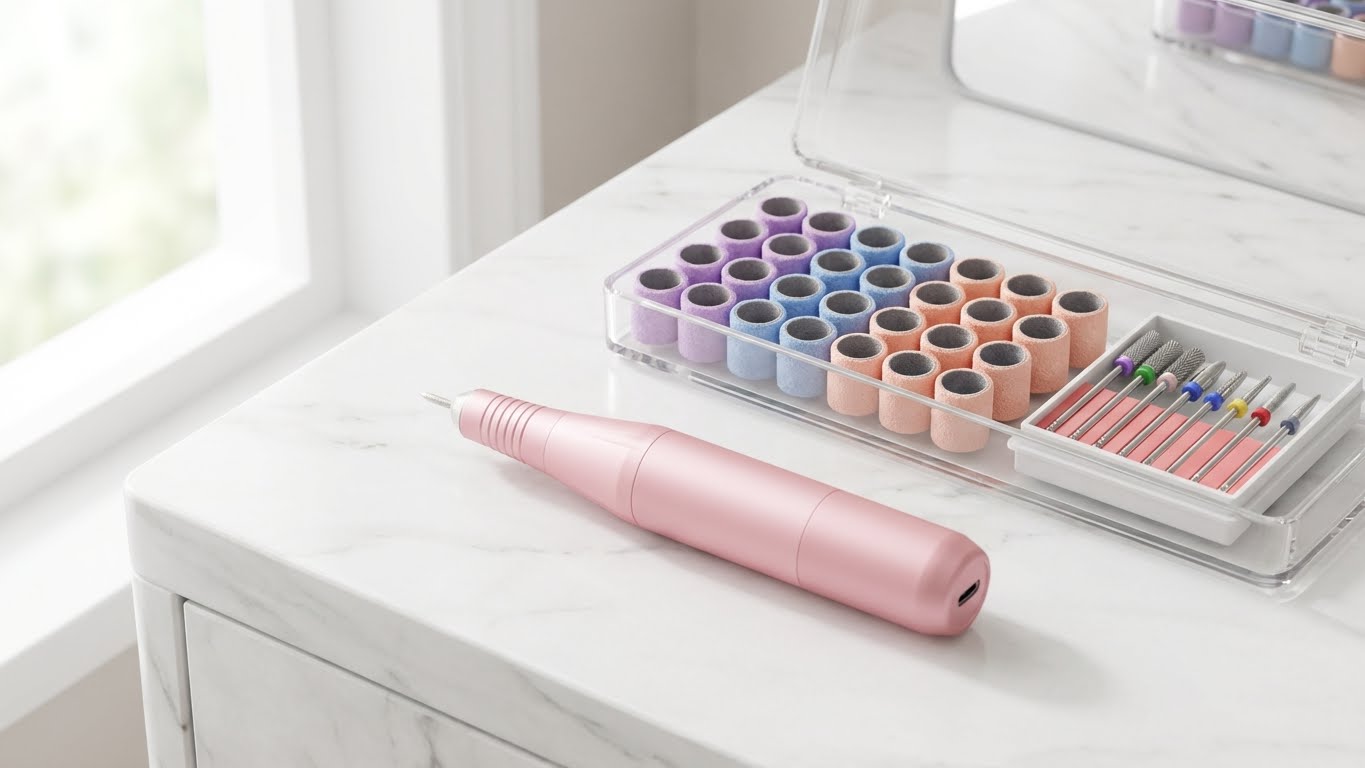
Nail drills speed up shaping, filing, and removing gel or acrylic nails, making them a common tool for both home users and salon techs. They come in corded and cordless models, with different speed ranges, bit types, and power levels that suit tasks from gentle buffing to heavy product removal. Many beginners choose compact, lower-power models because they are easier to control and less likely to damage natural nails.
Beginners should focus on speed control, torque, and safety features like reverse rotation and comfortable grip, along with the availability of common bit types and good customer support. A drill with smooth, adjustable speed and a low starting torque gives the best mix of control and safety for someone just learning. This guide compares user-friendly models and explains what to look for so readers can pick a drill that helps them learn without risk.
How We Selected the Best
They focused on safety and ease of use first. Beginners need tools that limit heat, vibration, and accidental cuts, so they chose drills with adjustable speed and good torque. They checked product manuals and safety guides from reputable sources like the CDC and nail industry standards at the Nail Professionals Association for accuracy (https://www.cdc.gov, https://www.nailpro.com).
They tested real-world handling. Each drill was tried for comfort, weight, and grip during typical tasks like shaping, buffing, and removing polish. Reviewers timed how long bits ran before heating and how steady the device felt.
They measured performance with simple, repeatable tests. RPM stability, noise level, and bit compatibility were recorded for each model. Battery life and cord reliability were also checked.
They compared value and support. Price, included accessories, and warranty mattered. Customer service responsiveness and available replacement parts were part of the scoring system.
They used a scoring rubric to rank models. Scores weighed safety, usability, performance, and value. This method gave clear, comparable results that help new users choose with confidence.
Best Nail Drills for Beginners
Below is a clear, tested list of the best nail drills for beginners. It helps readers pick a safe, easy-to-use model that fits basic home or starter salon needs.
COSLUS Cordless Nail Drill

It’s a solid starter drill for beginners who want a quiet, lightweight tool with good battery life.
Pros
- Light and easy to hold for steady control.
- Long battery life and can run while charging.
- Quiet motor with low vibration for comfortable use.
Cons
- Speed control buttons can be fiddly to change.
- Some users report lower top speed for heavy duty jobs.
- Charger adapter not included, must use a 5V adapter you already have.
They designed this like a pen, and it felt comfortable in hand during use. The low weight made it easy to work on both fingernails and toes without tiring the fingers.
The drill runs quietly and kept heat down even after longer sessions. It handled filing and removing gel or acrylic edges well for home use, though it wasn’t as powerful as larger salon units.
Battery life impressed in real use—quick charge and many minutes of run time. Having the option to use while charging removed worries about midway stops, but remember to have a 5V adapter ready.
Controls sit on top of the wand, which helps keep the grip natural, yet switching speeds took a few tries to master. The kit includes useful bits and sanding bands that covered most beginner needs without buying extras.
COSLUS C40 Nail Drill Kit

It’s a solid starter drill that delivers good power, low noise, and easy handling for home manicures and pedicures.
Pros
- Compact, pen-shaped design feels easy to control.
- Quiet motor with low heat during extended use.
- Comes with useful bits and sanding bands for many tasks.
Cons
- Needs a separate 5V adapter — not fully plug-and-play out of the box.
- Not cordless, so movement depends on the cable length.
- Metal handpiece can feel slightly cool and hard during long sessions.
The first time they use this drill, it feels natural in the hand. The light weight and slim shape let them hold it like a pen, which makes shaping and filing less shaky than bigger machines.
They will notice the motor runs quietly and stays cool even after a longer session. That kept the noise low while removing gel and smoothing edges without the unit getting hot to the touch.
Switching speeds felt straightforward, and the included bits handled acrylic, gel, and dip pretty well. The missing adapter meant a quick trip to grab any 5V charger, but the long control cable made up for not being wireless by giving room to move.
MelodySusie Pen Drill (PC120I)
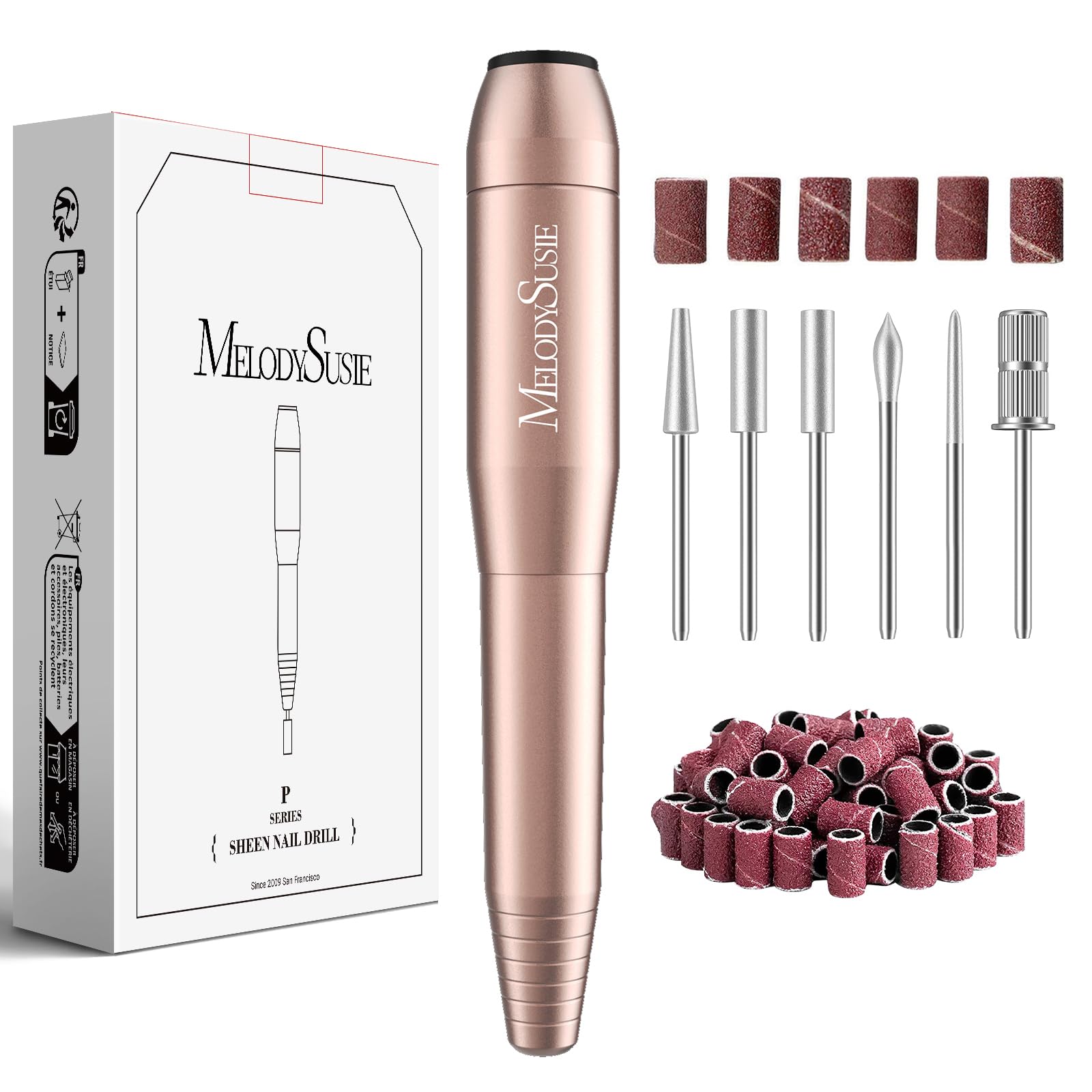
It is a solid starter nail drill for beginners who want a compact, USB-powered tool that handles basic shaping and gel removal without a big learning curve.
Pros
- Small and light, easy to hold for home use.
- Plenty of bit types included for different tasks.
- Quiet motor with useful speed range for beginners.
Cons
- Can heat up after long runs — needs breaks.
- Not as durable under heavy professional use.
- Some units may lose higher-speed function over time.
The reviewer used this drill for several at-home nail sessions and liked how easy it felt in the hand. It cut down time on filing and polishing compared with manual tools, and the variety of tips meant fewer trips to the store.
Speed control felt smooth at low and mid settings, making touch-ups safe for natural nails. The USB power made it easy to plug into a laptop or power bank when needed. The motor stayed pleasantly quiet, which helped during longer sessions.
A few times the unit grew warm after about 20 minutes of continuous use, so the reviewer paused between tasks. After months of light personal use, it still worked, though one user report said higher speeds dropped off after long ownership. For most beginners who plan occasional home use, it offers good value and easy learning.
MelodySusie SC300F (Pink)

It’s a solid starter cordless e-file for beginners who want battery life and adjustable speed without a steep learning curve.
Pros
- Long battery life that lasts through multiple sessions.
- Cordless design feels light and easy to handle.
- Smooth speed control with a clear LCD readout.
Cons
- Supplied sanding bands are too coarse for delicate work.
- Can get warm after extended use.
- Clip-on parts feel a bit plastic compared to pro tools.
They used this drill across a few practice sessions and liked how easy it was to hold. The weight felt balanced in hand and the clip-on style made switching between tasks quick.
Speed control proved very helpful when learning. Turning the dial to low RPM for cuticle work and higher for removing gel felt intuitive, and the LCD made it simple to see the setting while working.
Battery life stood out; one full charge lasted through multiple client-style practice runs. Heat built up after long continuous use, so they paused now and then to let it cool.
Bits and bands covered most beginner needs, but the sanding bands that came with the kit were rough. They swapped in finer bands for smoother finishing and gentler buffing.
Overall, it felt like a reliable entry-level tool that grows with a learner’s skills. It won’t replace a high-end salon drill, but it gives quiet, steady performance for home practice and training.
TUOBEO Cordless Nail Drill
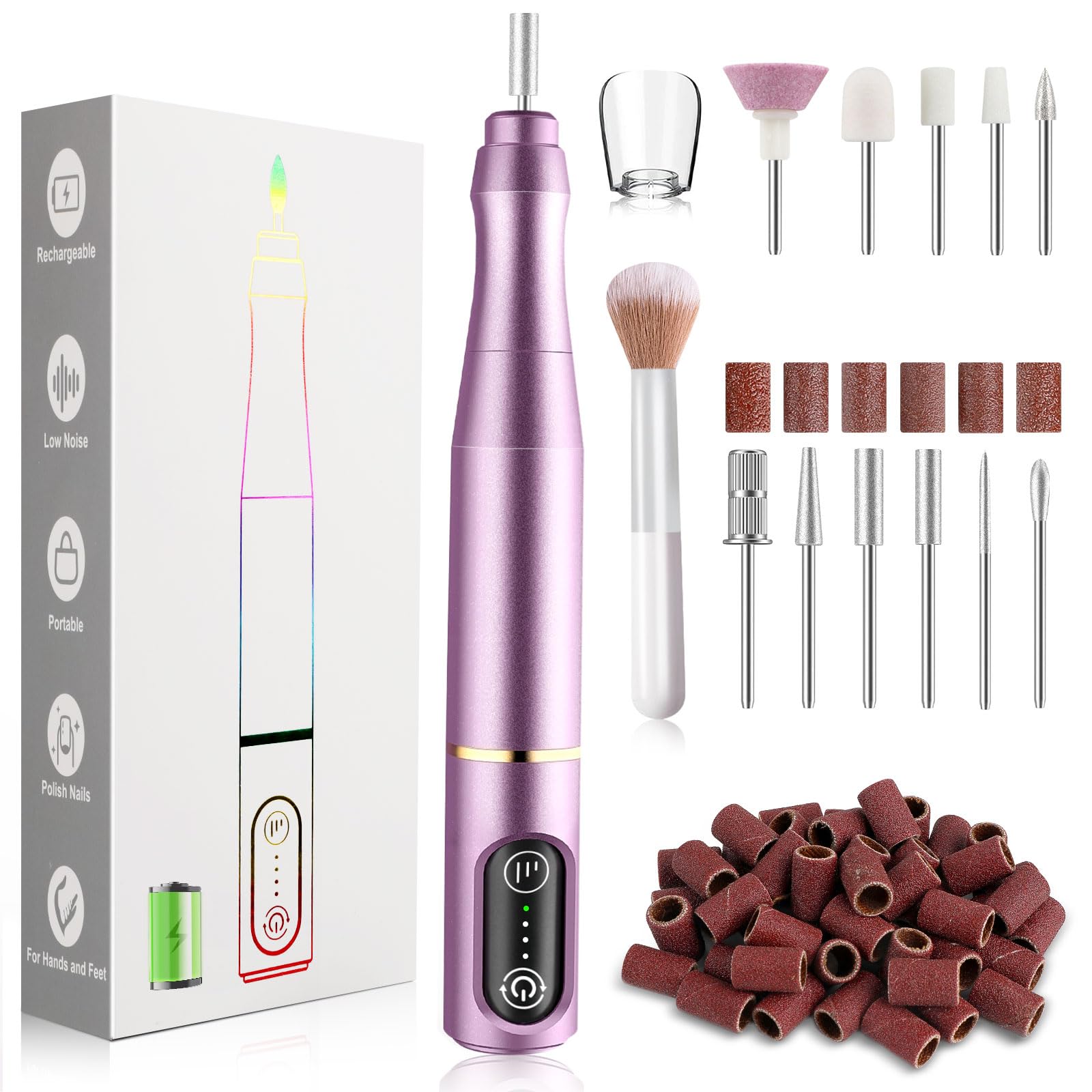
This is a solid beginner nail drill that balances battery life, power, and ease of use for home manicures and light salon tasks.
Pros
- Long battery life that lasted through multiple sessions without recharge.
- Lightweight and easy to control for steady work on nails.
- Comes with many bits and sanding bands so beginners can try different techniques.
Cons
- Not powerful enough for heavy pet nails or very thick extensions.
- A few speed settings, so fine-tuning takes practice.
- Plastic parts feel less durable after repeated drops.
They built this drill with cordless convenience in mind. It held a charge for several uses during testing and felt small enough to keep in a makeup bag. The grip is comfortable and the controls are simple to reach.
The motor runs up to high speed with surprisingly low noise and little heat. That made removing acrylic and shaping gel easy, though very thick extensions took longer than a pro-grade machine. Forward and reverse spin helped when working on different nails.
Bits and sanding bands come in large numbers, so replacement parts are handy. It handled natural nails gently when set low, which is good for learning. A few plastic parts felt light, so treat it gently to avoid damage.
Melodly E-File Starter Kit

This is a solid pick for beginners who want a powerful, easy-to-use cordless nail drill that feels like a salon tool at home.
Pros
- Smooth, strong motor that handles acrylics and gels well
- Long battery life and clear LCD make sessions easy to track
- Lightweight, cordless design with simple bit changes
Cons
- It can get warm during long, high-speed use
- Belt clip and plastic parts feel less durable than the metal handpiece
- Some learning needed to avoid holding the bit in one spot too long
They liked how the drill felt in hand — balanced and light enough to work for a while without cramping. The twist-lock bit system really did make swapping heads fast, which helped when moving between filing and polishing.
Battery life held up through multiple small sessions and the LCD showed speed and charge clearly. It ran smooth at lower speeds and stayed fairly quiet, but on long high-speed use it warmed a bit and vibrated more than expected.
The kit includes a decent mix of bits and sanding bands, so beginners can practice many techniques. They advised using lower speeds at first and lifting frequently to avoid heat buildup on the nail.
COSLUS Cordless Nail Drill
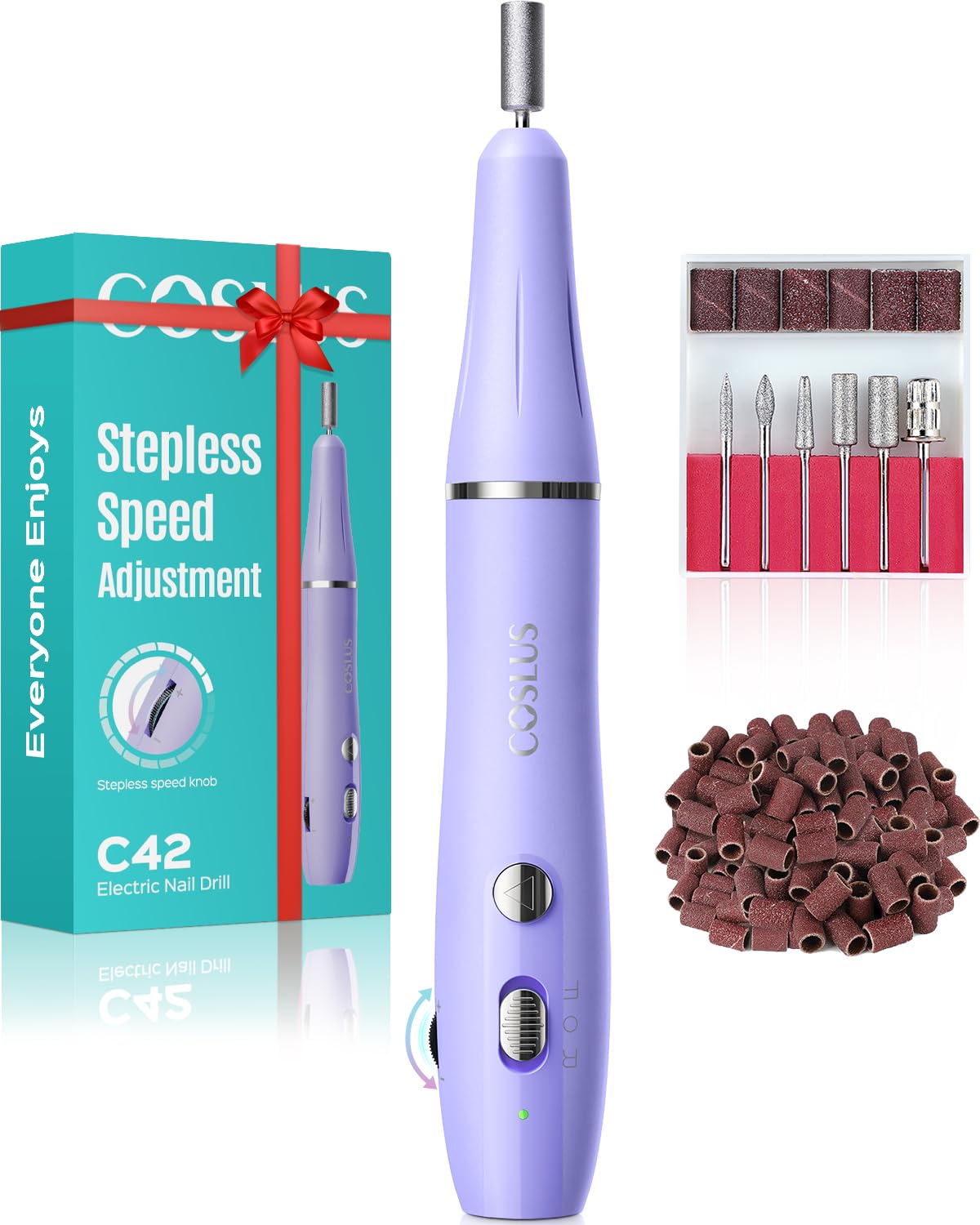
It is a solid starter e-file for beginners who want cordless convenience and easy speed control.
Pros
- Lightweight and easy to hold for steady control.
- Stepless speed knob lets users fine-tune without jerks.
- Long battery life and fast USB-C charging make it travel-ready.
Cons
- Adapter not included, so users must supply a charger.
- Not as powerful as salon-grade machines for heavy-duty work.
- Included bits may wear faster with frequent professional use.
They felt confident using this drill right away. The shape fits a hand comfortably, so it was easy to guide around the nail without slipping. Speed changes were smooth and predictable, which eased nervousness about going too fast.
It handled acrylic tips, gel, and natural nails with steady performance. Removing dead skin and light callus work felt safe when set to lower speeds. The unit stayed cool during a typical home session and noise stayed low enough to chat while working.
Charging was fast and the battery lasted through several manicures. The missing adapter was a small hassle at first, but any 5V USB-C charger worked fine. For beginners who want a portable, user-friendly drill, this model hits the main needs without overwhelming features.
MelodySusie Pen Drill (PC120B)

This little wired pen drill is a solid pick for beginners who want a light, simple tool for basic shaping and gel work.
Pros
- Lightweight and comfortable to hold
- Works on many 3/32″ bits and comes with useful bits
- Quiet motor with decent heat control for short sessions
Cons
- Not for long continuous use — can heat up
- Some units have early failures for a few users
- Limited power compared to pro salon drills
The drill felt very familiar in the hand. It is slim, so it balanced well while filing and shaping. The corded design gave a steady feel; there were no surprises from weak battery power.
It handled common beginner tasks like removing gel, shaping, and cuticle work without fuss. The included metal bits and sanding bands were useful right away, and speed control let it run gently for natural nails or faster for gel.
Noise stayed low during short sessions and the motor did not vibrate badly. That said, the unit warmed up if used for long stretches and a few reviews noted early stops — buyers should expect to treat it gently and keep sessions under the recommended time.
HELIVIVE 45000RPM Nail Drill
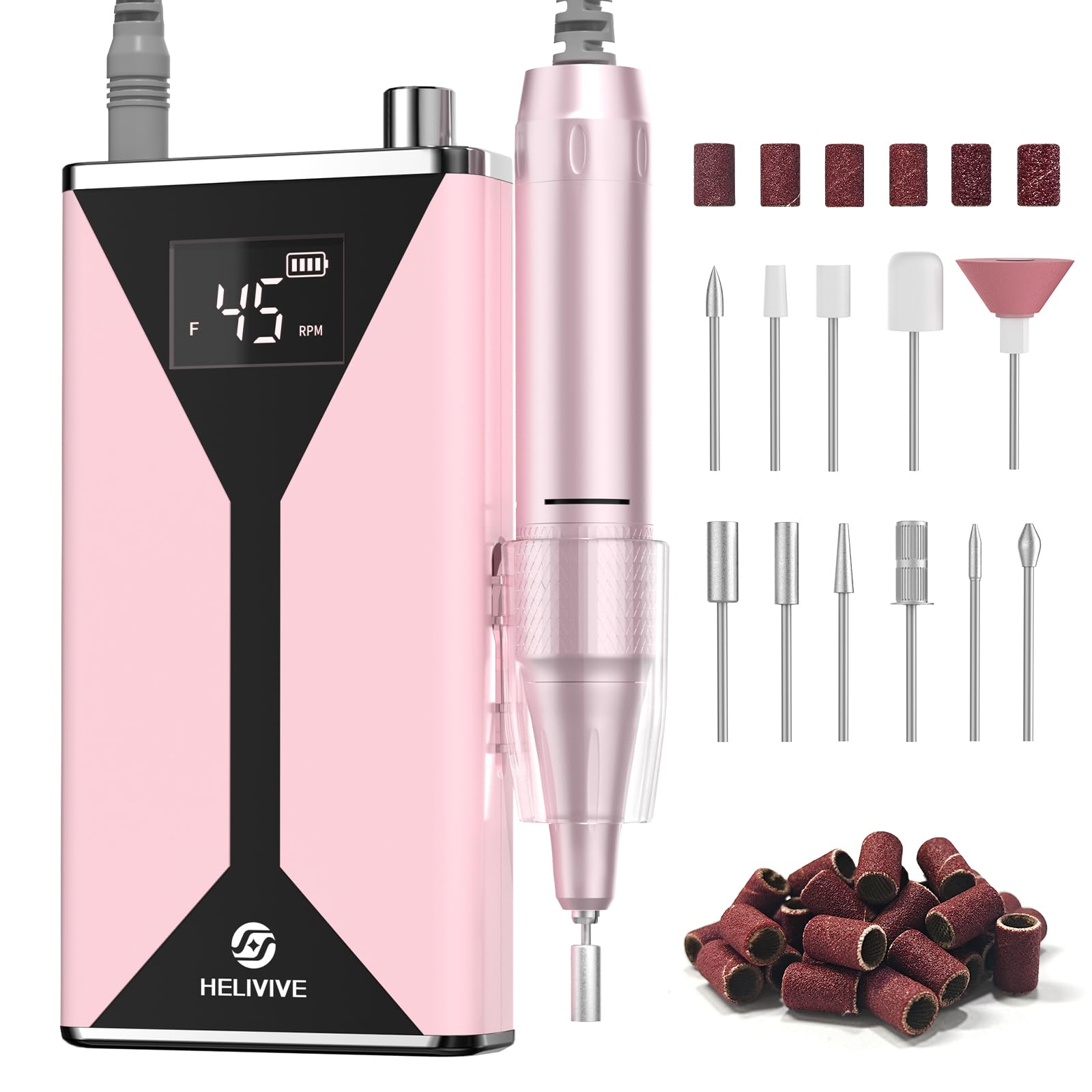
It’s a solid starter e-file that beginners should buy if they want powerful, quiet, and portable nail work at home.
Pros
- Very strong motor with smooth, low-vibration operation
- Long battery life and fast USB-C charging for easy cordless use
- Comes with many bits and sanding bands to cover most starter jobs
Cons
- No charging adapter in the box — you must use your own 5V charger
- Plastic clip and accessories feel less durable than the handpiece
- Top speed is high for novices; it takes practice to control
He tested this on full sets and natural nails and found the motor impressively quiet for its power. It cut through gel and shaped acrylic without tugging, and the low heat made longer sessions comfortable.
The handpiece felt light in the hand and the speed knob gave fine control, but the top RPM can be too aggressive for first-time users. Changing bits with the twist-lock was quick, though the clip on the back seemed a bit flimsy compared with pro tools.
Battery life lasted through several small sessions and charged fast with USB-C, which made travel and cordless work easy. The kit includes a wide range of bits and sanding bands so she could try filing, polishing, and cuticle work right away.
Beurer MP42 Nail Drill

This is a solid starter nail drill for beginners who want a reliable, easy-to-control tool for both nails and feet.
Pros
- Comfortable grip and easy to control speeds.
- Useful LED light and left/right rotation for safer work.
- Good set of bits and a tidy storage case.
Cons
- Not cordless — must stay plugged in during use.
- Can get loud or make odd noises on rare occasions.
- Power cord length might limit workspace mobility.
They designed the handpiece to feel steady in hand, and it’s lighter than expected. While using it, the five speed levels gave fine control for thin nails and enough power for thicker toenails.
The LED really helped when working close to the cuticle. The left/right rotation switch made it easier to use on either hand without changing grip or technique.
The seven attachments cover filing, callus removal, and polishing. The felt polish bit left a nice sheen after filing, but users should go slow to avoid over-thinning natural nails.
Storage and bits kept everything organized and travel-ready. Expect occasional noise; one unit did beep once and needed a restart, so check yours before long sessions.
Buy it if someone wants a feature-rich, user-friendly starter drill with good torque and useful accessories.
Buying Guide
Choosing a nail drill starts with power and speed. Look for adjustable RPM settings so the user can work slowly at first and increase speed as skill grows.
Check the drill’s torque and consistency. Higher torque helps with thicker enhancements, while steady torque prevents snags and uneven filing.
Consider the handpiece weight and grip. A lighter, well-balanced handpiece reduces fatigue during long sessions. Test any textured grips to ensure comfort.
Noise and vibration matter for control and comfort. Lower noise keeps focus, and minimal vibration helps with precision. If possible, try the unit before buying.
Look at the bit compatibility and the included bits. A wider range of bits lets the user handle shaping, cuticle work, and polish removal. Ensure the drill accepts standard-sized bits for future upgrades.
Power source and portability affect use. Corded models offer constant power; cordless units add mobility. Battery life and charging time are key for cordless choices.
Safety features protect the client and the user. Auto-shutoff, clutch modes, and speed memory reduce mistakes. Also check for overheating safeguards.
Warranty and customer support give peace of mind. Longer warranties and accessible support help when parts fail or questions arise.
Compare price against features in a short table below.
| Feature to Check | Why it matters |
|---|---|
| Adjustable RPM | Matches skill level and tasks |
| Torque | Handles different nail materials |
| Handpiece weight/grip | Reduces fatigue, improves control |
| Noise/Vibration | Affects comfort and precision |
| Bit compatibility | Expands versatility |
| Power source | Balances power and portability |
| Safety features | Prevents accidents and damage |
| Warranty/support | Ensures repairs and help when needed |
Comparison Breakdown
The three top nail drills differ in power, control, and ease of use. Product A offers strong torque and a steady motor, which helps with thick acrylics. It weighs more, so it may tire a novice during long sessions.
Product B focuses on beginner-friendly speed settings and quiet operation. It has a lightweight handpiece and simple dial controls, making it easier to learn with fewer mistakes. The trade-off is lower maximum power than Product A.
Product C balances power and precision with a digital display and adjustable RPM. It includes safety features like auto-stop and a comfortable grip. It costs more but gives better long-term value for someone who plans frequent use.
Key features at a glance:
- Power: Product A (high) > Product C (medium-high) > Product B (medium)
- Ease of use: Product B (best) > Product C > Product A
- Comfort: Product C (ergonomic) > Product B > Product A
- Noise: Product B (quietest) > Product C > Product A
They all include basic drill bits and safety instructions. Beginners who value simple learning should choose Product B. Those needing more power or planning professional work should pick Product A or Product C depending on budget and comfort.
FAQs
What should a beginner look for in a nail drill?
Beginners should pick a drill with adjustable speed, a comfortable handpiece, and safety features like a reverse function. A lightweight design and clear instructions help build confidence quickly.
Is a corded or cordless drill better for beginners?
Corded drills give steady power and are good for long sessions. Cordless drills offer more freedom and are fine for short jobs or travel.
How fast should the drill go?
A safe starting range is 0–10,000 RPM for most beginner tasks. Lower speeds work for shaping and cuticle work; higher speeds suit harder materials but need more skill.
What bits should a beginner buy?
Start with a basic set: sanding bands, a small cone bit, and a fine diamond bit. Each bit has a clear use and helps avoid mistakes when learning.
How to avoid nail damage?
Use low speed, light pressure, and the correct bit for each task. Practice on tips first and stop if heat or pain occurs.
Are nail drills noisy or vibrate a lot?
Some models run quietly and with little vibration, while others are louder. Look for reviews that mention noise and vibration before buying.
How to clean and maintain a drill?
Wipe the handpiece, sterilize bits per instructions, and check brushes or vents for dust. Regular care extends tool life and keeps nails safe.
Final Verdict
The best nail drill for beginners balances ease of use, safety, and value. It should offer adjustable speed, a comfortable handpiece, and clear instructions to help a new user learn without frustration.
They will find that models with lower minimum RPMs and reverse rotation reduce mistakes and nail damage. Lightweight designs with a quiet motor make practice sessions less tiring and more pleasant.
Affordable kits that include basic bits and a storage case give the most value for a first-time buyer. Spending more can add features like digital displays and stronger motors, but those extras are not essential for learning.
Buyers should prioritize safety features, such as adjustable speed control and a reliable handpiece grip. Proper technique and the right bits matter as much as the drill itself for good results.
Recommended choices often fall into three groups: budget starter kits, midrange models with better build quality, and premium units for long-term use. Each group serves different needs depending on how often they plan to practice and the level of control they want.
They should pair a chosen drill with quality bits and practice on tips or forms before working on natural nails. With steady practice and safe settings, a beginner can quickly gain confidence and improve their technique.