
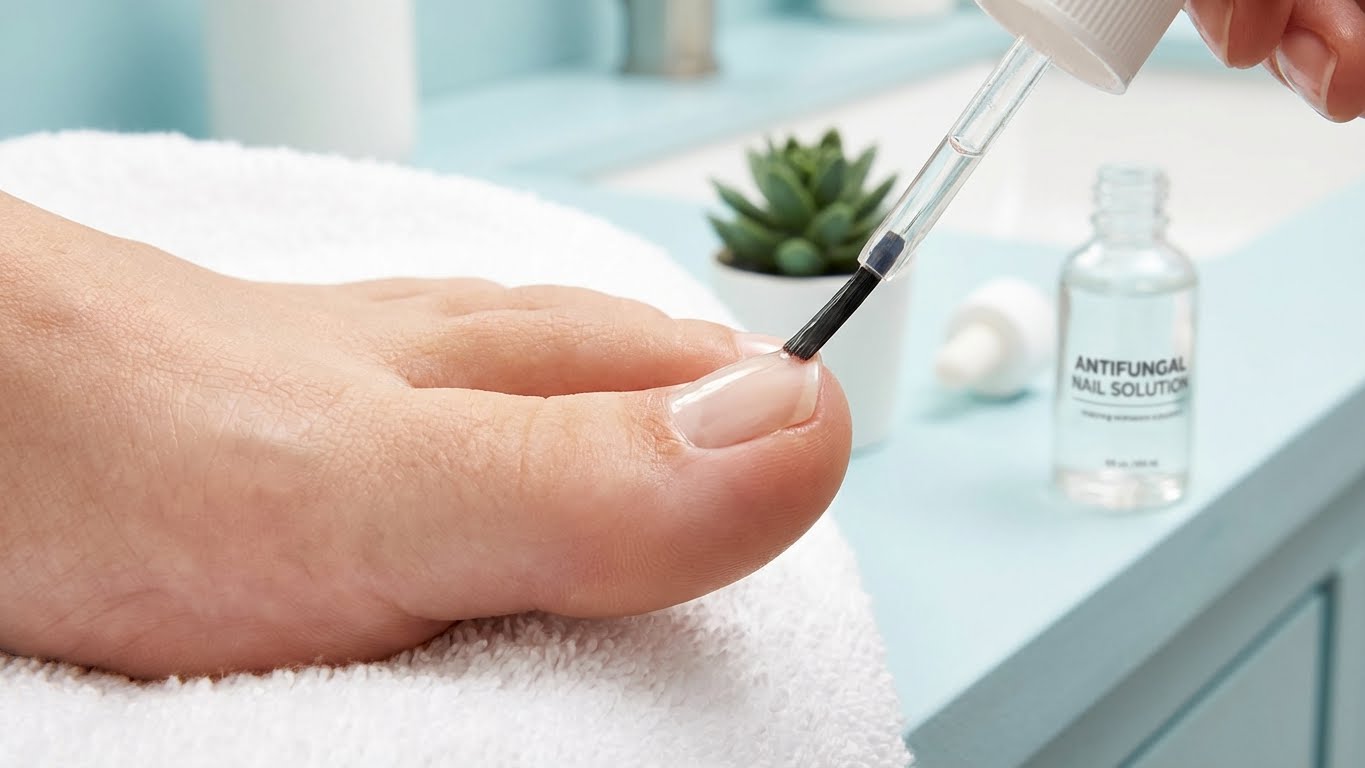
Nail fungus is a common problem that can make nails discolored, thick, and brittle. Over-the-counter and prescription treatments aim to clear the infection, protect the nail bed, and prevent recurrence. Antifungal creams, medicated lacquers, oral pills, and laser treatments work in different ways and suit different levels of infection and patient needs.
The most important factors when choosing a nail fungus treatment are how well it penetrates the nail, proven antifungal ingredients, treatment duration, and safety for long-term use. Products with clinical evidence of fungal clearance and good nail penetration usually give the best results, while ease of use and side-effect risk help decide between topical and oral options. This guide explains how the top options were chosen and compares strengths and drawbacks to help readers pick the right treatment.
How We Selected the Best
The team reviewed clinical studies, ingredient lists, and real-world user results to judge effectiveness. They checked evidence for antifungal actives like terbinafine and ciclopirox and looked at treatment duration and cure rates. For medical guidance, they consulted sources such as the Centers for Disease Control and Prevention (https://www.cdc.gov/fungal) and peer-reviewed summaries.
Safety mattered as much as effectiveness. The reviewers screened for side effects, drug interactions, and suitability for people with diabetes or immune concerns. They prioritized products with clear dosing and warnings.
Ease of use influenced rankings. The team rated application style, treatment length, and product packaging. Products that fit common routines scored higher.
Value and transparency were included in the process. Reviewers compared price per treatment and weighed manufacturer claims against independent studies. They favored brands that publish clinical data and ingredient sourcing.
Best Nail Fungus Killers
Below is a carefully chosen list of the best nail fungus killers based on effectiveness, safety, and user reviews. The list helps readers compare topical treatments, oral options, and nail care tools to find the right choice for their needs.
Kerasal Nail Renewal

It is worth buying for someone who wants to improve nail appearance and reduce thickness without harsh chemicals.
Pros
- Targets thick, discolored nails with a precise applicator.
- Feels gentle and hydrating thanks to urea and lactic acid.
- Easy to add to a daily routine; no messy cleanup.
Cons
- Results vary; some users see only cosmetic change.
- Requires consistent use for weeks to notice improvement.
- Small bottle may run out quickly for severe cases.
They used the product nightly and noticed softer, smoother nail edges within two weeks. The precision tip made it easy to apply only to the damaged area, which felt less wasteful than a full coating.
After about six to eight weeks, the nail looked clearer and thinner on one toe, while another toe showed little change. The formula did not sting and the nails felt less brittle after regular use.
This worked best as a maintenance or cosmetic fix rather than a medical cure in their experience. For people who want a gentler option to improve nail appearance, it’s a practical choice to try.
Dr. Budwa Toenail Treatment
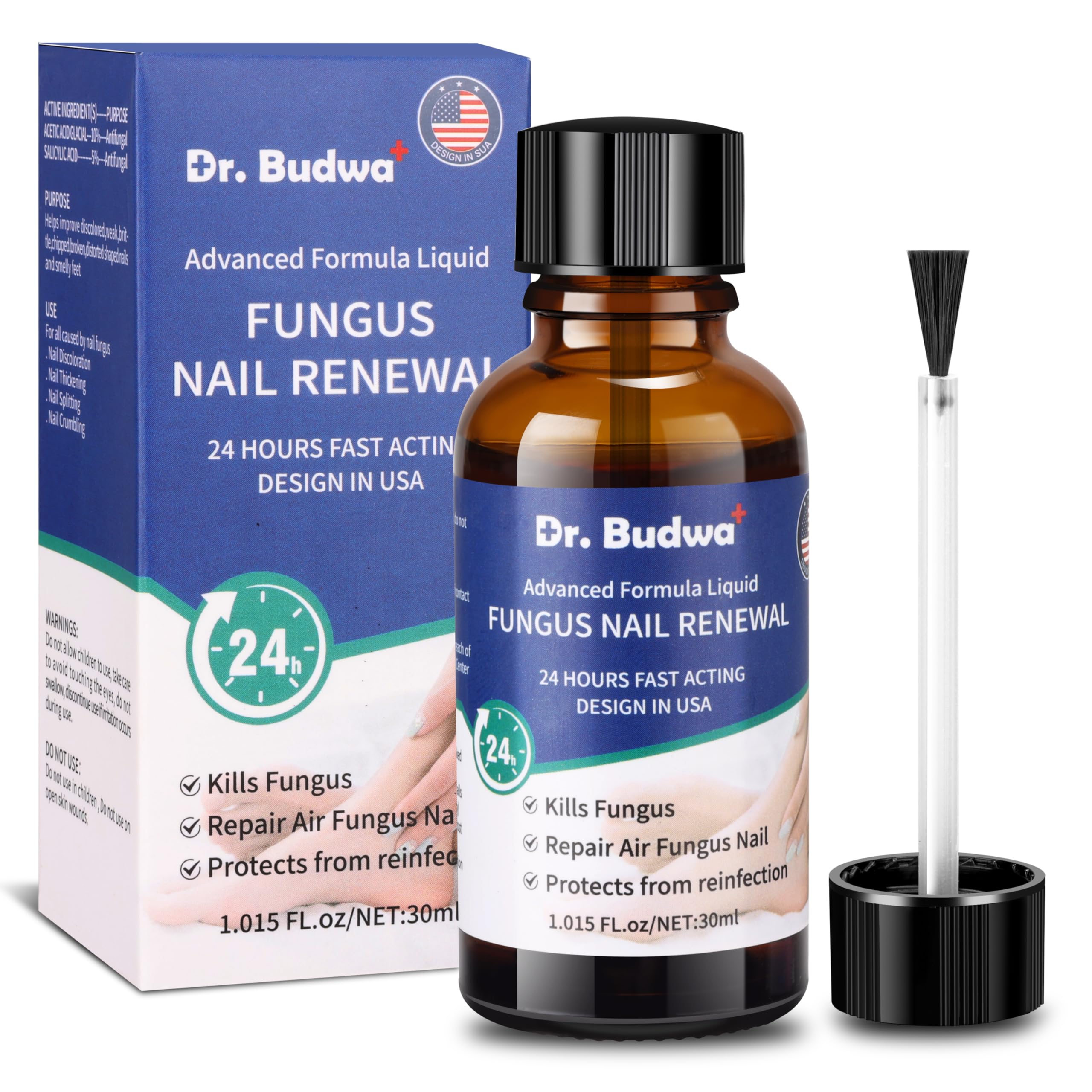
It is worth buying for people who want a strong, easy-to-apply treatment that shows gradual nail improvement with regular use.
Pros
- Penetrates well and feels fast-acting.
- Brush applicator targets nails without mess.
- Gentle on skin while treating fungus.
Cons
- Not an overnight fix—needs consistent use.
- Bottle size is small for long courses.
- Works best with ongoing application to prevent return.
They noticed the liquid sank into the nail quickly and did not leave a greasy film. The brush made it simple to reach under edges and along nail curves without touching healthy skin.
Daily use seemed to reduce yellowing and brittleness over weeks. Nails looked clearer and firmer after continued use, matching what others have reported about steady improvement.
Application felt straightforward and low-odor. The formula felt strong but did not irritate their skin, though they kept up the routine to see full regrowth.
They would recommend it for someone who wants a salon-grade option to try at home, but warned that patients expecting instant results will need patience.
Treatonic Toenail Fungus Kit
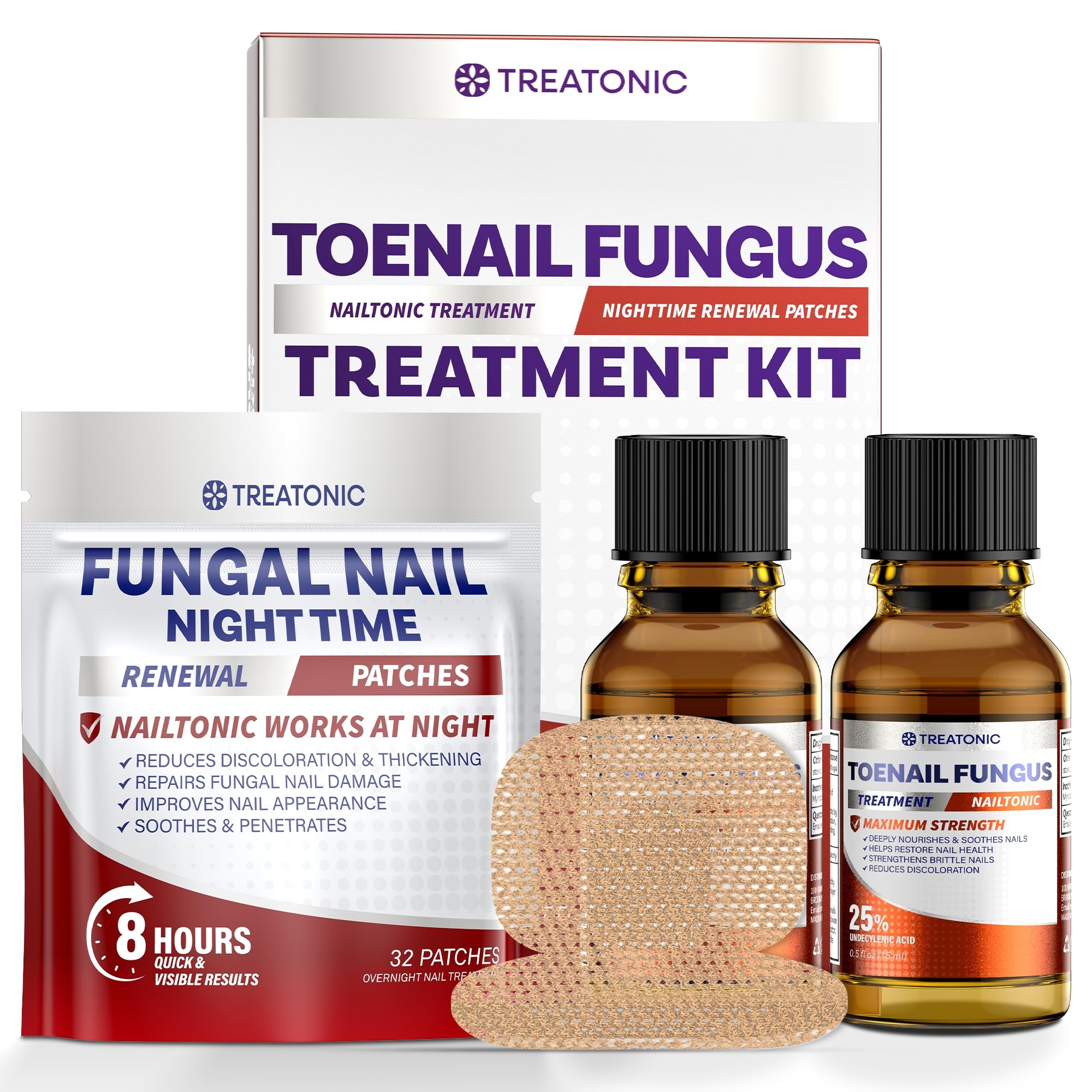
This kit is worth buying if someone wants a simple day-and-night routine that showed visible nail improvement in a few weeks.
Pros
- Fast-acting combo of daytime liquid and nighttime patches
- Strong 25% undecylenic acid that soaks into the nail
- Patches stay on during sleep and under socks
Cons
- Requires daily two-step routine for best results
- Patches may feel bulky on tight shoes
- Some users may need longer use for full clearance
They used the liquid each morning and the patch every night. The dropper went on cleanly and absorbed quickly, so it didn’t feel greasy during the day. After a week they noticed less discoloration and softer edges where the fungus had lifted.
The nighttime patches sealed the nail well and stayed put through sleep and light activity. Those patches kept the nail moist while the active ingredient worked, which seemed to help reduce thickness over time. Wearing shoes felt fine after a night or two, though tight shoes made the patch noticeable.
Overall it felt like a practical, no-mess system for someone serious about clearing nail fungus. It won’t replace a doctor for severe infections, but for mild to moderate cases it offered steady, visible improvement when used as directed.
Foot Cure Toenail Treatment
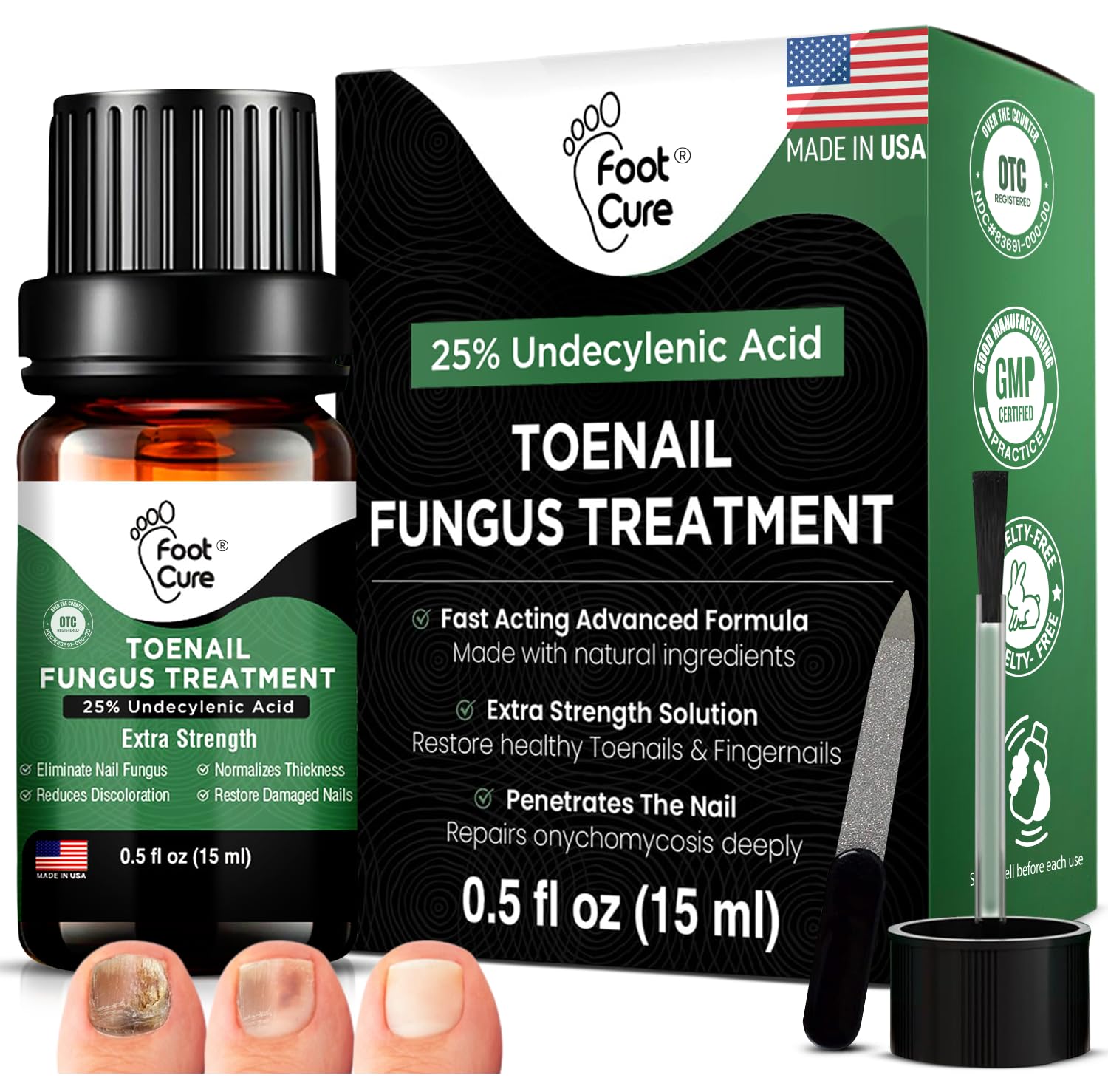
It is worth buying for people who want an OTC topical that aims to reduce nail fungus slowly and help nail strength with oil-based ingredients.
Pros
- Feels nourishing and oil-rich on application.
- Uses undecylenic acid with tea tree and oregano oils.
- Made in the USA and easy to apply with a dropper.
Cons
- Results can take many weeks and need strict, daily use.
- Strong herbal scent may bother some users.
- Not guaranteed to work for severe or long-standing infections.
They applied the oil and noticed it coated the nail well without flaking. It left the nail feeling softer after a few weeks, which made trimming and filing easier.
Daily use required patience; small gains appeared around 8–12 weeks for some users. A few people saw big improvements, while others reported little change even after months.
The herbal smell was noticeable right after application, and it lingered on shoes for a bit. Mixing with a pure oregano oil helped one tester, but that is an extra step and not in the official instructions.
Overall, it works best for mild to moderate infections if the person sticks to the routine and keeps expectations realistic. For deep or long-term cases, a doctor’s prescription treatment may be more reliable.
NONYX Clarifying Gel
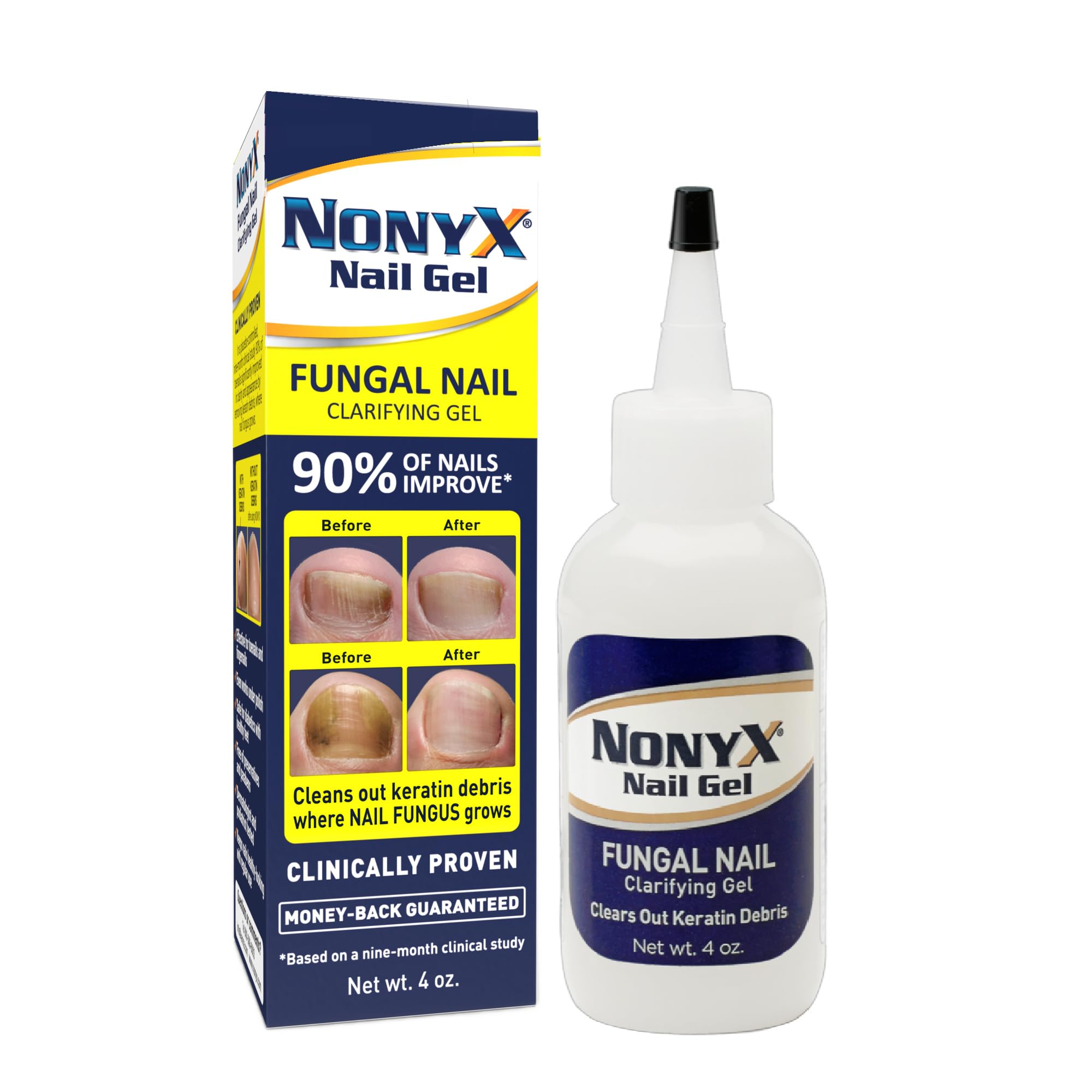
It works for many people and is worth trying if someone wants a proven topical option for discolored or thick nails.
Pros
- Clinically shown to improve most nails in studies.
- Dries clear, non-staining, and works under polish.
- Large bottle lasts months and is cost effective.
Cons
- Results come slowly — nails must grow out.
- Needs regular, repeated use for best effect.
- Not a guaranteed fix for severe infections.
They applied the gel like a nail treatment and noticed the texture felt light and non-greasy. The clear finish made it easy to wear polish over it while continuing treatment.
After a few weeks the nails looked less yellow at the edges, but real change took months because toenails grow slowly. The bottle size kept them from rushing through doses.
It felt reassuring that podiatrists and dermatologists recommend it and that it’s been on the market for years. Still, anyone with severe pain or spreading infection should see a doctor before relying only on a topical product.
TegaSolve Toenail Fungus Treatment
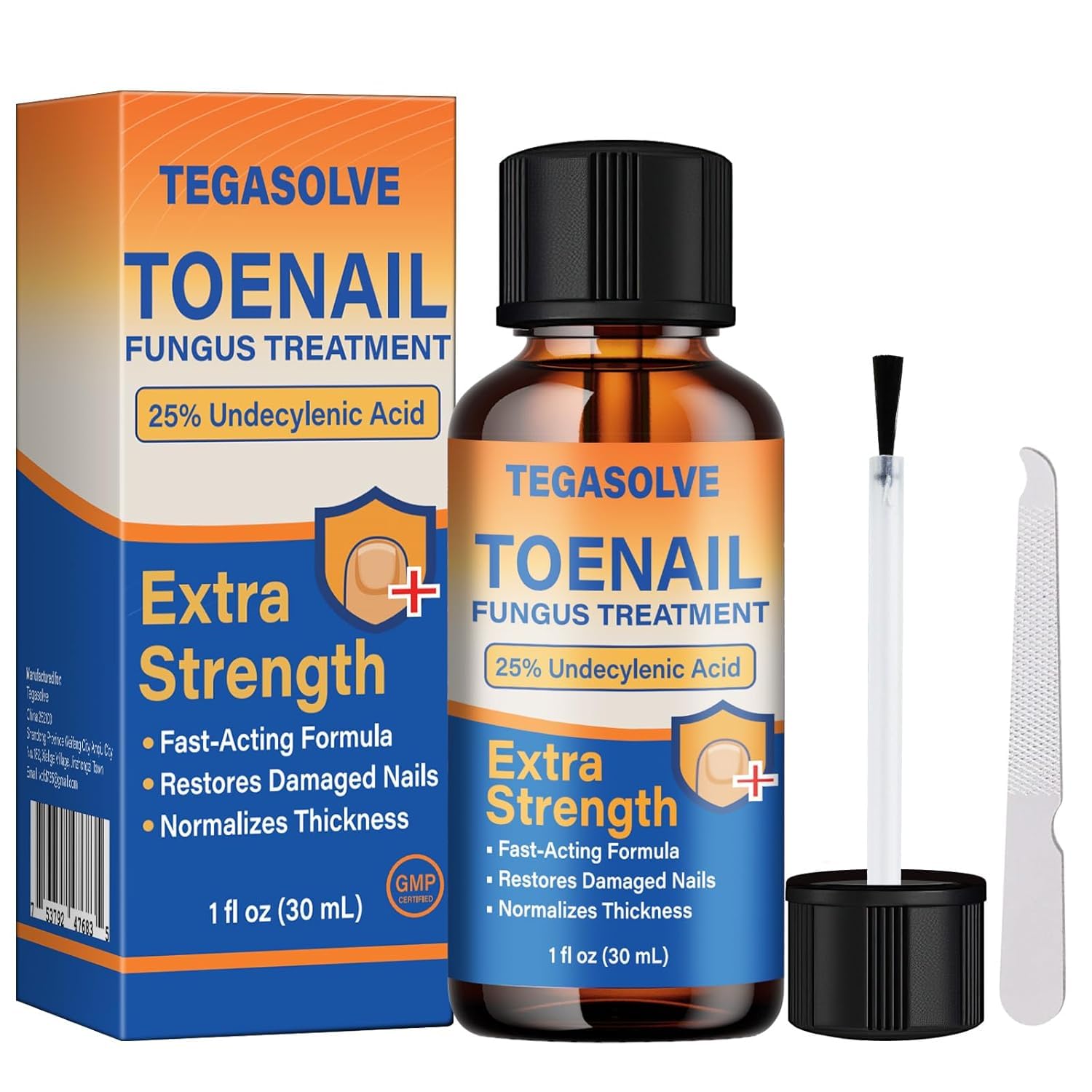
This is worth trying for people who want a strong topical option with natural soothing ingredients and clear application results over time.
Pros
- Strong 25% undecylenic acid formula that seemed to work on discolored nails.
- Plant blend (tea tree, aloe, jojoba) felt soothing and not harsh.
- Absorbs quickly and can be used on both fingers and toes.
Cons
- Dropper can leak and makes even application tricky.
- Results take consistent daily use; not an instant fix.
- Bottle is small for long treatment courses.
They used this for several weeks and saw the nail surface start to clear and flatten. The formula felt light and did not sting, and the botanical scent was mild instead of overwhelming.
Application was simple but fiddly when the dropper dripped. It worked better when they wiped excess and let it dry before putting socks or shoes on.
Overall, it helped reduce yellowing and thickness when used every day, though a full nail cycle will take time. TegaSolve Toenail Fungus Treatment
Dermatool Toenail Fungus Treatment

It is worth buying if someone wants a clear, fast-drying topical that targets nail fungus and includes natural skin-soothing ingredients.
Pros
- Dries clear and non-staining, so it can be used with shoes and polish.
- Contains tolnaftate 1% plus tea tree and vitamin E for added care.
- Brush applicator reaches under the nail and feels mess-free.
Cons
- Requires consistent, long-term use to see steady improvement.
- Results vary; severe infections may need more than topical care.
- Small bottle means frequent repurchase for extended treatment.
They applied this liquid twice daily and found the brush made it simple to get product under the edges. It went on clear and didn’t leave stains on socks or polish, which helped keep nails presentable during treatment.
After a few weeks, yellowing and texture felt improved, though full nail regrowth took months. The formula felt soothing around irritated skin, likely from the tea tree and vitamin E, but stubborn infections still showed only gradual progress.
People with mild to moderate fungus should expect steady gains if they stick to the routine. Those with deep or long-term infections might need a stronger or combined approach, but the easy applicator and non-greasy finish make this a solid topical option.
Fungi-Nail Anti-Fungal Solution

It is worth buying for people who want an affordable, topical antifungal to treat skin around nails and feet when used consistently.
Pros
- Affordable and easy to apply with a pinpoint brush.
- Contains tolnaftate and soothing oils like tea tree and aloe.
- Feels non-greasy and has little odor.
Cons
- Not designed to penetrate thick nails deeply.
- Needs long, consistent use to see results.
- Brush applicator can be messy if overused.
They used this bottle on the skin around toenails and on the feet. The applicator made it simple to target the edges where fungus usually hides. It dried quickly and did not leave a strong smell.
After a few weeks of daily use, they noticed less itching and reduced redness. Nail improvement took months, which matched expectations because topical solutions often act slowly. It helped more when paired with good foot hygiene and keeping feet dry.
Some testers wished it reached under the nail better. For thick, established nail fungus, a doctor-prescribed oral or professional treatment may work faster. Still, for surface infections and prevention after exposure (pools, locker rooms), it worked well and felt gentle on the skin.
Fungus Killer 3-Pack (with Free Nail File)

This product is worth trying for mild to moderate nail fungus because it works over time and comes with a nail file to help treatment reach the infected area.
Pros
- Small gel drops target the nail without mess.
- Comes as three bottles so treatment can continue.
- Includes a nail file to help the medicine reach the fungus.
Cons
- Results are slow and need steady use.
- Some users see little to no change.
- Requires filing and patience to work well.
They used the gel twice daily and noticed the medicine soaked into the nail quickly without strong odor. The tiny dropper made it easy to treat just the affected nail without wasting product.
They also found the included nail file helpful; thinning the nail sped up visible improvement. Several weeks of daily use were needed before any change, so persistence mattered.
A few users reported no benefit, so results vary by how deep the infection is and how consistent the application is. For someone willing to file the nail and use the drops faithfully, this is a low-cost option that can help.
PHARMBANNER Toenail Fungus Treatment
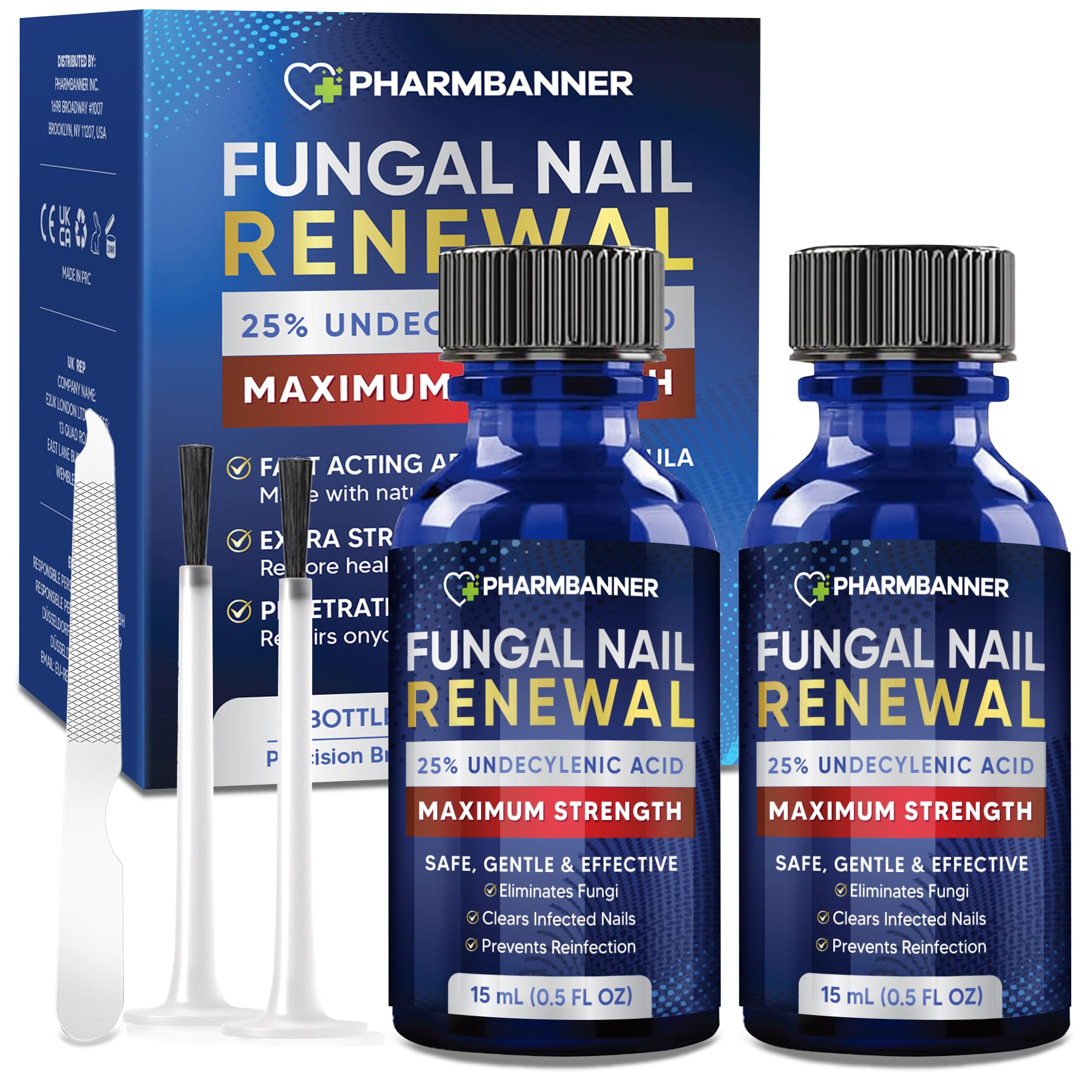
It is worth buying for people who want a strong, easy-to-use topical kit that targets discoloration and thick nails with 25% undecylenic acid.
Pros
- Strong active ingredient that felt effective on stubborn, discolored nails.
- Comes with brush and file for neat, targeted application.
- Feels moisturizing thanks to added natural oils.
Cons
- Requires daily use and patience; results are gradual.
- Strong scent from active ingredients may bother some users.
- Small bottle size means it runs out faster with heavy use.
They noticed the first improvement after a few weeks of consistent application. The brush made it simple to reach under edges and around cuticles, and the quick-dry formula kept shoes from feeling messy.
Application felt precise and hygienic. The kit’s oils left nails less brittle while the undecylenic acid worked on discoloration and thick spots.
Some users may wish for a larger bottle or a milder smell. For anyone ready to stick to a daily routine, this kit offers a clear, practical option for improving nail appearance.
Buying Guide
Choose a product that matches the type and severity of the infection. They should check whether the treatment is for nails, skin around the nail, or both. A formula with clear use instructions helps prevent mistakes.
Look for active ingredients with evidence of antifungal activity. They should prefer products that list concentration and usage frequency. A higher concentration is not always better; follow label directions and consult a clinician if unsure.
Consider the delivery method and ease of application. Creams and ointments work well for skin; solutions, lacquers, or oils may suit nails. Treatment that is easy to apply encourages consistent use, which improves outcomes.
Evaluate safety and side effects. They should read warnings about allergies, interactions, and use in pregnancy. Products with fewer irritants or added moisturizers reduce the chance of skin dryness.
Check treatment duration and follow-up needs. Nail fungus often needs weeks to months of use. They should plan for long-term application and monitor progress regularly.
Compare price and product size for value. Longer treatments can cost more overall. Buying a larger supply can save money if directions call for extended use.
Look for clear guidance on when to see a healthcare provider. If symptoms worsen or do not improve within the expected time, professional evaluation is important.
Comparison Breakdown
The list compares three top nail fungus killers: a topical antifungal solution, an oral prescription, and an over-the-counter natural remedy. Each works differently and suits different needs.
The topical solution targets nails directly. It is easy to apply and has fewer systemic side effects. Results may take months and it may not reach deep nail bed infections.
The oral prescription treats fungus from inside the body. It often clears severe infections faster and reaches deep tissue. It carries higher risk of side effects and needs medical monitoring.
The natural remedy offers mild antifungal action and low risk. It is attractive for those avoiding drugs. Evidence is limited, so it may only help mild or early infections.
Key differences in use and cost:
- Application: topical = local, oral = systemic, natural = variable.
- Speed: oral > topical > natural (generally).
- Safety: natural > topical > oral (generally).
- Cost: variable; OTC and natural are often cheaper than prescription.
They should choose based on infection severity, health status, and doctor advice. Monitoring progress and consistency matter for all three approaches.
FAQs
What causes nail fungus?
Nail fungus usually comes from fungi called dermatophytes. It often starts after small nail or skin injuries or in damp, communal areas like locker rooms.
How long does treatment take?
Treatment can take weeks to months. Topical treatments may need daily use for 6–12 months; oral medicines often work faster but require a doctor’s supervision.
Are over-the-counter products effective?
Some OTC antifungal creams and lacquers help mild cases. They work best on early infections and when used consistently.
When should someone see a doctor?
See a doctor if the nail is very thick, painful, or spreading. Also seek help if someone has diabetes or a weakened immune system.
Can one prevent reinfection?
Yes. Keep feet dry, trim nails straight, and change socks daily. Disinfect shoes and avoid walking barefoot in public showers.
Do home remedies work?
Some home remedies may relieve symptoms but have limited evidence. They can be tried for mild cases, but medical treatments usually clear infection more reliably.
Are there side effects of prescription treatments?
Oral antifungals can affect the liver and interact with other drugs. Topical treatments have fewer side effects but may cause skin irritation. Patients should follow medical advice.
Final Verdict
The best option depends on the infection’s severity and the user’s needs. For mild cases, topical treatments often work well and carry fewer side effects. For long-standing or severe infections, oral prescriptions may be more effective but need medical monitoring.
They should look for products with proven active ingredients like terbinafine or ciclopirox. Consistent use and following instructions matter more than brand names. Treating nails takes time; improvements can take months.
If they have diabetes, weak immunity, or circulation problems, they should consult a healthcare professional before starting treatment. Drug interactions and liver risks can occur with some oral medicines. A doctor can test the fungus and recommend the safest, most effective plan.
Practical steps help outcomes: keep nails trimmed and dry, disinfect tools, and change socks often. Over-the-counter options can help maintain progress after prescription treatment. Combining approaches—topical care plus lifestyle changes—gives the best chance to stop recurrence.
Bold choices for different needs:
- Quick, mild care: topical antifungal creams or lacquers.
- Persistent or severe cases: oral antifungals under medical supervision.
- Preventing return: hygiene, footwear changes, and maintenance products.
They should stop any treatment that causes severe side effects and seek care. Regular follow-up ensures the chosen approach works and remains safe.