
10 Best Professional Nail Files for Salon-Quality Results

Nail files shape, smooth, and refine the edges of natural or artificial nails. Professional files help technicians work with greater control, whether they are preparing a nail for polish, correcting its shape, or removing rough edges.
The best professional nail file depends on its grit, material, durability, and intended use. Coarse files remove length quickly, while fine-grit files smooth and finish the nail. Glass, metal, and disposable files each offer different levels of control, hygiene, and upkeep, so the right choice depends on your work and cleaning needs.
We compared professional nail files for performance, comfort, durability, and ease of cleaning to identify the options worth using in a salon or at home.
Best Professional Nail Files
We selected the best professional nail files for shaping, smoothing, and refining nails. Our list includes durable options with different grit levels, materials, and designs to suit salon professionals and home users.
Cliganic 12-Pack Nail File Set
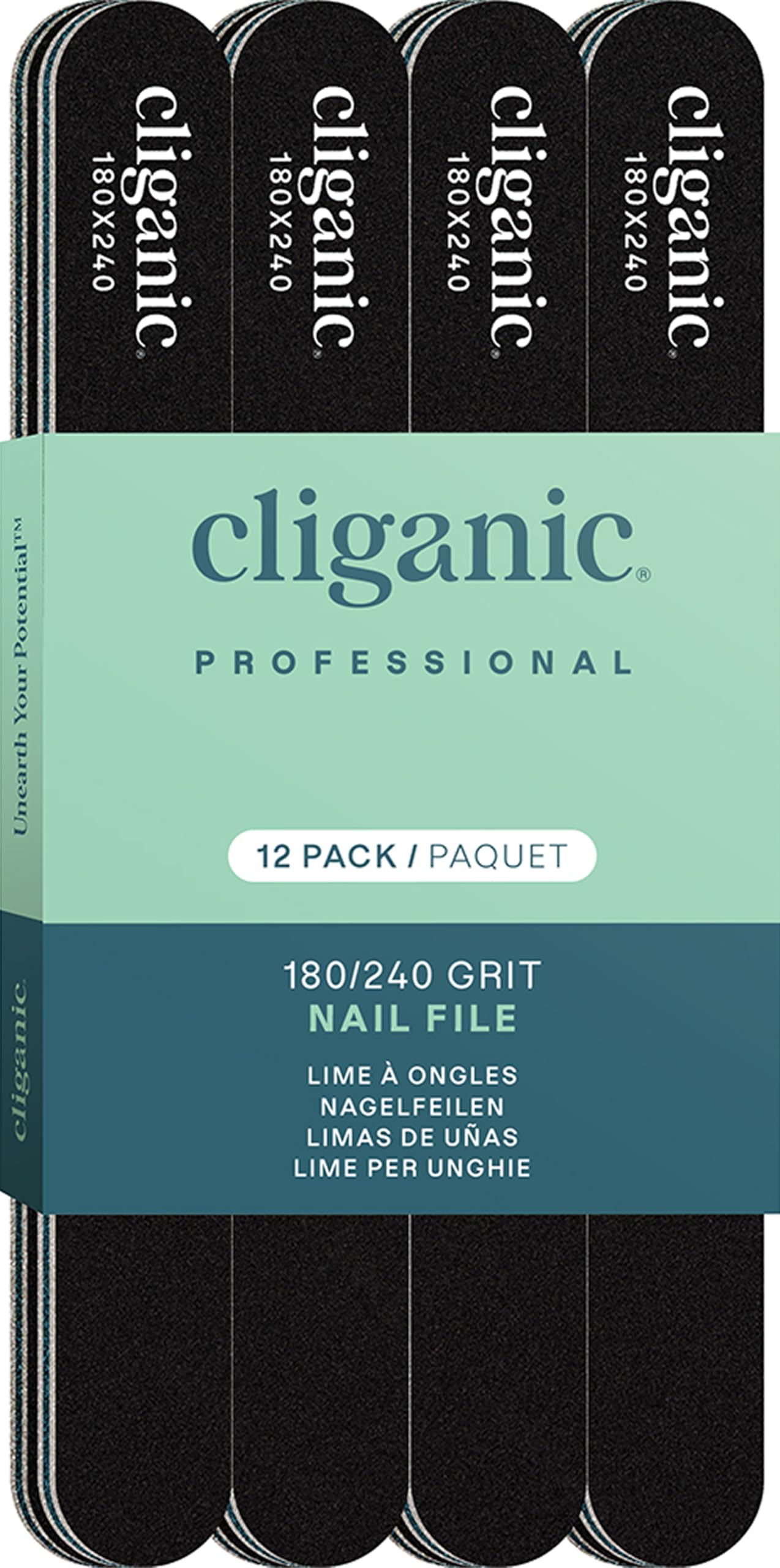
We recommend this set for anyone who wants durable, washable files for natural, gel, or acrylic nails at a low cost.
Pros
- Two useful grits for shaping and smoothing
- Sturdy files that hold their texture well
- Twelve-piece pack offers good value
Cons
- The 180-grit side may feel too rough on natural nails
- The long design can feel less precise for small nails
- The files may need a finer buffer for a smooth finish
The 180-grit side shaped gel and acrylic nails quickly, while the 240-grit side worked better for refining edges and filing natural nails. We liked having both surfaces on one file because it reduced the need to switch tools.
Each file felt firm during use and did not bend easily. The texture also stayed consistent through several filing sessions. We could rinse the boards with soap and water, which made cleanup simple.
These files work best with light pressure on natural nails. The rougher side can remove material quickly, so we used short strokes and finished with the finer side. This set suits home manicures, salon supplies, and occasional craft work.
Drei Schwerter Sapphire Metal Nail File Set

We recommend this set for buyers who want durable metal files that shape nails quickly and provide a smooth finish.
Pros
- Coarse and fine surfaces support shaping and finishing.
- Sapphire coating feels durable during regular use.
- Includes a useful three-way buffer and cuticle pusher.
Cons
- Metal files may feel too firm for thin or fragile nails.
- The cuticle pusher takes some practice to use comfortably.
- The buffer may wear faster than the files.
We found the coarse side effective on thick toenails and rough edges. It removed material quickly without requiring much pressure, while the fine side helped smooth the edge afterward.
The handle provided a steady grip, and the slim design made it easy to reach smaller nails. We also liked having a built-in cuticle pusher for basic grooming between manicures.
These files feel more durable than many disposable emery boards. However, the firm metal surface requires a light touch, especially on natural nails that split or bend easily. The set suits home users who want professional-style tools for both finger and toe nails.
Makartt Zebra Nail Files
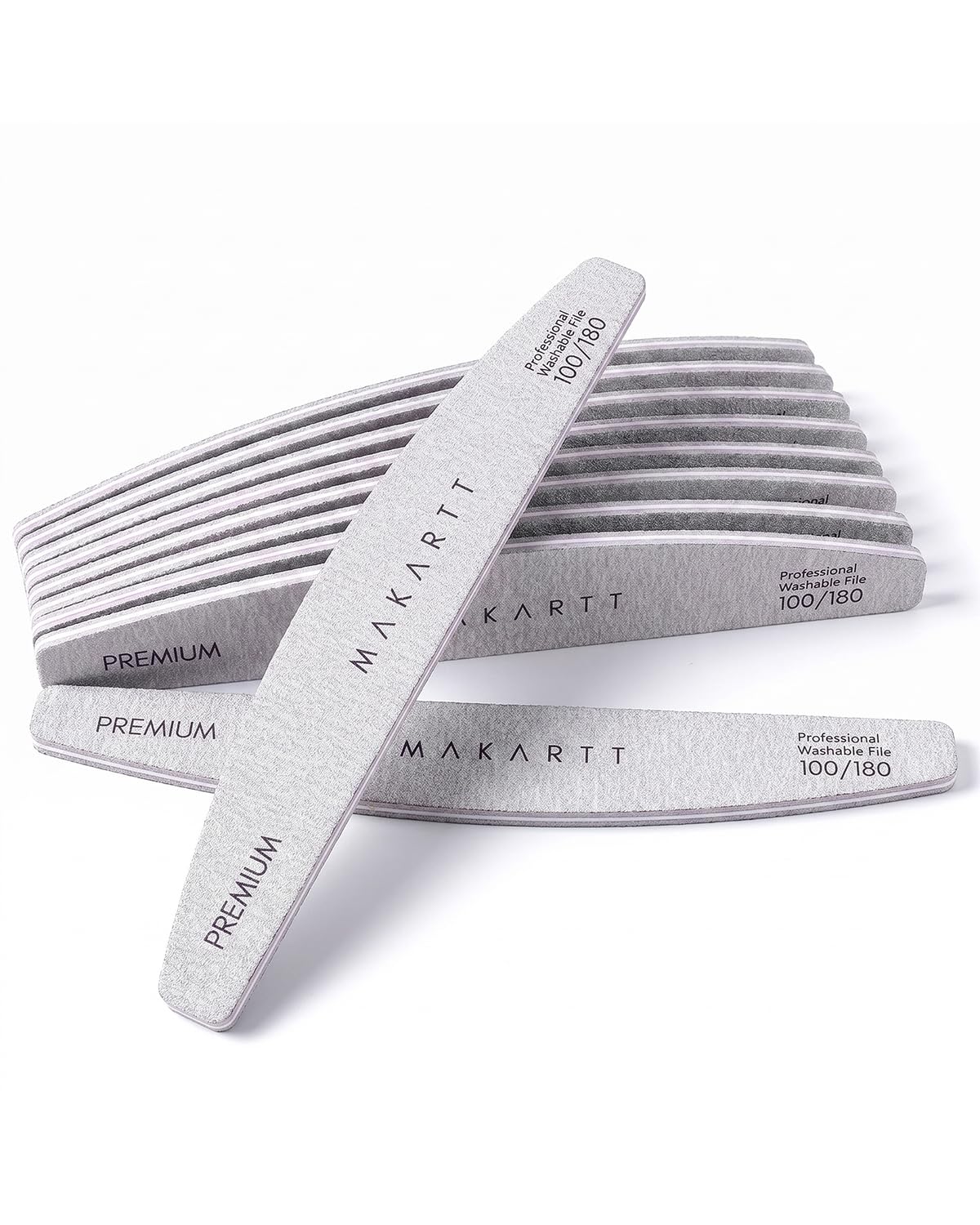
We recommend these files for shaping acrylic, gel, dip, and thick natural nails because they offer strong abrasion, useful two-sided grits, and good value in a 10-pack.
Pros
- The coarse side shapes artificial nails quickly.
- The curved design helps us reach corners and sidewalls.
- The reinforced boards stay firm during repeated use.
Cons
- The 180-grit side may feel rough on delicate natural nails.
- The coarse side can remove too much material if we use heavy pressure.
- These files suit shaping more than fine buffing.
When we used the 100-grit side on acrylic and gel, it shortened and shaped them with little effort. The 180-grit side helped smooth the edges afterward, although we used a light touch on natural nails.
The half-moon shape made it easier to follow the nail line and work around the corners. We also found the pre-buffed edges more comfortable near the cuticles than sharp-edged files.
Each board felt sturdy and resisted bending while we filed. The abrasive surface held up well through several uses, making this set practical for home manicures, pedicures, or a salon station.
For the best results, we would use the coarse side only on artificial nails or thick areas. These Makartt files are a strong choice for shaping, but users who want a very smooth finish may still need a separate fine buffer.
HeeYaa 100/180 Nail Files

We recommend these files for shaping acrylic, gel, and natural nails because they offer firm abrasion, two useful sides, and good value in a 12-piece set.
Pros
- Two-sided grit supports shaping and smoothing
- Sturdy feel for acrylic and gel nails
- Washable design supports repeated use
Cons
- Coarse surface may feel too rough for thin natural nails
- Edges can feel sharp at first
- Some users may notice a plastic-like odor
When we used the HeeYaa files on extensions, the 100-grit side shaped the edges quickly without needing much pressure. The 180-grit side worked better for refining the shape and smoothing small rough spots.
The files felt firm during use and did not bend easily. Their wider design also gave us a steady grip, although the edges felt sharp enough that we would handle them carefully around the cuticles.
After filing, we rinsed the file and let it dry before using it again. The washable surface makes this set practical for home manicures, though the coarse grit may be better suited to extensions and thicker nails than delicate natural nails.
HomeyEra 100/180 Grit Nail Files

We recommend these files for home users and salons that want a sturdy, versatile pack for shaping natural, acrylic, and toenails.
Pros
- Dual-sided grit handles shaping and smoothing
- Sturdy design holds up through repeated use
- Twelve files provide good value for regular manicures
Cons
- The coarse side may feel too strong for thin natural nails
- The long shape can feel less precise around small nails
- The files lack a cushioned center for added comfort
When we used the coarse side, it shaped thicker nails and acrylic edges quickly without bending. We switched to the finer side to smooth rough edges and refine the nail surface.
The 7.1-inch length gave us a steady grip, especially when filing toenails. Its square shape also made it easy to control, although a shorter file may work better for detailed work near the cuticle.
These files feel more durable than many disposable emery boards. They can handle several uses, but we would still replace them between clients for proper hygiene. For personal use, this 12-pack offers a practical supply at a reasonable price.
HeeYaa 10-Pack Nail Files
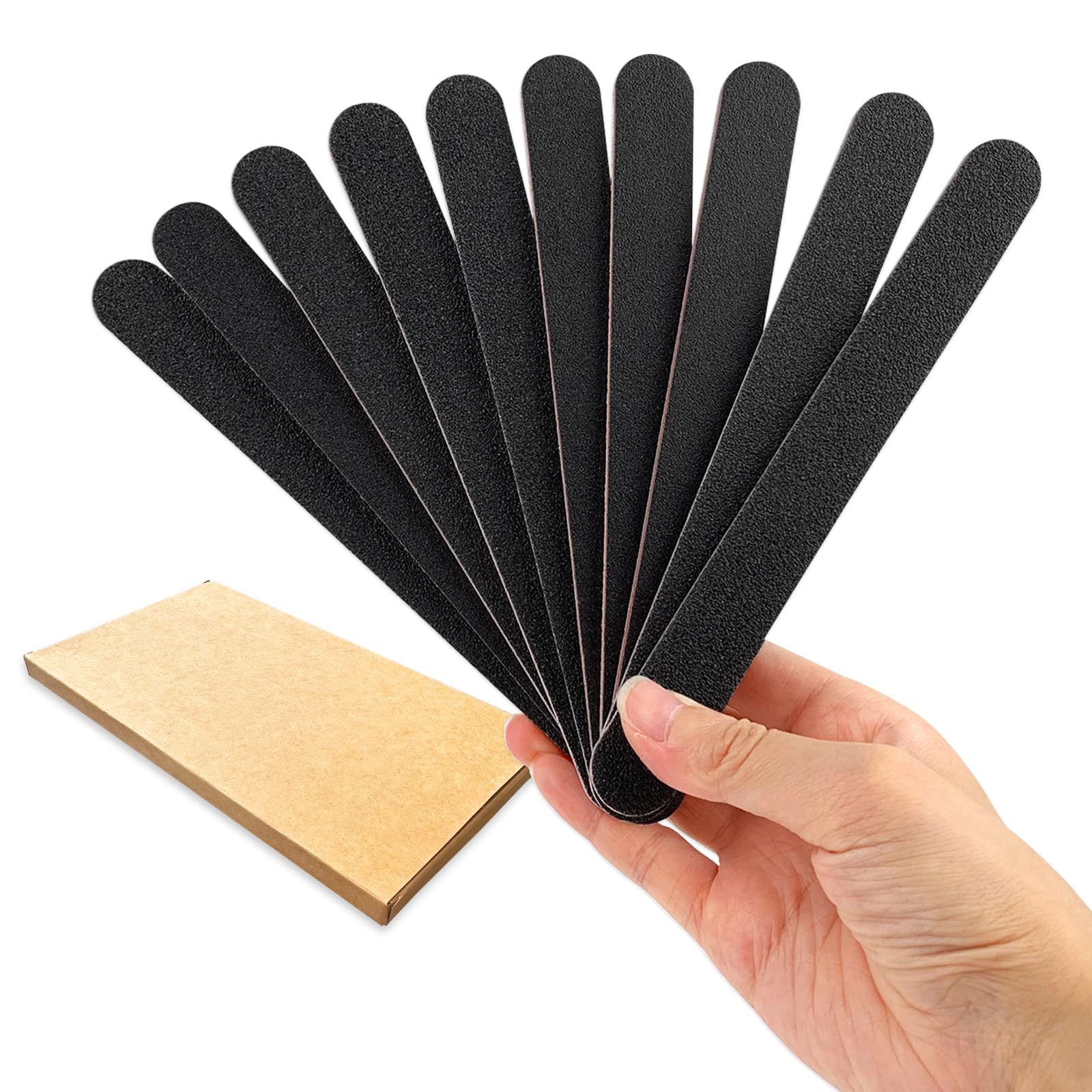
We recommend these files for home users and salons that want a sturdy, affordable set for shaping and smoothing nails.
Pros
- Coarse and fine sides handle different filing tasks
- Firm yet slightly flexible during use
- Ten files offer good value for regular manicures
Cons
- Layers may separate after extended use
- Some users report uneven grit between files
- The coarse side can feel too rough for thin nails
We found the 100-grit side useful for shortening nails and making quick shape changes. The 180-grit side worked better for smoothing edges and finishing a manicure. Using light pressure helped prevent roughness, especially on natural nails.
The files felt solid in our hands without becoming too rigid. Their length gave us good control on both fingernails and toenails, while the rounded ends made it easier to reach the sides of each nail.
The PP core held up well through repeated use, and we could clean the files between sessions. However, the layered construction may eventually split, particularly with frequent soaking or heavy use. Overall, this set suits shoppers who want practical double-sided files at a low cost.
Teenitor Nail File and Buffer Set

We recommend this versatile set for home users who want several filing, smoothing, and polishing options in one kit.
Pros
- Offers tools for shaping, smoothing, and polishing
- Works well for natural, gel, and acrylic nails
- Easy to clean and store
Cons
- Some coarse files may feel too mild
- The set includes more tools than casual users may need
- Buffing requires a light touch to avoid overworking the nail
We found the Teenitor set useful for a full at-home manicure. The different file surfaces let us shape nails first, smooth rough edges next, and polish the surface at the end.
The set works across several nail types. The coarser files handle acrylic and gel removal, while the finer sides feel more suitable for natural nails and light shaping. We used gentle pressure on natural nails to avoid thinning them.
The buffer blocks helped reduce small ridges and scratches, and the fine polishing side left a noticeable shine. The files feel sturdy for regular personal use, though users who file often may wear through the rougher surfaces over time.
With six pieces and several grit options, this kit suits people who do their own manicures or share nail care tools with family. It offers strong value, but casual users may prefer a simpler single-file option.
MR.GREEN Stainless Steel Nail File
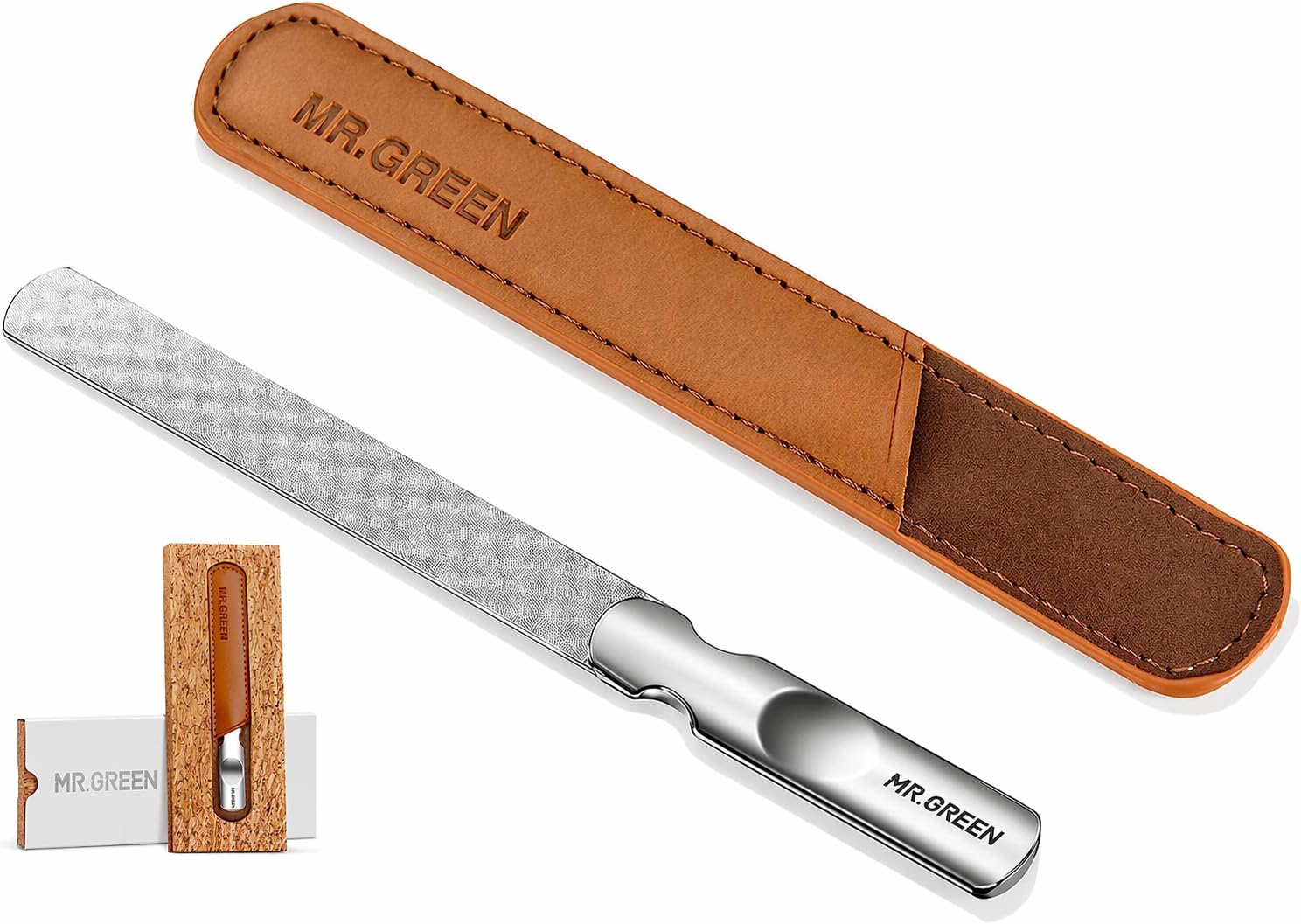
We recommend this reusable file for its sturdy build, dual filing surfaces, and easy cleaning.
Pros
- Coarse and fine sides handle shaping and smoothing
- Stainless steel body feels durable and steady
- Leather case makes storage and travel convenient
Cons
- Sharp edges may irritate the skin if used carelessly
- Metal files can feel firm on thin or weak nails
- Small size may take longer to handle for some users
We found the coarse side removed excess length quickly, while the finer side smoothed snags and softened the edge. The file felt solid in our hand, and its anti-slip handle helped us keep control during short filing sessions.
The metal surface rinsed clean after use, which makes this a practical choice for regular nail care. Unlike disposable files, it should not wear down quickly with normal use.
We also liked the included leather case. It protects the file in a grooming kit or travel bag without adding much bulk. However, we needed to keep the sharper edges away from the skin and nail bed to avoid discomfort.
Mont Bleu Rainbow Crystal Nail File Set

We recommend this set for anyone who wants smooth, gentle filing with three useful sizes and easy cleaning.
Pros
- Smooth filing helps reduce rough edges and splitting
- Three sizes work well for home or travel use
- Washable glass surfaces and protective pouches support easy care
Cons
- Glass can break if dropped
- Thicker edges may not reach tight corners easily
- The fine surface may feel slow on very long nails
During use, these files shaped natural nails smoothly without the harsh scraping feel of some emery boards. The surface felt gentle around the nail edges while still removing enough material for controlled shaping.
We liked having three lengths available. The smaller file worked well for quick touch-ups, while the longer files gave us better control during a full manicure. Their fine feel suits finishing and routine maintenance more than heavy filing.
The glass surfaces rinsed clean with soap and water, which made them practical for repeated use. Each file also includes a pouch, so we could store and carry them with less risk of damage.
The main drawback is the glass construction. We would handle these carefully and avoid using them to reach deep under short nails, since the thicker edges can limit access. The lifetime guarantee adds reassurance, but it does not make the files drop-proof.
CANVALITE Professional Nail Files

We recommend these files for home users and nail technicians who need a durable set for shaping natural, acrylic, gel, and artificial nails.
Pros
- Two useful sides for shaping and smoothing
- Sturdy design that holds up over repeated use
- Half-moon shape works well around curved nail edges
Cons
- The coarse side may feel too rough for thin nails
- Larger than some files made for detailed work
- Does not include a finer side for final polishing
We found the 100-grit side effective for shortening and shaping harder nails, including acrylic and gel extensions. The 180-grit side softened rough edges without taking off too much material.
The half-moon shape gave us both a straight edge and a curved edge to work with. The curve helped us reach the sides of each nail, while the straight section worked well for creating clean nail shapes.
These files felt firm during use and did not bend easily. They also lasted through repeated filing, making the 10-pack practical for a home kit or salon station.
We would use a lighter touch on thin or fragile natural nails because the coarse side can remove material quickly. Buyers who prefer very small files or an extra-fine finish may want a different option.
Buying Guide
We should choose a professional nail file based on the material, grit, shape, and intended use. A file for natural nails needs different features than one for acrylic, gel, or other enhancements.
| Feature | What we should look for |
|---|---|
| Grit | Fine grits suit natural nails and finishing. Medium or coarse grits work better for enhancements. |
| Material | Glass, metal, paper, and foam files offer different levels of durability and flexibility. |
| Shape | Straight edges suit general filing, while curved or narrow shapes help us reach detailed areas. |
| Flexibility | A flexible file follows the nail’s curve and can reduce uneven pressure. |
| Cleanability | Washable or sanitizable files support better hygiene in professional settings. |
| Grip | A comfortable handle or textured surface gives us better control during long sessions. |
We should check the grit rating before buying. A lower number usually indicates a rougher surface, while a higher number provides a smoother finish. Using too coarse a file on natural nails may cause splitting or surface damage.
Durability also matters when we compare files. Reusable tools need materials that tolerate proper cleaning, while disposable files should have a secure abrasive surface and sturdy core.
We should also consider the file’s size and balance. A tool that feels stable in our hand helps us shape nails evenly and work with greater precision.
Editor’s Choice
We chose the GERmanikure Professional Glass Nail File as our editor’s pick for its smooth filing surface, durable glass construction, and easy cleaning. It works well for shaping natural nails without leaving rough edges.
| Feature | Why it matters |
|---|---|
| Tempered glass | Resists wear and supports repeated use |
| Fine abrasive surface | Helps shape nails smoothly |
| Washable design | Makes cleaning simple |
| Protective case | Helps prevent chips and scratches |
We like glass files for home and professional use because they do not shed grit as paper files can. Their fine surface also gives us better control when we refine the nail edge.
For salons, we recommend keeping separate files for each client and following local sanitation rules. A glass file can be washed, but cleaning and disinfection methods should match the manufacturer’s instructions.
Conclusion
We should choose a professional nail file based on the nail type, service, and level of control we need. A glass file suits natural nails, while a durable metal or cushioned file may work better for regular salon use.
Grit also matters. We can use a finer grit for shaping natural nails and a coarser grit for reducing length or working with enhancements. Using the right grit helps us avoid rough edges and unnecessary nail damage.
Key points to remember:
- Match the file to the service.
- Use fine grits on natural nails.
- Replace worn or damaged files.
- Clean reusable tools after each client.
- Follow salon hygiene rules.
When we invest in a well-made file and use it correctly, we gain better control and more consistent results. A simple, comfortable design can also reduce hand strain during frequent use.
FAQS
What grit should we use for natural nails?
We usually recommend a 180- to 240-grit file for natural nails. Finer grits help reduce splitting and work well for shaping and smoothing the edges.
Which file works best for acrylic or gel nails?
For enhancements, we can use a 100- to 180-grit file, depending on the task. Coarser files remove length and product faster, while finer files refine the shape and surface.
Are glass nail files better than emery boards?
Glass files create a smooth edge and can last a long time when we handle them carefully. Emery boards cost less and work well for quick shaping, but their surface wears down faster.
How should we clean a professional nail file?
We should follow the manufacturer’s cleaning instructions. Washable files can be cleaned with soap and water, while disposable files should be replaced between clients to support good hygiene.
When should we replace a nail file?
We should replace a file when its surface becomes smooth, damaged, or difficult to clean. A worn file can take longer to shape nails and may produce uneven results.
| Nail type | Useful grit range |
|---|---|
| Natural nails | 180–240 |
| Acrylic or gel | 100–180 |
| Final smoothing | 240 or higher |

