
10 Best Salon Nail Files for Professional-Quality Results

Nail files help shape, smooth, and maintain natural or artificial nails. Salon-quality files come in several types, including emery boards, glass files, and professional abrasive files. Each type offers a different level of grit, durability, and control.
The best salon nail files match the nail type and task, with the right grit, comfortable handling, and a surface that stays effective over time. We also consider whether a file cleans easily, protects against splitting, and provides enough control for detailed shaping.
We compared leading salon nail files to find the options that make shaping and smoothing nails easier, faster, and more precise.
Best Salon Nail Files
We evaluated salon nail files for grit, durability, comfort, and ease of use. Our list features reliable options for shaping, smoothing, and finishing nails at home or in a salon.
Treamlyn 100/180 Grit Nail Files

We recommend this 10-piece set for shaping natural, gel, acrylic, and toenails at home or in a salon.
Pros
- Two-sided grit handles both shaping and smoothing
- Firm boards stay steady during use
- Ten files offer good value for regular nail care
Cons
- The rough surface can wear down with frequent use
- The coarse side may feel too strong for thin natural nails
- These files should not be washed with water
We found the 100-grit side useful for shortening nails and removing bulk from acrylic or gel. It worked quickly without bending, which gave us better control around the nail edges.
The 180-grit side produced a smoother finish after shaping. We used it to refine the edges of natural and artificial nails, though we worked gently on thinner nails to avoid over-filing.
The files feel sturdy in hand and come in a practical pack of ten. Their abrasive surface does lose some texture over time, especially with regular use, but the quantity makes it easy to keep fresh files available.
Cliganic 12-Pack Nail File Set
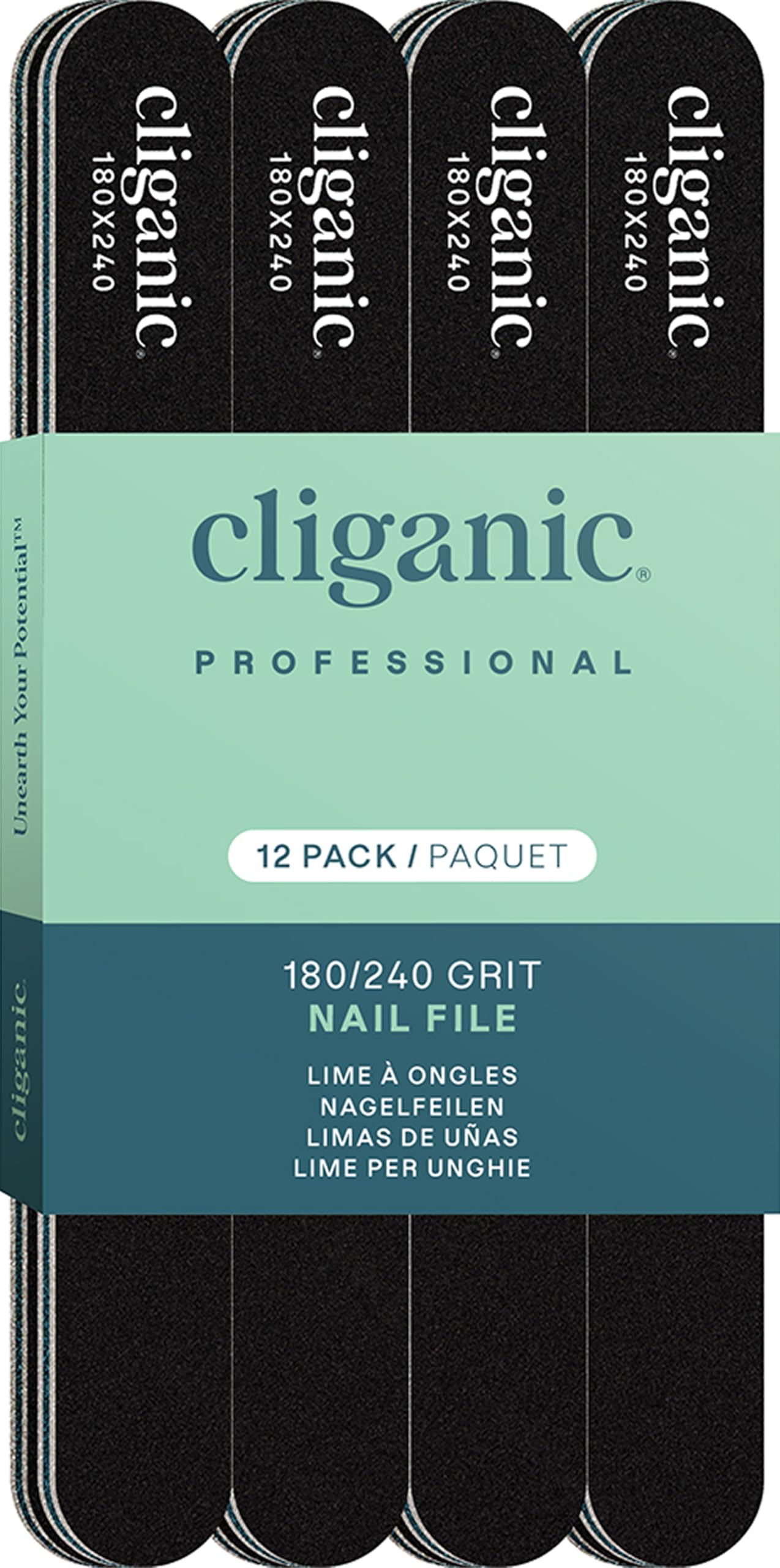
We recommend this set for its durable emery boards, useful two-sided grits, and low cost per file.
Pros
- Two grits support shaping and finishing
- Sturdy, washable boards
- Twelve files offer good value
Cons
- The 180 grit may feel rough on thin natural nails
- The boards take up more space than compact files
- We still needed a smoother file for a polished finish
The 180-grit side shaped medium-thickness gel and acrylic nails efficiently, while the 240-grit side handled lighter finishing work. We found the coarser side too aggressive for some natural nails, so we used gentle strokes and switched to the finer side for final shaping.
At 7 inches long, each file gave us a steady grip and enough surface area for larger nails. The boards felt firm during use and did not wear down quickly. After filing, we rinsed one under soap and water, and it cleaned up easily.
This pack works well for home manicures, pedicures, and occasional salon-style work. We would choose it for extensions and general nail maintenance, but users with thin or fragile natural nails may prefer a finer file.
Makartt 100/180 Grit Nail Files
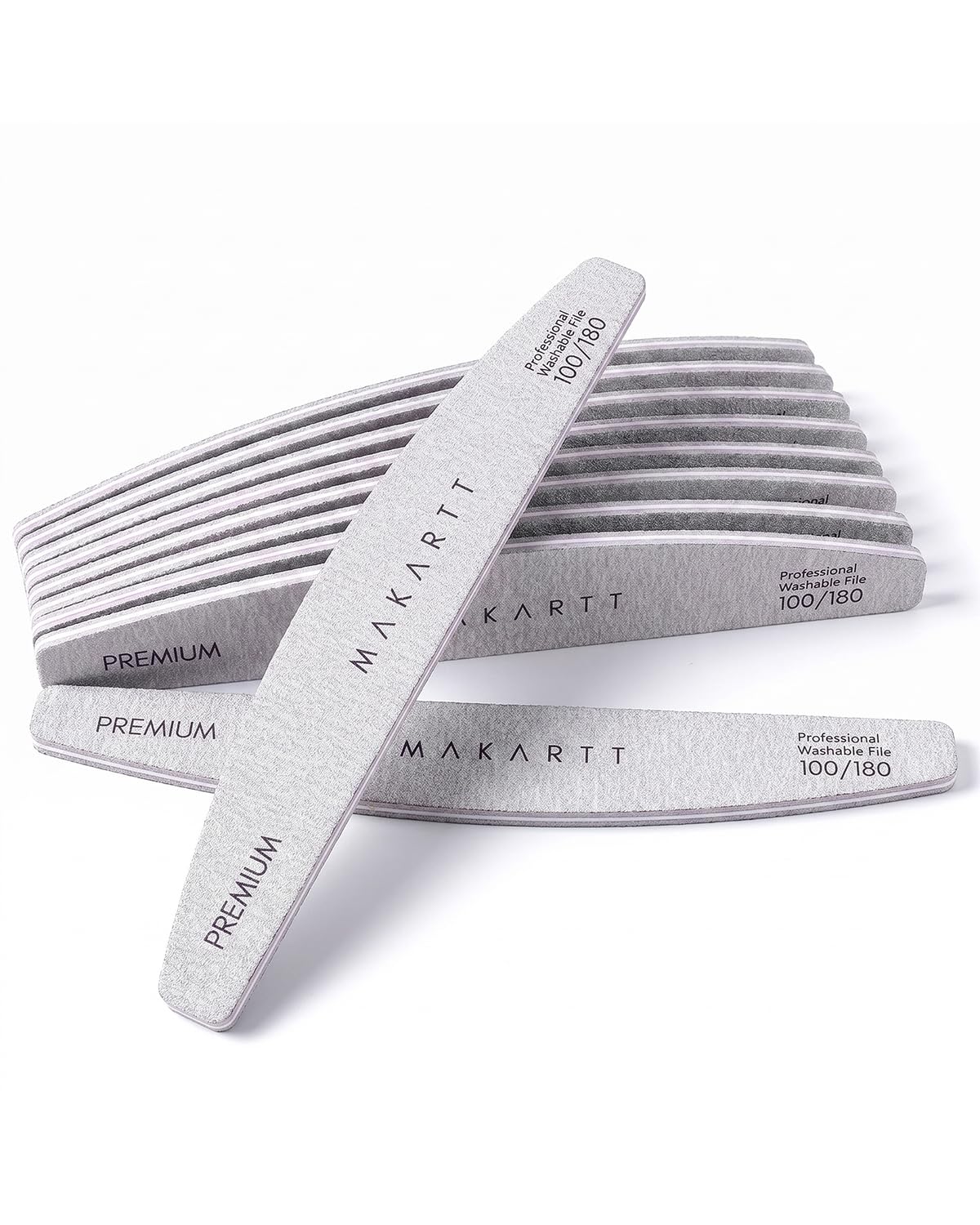
We recommend this 10-piece set for shaping acrylic, gel, dip, and thick natural nails with a coarse side and a smoother finishing side.
Pros
- The 100-grit side removes length and bulk quickly.
- The curved shape helps us reach corners and sidewalls.
- The reinforced boards stay firm during repeated filing.
Cons
- The 180-grit side may feel rougher than expected on thin natural nails.
- The coarse side can remove too much if we use heavy pressure.
- These files are better for shaping than final natural-nail smoothing.
We found the 100-grit side useful for shortening extensions and refining bulky acrylic edges. It worked quickly without bending, while the 180-grit side helped clean up the shape afterward.
The half-moon design made it easier for us to follow the nail curve and work around corners. The pre-buffed edges also felt more comfortable near the cuticles than sharp-edged files.
For thin or weak natural nails, we used light pressure and stayed with the smoother side. The 10-pack gives us convenient backups for home use, travel, or a salon station.
HeeYaa 100/180 Nail Files

We recommend this 12-pack for shaping acrylic, gel, and natural nails at home or in a salon because it offers firm filing power at a reasonable price.
Pros
- Two usable sides for shaping and smoothing
- Sturdy enough for acrylic and gel nails
- Washable design supports repeated use
Cons
- The coarse side may feel too strong for thin natural nails
- Some files may have a noticeable plastic smell
- The edges can feel sharp before light smoothing
When we used these files on extensions, the coarse side shaped the nail quickly, while the finer side helped clean up the edges. The files felt solid in hand and did not bend easily during use.
Their 100/180 grit combination works best for acrylic, gel, and false nails. We would use a lighter touch on natural nails, especially if they are thin or prone to splitting.
The washable surface makes cleanup simple, and the 12-piece pack gives us replacements for future manicures. We noticed that smoothing the edges before use can make handling more comfortable.
HomeyEra 100/180 Grit Nail Files

We recommend these files for home or salon use because the dual-sided design handles both shaping and smoothing at a low cost.
Pros
- Coarse and fine sides suit acrylic and natural nails
- Sturdy, comfortable shape
- Twelve files provide good value
Cons
- The coarse side may feel too rough for thin nails
- The large size takes more space than compact files
- Reuse depends on how well the surface is cleaned
We found the 100-grit side useful for shaping thicker nails and acrylic extensions. It removes material quickly, while the 180-grit side smooths edges and light surface ridges without needing another file.
The long, square design gave us a steady grip during filing. The boards also felt firm instead of bending easily, which helped us keep an even shape on fingernails and toenails.
These files held their texture through multiple uses better than many basic emery boards. We would still use light pressure on natural nails, especially if they are thin or brittle. With twelve included, this pack works well for shared salon use or keeping fresh files around the home.
CANVALITE Professional Nail Files

We recommend this 10-pack for salon and home use because the two-sided files handle shaping, smoothing, and work on artificial nails.
Pros
- Two grits support shaping and finishing.
- Sturdy boards hold up well with regular use.
- The curved design makes edge work easier.
Cons
- The coarse side may feel too rough for thin nails.
- The file may feel large for detailed work.
- It lacks a finer grit for delicate finishing.
When we used these files, the 100-grit side shaped thick nails and acrylic edges quickly. The 180-grit side smoothed rough edges without needing much pressure.
The half-moon shape gave us both a straight edge and a curved edge to work around the nail. That design helped with toenails and larger nail surfaces, though the file felt less convenient for small or precise areas.
The boards felt firm during use and did not bend easily. We also found them useful for gel and artificial nails, while natural nails needed a lighter touch to avoid over-filing. This pack suits regular maintenance, but we would choose a finer file for fragile nails.
Teenitor Nail File and Buffer Set

We recommend this versatile set for at-home users who want several files for shaping, smoothing, and polishing natural or artificial nails.
Pros
- Covers shaping, buffing, and polishing
- Includes coarse, medium, and fine surfaces
- Washable tools offer easy cleanup
Cons
- Some coarse files may feel less effective
- The set can feel excessive for basic nail care
- Nail shine may fade with regular hand washing
We used the files to shape natural nails and found the different grits useful for each step. The 150- and 180-grit sides worked well for shortening and shaping, while the finer surfaces helped smooth rough edges.
The buffer blocks gave us more control than a basic four-sided buffer. We used the smoother sides to reduce small ridges, then finished with the 1000/4000-grit file for a noticeable shine.
This set also works for gel and acrylic nails, but the coarser surfaces need a gentle touch on natural nails. Some users may find certain lower-grit files less effective, while the finer buffers received stronger praise. Overall, we found it a practical, low-cost kit for regular nail care.
AhaTopia Nail File and Buffer Set

We recommend this set for home manicures because it combines sturdy files with buffers that smooth and add shine.
Pros
- Includes 10 double-sided files and two four-way buffers
- Works well on natural, acrylic, and glue-on nails
- Offers good value for regular at-home use
Cons
- The buffers may feel too mild for some users
- Coarse files can leave natural nails rough if used too firmly
- The file surfaces may wear down with frequent use
We found the 100/180-grit files useful for shaping acrylic and thicker nails. The finer side worked better for light smoothing, while natural nails needed a gentle touch to avoid a rough edge.
The four-way buffers make the set more versatile. We used the sides in order: shaping, smoothing, buffing, and polishing. The final side gave natural nails a clean shine without polish, although it did not feel as aggressive as some salon-grade buffers.
The files are lightweight, washable, and easy to store in a travel bag. With 12 pieces included, we could keep extras in different rooms or replace worn files without buying another full kit.
We would choose this set for beginners, families, and anyone who wants basic salon-style tools at home. Professional users may prefer stronger, longer-lasting files for heavy daily use.
TsMADDTs Nail File and Buffer Set

We recommend this set for affordable home manicures because it includes separate files for shaping and buffers for smoothing.
Pros
- Includes six files and six buffer blocks
- Works on natural, acrylic, and artificial nails
- Color-coded sides make grit selection simple
Cons
- The coarse files can bend under heavy pressure
- Buffers may wear faster with frequent use
- The set lacks a storage case
We used the 100-grit side to shorten and shape tougher nails, then switched to the 180-grit side to refine the edges. The two-sided design made the change quick, while the color coding helped us identify each surface without checking labels.
The buffer blocks felt comfortable to hold and smoothed small ridges before polish. We found that light pressure worked best, especially on natural nails. Pressing too firmly can make the file flex and may create excess friction.
With six of each tool, this kit works well for shared home use or keeping a file in several places. It also handles acrylics and artificial tips, although frequent salon-level use may wear the buffers sooner. Overall, we get useful variety and solid value for basic nail care.
RedFlow 52-Piece Nail File Set

We recommend this set for home users and salons that need affordable files for shaping acrylic, gel, artificial, and natural nails.
Pros
- 52 files provide plenty of replacements
- Two grits support shaping and lighter smoothing
- Foam centers make the files comfortable to hold
Cons
- The files may wear down with frequent salon use
- They offer limited control for very fine finishing
- Disposable construction creates more waste
We found the 100-grit side useful for shortening and shaping thicker acrylic or false nails. The 180-grit side worked better for smoothing edges and making smaller adjustments.
The rounded ends helped us reach around the nail without scraping the skin. Each file felt flexible but sturdy enough for regular filing, while the foam center made longer sessions more comfortable.
This set also works well for basic gel removal and foot care. We would use a lighter touch on natural nails because the coarser side can remove material quickly. The large pack makes it a practical choice for shared use, practice, or replacing worn files.
Buying Guide
We should choose a nail file based on the nail type, intended use, and file material. A file that works well for natural nails may not suit acrylic or gel enhancements.
| Feature | What we should look for |
|---|---|
| Grit | Fine grit for smoothing and natural nails; coarser grit for enhancements |
| Material | Glass, crystal, metal, or coated board based on durability and cleaning needs |
| Shape | Straight edges for control; curved or cushioned shapes for comfort |
| Size | A compact file for travel; a larger file for steady salon use |
| Cleaning | Washable or disinfectable surfaces for shared use |
| Grip | A firm, comfortable handle that does not slip |
Grit affects how much material the file removes. We should use a fine grit near the nail edge and avoid harsh, rapid filing on thin or weak nails. For enhancements, we can select a stronger file designed for that material.
Material also affects care and lifespan. Glass files often offer a smooth surface and easy cleaning, while disposable boards may suit salon services that require single-client use. We should check whether the file can withstand the cleaning method used in our salon.
We should inspect the file’s edges, surface, and handle before buying. A balanced design gives us better control, and a sealed or durable surface helps prevent early wear.
Editor’s Choice
We choose the Germanikure Professional Glass Nail File as our editor’s pick for home and salon use. Its etched glass surface files nails evenly, while the washable design supports repeated use.
The fine grit helps smooth natural nails without catching or tearing the edge. We also like its compact shape, which makes it easy to store in a nail kit or carry between appointments.
| Feature | Why it matters |
|---|---|
| Etched glass surface | Files gently and evenly |
| Washable design | Easy to clean between uses |
| Fine grit | Helps reduce rough edges |
| Compact size | Fits most manicure kits |
We recommend using light, one-direction strokes instead of sawing back and forth. Clean the file with mild soap and water, then dry it fully before storing it in its case.
Conclusion
We should choose a salon nail file based on the nail type, service, and grit. A fine-grit file suits natural nails, while a coarser file works better for shaping enhancements such as acrylic or gel.
Key points to remember:
- Use a gentle file on thin or weak natural nails.
- Select a higher grit for smoothing and finishing.
- Keep separate files for natural nails and enhancements.
- Replace files when the surface becomes worn or difficult to clean.
- Follow salon hygiene rules, especially when files touch more than one client.
A quality nail file should shape the nail evenly without causing excess friction or splitting. We can improve results by using light pressure and filing in one direction when working on natural nails.
The right tool supports clean, consistent work. By matching the file to each service and maintaining it properly, we can protect the nail and create a smoother finish.
FAQS
What nail file grit should we use?
We use a 180-grit file for shaping natural nails. A 240-grit file works better for smoothing edges and finishing. Lower grits feel rougher and suit artificial nails or thicker materials.
Are glass nail files better than disposable files?
Glass files provide a smooth, gentle finish and can last for years with proper care. Disposable files offer more flexibility because we can choose different grits for natural nails, acrylics, and gels.
How should we file our nails?
We file with light pressure and use one steady direction from the outer edge toward the center. Filing back and forth can increase splitting, especially on thin or weak nails.
How often should we replace a salon nail file?
We replace disposable files when the surface becomes smooth, uneven, or stained. We can keep a glass file longer, but we should replace it if it chips or develops cracks.
How do we clean a reusable nail file?
We wash glass files with soap and water, then dry them fully. We follow the salon’s sanitation rules and avoid sharing files that cannot be cleaned properly.
Can we use one file for natural and artificial nails?
We should use separate files. Artificial nails can leave product residue and may require a coarser grit, which can damage natural nails.

