
What Is the Best Shape for Toenails? A Safe, Practical Guide

If you love a neat pedicure, it is natural to wonder whether your toenails should be square, round, oval, or somewhere in between. The choice may look purely cosmetic, but toenail shape can also affect comfort and the way the nail grows beside the surrounding skin.
So, what is the best shape for toenails? For most people, a straight-across or softly squared shape is the safest everyday choice. The corners should remain visible rather than being cut deeply into a curve.
Below, you will learn what a healthy toenail shape should look like, how to create it with clippers and a nail file, which shapes are best avoided, and when a toenail problem needs professional attention.
Quick Answer
The best shape for toenails is generally straight across with the corners left visible, sometimes called a soft-square shape. You can gently file sharp points for comfort, but avoid deeply rounding the sides. Keeping toenails moderately long and straight across can help reduce the chance of painful ingrown toenails.
Why Toenail Shape Matters More Than You Might Think
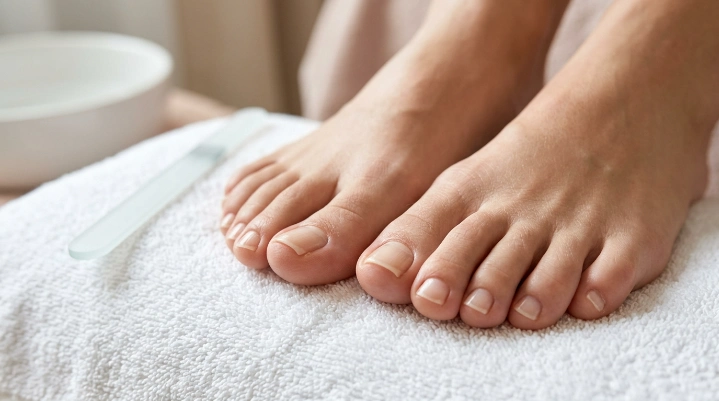
Your toenails deal with pressure every day. Shoes, socks, exercise, walking, and accidental bumps all place stress on the nail and surrounding skin.
When you repeatedly cut away the corners to create a strongly rounded shape, the skin beside the nail may begin occupying the space where the nail normally grows. As the nail grows forward again, its edge can press into that skin.
That is one reason the American Academy of Dermatology’s nail-trimming guidance recommends cutting toenails straight across to reduce the risk of an ingrown nail.
A good toenail shape should therefore balance two goals:
- Looking neat and polished
- Allowing the nail to grow forward without unnecessarily irritating the sidewalls
You do not need perfectly box-shaped nails. Think soft square rather than deeply rounded.
What Is the Best Shape for Toenails?
For most healthy toenails, the best overall shape is a straight-across or gently softened square.
Imagine looking directly down at your big toenail. The front edge should form a mostly straight line, while both corners remain visible.
If a corner feels sharp enough to catch your sock, you can lightly smooth it with a nail file. What you want to avoid is cutting or filing far down the sides simply to create a rounder appearance.
Mayo Clinic’s guidance on preventing ingrown toenails specifically recommends trimming straight across rather than curving toenails to match the rounded shape of the toe.
Straight Across
This is the standard recommended shape for most toenails.
The front edge remains relatively straight, and you avoid cutting down into either corner.
Best for: Routine toenail care and people concerned about ingrown nails.
Soft Square
A soft square begins with a straight-across trim, followed by very light filing of any sharp points.
It can look slightly more polished than a rigid square while still keeping the corners intact.
Best for: Pedicures where you want a neat cosmetic finish without dramatically rounding the nail.
Rounded
A lightly rounded appearance is not necessarily a problem if the actual corners remain visible.
The concern begins when you repeatedly remove the corners and taper the sides.
Best for: Usually unnecessary for toenails; gentle smoothing is safer than reshaping the entire nail into a curve.
Deep Oval or Very Rounded
This shape requires removing more material from both sides of the nail.
That may look elegant immediately after a pedicure, but it can leave the growing nail edge beside or beneath the surrounding skin.
Best for: Generally avoided when shaping natural toenails.
Toenail Shape Comparison
| Toenail Shape | What It Looks Like | Main Benefit | Main Limitation | Best Choice? |
|---|---|---|---|---|
| Straight across | Nearly straight front edge | Keeps corners visible | May feel slightly sharp immediately after clipping | Yes, for most people |
| Soft square | Straight edge with lightly softened tips | Neat and comfortable | Requires careful filing | Yes |
| Slightly rounded | Gentle curve with corners still present | Softer appearance | Easy to over-round | Sometimes |
| Deeply rounded | Corners removed into the sides | Very curved cosmetic look | May encourage irritation or ingrowing | Usually avoid |
| Extremely short | Nail cut close to the nail bed | Temporarily looks very tidy | Can increase tenderness and shoe pressure | Avoid |
The NHS guidance on preventing ingrown toenails similarly advises cutting straight across, avoiding the edges, and not trimming toenails too short.
How Long Should Toenails Be?
Shape and length work together.
Even a straight toenail can become uncomfortable if you cut it extremely short.
For most people, the nail should remain long enough that the corners are clearly visible. You do not need to remove every trace of the white free edge.
Mayo Clinic recommends maintaining a moderate length because excessively short nails can allow pressure from footwear to push surrounding tissue toward the growing nail.
At the same time, very long toenails can hit the front of your shoes, catch on socks, or break.
Aim for a length that:
- Does not press against your shoes
- Leaves the nail corners visible
- Does not expose tender tissue
- Feels comfortable while walking
- Gives you enough free edge to file safely
Pain is not a normal part of toenail trimming. If you have to dig down beside the nail to reach a corner, stop rather than continuing to cut.
How to Shape Toenails Safely
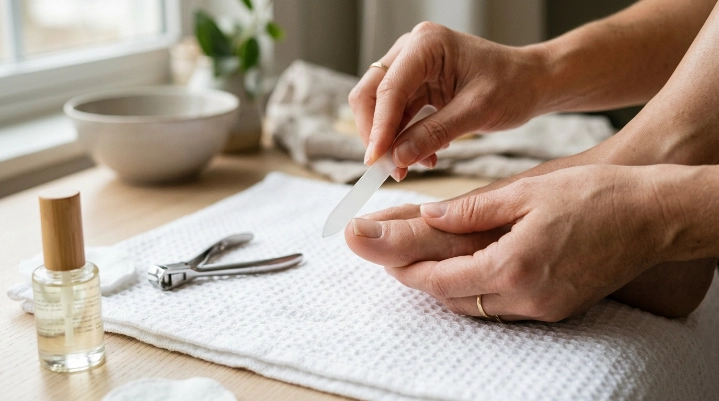
A good shape is easier to create when you use controlled cuts instead of trying to sculpt the entire nail at once.
1. Check the Nail First
Before clipping, look at the nail and surrounding skin.
Do not treat the session as a normal cosmetic pedicure if you notice significant:
- Redness
- Swelling
- Bleeding
- Drainage or pus
- Severe tenderness
- Nail separation
- Unexplained dark discoloration
- Major thickening or distortion
These changes may need professional assessment rather than additional cutting or filing.
2. Use the Right Clippers
Toenail clippers are normally larger and stronger than fingernail clippers.
For ordinary toenails, a good stainless-steel toenail clipper is inexpensive and usually sufficient. If the nail is unusually thick, a nail nipper may offer more leverage, but its sharper jaws require better control.
A basic home setup does not have to be expensive:
| Tool | Typical Use | Approximate Cost Level | What to Look For |
|---|---|---|---|
| Toenail clipper | Regular trimming | Low | Sharp, aligned blades |
| Nail nipper | Thick nails | Low to moderate | Comfortable grip and controlled jaw |
| Emery board | Occasional smoothing | Low | Clean, unworn surface |
| Glass file | Gentle edge refinement | Low to moderate | Smooth, washable surface |
| Metal file | Firm or thick nails | Low | Fine enough for controlled filing |
Material matters less than sharpness, cleanliness, and your ability to control the tool safely.
3. Make Small Cuts Across the Nail
Position your clipper near the free edge and make several small cuts moving across the nail.
Avoid one forceful cut across a large or thick big toenail. Smaller cuts give you more control and reduce the temptation to dig into the sides.
4. Keep Both Corners Visible
This is the most important shaping rule.
After trimming, you should still be able to see where the front edge meets each side of the nail.
Do not chase a perfectly curved appearance by cutting farther and farther into the corners.
5. File the Rough Spots
Once the basic straight shape is established, run your fingertip gently along the free edge.
If you notice a sharp point, use a clean file with light strokes until it feels smooth.
The American Academy of Dermatology also recommends smoothing uneven edges with a nail file and filing in the same direction rather than aggressively sawing back and forth.
Expert Tip: If one corner looks slightly uneven after clipping, resist the urge to cut deeper. Use a fine file to soften the rough point instead. You will have much more control and are less likely to remove an important corner accidentally.
What Type of Nail File Is Best for Toenails?
Because toenails tend to be thicker than fingernails, they can usually handle a slightly sturdier file. That does not mean you need the coarsest surface available.
Emery Boards
Emery boards are affordable and easy for beginners to control.
They work well when you only need to soften an edge after clipping.
Their main limitation is hygiene. Porous disposable files are difficult to disinfect thoroughly and eventually become worn.
Glass Nail Files
Glass files provide a smooth filing surface and are a good choice for normal natural toenails.
They are especially useful when your nails tend to split easily or when you only need precise finishing.
Quality glass files can cost more initially, but reusable versions may last much longer than disposable boards.
Metal Nail Files
Metal files are durable and may be useful for firm or thicker toenails.
Use gentle pressure. An aggressive metal file can scrape nearby skin or remove more nail than intended.
Regardless of material, stop filing if you feel pain, burning, excessive heat, or tenderness.
What If Your Toenails Naturally Curve?
Not every toenail grows perfectly flat.
Some people naturally have more curved nail plates, particularly on their big toes. That does not mean you should try to force the nail into a flatter appearance by cutting down the sides.
Instead:
- Keep the front edge mostly straight.
- Leave the corners intact.
- Smooth sharp areas lightly.
- Wear shoes with enough toe room.
- Watch the sides for tenderness or redness.
If a naturally curved nail repeatedly presses into the skin despite careful trimming, a podiatrist or dermatologist can help determine why.
Should Small Toenails Be Shaped the Same Way?
Your smaller toenails may naturally look rounder because their nail plates are narrow.
You do not need to make every toenail visually identical.
The principle is the same: avoid digging into the sides or aggressively removing corners.
A small fifth toenail may only need a tiny amount of trimming and filing. Trying to create a perfectly square mini-nail can result in taking off too much.
Work with the natural size and shape of each nail rather than forcing every toe into one cosmetic template.
Nail Shape and Ingrown Toenails
An ingrown toenail occurs when the nail edge presses or grows into nearby skin. The big toe is commonly affected.
Improper trimming is not the only possible cause. Tight shoes, injury, naturally curved nails, and other factors can also contribute.
Still, straight-across trimming is one of the simplest preventive habits.
If the side of your nail is already painful, swollen, or embedded in the skin, do not repeatedly cut farther into the corner to try to remove it yourself.
That may provide temporary relief while making the growing edge harder to manage later.
Seek medical guidance if the problem is worsening, recurrent, or showing signs of infection.
Tool Hygiene Matters
A perfect toenail shape is not worth much if your tools introduce unnecessary contamination.
Nail clippers and files can collect nail dust, skin debris, and microorganisms.
The American Academy of Dermatology advises against sharing personal nail-grooming tools because fungal infections can spread through contaminated items.
For safer home care:
- Remove visible debris after each use.
- Clean reusable tools according to their material and manufacturer instructions.
- Let metal and glass tools dry completely before storage.
- Replace disposable files when worn or contaminated.
- Do not share personal toenail tools.
- Store clean tools separately from dirty bathroom items.
If you suspect a fungal nail infection, avoid using the same uncleaned file across multiple nails.
DIY Shaping vs. a Professional Pedicure
Healthy, uncomplicated toenails can usually be shaped at home.
DIY care is inexpensive and gives you complete control over how much nail you remove. A basic clipper and file may be all you need.
A professional pedicure can be worthwhile when:
- You have difficulty reaching your feet.
- You struggle to see the nail clearly.
- You want a more polished cosmetic finish.
- Your nails are difficult to cut but otherwise healthy.
- You are uncomfortable handling sharp nail tools.
Tell your nail technician that you prefer your toenails kept mostly straight across rather than deeply rounded.
A nail technician can help with grooming and appearance, but a salon service is not a substitute for medical diagnosis or treatment.
Common Mistakes to Avoid
Even experienced DIY pedicure fans can accidentally over-shape toenails.
- Rounding deeply into the corners: This removes the portion of nail that should continue growing forward.
- Cutting every bit of white nail away: Extremely short nails can become tender inside shoes.
- Trying to match the curve of the toe: Your toenail does not need to follow the rounded tip of your toe.
- Using tiny, dull clippers: They can crush or tear thicker nail plates.
- Aggressively sawing with a file: Excessive filing may leave the edge thin and fragile.
- Filing the skin beside the nail: Nail files are abrasive and can cause irritation.
- Sharing files and clippers: This creates unnecessary hygiene risks.
- Digging underneath a painful corner: Stop if the area is tender instead of treating pain as a sign that you need to cut deeper.
- Covering suspicious nail changes with polish: Removing polish periodically makes it easier to notice changes in the natural nail.
- Forcing thick nails into a cosmetic shape: New or significant thickening deserves evaluation before aggressive filing.
When to See a Nail Technician or Dermatologist
A nail technician is a reasonable choice for healthy toenails that simply need cosmetic trimming, filing, and polish.
A dermatologist, podiatrist, or other appropriate healthcare professional is the better choice when the problem involves pain, infection, injury, or an unexplained change.
Arrange professional evaluation if you notice:
- Increasing pain
- Significant swelling or redness
- Warm skin around the nail
- Pus or other drainage
- Recurrent ingrown toenails
- A nail separating from the nail bed
- New or unexplained dark pigmentation
- Major yellow, green, brown, or black discoloration
- Thickening or crumbling that is getting worse
- Bleeding or an open wound
- A major unexplained change in nail shape
The American Academy of Dermatology notes that unexplained changes in nail color, texture, or shape can sometimes indicate infection or another condition and may deserve evaluation.
If you have diabetes, poor circulation, reduced sensation in your feet, or another health issue that makes foot injuries harder to detect or heal, ask your healthcare professional about the safest toenail-care routine before aggressively cutting or filing problem nails.
FAQs
Should toenails be square or round?
Toenails are generally best kept straight across or softly squared. Lightly smooth sharp points if needed, but avoid cutting deeply into the corners to create a strongly rounded shape.
Is a squoval shape safe for toenails?
A very subtle squoval shape can be reasonable if you begin with a straight-across nail and only soften the sharp tips. The corners should still remain visible rather than being filed away.
Can I round the corners of my big toenail?
You can gently smooth a sharp corner with a fine file. Avoid cutting or filing deeply down the side of the nail, particularly if you are prone to ingrown toenails.
How short should toenails be?
Keep toenails at a moderate, comfortable length. Do not remove every bit of the free edge or cut so short that the corners disappear into the surrounding skin.
Should I use clippers or a nail file to shape toenails?
Clippers are usually more practical for removing length, while a nail file gives you better control for smoothing and refining the final edge. Many people get the best result by using both.
What should I do if my toenail is already ingrown?
Avoid repeatedly digging into or cutting away the painful corner. If the nail is very painful, swollen, draining, infected-looking, recurrent, or getting worse, seek professional medical care.
Can a nail technician fix an unusual toenail shape?
A nail technician can improve the cosmetic shape of a healthy toenail. Unexplained thickening, discoloration, severe curvature, pain, swelling, or infection should be assessed by an appropriate healthcare professional instead.
Conclusion
If you are wondering what is the best shape for toenails, keep the answer simple: aim for a straight-across or softly squared shape, leave the corners visible, maintain a comfortable length, and use a nail file only to smooth rough points.
You do not need perfectly square toenails, and you do not need every toe to look identical. The goal is a shape that works with the nail’s natural growth while avoiding unnecessary pressure on the surrounding skin.
Use clean, sharp tools, file gently, and resist the temptation to dig into corners for a more rounded pedicure.
Most healthy toenails can be maintained easily at home. But if you notice pain, swelling, drainage, major discoloration, unusual thickening, or repeated ingrown nails, put the cosmetic shaping on hold and get appropriate professional advice.
Your next pedicure can still look beautiful—just make comfort, healthy growth, and gentle shaping the priorities.

