
Can Acetone Be Used as Nail Dehydrator? Safe Nail Prep Guide

If you are doing gel, acrylic, press-on, or regular polish at home, you may have heard that removing oil from the natural nail helps products stick better. That raises an obvious question: can acetone be used as nail dehydrator instead of buying another nail-prep product?
The short answer is yes—100% pure acetone can temporarily remove oil and moisture from the nail surface, so it can work as a basic nail-prep substitute in some situations. However, acetone is not identical to a professionally formulated nail dehydrator, and frequent or careless use can leave nails and surrounding skin dry and irritated.
Here is what acetone actually does, when it makes sense to use it, when a proper dehydrator is the better choice, and how to prep your nails without causing unnecessary damage.
Quick Answer
Yes, 100% pure acetone can be used as a temporary nail dehydrator because it removes surface oils and evaporates quickly. However, it can dry the nail plate and surrounding skin, and regular nail polish remover may contain oils or moisturizers. For frequent gel or acrylic manicures, a dedicated nail dehydrator is usually the better option.
What Does a Nail Dehydrator Actually Do?

A nail dehydrator is a prep product applied to the natural nail before gel polish, acrylic, builder gel, dip powder, or other enhancements.
Its main job is to temporarily remove:
- Natural oils
- Surface moisture
- Residue from lotions or cuticle products
- Small amounts of contamination left after nail preparation
This leaves a cleaner, drier nail surface that may help the next product adhere more consistently.
A dehydrator is different from a primer. Dehydrator cleans and dries the surface, while primer is designed to improve the bond between the natural nail and the enhancement system.
You also do not need to make the nail extremely dry. The goal is simply to create a clean surface for application.
Can Acetone Be Used as Nail Dehydrator?
Yes, with some important limitations.
Pure acetone can remove oils and moisture from the nail surface, which means it performs part of the same job as a nail dehydrator.
Acetone is also very volatile, so it evaporates quickly instead of leaving the nail noticeably wet.
That makes it a practical backup when you are doing an occasional manicure and do not have a dedicated dehydrator available.
However, using acetone as a dehydrator does not automatically make it equivalent to the prep product recommended by your gel, acrylic, or nail-extension manufacturer.
Commercial nail dehydrators are specifically formulated for nail preparation. Depending on the product, they may use a carefully selected blend of fast-evaporating solvents designed to clean the nail while fitting into a particular application system.
The Important Difference Between Pure Acetone and Nail Polish Remover
This distinction matters.
If you decide to use acetone for nail prep, look for a product labeled 100% acetone rather than assuming every bottle of nail polish remover will do the same thing.
Some nail polish removers contain:
- Fragrance
- Conditioning ingredients
- Oils
- Moisturizers
- Other solvents
Those additions may be useful during polish removal because acetone can be drying, but they are not necessarily ideal immediately before applying an enhancement.
Poison Control notes that nail polish removers can contain acetone along with ingredients such as fragrance and moisturizing substances. Poison Control’s nail polish remover safety information
A remover that leaves an oily or conditioning film may work against the clean, oil-free surface you are trying to create.
Acetone vs. Nail Dehydrator vs. Rubbing Alcohol
These products may look interchangeable, but they are not exactly the same.
| Nail Prep Option | What It Does | Best For | Main Limitation |
|---|---|---|---|
| 100% acetone | Removes oils, residue, and moisture quickly | Occasional DIY prep or backup use | Can be drying and irritating |
| Dedicated nail dehydrator | Designed specifically to prepare the nail for enhancements | Gel, acrylic, extensions, builder gel, frequent manicures | Costs more than using a product you already own |
| Isopropyl alcohol | Cleans oils, dust, and some surface residue | General nail cleaning and certain manicure systems | May not dehydrate as aggressively as acetone |
| Regular nail polish remover | Removes polish and may contain conditioning ingredients | Removing regular polish | Added oils or moisturizers may interfere with adhesion |
A small bottle of nail dehydrator is usually inexpensive and lasts a long time because you apply only a thin layer. If you regularly wear gel or acrylic enhancements, buying the proper prep product is generally more practical than repeatedly improvising with acetone.
When Using Acetone as a Dehydrator Can Make Sense
Acetone may be reasonable when you are doing an occasional manicure and simply need to remove temporary surface oil before application.
For example, it can be useful if:
- You touched your nails after preparing them.
- You accidentally applied hand cream before polishing.
- Your nails naturally become oily quickly.
- You are doing a simple DIY manicure and do not own dehydrator.
- You need to clean dust and residue after gentle filing.
- The product system you are using does not specifically require its own dehydrator.
It is especially important to check the directions supplied with gel, acrylic, press-on, or extension products.
The FDA recommends using nail products according to their labeled directions and paying attention to warning statements. FDA nail-care product safety guidance
If a manufacturer specifies a particular prep product or system, following those instructions gives you the most predictable result.
When a Dedicated Nail Dehydrator Is the Better Choice
Choose a proper dehydrator if you regularly apply:
- Gel polish
- Builder gel
- Acrylic
- Gel extensions
- Soft-gel tips
- Dip powder
- Other long-wear enhancements
A dedicated product is also more useful if you constantly struggle with lifting.
Poor adhesion is not always caused by oil, though. Problems can also come from incorrect curing, product touching the cuticle, insufficient preparation, incompatible products, incorrect primer use, or excessive filing.
That is why applying stronger and stronger solvents is not necessarily the answer.
More dehydration does not always mean better adhesion.
How to Use Acetone as a Nail Dehydrator Safely
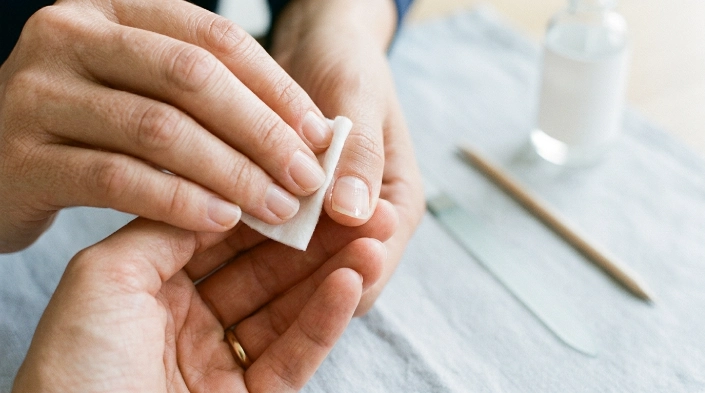
If you want to try acetone as a temporary substitute, use a small amount and keep it focused on the natural nail plate.
1. Wash and Dry Your Hands
Start with clean hands.
Wash with mild soap and water, then dry thoroughly. Avoid applying hand cream, cuticle oil, or lotion immediately afterward.
2. Shape Your Nails
Trim and shape the free edge before applying acetone.
For natural nails, use a gentle nail file rather than an unnecessarily coarse abrasive. Over-filing can create peeling, thinning, and weak edges.
You generally need only enough filing to create the shape you want. Do not aggressively scrape the natural nail simply because you are preparing for gel or another enhancement.
3. Remove Filing Dust
Use a clean nail brush or lint-free wipe to remove dust.
Avoid repeatedly touching the nail plate afterward because oils from your fingertips can transfer back onto the surface.
4. Apply a Small Amount of 100% Acetone
Place a little pure acetone onto a lint-free wipe.
Wipe each natural nail once or twice, paying attention to the nail plate rather than soaking the surrounding skin.
Do not soak your fingers in acetone simply to dehydrate your nails.
The American Academy of Dermatology recommends limiting acetone contact with surrounding skin during gel removal because acetone can irritate and damage the skin. American Academy of Dermatology’s acetone and gel manicure guidance
5. Let It Evaporate
Acetone should disappear quickly.
Wait until the nail looks completely dry before applying the next product.
Do not rinse your nails, touch them, or apply oil afterward because that defeats the purpose of surface preparation.
6. Continue With Your Nail System
Apply dehydrator, primer, base coat, gel, acrylic, or another product only as required by the system you are using.
If your product directions specifically call for a dedicated dehydrator after cleansing, follow those instructions rather than assuming the acetone replaced every prep step.
Expert Tip: Use the smallest amount of acetone needed to clean the nail. Flooding the nail and cuticle does not improve adhesion—it mainly increases unnecessary exposure and dryness.
Does Filing Make Acetone Work Better?
Proper nail preparation can help adhesion, but aggressive filing is not necessary.
Lightly shaping the free edge is normal. Some enhancement systems may also require very gentle removal of surface shine, but the exact prep method depends on the product.
Coarse files can remove natural nail layers surprisingly quickly.
Never keep filing until the nail feels thin, hot, sore, or sensitive.
After filing, remove all visible dust before using acetone or dehydrator. Dust trapped beneath gel or enhancements can contribute to uneven application and lifting.
If the nail is already thin or damaged from previous filing, focus on recovery rather than adding more aggressive prep.
Acetone Safety: What You Should Know
Acetone is common in nail care, but common does not mean completely harmless.
It can remove oils from both the nail and skin. With repeated exposure, this may contribute to dryness, irritation, cracking, and brittleness.
The American Academy of Dermatology notes that acetone used during manicure removal can dry the nails and irritate surrounding skin.
CDC/NIOSH also identifies acetone as one of the chemicals encountered in nail salons and notes that nail professionals can be exposed to chemicals through their skin and by breathing vapors. CDC/NIOSH nail technician safety guidance
For safer home use:
- Work in a well-ventilated room.
- Keep the bottle closed when you are finished.
- Keep acetone away from flames and heat.
- Avoid unnecessary skin contact.
- Do not use it around irritated or broken skin.
- Stop if you experience significant burning, redness, or discomfort.
- Keep nail chemicals out of reach of children and pets.
- Never intentionally inhale or swallow acetone.
Acetone is also highly flammable, so keep it away from candles, cigarettes, open flames, and hot equipment.
What If You Have Dry, Thin, or Sensitive Nails?
If your nails are already peeling, splitting, or unusually thin, routinely applying acetone purely for dehydration may not be your best option.
The temporary oil removal may help adhesion, but repeatedly drying already fragile nails can make your manicure routine uncomfortable.
Consider reducing enhancement use and allowing the nails to recover.
Between manicures, moisturizing the nail and surrounding skin can help counter dryness. The AAD recommends rehydrating nails and cuticles between polish applications, especially after acetone exposure.
Just remember to remove excess oil before your next manicure.
Hygiene Matters Too
A successful manicure is about more than adhesion.
Keep reusable tools clean and avoid sharing personal nail files, buffers, or manicure implements that cannot be properly sanitized.
If you use a disposable emery board on a damaged, infected, or suspicious nail, do not use that same file on healthy nails.
Also avoid applying enhancements over nails showing possible infection or injury.
Signs that deserve attention include:
- Increasing redness
- Swelling
- Throbbing pain
- Pus or drainage
- Green, yellow, brown, or unusual discoloration
- A nail lifting unexpectedly from the nail bed
- Bleeding or open skin
- Persistent tenderness
Covering the problem with acrylic, gel, or polish can make it harder to monitor what is happening underneath.
Common Mistakes to Avoid
If you are using acetone as part of nail preparation, avoid these common mistakes:
- Using oily nail polish remover instead of pure acetone. Conditioning ingredients may leave residue behind.
- Soaking the entire fingertip. A quick nail-plate wipe is usually enough for prep.
- Getting acetone all over the cuticles. Repeated contact can increase dryness and irritation.
- Over-filing before dehydrating. Rough preparation can thin and weaken natural nails.
- Touching the nails afterward. Finger oils can immediately contaminate the prepared surface.
- Applying multiple heavy coats of dehydrating products. More product does not automatically create stronger adhesion.
- Ignoring manufacturer instructions. Nail systems may require specific prep steps.
- Using acetone on broken or irritated skin. Allow the area to recover first.
- Working beside flames or heat. Acetone is extremely flammable.
DIY Acetone Prep vs. Professional Nail Prep
For an occasional home manicure, a careful wipe with 100% acetone can be a convenient solution.
If you wear enhancements continuously or experience frequent lifting, however, the better answer may be improving your full preparation routine rather than relying on extra acetone.
A professional nail technician can evaluate factors such as:
- Nail condition
- Product compatibility
- Filing technique
- Cuticle preparation
- Primer requirements
- Gel curing
- Enhancement structure
- Repeated lifting
Professional services cost more than doing your nails at home, but troubleshooting persistent problems correctly may help prevent repeated product removal, over-filing, and unnecessary damage.
When to See a Nail Technician or Dermatologist
A nail technician can help when the main issue is application technique, product lifting, shaping, or choosing the correct manicure system.
A dermatologist is more appropriate when the problem appears to involve the health of the nail or surrounding skin.
Consider medical advice if you have persistent:
- Pain or swelling
- Red or inflamed skin
- Discharge or pus
- Nail separation
- Unexplained color changes
- Severe splitting or thinning
- Rash or suspected allergic reaction
- Changes that continue even after stopping nail products
Do not try to solve a possible infection or allergic reaction by adding more primer, acetone, glue, or polish.
FAQs
Can I use acetone instead of nail dehydrator for gel nails?
You can use a light wipe of 100% acetone to remove surface oils before a gel manicure, but it may not replace every preparation step required by your gel system. If the manufacturer recommends a specific dehydrator or primer, follow those instructions for the most reliable adhesion.
Is 100% acetone a good nail dehydrator?
It can work as a temporary dehydrating and degreasing step because it evaporates quickly and removes surface oils. However, it is more drying than many people need for routine prep, so frequent manicure users may prefer a dedicated nail dehydrator.
Can I use regular nail polish remover as dehydrator?
Not always. Many removers contain fragrance, moisturizers, oils, or other ingredients. Those may leave residue that is not ideal before gel, acrylic, or adhesive application. Check the ingredient label rather than assuming all nail polish remover is pure acetone.
Can acetone damage natural nails?
Repeated acetone exposure can contribute to dryness and brittleness, particularly when nails are soaked for long periods or already damaged. Occasional brief contact is different from frequent prolonged exposure, but using only the amount you need is a smart approach.
Should I use acetone before press-on nails?
A quick wipe with pure acetone may remove oil before applying press-ons, but check the instructions included with your nail glue or adhesive tabs. Some brands recommend alcohol or their own prep solution instead.
Do I need both acetone and nail dehydrator?
Usually not for the same purpose unless the product instructions tell you to use both. If you own a proper dehydrator designed for your manicure system, use it as directed rather than repeatedly layering different drying products.
What can I use if I do not have nail dehydrator?
For occasional nail prep, 100% acetone or an appropriate isopropyl alcohol cleanser may help remove surface oils. The best substitute depends on the manicure system, so always check the product manufacturer’s directions before changing the recommended preparation process.
Conclusion
So, can acetone be used as nail dehydrator? Yes—100% pure acetone can temporarily remove surface oils and moisture and can be useful for occasional DIY nail prep.
The key is moderation.
Use a small amount on the natural nail plate, avoid unnecessary contact with the surrounding skin, allow it to evaporate fully, and follow the instructions for whatever gel, acrylic, press-on, or polish system you are applying.
For frequent manicures or long-wear enhancements, a purpose-made nail dehydrator usually gives you a more consistent routine without relying on extra acetone every time.
And if your nails are painful, inflamed, discolored, lifting, or badly damaged, skip the DIY prep entirely until you know what is causing the problem. Healthy nails should always come before making a manicure last a few extra days.
