
Can Alcohol Dehydrate Nails? What Rubbing Alcohol Really Does

If you have ever wiped your nails with rubbing alcohol before gel polish, press-ons, or a manicure, you may have wondered whether you are actually drying out your natural nails. Can alcohol dehydrate nails? Yes—alcohol can temporarily remove surface oils and moisture from the nail plate, and it can also dry the surrounding skin and cuticles when used frequently.
That does not mean one quick prep wipe will permanently damage healthy nails. The bigger concern is repeated exposure, soaking, strong solvents, or using alcohol on nails and skin that are already dry, peeling, cracked, or irritated.
Here is what alcohol really does to your nails, when it can be useful, when to avoid it, and how to prep your nails without overdoing it.
Quick Answer
Yes, alcohol can dehydrate nails temporarily by removing surface oils and helping moisture evaporate. A quick wipe before polish or press-ons is usually less concerning than repeated soaking or frequent exposure. If your nails or cuticles already feel dry, brittle, cracked, or irritated, use alcohol sparingly and moisturize afterward.
What Does “Dehydrating the Nail” Actually Mean?
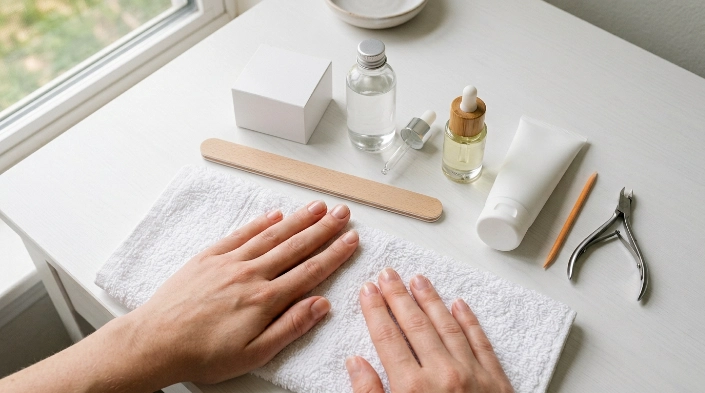
In nail care, dehydrating usually means removing moisture, natural oils, and residue from the surface of the nail plate so polish, gel, glue, or another enhancement can grip more effectively.
Your visible nail plate is made mostly of keratin. Alcohol—usually isopropyl alcohol in manicure prep—evaporates quickly and can lift oils, lotion residue, and moisture from the surface.
That is why it may be used before:
- Gel polish
- Press-on nails
- Nail glue
- Builder gel
- Nail wraps
- Some acrylic or extension systems
The important difference is temporary surface preparation versus repeated over-drying.
A single light wipe is very different from soaking your fingertips in alcohol or repeatedly scrubbing your nails because you believe that “drier” automatically means better adhesion.
The American Academy of Dermatology’s healthy nail care guidance recommends keeping nails clean and dry while avoiding unnecessary damage and maintaining sensible nail-care habits.
How Alcohol Affects Natural Nails and Cuticles
Alcohol can affect the hard nail plate and the softer skin surrounding it differently.
On the Nail Plate
A small amount of alcohol can:
- Remove surface oil and lotion
- Clear away light residue and dust
- Leave the nail temporarily drier
- Help some manicure products adhere properly
Healthy nails may tolerate occasional use without a problem.
However, repeated exposure can become more noticeable if your nails are already thin, peeling, over-filed, or frequently exposed to acetone and other solvents.
On the Cuticles and Skin
The skin around your nails is usually more sensitive to alcohol than the nail plate itself.
Alcohol can remove protective oils from the skin barrier, leading to:
- Tightness
- Flaking
- Stinging
- Cracking
- Redness
- Increased sensitivity
The American Academy of Dermatology’s advice for preventing dry hands notes that alcohol-based hand sanitizer can be very drying and recommends applying moisturizer after the sanitizer dries. That same principle is useful for protecting the skin around your nails.
If your cuticles are already torn, bleeding, or inflamed, alcohol may sting and make the irritation feel worse.
Is Rubbing Alcohol the Same as Nail Dehydrator?
Not exactly.
Both products may remove oil or moisture during nail prep, but they are designed for slightly different purposes.
| Product | Main Purpose | Best Use | Main Limitation |
|---|---|---|---|
| Rubbing alcohol | Removes surface oil and residue | Light manicure prep and cleaning | Can dry cuticles with frequent use |
| Nail dehydrator | Creates a very dry prep surface | Gel, acrylic, extensions, or systems that require it | May be unnecessarily drying if overused |
| Acetone | Removes polish, gel, adhesive, and oils | Product removal and certain prep routines | Strong drying effect with repeated exposure |
| Soap and water | Removes dirt and debris | Basic hand and nail hygiene | Nails must dry thoroughly before some manicures |
Dedicated nail dehydrators may contain alcohol, acetone, ethyl acetate, or other fast-evaporating solvents.
More dehydration is not automatically better.
If your gel, glue, or enhancement system does not require a strong dehydrator, adding extra drying products may increase irritation without noticeably improving wear time.
Can Alcohol Make Nails Brittle or Peel?
Alcohol can contribute to dryness, particularly when it is only one part of an already aggressive nail routine.
A single wipe is unlikely to turn healthy nails brittle overnight. But think about everything your nails may experience during a typical DIY manicure:
- Filing or buffing
- Acetone
- Alcohol
- Nail dehydrator
- Gel removal
- Hand sanitizer
- Frequent handwashing
- Household cleaners
Those effects can add up.
Watch for signs such as:
- Peeling layers near the nail tip
- White or chalky-looking areas
- Increased splitting
- Rough texture
- Tender cuticles
- Flaky skin around the nails
- Stinging when products are applied
If your nails are becoming visibly thinner, reduce aggressive filing and unnecessary solvent exposure.
When Alcohol Can Be Useful During a Manicure
Alcohol is not automatically bad for nails. It can be useful when you have a specific reason to use it.
Before Gel Polish
A light wipe may remove lotion, oil, or residue that could interfere with adhesion.
Let the nail dry completely before applying your base coat.
Avoid wiping the same nail repeatedly just to make it feel extremely dry. Proper curing, thin coats, compatible products, and careful application also affect how long your manicure lasts.
Before Press-On Nails
Alcohol wipes are often used before press-ons because natural oils can weaken the bond between the nail and adhesive.
Use one light wipe and let it evaporate.
If your nails are already thin, avoid combining aggressive surface filing with repeated alcohol wiping. You usually do not need to rough up the nail dramatically to apply press-ons.
For Nail Tools
Alcohol can also be useful for certain manicure tools.
The American Academy of Dermatology’s nail infection prevention guidance explains that tools such as nail clippers should first be cleaned of debris and can then be disinfected with 70% rubbing alcohol in routine situations where no known infection is present.
However, a quick alcohol wipe does not make every tool safe to share. Porous files, buffers, and similar items may be better kept for one person or disposed of according to their intended use.
How to Use Alcohol on Nails Without Over-Drying Them
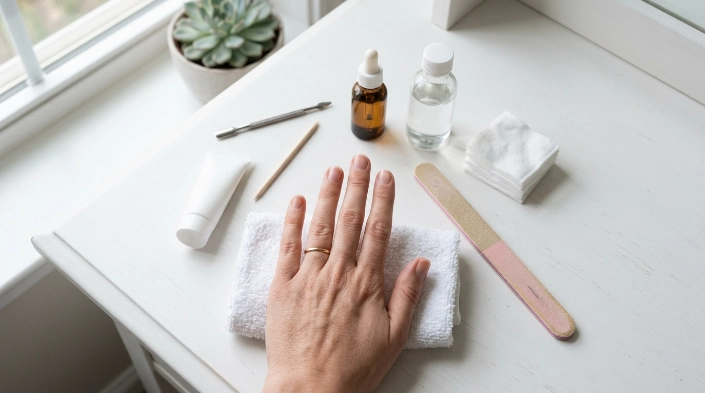
If alcohol is part of your manicure prep, keep the process simple.
- Clean your hands if needed. Remove obvious dirt or product residue, then dry your hands thoroughly.
- Shape your nails gently. Use a clean nail file suitable for natural nails. Avoid aggressive sawing or thinning the nail plate.
- Remove filing dust. Use a clean brush or lint-free pad.
- Apply only a small amount of alcohol. Lightly wipe the nail plate once rather than saturating the entire fingertip.
- Avoid flooding your cuticles. The product should mainly contact the nail plate.
- Allow it to evaporate completely. Continue with your manicure once the nail looks and feels dry.
- Moisturize afterward. Once your manicure is finished and oil will no longer interfere with adhesion, apply cuticle oil or hand cream.
Expert Tip: If your manicure keeps lifting, do not automatically add more alcohol or more filing. Check for invisible cuticle on the nail plate, lotion residue, product touching the skin, incorrect curing, incompatible products, or improper application first.
Does Hand Sanitizer Dehydrate Nails?
Frequent alcohol-based hand sanitizer can make the fingers and cuticle area feel noticeably dry.
Your nails may also feel drier when sanitizer use is combined with frequent handwashing, cold weather, acetone, and regular manicure removal.
You do not need to avoid sanitizer when it is appropriate for hygiene. Instead:
- Use sanitizer as directed
- Let it dry completely
- Apply fragrance-free hand cream afterward
- Work moisturizer around your fingertips and nail folds
- Wear gloves during dishwashing and cleaning
If your skin repeatedly burns, develops painful cracks, or develops a persistent rash, the problem may be more than normal cosmetic dryness.
Alcohol, Acetone, and Nail Files: Avoid Over-Prepping
This combination is common during DIY manicures—and it is also easy to overdo.
A nail file removes material through friction. Acetone strongly dissolves polish, adhesives, and oils. Alcohol removes surface residue and evaporates quickly.
Each tool can be useful.
But if you aggressively buff a natural nail, repeatedly wipe it with acetone, use alcohol, and then apply a separate dehydrator, you may be doing far more preparation than your manicure needs.
A better rule is:
Use the least aggressive amount of filing and solvent prep that still gives you reliable adhesion.
The American Academy of Dermatology’s manicure and pedicure safety advice recommends moisturizing nails after polish removal because polish removers can contribute to dryness.
Nail File Type Matters When Your Nails Are Dry
If your nails already feel dry or brittle, your file choice becomes important.
A fine-grit file or a smooth glass file is generally easier to control on natural nails than a very coarse abrasive designed for acrylic or other hard enhancements.
Keep these habits in mind:
- Use a file intended for natural nails.
- File gently instead of using aggressive back-and-forth pressure.
- Avoid thinning the top of your natural nail unnecessarily.
- Replace worn or contaminated files.
- Keep porous files personal rather than sharing them.
If your nails start peeling after a manicure routine involving alcohol, alcohol may not be the only reason. Over-filing is another common source of damage.
Do You Need to Buy a Separate Nail Dehydrator?
For a simple at-home manicure, not always.
Alcohol wipes are inexpensive and may be enough for basic surface preparation when your manicure system allows them.
A dedicated dehydrator can make more sense if you regularly use:
- Acrylic
- Builder gel
- Gel extensions
- Professional-style press-on systems
- Products whose manufacturer specifically requires dehydration
Before buying another prep product, ask:
- Does my manicure system actually require it?
- Are my nails naturally oily or already dry?
- Am I also using acetone?
- Do I have sensitive skin?
- Is poor adhesion really my problem?
If your nails are already peeling, a stronger dehydrator may create more dryness without fixing poor technique.
Who Should Be Extra Careful With Rubbing Alcohol?
Use extra caution if you have:
- Cracked or bleeding cuticles
- Hand eczema or dermatitis
- Thin or peeling nails
- Recent damage from gel or acrylic removal
- Open cuts around your nails
- Known sensitivity to manicure products
- Possible nail or skin infection
Cleveland Clinic notes that rubbing alcohol can be drying and irritating to skin, particularly when the skin barrier is already vulnerable.
Rubbing alcohol is also flammable. Keep it away from flames, heat, sparks, and children.
Common Mistakes to Avoid
- Soaking your nails in alcohol. A brief prep wipe is normally enough.
- Applying alcohol over broken skin. This can cause stinging and irritation.
- Using alcohol, acetone, heavy buffing, and dehydrator together without a reason.
- Using a coarse file on natural nails. This can remove too much nail quickly.
- Skipping moisturizer after repeated solvent exposure.
- Assuming lifting always means your nails need stronger dehydration.
- Sharing dirty or porous nail files.
- Ignoring pain, swelling, drainage, or unusual discoloration.
When to See a Nail Technician or Dermatologist
A licensed nail technician can be helpful when your problem is mainly related to technique, such as repeated lifting, press-on fit, incorrect shaping, product removal, or selecting a manicure system that suits your natural nails.
A dermatologist or other healthcare professional is more appropriate when the nail or surrounding skin looks unhealthy.
Seek medical advice if you have:
- Increasing redness or swelling
- Pus or drainage
- Strong or worsening pain
- A bad odor
- A nail lifting away from the nail bed
- Deep cracks or bleeding
- A persistent rash
- New or unexplained dark discoloration
- Nail changes that continue after you stop irritating products
Do not try to treat a suspected infection by repeatedly pouring rubbing alcohol on it. Irritation can worsen, and alcohol is not a substitute for proper diagnosis or treatment.
FAQs
Can alcohol dehydrate nails before gel polish?
Yes. Alcohol can temporarily remove surface oil and moisture, which is why it appears in some gel prep routines. Use only the amount your manicure system requires. Repeated wiping usually is not necessary.
Is 70% rubbing alcohol safe for nails?
A small amount used briefly on intact nails is tolerated by many people. However, it can dry or irritate the surrounding skin with repeated use. Avoid soaking your fingertips and stop if you develop significant burning, rash, or cracking.
Can I use hand sanitizer instead of rubbing alcohol for nail prep?
It is not the best choice. Hand sanitizer may contain moisturizers, fragrances, thickeners, and other ingredients that can leave residue. Use a prep product that is compatible with your polish, gel, or adhesive system instead.
Does alcohol strengthen nails?
No. Alcohol may make the nail surface feel dry and clean, but it does not strengthen the nail plate. For peeling or brittle nails, focus on gentle filing, moisturizing, reducing trauma, and proper manicure removal.
Can rubbing alcohol remove nail glue?
It may soften certain adhesive residues, but it is not the correct remover for every nail glue. Follow the adhesive manufacturer’s removal instructions and never force press-ons or extensions off.
Does drinking alcohol dehydrate your nails?
Excessive alcohol consumption can contribute to overall dehydration, but drinking alcohol does not instantly dry the nail plate in the same way a topical solvent can. Persistent nail changes can have many causes and should not automatically be blamed on one habit.
What should I put on my nails after using alcohol?
After your manicure is complete, use cuticle oil or a fragrance-free hand cream around the nail area if it will not interfere with your manicure. Moisturizing is especially useful when the surrounding skin feels tight or dry.
Conclusion
So, can alcohol dehydrate nails? Yes—but in manicure prep, the effect is usually temporary and mainly involves removing surface oil and moisture.
Problems are more likely when alcohol is used too frequently, used in large amounts, or combined with heavy filing, acetone, dehydrator, and repeated product removal.
For safer at-home nail care, use alcohol only when it has a clear purpose. A light prep wipe may help certain manicures adhere, but soaking and repeated scrubbing rarely provide extra benefit.
If your nails start peeling, cracking, or feeling sore, simplify your routine and reduce aggressive prep. Moisturize the surrounding skin and give damaged nails time to recover.
And if you develop swelling, drainage, worsening pain, or persistent nail changes, stop treating the problem as a cosmetic issue and speak with a qualified professional.
Your safest approach is to use the least aggressive nail prep that still gives you a clean, long-lasting manicure.

