
Can Cats Chew on Nail Files? Safety Risks and What to Do

Seeing your cat grab a nail file with her teeth can look harmless at first. The rough texture may even seem like another fun thing for her to investigate.
But can cats chew on nail files safely? No. It is best not to let a cat chew, lick, bite, or play with nail files. Pieces can break off and be swallowed, rough surfaces may irritate the mouth, and damaged files can become unsafe for your own nails.
The level of risk depends on the type of nail file, how much your cat chewed it, and whether any part is missing. In this guide, I’ll explain what makes nail files risky, what to do if your cat bites one, warning signs to watch for, and how to keep both your cat and your nail tools safe.
Quick Answer
Cats should not chew on nail files. Emery boards, foam files, glass files, and metal files can all create problems if bitten or swallowed. Remove the file, check whether pieces are missing, and watch your cat closely. If your cat swallowed part of a file or develops vomiting, pain, drooling, or appetite loss, contact a veterinarian.
Why Do Cats Chew on Nail Files?
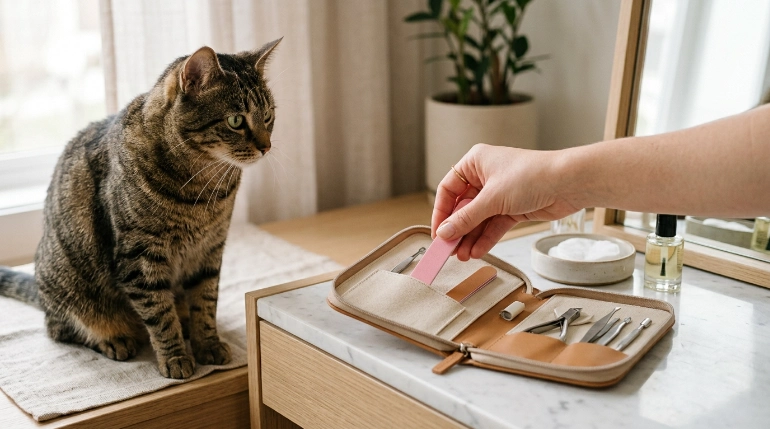
Cats explore their surroundings with their noses, paws, and mouths. A nail file can be especially interesting because it has a rough surface, an unusual smell, and a size that makes it easy to bat around.
Some cats simply bite an object once out of curiosity. Kittens may also mouth unfamiliar objects during play.
Repeated chewing deserves more attention.
A cat that regularly chews or swallows non-food objects may be showing behavior associated with pica. Pica means repeatedly eating or trying to eat things that are not food.
According to VCA Animal Hospitals’ guide to pica in cats, cats with pica may chew materials such as paper, plastic, fabric, string, or thread. Medical and behavioral factors can both contribute to the behavior.
International Cat Care’s information on feline pica also describes pica as eating non-edible materials and notes that underlying health or behavioral issues can sometimes be involved.
So, one curious bite does not automatically mean your cat has pica. Repeated searching for, chewing, or swallowing non-food items is a better reason to talk with your veterinarian.
Why Nail Files Can Be Dangerous for Cats
The biggest concern is not that every nail file is automatically poisonous. The more practical problem is what can happen when a cat tears, cracks, splinters, or swallows part of one.
Small Pieces Can Be Swallowed
A disposable emery board may soften or tear after repeated chewing. Foam files can also break apart.
If pieces disappear while your cat is chewing, you cannot safely assume they will pass without trouble.
Veterinary guidance on foreign-body ingestion warns that swallowed objects can sometimes become trapped in a cat’s digestive tract. VCA notes that signs can include vomiting, reduced appetite, abdominal discomfort, lethargy, diarrhea, or difficulty passing stool.
Rough Material Can Irritate the Mouth
Think about what a nail file is designed to do: remove tiny layers of hard nail material through abrasion.
That rough surface does not belong against a cat’s gums, tongue, or other soft mouth tissue.
Hard biting may also put unnecessary pressure on teeth, particularly with glass or metal files.
Sharp or Broken Pieces Are More Concerning
A cracked glass file or a damaged metal file deserves immediate attention.
Sharp foreign objects can injure tissues rather than simply causing a blockage. VCA’s information on feline pica notes that sharp swallowed objects can damage the intestinal tract and, in serious situations, create perforations.
Never leave a cracked glass nail file where a pet can reach it.
Chewing Also Ruins the Nail File
There is another problem that matters from a nail-care point of view.
A file covered in saliva, tooth marks, rough chips, or damaged abrasive material is no longer a tool I would want near my nails.
Small changes in the surface can make filing uneven. A damaged edge may also snag the nail instead of smoothing it.
Basic nail files are inexpensive compared with the problems caused by using a contaminated or damaged tool, so replacement is normally the sensible choice.
Which Nail File Types Are Riskiest?
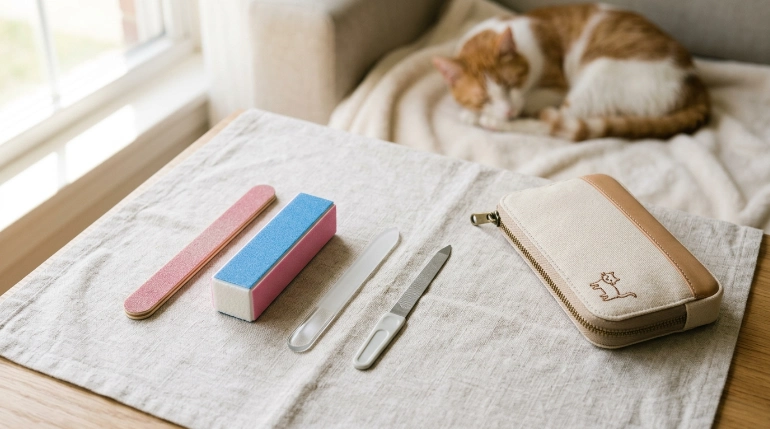
No nail file should be treated as a cat toy, but different materials create different concerns.
| Nail file type | Main concern if chewed | Best response |
|---|---|---|
| Emery board/cardboard file | Torn abrasive or backing pieces | Remove and discard |
| Foam/buffer file | Soft material can tear into chunks | Check for missing pieces and discard |
| Glass file | Cracking or sharp fragments | Remove immediately and inspect area |
| Metal file | Hard surface may hurt teeth or mouth | Remove and check file for damage |
A disposable file that has obvious tooth marks is easy to replace.
With reusable glass or metal tools, I would still stop using the file if it has cracks, chips, sharp areas, or damage that changes the filing surface.
Expert Tip: Keep nail files in a closed manicure pouch or drawer as soon as you finish using them. Putting the file away immediately is much easier than trying to teach a curious cat that your manicure tools are off-limits.
What to Do If Your Cat Chewed a Nail File
If you catch your cat chewing a nail file, avoid panicking. Start with a quick inspection.
1. Take the Nail File Away
Move the file somewhere your cat cannot reach.
Do not turn removal into a chasing game. Calmly trade it for a cat-safe toy or treat if needed.
Then keep any broken pieces together so you can see how much material may be missing.
2. Inspect the Nail File
Look closely at the whole file.
Ask yourself:
- Are there obvious bite marks?
- Is the cardboard or foam torn?
- Is part of an emery board missing?
- Has a glass file cracked?
- Is the edge chipped?
- Are pieces lying nearby?
- Could your cat have swallowed anything?
If the entire tool is intact and your cat merely grabbed it briefly, the risk is generally different from a situation where a large section is missing.
3. Look at Your Cat’s Mouth Only If It Is Safe
If your cat is calm, look for obvious bleeding, drooling, or material stuck near the front of the mouth.
Do not force your cat’s mouth open or put your fingers deep inside it.
A frightened or uncomfortable cat can bite, and an object lodged farther back should be handled by a veterinarian.
4. Contact Your Vet If Material May Have Been Swallowed
If you know or strongly suspect your cat swallowed a piece of the nail file, call your veterinarian and explain what happened.
Tell them:
- What kind of nail file it was
- What material it appears to be made from
- Approximately how much is missing
- When the chewing happened
- Your cat’s approximate size
- Whether symptoms have started
Keeping the damaged file can help you describe the situation.
5. Do Not Try to Make Your Cat Vomit at Home
This is especially important.
Do not give hydrogen peroxide, salt, or another homemade remedy in an attempt to bring the object back up.
The ASPCA advises pet owners not to induce vomiting at home without first consulting a veterinarian, and VCA specifically advises against inducing vomiting after ingestion of certain foreign objects.
Bringing a rough or sharp object back through the throat may also create additional problems.
Follow your veterinarian’s instructions instead.
Warning Signs After a Cat Chews a Nail File
If no piece appears to be missing, your cat may simply need observation.
If anything could have been swallowed, pay much closer attention.
Common warning signs of foreign-body problems can include:
- Repeated vomiting
- Gagging or retching
- Excessive drooling
- Refusing food
- Drinking less than normal
- Unusual tiredness
- Hiding
- Abdominal discomfort
- Reacting when the belly is touched
- Diarrhea
- Straining to pass stool
- Producing very little stool
These signs do not prove that a nail-file fragment caused a blockage. Many feline health problems can produce similar symptoms.
That is exactly why persistent symptoms should be assessed rather than diagnosed at home.
Cornell University’s feline health information notes that vomiting in cats can have many causes, including obstruction from an ingested foreign object.
Repeated vomiting, significant pain, breathing trouble, extreme weakness, or a known swallowed sharp object warrants prompt veterinary attention.
Is an Emery Board Toxic to Cats?
There is no simple universal answer because nail files are made by many manufacturers from different backing materials, abrasives, adhesives, coatings, and decorative finishes.
That means I would not assume that every emery board has identical ingredients.
More importantly, physical ingestion is already enough reason to prevent chewing, even when chemical toxicity is not expected.
A chunk of cardboard, foam, plastic, coating, or abrasive material is not food and is not designed to pass through a cat’s digestive system.
If your cat swallowed material from a coated, scented, painted, treated, or unusual nail file and you are concerned about its ingredients, keep the product packaging and contact your veterinarian. For suspected exposure to a potentially poisonous substance, the ASPCA Animal Poison Control Center provides professional poison guidance.
What About Glass Nail Files?
Glass files deserve extra caution around pets.
They are usually much harder for a cat to tear into small chewable chunks than a cardboard emery board. That does not make them appropriate chew toys.
Dropping or biting a damaged glass file could create chips or sharp edges.
If your cat gets hold of one:
- Remove it.
- Inspect it in good light.
- Look around the floor for fragments.
- Stop using it if you notice a crack or chip.
- Contact your veterinarian if you think glass was swallowed.
I would rather replace a questionable glass file than keep using one that may have hidden damage.
Can Cats Chew on Metal Nail Files?
Metal files have a different problem.
They do not normally tear apart like foam or cardboard, but they are very hard compared with a cat’s mouth.
Aggressive biting could injure the gums or potentially damage a tooth.
The textured surface can also collect saliva and debris.
If your cat only licked an intact metal file, clean it according to its manufacturer’s care instructions before using it again. If there are deep bite marks, sharp areas, rust, or other damage, replacement makes more sense.
Should You Keep Using a Nail File After Your Cat Chews It?
For a disposable emery board or foam buffer, I recommend throwing it away.
There is little benefit to saving a low-cost personal-care tool after it has been covered in pet saliva and damaged by teeth.
Reusable files require judgment.
Replace the File If:
- Part of it is missing.
- The abrasive layer is peeling.
- It has deep tooth marks.
- A glass file is chipped.
- A metal edge feels rough or damaged.
- You cannot clean it according to its care instructions.
- You are unsure whether the filing surface is still even.
Good nail hygiene is about more than making your manicure look neat.
Using a damaged tool can create rough nail edges, while sharing contaminated tools between different surfaces is an unnecessary hygiene risk.
For people with irritated skin, cuts around the nails, or very sensitive nail folds, being cautious with tool cleanliness is especially sensible.
How to Stop a Cat From Chewing Your Nail Files
Prevention is easier than dealing with a swallowed piece.
Store Your Manicure Tools in a Closed Container
A zippered manicure case, lidded box, drawer, or cabinet works well.
Do not rely on placing a file at the back of a table. Cats are excellent at finding things that seem temporarily out of reach.
Clean Up Immediately After Filing
Nail-care routines can leave files, clippers, cotton pads, polish bottles, and other small objects sitting around.
Once you finish, put everything away.
This protects your tools and keeps curious paws away from items that were never designed for pets.
Give Your Cat Better Things to Investigate
A cat that keeps stealing nail files may simply enjoy the texture or interaction.
Offer safe alternatives such as appropriately sized cat toys, food puzzles, play sessions, scratching surfaces, or other enrichment.
Avoid replacing one unsafe household object with another improvised object that can break apart or be swallowed.
Pay Attention to Repeated Non-Food Chewing
Occasionally batting at your manicure kit is one thing.
A cat that constantly searches for cardboard, fabric, plastic, foam, rubber, strings, or similar materials deserves more attention.
Pica can have behavioral or medical associations, and a veterinarian can help determine whether further evaluation is needed.
Common Mistakes to Avoid
A few reactions can make a simple incident more complicated.
- Assuming a missing piece is harmless. If part of the file disappeared, consider the possibility that it was swallowed.
- Trying to induce vomiting yourself. Do not give hydrogen peroxide or another home remedy unless a veterinary professional specifically directs appropriate treatment.
- Continuing to use a chewed disposable file. Replacing it is simpler and more hygienic.
- Leaving glass fragments on the floor. Inspect the area carefully after a glass file breaks.
- Waiting for severe symptoms after a known ingestion. Calling your veterinarian early gives them better information about timing and the object involved.
- Ignoring repeated chewing behavior. A pattern of eating non-food objects may need veterinary evaluation.
- Scolding the cat without changing storage habits. Secure storage removes the opportunity instead of relying on punishment.
Nail Tool Hygiene After a Cat Gets Into Your Manicure Kit
If your cat has been walking through or chewing items in an open manicure kit, check more than the nail file.
Throw away disposable items that have been heavily chewed or contaminated.
Reusable tools should be cleaned according to the manufacturer’s instructions before they go near your nails again.
Do not apply strong cleaning chemicals randomly. Different materials tolerate different cleaning methods, and residue from inappropriate products may irritate your skin.
Also inspect your own fingers before doing a manicure.
If you have cuts, torn skin, hangnails, or irritated nail folds, avoid using questionable tools over those areas.
When to See a Nail Technician or Dermatologist
For a cat that swallowed a nail file, neither a nail technician nor a dermatologist is the right professional. Contact a veterinarian.
A nail technician becomes relevant if you are unsure whether a damaged reusable manicure tool is still suitable for nail work or need advice on replacing professional-style equipment.
A dermatologist is more appropriate for your health if you develop persistent swelling, redness, pain, drainage, or another concerning skin or nail problem after an injury or contaminated-tool exposure.
DIY nail care has limits. Nail technicians handle cosmetic services, dermatologists diagnose human skin and nail conditions, and veterinarians handle medical concerns involving your cat.
Keeping those roles clear helps you get the right kind of help faster.
When Your Cat Should See a Veterinarian
Contact a veterinarian if:
- You saw your cat swallow part of the nail file.
- A noticeable piece is missing.
- The file contained sharp material.
- Your cat has mouth bleeding or persistent drooling.
- Your cat begins vomiting.
- Your cat stops eating.
- Your cat seems unusually weak or lethargic.
- Your cat appears painful.
- Your cat strains to defecate.
- Your cat repeatedly eats non-food objects.
Foreign-body obstruction can become serious when an object does not pass normally through the digestive tract. VCA describes gastrointestinal obstruction as a potentially life-threatening complication of foreign-body ingestion.
A veterinarian may decide that simple monitoring is enough, or they may recommend an examination or imaging based on what was swallowed and how your cat is acting.
FAQs
Can cats chew on nail files without getting sick?
A cat may bite a nail file once and have no obvious problem, but that does not make chewing safe. Nail files can tear, chip, or break into pieces that may be swallowed. It is better to remove the file and offer a safe cat toy instead.
What happens if my cat eats part of an emery board?
A swallowed piece may pass, but it can also irritate the digestive tract or become stuck. Contact your veterinarian if a noticeable piece is missing, especially if your cat develops vomiting, appetite loss, pain, lethargy, or trouble passing stool.
Why does my cat lick my nail file?
The texture, scent, dust, or simple curiosity may attract your cat. Occasional investigation is different from persistent non-food chewing. If your cat regularly licks, chews, or eats household objects, discuss the behavior with your veterinarian.
Should I throw away a nail file my cat chewed?
For disposable emery boards and foam files, yes. Replacement is simple and avoids using a damaged, saliva-covered tool on your nails. Reusable files should also be replaced if they have cracks, chips, rough damage, or surfaces that cannot be cleaned properly.
Can a glass nail file hurt a cat?
Yes. An intact file is still too hard and abrasive to be a chew toy, while a cracked glass file could create sharp pieces. Remove it immediately and check carefully for chips or missing fragments.
Is it safe to make my cat vomit after swallowing a nail-file piece?
Do not try to induce vomiting at home unless a veterinarian specifically directs you. The ASPCA advises pet owners not to attempt vomiting without veterinary guidance, and foreign objects may create additional risks on the way back up.
Does chewing nail files mean my cat has pica?
Not necessarily. A single curious bite does not diagnose pica. Repeatedly chewing or swallowing non-food materials is more concerning and can be associated with pica. A veterinarian can help evaluate persistent behavior.
Conclusion
So, can cats chew on nail files? They may certainly try, but nail files should stay out of their mouths.
Emery boards and foam files can tear into swallowable pieces. Glass files may chip or break. Metal files are hard enough to hurt the mouth or teeth. Even when nothing is swallowed, a chewed file may no longer be clean or safe for your manicure.
If you catch your cat with a nail file, remove it, check for missing pieces, discard damaged tools, and watch for warning signs. If part of the file was swallowed or your cat develops vomiting, pain, appetite loss, drooling, or unusual behavior, contact a veterinarian.
For everyday prevention, the easiest solution is simple: finish your manicure, put every tool back into a closed case, and give your cat something made for cats to chew and play with instead.

