
Can Kids Get Manicures? A Parent’s Guide to Safe, Age-Appropriate Nail Care

Yes — kids can get manicures, but the safest version for children is usually a simple, gentle one. Think nail shaping, light filing, moisturizing, and maybe regular polish for a special occasion. The farther you move into cuticle cutting, strong removers, gel, acrylic, or nail extensions, the more caution you need.
As a nail tech and a mom, I like to separate nail care from nail enhancements. Those are not the same thing. A child’s manicure should focus on clean, healthy-looking nails and a calm experience, not on long wear or dramatic changes to the nail plate.
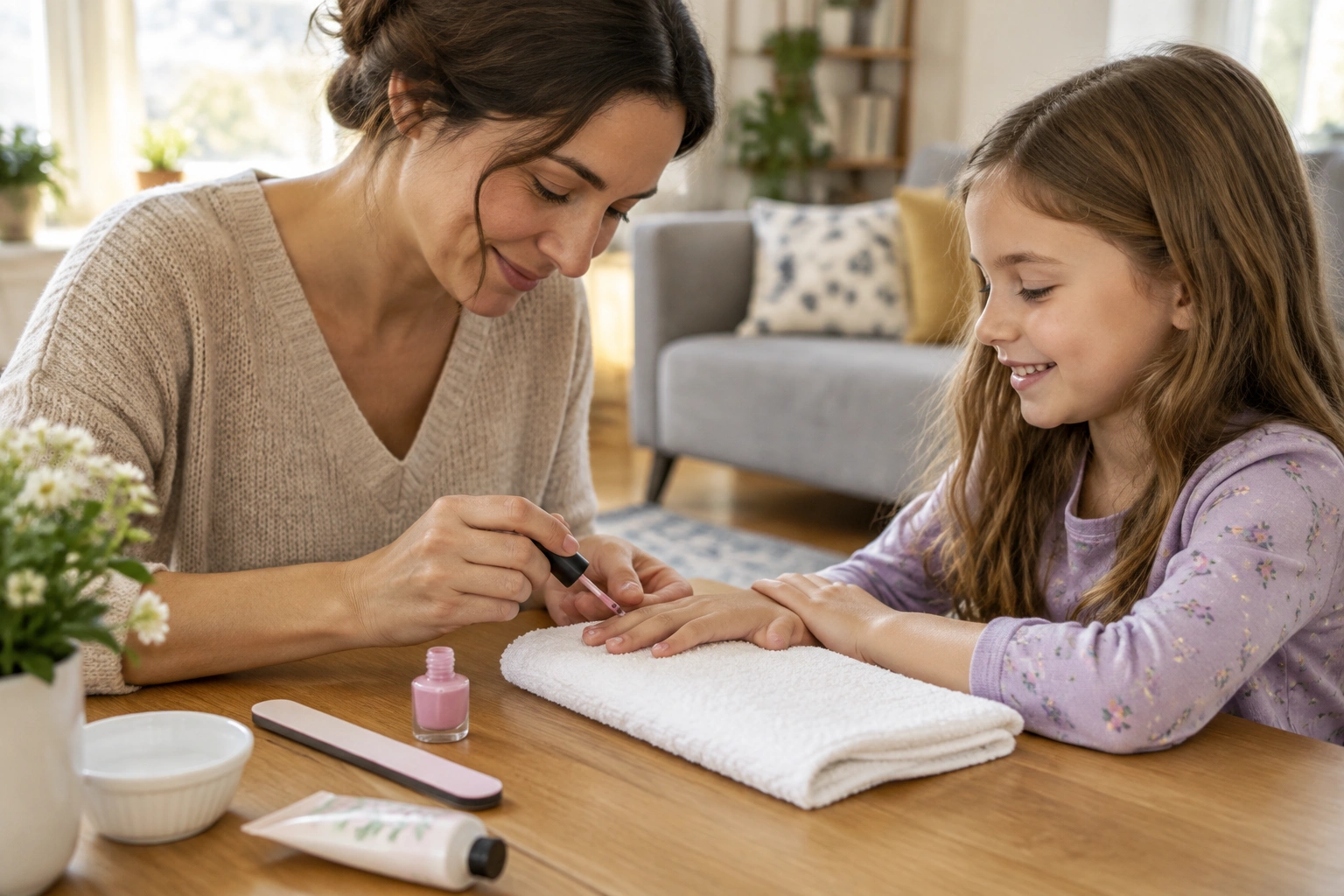
A good rule of thumb: if the service requires aggressive tools, strong chemicals, or a lot of maintenance, it usually belongs in the “maybe later” category for kids and younger teens.
Quick age-by-age recommendation:
– Toddlers/preschoolers: at-home nail trimming, filing, and a little polish only if they enjoy it; skip salon services and enhancements.
– School-age children: simple manicures are usually fine as an occasional treat, with regular polish or clear polish.
– Tweens: basic salon manicures can be reasonable if the salon is clean and the service stays gentle; avoid acrylics and be cautious with gel, dip powder, and press-ons.
– Teens: more options may be okay, but gel, dip powder, acrylics, and press-ons should still be chosen carefully based on nail health, skin sensitivity, and removal plans.
Can Kids Get Manicures Safely?
They can — with the right expectations.
The American Academy of Dermatology’s guidance on manicure and pedicure safety supports a simple approach: keep nails moisturized after polish removal, avoid cutting or forcefully pushing back cuticles, and pay close attention to cleanliness and disinfection in the salon. You can read the AAD’s guidance on manicure and pedicure safety.
For kids, the safest manicure is usually the one that does the least. That means:
- no cuticle cutting
- no aggressive buffing
- no harsh scraping
- no artificial length
- no rushed removal
If a salon’s idea of a manicure includes a lot of “cleaning up” around the cuticles, that’s a red flag for a child. Kids’ skin can be more easily irritated, and even tiny nicks can become sore or infected.
What counts as acceptable, and what does not
A child-friendly manicure is usually fine when it stays in the “basic grooming” lane:
– trimming or gentle filing
– light shaping
– moisturizing
– regular polish, clear polish, or no polish
It is not a good fit when it turns into a cosmetic enhancement service:
– cuticle cutting
– heavy buffing
– acrylics or extensions
– harsh removal methods
– products that sting, burn, or require a lot of soaking and scraping
The difference matters because kids generally do not need long wear or dramatic nail changes. They need low-risk grooming that does not irritate the skin around the nails.
What a child-friendly manicure usually looks like
A basic child manicure is often just:
- hand wash or brief soak
- gentle nail trim or file
- light shaping
- moisturizing
- clear polish or regular polish, if desired
That’s plenty for most children. You do not need a full spa-style service for a child to enjoy having their nails done.
What Age Is Appropriate for a Child’s First Manicure?
There isn’t one universal age that fits every child, and salon rules vary by location and business policy. Some salons set their own minimum age or require a parent to be present for minors. Others may offer a simple children’s service menu.
Rather than asking, “What’s the magic age?” I’d use this decision framework:
Toddlers and preschoolers: home care only
For toddlers and preschoolers, I’d keep it to:
– trimming or filing
– moisturizing
– a tiny amount of polish only if the child enjoys it
At this age, a salon manicure is usually unnecessary. Young children are more likely to move around, touch products, or put hands near their mouth or eyes. A short at-home routine is the better choice.
School-age children: simple manicures can be reasonable
A child who can sit still, follow instructions, and keep hands away from their face may do fine with a simple manicure. I’d still avoid anything that involves strong product systems or a lot of filing.
A realistic example: a 9-year-old getting a neat nail shape and regular polish before a birthday party is much more reasonable than a full gel set.
Tweens: basic salon services may be okay
Tweens may be ready for a simple salon manicure if the salon uses clean tools, avoids cuticle cutting, and keeps the service short. This is the age where some kids start asking for more polished looks, but that does not mean they need long-wear systems.
A good middle ground for tweens is:
– nail trim and shape
– moisturizing
– regular polish
– possibly press-ons for a one-time event, if they are easy to remove and do not irritate the skin
Teens: more options, but not “anything goes”
Teens may be able to handle more salon choices, but the same safety rules still matter. If a teen wants gel, dip powder, or acrylics, the conversation should include removal, sensitivity, and whether the nails are already weak or bitten.
If you want a broader breakdown of polish choices, you may also find this guide helpful: what age kids can wear nail polish.
Which Manicure Types Are Safest for Kids?
Here’s the short version: basic manicures and regular polish are usually the safest starting point. Gel, acrylic, dip powder, and extensions are the options I’d approach much more cautiously for children.
| Manicure type | Kid-friendliness | Why |
|---|---|---|
| Basic manicure | Best option for most kids | Simple shaping, moisturizing, and minimal product exposure |
| Regular polish | Usually okay with supervision | Easy to apply and remove, though removers can dry nails |
| Peel-off or gentler polish formulas | Can be useful for some families | Easier removal, but not always as durable |
| Gel polish | Use caution, especially for younger kids | Requires curing and more involved removal; can irritate sensitive skin |
| Dip powder | Use caution or avoid for younger kids | Often involves stronger prep, adhesives, and removal steps |
| Press-ons | Okay for some older kids and teens, with caution | Can be fine for short-term wear, but glue and removal can irritate skin |
| Acrylic nails | Usually best avoided for children | More filing, stronger chemicals, and more maintenance |
| Nail extensions | Usually best avoided for children | Adds length and stress to the natural nail |
Basic manicure vs. gel manicure
A basic manicure is lower stress. Gel lasts longer, but the trade-off is more product complexity and a more involved removal process. For a child, longer wear is not usually worth the extra exposure.
Regular polish vs. peel-off or gentler formulas
Regular polish is familiar and easy to understand. Peel-off formulas can be convenient for parents who want less remover use. The downside is that some peel-off products do not wear as well, so kids may pick at them sooner.
Acrylic, dip powder, and press-ons
I would not make acrylics or dip powder a routine choice for children. They are designed for longer wear and stronger structure, not just grooming natural nails. Press-ons can be a lower-commitment option for an older child or teen for a special event, but they still rely on glue or adhesive tabs and should be removed gently.
If you want a salon-service overview beyond kids’ manicures, this page may help: what you can get done at a nail salon.
What Risks Should Parents Know About?
The main risks are not mysterious — they’re the same ones I watch for in adults, just with a lower tolerance for mistakes.
Cuticle cutting and forceful pushing
This is one of the biggest issues. Cuticles help protect the nail area. If a technician cuts them or pushes them back too hard, the skin can tear. That creates a doorway for irritation or infection.
The safer approach is simple: leave the cuticles alone unless a professional has a very specific reason to do otherwise, and even then be gentle.
Infection from shared tools or small cuts
Even tiny nicks matter. If tools are not cleaned properly, or if the child has broken skin around the nails, the chance of irritation goes up. This is why sanitation matters as much as polish choice.
Allergic contact dermatitis
Some kids react to nail products, adhesives, or removers with itching, redness, or rash. That reaction can show up around the nails, on the fingers, or even on the face if they touch their skin after the service.
Over-filing and thinning the nail
A child’s nails can be more easily irritated by heavy buffing or repeated filing. Heavy buffing can make them feel rough, weak, or tender. A light file is enough.
Dryness from removers
The AAD notes that many nail removers can dry the nails, which is why moisturizing after polish removal matters. That’s a small step, but it makes a real difference.
Kid-Safe Nail Products and Ingredients to Watch
“Kid-friendly” on a label is not the same as “risk-free.” But some choices are still more sensible than others.
Better bets for kids
- Regular polish used sparingly
- Gentle base coat and top coat
- Simple nail oil or hand cream
- Acetone-free remover when possible, especially for occasional use
Ingredients and product types to use cautiously
You do not need to memorize a chemistry lesson. Just know these common names:
- Formaldehyde: can be irritating and is sometimes used in nail hardeners.
- Toluene: a solvent that some people try to avoid because of its strong fumes.
- Dibutyl phthalate (DBP): a plasticizer that is less common than it used to be, but still worth watching for on labels.
- Methacrylates: ingredients often found in acrylics, gel systems, and some adhesives; these are a common source of sensitivity for some people.
- Nail glue and strong adhesives: useful for press-ons, but more likely to irritate skin if they touch the nail folds or surrounding skin.
Products to limit or avoid for younger children
- strong acrylic systems
- nail glues
- heavy-duty removers
- products that require lots of filing or soaking
- anything that irritates the skin on contact
If a child has sensitive skin, I’d be extra careful with “long wear” products. They often sound convenient, but convenience is not the same thing as being child-appropriate.
A practical label-reading rule: if the product depends on adhesion, curing, or strong removal, it is probably not the first choice for a child.
Salon vs. At-Home Manicures for Children
Both can work. The better choice depends on your child’s age, temperament, and skin sensitivity.
Salon manicure: pros and trade-offs
A salon can feel special, and a trained technician may shape nails neatly and quickly. The downside is less control over sanitation, technique, and product choice.
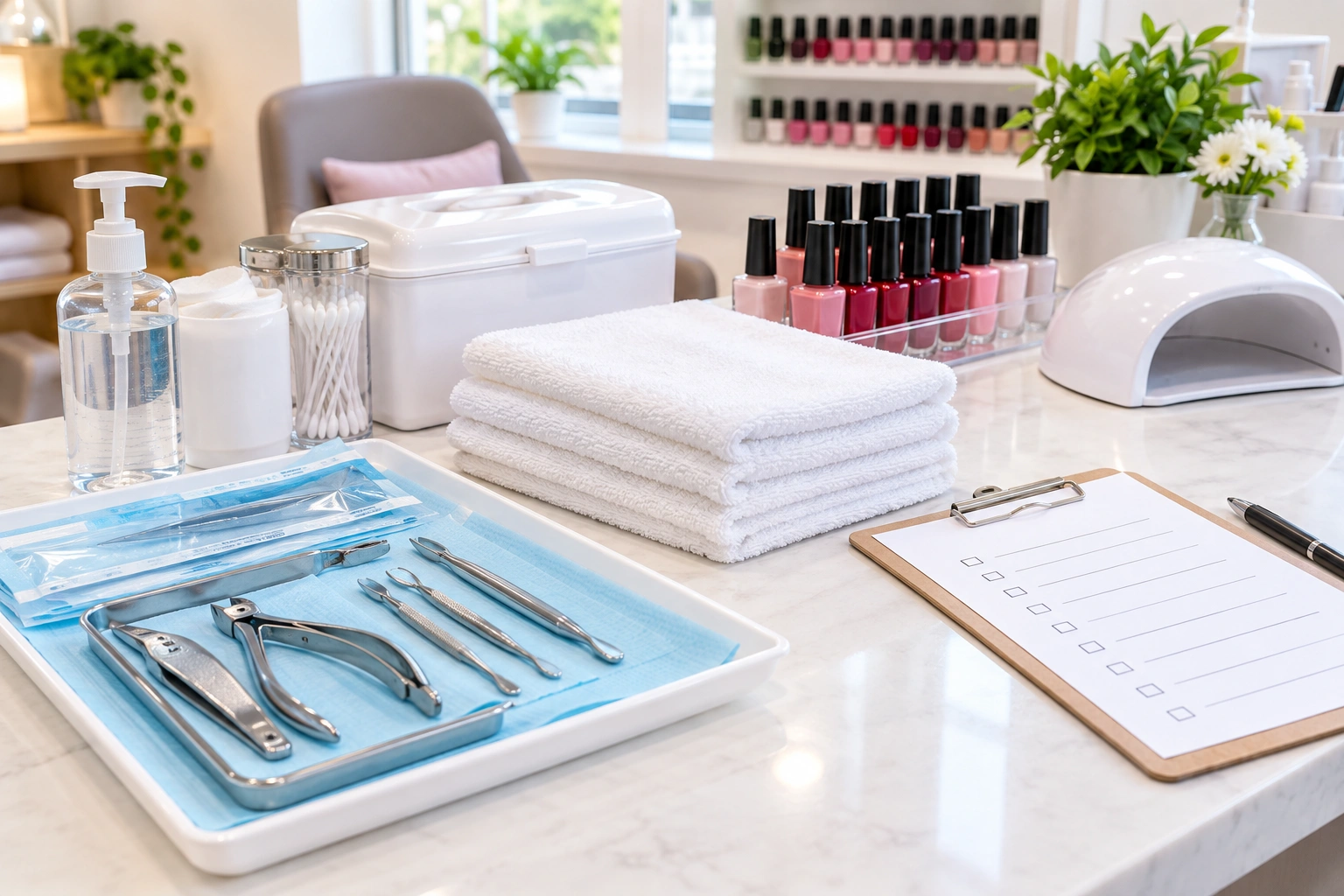
Choose a salon if:
– your child can sit still comfortably
– the salon is clean and transparent about sanitation
– you want a one-time treat, not a routine service
At-home manicure: pros and trade-offs
At home, you control the tools, the products, and the pace. That is often ideal for younger children or kids with eczema, nail biting, or sensory sensitivities.
At-home care works especially well when the goal is:
– trimming
– gentle filing
– moisturizing
– clear polish or no polish at all
For many families, home is the lower-stress option. There’s no waiting room, no pressure to upsell, and no surprise products.
Quick at-home manicure checklist
If you want a simple, safe routine, try this:
- Wash hands with soap and water.
- Clip nails straight across if needed, then gently file sharp corners.
- Skip cuticle cutting and do not force the skin back.
- Wipe tools with soap and water, then disinfect according to the tool’s instructions or replace single-use items.
- Apply a thin base coat or regular polish only if desired.
- Finish with hand cream or cuticle oil on the skin around the nails, not deep under the nail fold.
- Put tools away clean and dry.
Tool-cleaning tip: use separate tools for each child when possible, and do not share clippers or files between siblings unless they have been cleaned and disinfected first.
How to Choose a Clean, Child-Safe Salon
Before booking, ask a few direct questions. A good salon will not act offended.
Salon safety checklist for parents
- Do you disinfect tools between clients, and how do you do it?
- Do you use single-use items like files, buffers, or toe separators when appropriate?
- Are metal tools cleaned and sterilized or disinfected according to salon policy and local rules?
- Will you skip cuticle cutting for my child?
- Can we do a simple file-and-paint service?
- Do you use shared soaking tubs or foot baths, or can my child avoid them?
- What products do you use for polish removal?
- Do you have a policy for minors needing a parent present?
The AAD recommends looking for cleanliness and disinfection practices when visiting a salon. That’s exactly the standard I’d use for a child’s appointment.
What I’d refuse before booking
If a salon:
– cannot explain how tools are cleaned
– uses worn or visibly dirty tools
– insists on cutting cuticles
– pushes gel, dip powder, acrylics, or extensions on a young child
– wants to use a shared soaking tub or foot bath when you prefer not to
– seems annoyed by questions
I’d leave. A child’s manicure should never feel like a sales pitch.
Age-Appropriate Nail Care by Developmental Stage
Younger children
For little ones, the best routine is simple:
– keep nails short
– file rough edges
– moisturize hands and nail beds
– use polish only occasionally
If your child is very young, a manicure can be as basic as a tiny “spa moment” at home with a warm washcloth and a clear coat.
School-age kids
This is the stage where a fun manicure starts to make sense as a special treat. I’d still keep the service light and skip anything invasive.
A good example: a child gets a quick trim, a soft file, and one coat of polish before a holiday or birthday.
Teens
Teens often want more style and longer wear. That’s understandable. The question is whether the nails and skin can handle it.
If a teen wants gel, dip powder, press-ons, or acrylics, ask:
– are their nails healthy right now?
– do they have any history of reactions?
– do they know how removal works?
– will they keep up with maintenance?
If the answer is shaky, a simpler option is smarter.
What to Do If Your Child Has Sensitive Skin, Eczema, or Nail-Biting Habits
This is where I get extra conservative.
Sensitive skin or eczema
If the skin around the nails is already irritated, skip polish and let the area calm down first. Even gentle products can sting on broken or inflamed skin.
A polish-free manicure can still be lovely:
– trim nails
– smooth sharp edges
– moisturize well
– finish with hand cream
Nail biting
For biters, the best “manicure” is often a clean, short nail with a smooth edge. Artificial enhancements usually are not the answer, especially for younger kids. They can sometimes make biting worse by creating something to pick at.
Open skin, hangnails, or redness
If there’s broken skin, swelling, or tenderness, don’t cover it up with polish or glue. That’s the time to pause and keep the area clean.
Signs a Child Should Skip a Manicure or Stop Early
Stop the service if you notice:
– redness
– swelling
– itching
– pain
– stinging
– broken skin
– bleeding
– a rash forming after product contact
If those symptoms show up after the appointment, remove the polish gently and watch the area closely. If the reaction is significant or doesn’t settle, it’s time to call a pediatrician or dermatologist.
How Often Can Kids Get Manicures?
For most children, occasional is better than routine. Kids generally do not need frequent manicure appointments the way adults might enjoy them.
A child’s nails grow and change quickly, and repeated cosmetic services can mean more filing, more removers, and more opportunities for irritation. If you’re doing nails often, keep the service very light.
A practical approach:
– Toddlers and preschoolers: only occasionally, and usually at home
– School-age children: occasional special-occasion manicures
– Tweens: occasional salon or at-home manicures, if nails and skin stay healthy
– Teens: a little more flexibility is fine, but frequent gel, dip powder, acrylics, or press-ons can add up fast
If you use regular polish, occasional use is usually easier on nails than repeated long-wear systems. If your child has sensitive skin or brittle nails, stretch the time between manicures and keep the routine simple.
Simple, Kid-Friendly Alternatives to a Full Manicure
If you want the fun without the fuss, these are my favorite lower-risk options:
- a warm hand wash and lotion
- nail trimming and gentle filing
- clear polish or a sheer tint
- stickers or press-on nail art for a short event, if appropriate and easy to remove
- a “spa night” at home with a towel, file, and hand cream
These alternatives still feel special. They just skip the parts most likely to cause problems.
When to See a Pediatrician or Dermatologist
Make an appointment if your child has:
– persistent redness or swelling around the nails
– pain that doesn’t improve
– repeated rashes after polish or remover
– eczema that flares with nail products
– signs of infection
– ongoing nail biting with skin damage
If you’re unsure whether a reaction is from polish, remover, or something else, a dermatologist can help sort that out.
Frequently Asked Questions
Can a child get a manicure at a regular salon?
Yes, if the salon is willing to do a simple, child-appropriate service and follows good sanitation practices. Ask about cuticle care, tool cleaning, and whether they can avoid shared soaking tubs before booking.
Are gel manicures safe for kids?
They are not my first pick for children. Gel adds more complexity, more removal steps, and more chances for irritation. For younger kids, regular polish is usually the better choice.
Are acrylic nails okay for children?
I’d generally avoid acrylics for children. They are more maintenance-heavy and put more stress on the natural nail.
What about dip powder or press-ons?
Dip powder is usually something I’d use cautiously or avoid for younger kids because it often involves stronger prep and removal. Press-ons can be okay for older kids or teens for a short event, but glue and removal can irritate the skin if they are not handled carefully.
What if my child only wants color, not a full manicure?
That’s often the easiest option. A light nail trim, gentle file, and regular polish can be enough.
Can teens get manicures safely?
Yes, teens can often handle a wider range of options than younger children, but safety still matters. Clean tools, gentle technique, and careful removal are non-negotiable.
Is at-home nail care better than a salon for kids?
Often, yes — especially for younger children, nervous kids, or children with sensitive skin. At home, you control the products and can keep the service very simple.
How do I know a salon is child-safe?
Look for clean tools, clear disinfection practices, single-use items where appropriate, a willingness to skip cuticle cutting, and a calm response to questions. If the salon seems dismissive, choose another one.
The bottom line: kids can get manicures, but the safest version is usually the simplest one. Keep the focus on clean nails, gentle care, and age-appropriate choices, and you’ll give your child the fun of polished nails without unnecessary risk.

