
Can Nail Dehydrator Expire? Shelf Life, Signs, and Storage Guide

Quick Answer
Yes, nail dehydrator can expire or become unreliable with age, especially after the bottle has been opened. There is no universal expiration period, so check the manufacturer’s date, period-after-opening symbol, and storage instructions; the FDA’s cosmetic shelf-life guidance also explains that storage and exposure to air can affect how long cosmetic products perform as expected.
Signs Your Nail Dehydrator May Need Replacing
- Past its date: The printed expiration or recommended after-opening period has passed.
- Changed appearance: The liquid has developed unusual cloudiness, discoloration, or visible particles.
- Damaged seal: The cap leaks, no longer closes tightly, or the bottle has repeatedly been left open.
- Different performance: The product behaves noticeably differently from when it was fresh.
- Unknown age: You cannot identify when the product was opened or how it was stored.
Best Rule
- When the manufacturer says the product has expired, or you are unsure whether an old bottle is still reliable, replacing it is the safer choice.
If you’ve found an old prep bottle in your nail drawer, you’ve probably wondered, can nail dehydrator expire even though it still looks like a clear liquid? The short answer is yes, although nail dehydrator doesn’t always show age as obviously as gel polish or nail glue.
As of 2026, the most reliable approach is to follow the individual product label instead of assuming every dehydrator lasts the same number of months. Here’s how I decide when a bottle is still worth using and when it’s time to replace it.
In This Guide
- Does Nail Dehydrator Really Expire?
- How Long Does Nail Dehydrator Last?
- How Can You Tell If Nail Dehydrator Is Expired?
- What Happens If You Use Expired Nail Dehydrator?
- Why Does Nail Dehydrator Change With Age?
- Does Dehydrator Expire Like Nail Primer?
- How Should You Store Nail Dehydrator?
- Frequently Asked Questions
- When Should You Replace Your Nail Dehydrator?
Does Nail Dehydrator Really Expire?
Yes. A nail dehydrator has a useful shelf life, and the manufacturer may specify an expiration date, use-by date, or recommended period after opening.
A nail dehydrator is a fast-evaporating nail-prep liquid designed to remove temporary surface moisture and oils before gel, acrylic, dip, or another compatible enhancement system is applied.
Simple definition: Nail dehydrator prepares the natural nail plate by leaving its surface temporarily cleaner and drier so the next compatible product has a better surface to adhere to.
Many dehydrators use volatile solvents such as isopropyl alcohol and acetate-based solvents. Because these ingredients evaporate readily, repeated exposure to air and poor storage can affect the product inside the bottle.
Expiration does not always mean the liquid suddenly becomes unusable on one exact day. It means the manufacturer can no longer guarantee that the product will perform as intended beyond its stated shelf life.
The FDA’s nail-care product guidance recommends following product directions and warning statements carefully. That matters with nail prep liquids because formulas differ between brands.
- Unopened shelf life: The bottle may have a manufacturer-set best-before or use-by period.
- After-opening life: Some brands provide a shorter period once air regularly enters the bottle.
- Storage conditions: Heat, sunlight, loose caps, and repeated evaporation can shorten practical usability.
- Formula differences: One brand’s recommended lifespan should never be automatically applied to another.
Section Takeaway: Yes, nail dehydrator can expire. The product’s own label and manufacturer instructions should always take priority over a generic shelf-life estimate.
How Long Does Nail Dehydrator Last?
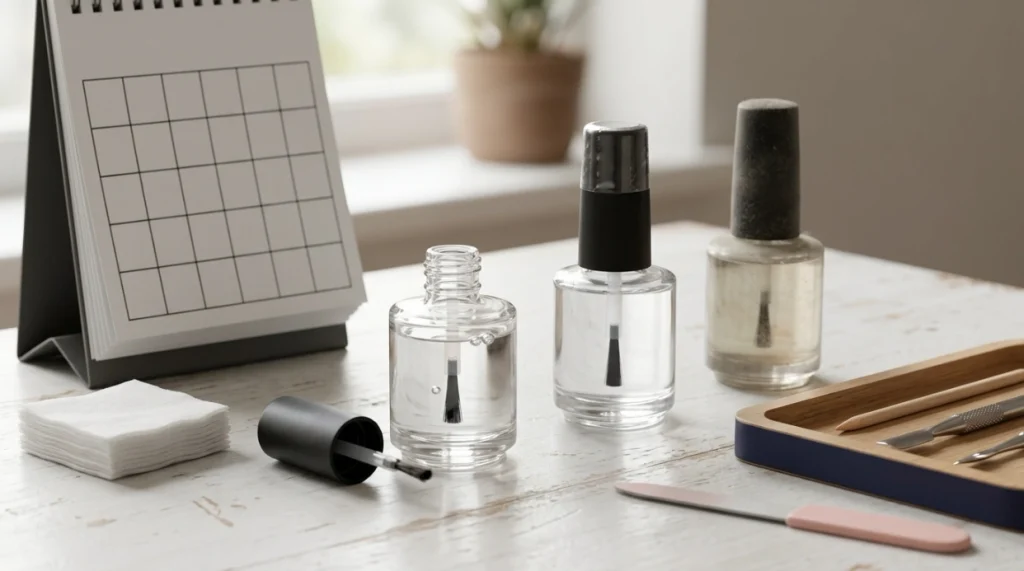
There is no single shelf life that applies to every nail dehydrator. Current product labels show meaningful differences between brands and formulations.
For example, one dehydrator specifies 24 months before its best-before date and 12 months after opening. Another currently lists a six-month shelf life after opening.
A separate product manufactured on December 1, 2025 lists a use-by date of December 1, 2028. Those differences are exactly why I don’t recommend writing one universal expiration number on every bottle.
| Current Product Example | Listed Shelf-Life Information | What It Shows |
|---|---|---|
| Shelly Nail Dehydrator | 24 months; 12 months after opening | Opening the bottle can create a shorter usable period. |
| NOCIS Nail Dehydrator | 6 months after opening | Some formulas carry a much shorter recommendation. |
| Nailsoftheday Dehydrator | Made December 1, 2025; use by December 1, 2028 | Some manufacturers provide a specific calendar use-by date. |
In the United States, cosmetics generally are not required to carry expiration dates. That means an undated bottle is not automatically unusual.
If your bottle has no clear date, check for a period-after-opening symbol, batch code, packaging instructions, or information on the manufacturer’s website. You can also contact the manufacturer with the batch number.
- Write the opening date on the bottle with a small label.
- Keep the original packaging when it contains storage information.
- Photograph batch codes if they may rub off with use.
- Do not rely on a purchase receipt alone if the product sat unopened for a long time.
How Can You Tell If Nail Dehydrator Is Expired?
Start with the printed date or after-opening guidance. Visual and performance changes are secondary clues, not a replacement for manufacturer instructions.
A dehydrator can still look clear even when its age or storage history makes it questionable. That is why appearance alone cannot confirm that a product is fresh.
Check the bottle and liquid
- Cloudiness: A normally clear product suddenly looks hazy.
- Particles: You can see debris or contamination that was not present before.
- Color change: The liquid has changed noticeably from its original appearance.
- Leaking cap: The neck or cap no longer creates a secure seal.
- Major volume loss: The level has fallen despite relatively little product use.
Check how it behaves
A fresh dehydrator usually spreads in a thin layer and flashes off quickly according to its formula. A noticeable change from the bottle’s normal behavior deserves attention.
Do not judge age by odor alone. Nail dehydrators commonly contain strong-smelling volatile solvents, so a solvent smell can be normal.
Check its history
I am more cautious with a bottle when I cannot remember when it was opened. The same applies to products stored in hot cars, sunny windows, or areas with frequent temperature swings.
If a bottle came from someone else’s kit and its age is unknown, replacement removes unnecessary guesswork. Nail prep is not the best place to gamble with an uncertain product.
What Happens If You Use Expired Nail Dehydrator?
An old dehydrator may no longer prepare the nail as consistently as intended. Poor prep can contribute to adhesion problems even when the gel, acrylic, or base product itself is fresh.
Possible clues include unexpected lifting, inconsistent results between nails, or a dehydrator that no longer behaves as you remember. Those problems can also come from technique, so they do not prove expiration by themselves.
- Residual oils may remain on the nail plate.
- Prep results may become less predictable.
- Your manicure may lift earlier than expected.
- You may waste more expensive gel, acrylic, or extension products troubleshooting the problem.
Do not try to repair an old dehydrator by adding rubbing alcohol, acetone, or another solvent. Changing the formula means you no longer know its intended composition or performance.
For professional services, I would be especially strict about dates and storage history. Using fresh, traceable products makes troubleshooting easier and keeps salon procedures more consistent.
Good ventilation also matters when working with nail products. OSHA’s nail-salon safety guidance explains that nail technicians can be exposed to vapors and other chemical hazards during repeated salon work.
Safety note: Avoid unnecessary skin and eye contact, follow the product label, and stop using a nail product if it causes burning, swelling, rash, or another unexpected reaction. Seek medical advice when symptoms are significant or persist.
Section Takeaway: An expired dehydrator may create inconsistent nail prep and make adhesion problems harder to diagnose. Replacing a questionable bottle is usually simpler than trying to rescue it.
Why Does Nail Dehydrator Change With Age?
The main issue is often exposure. Many common dehydrator ingredients are designed to evaporate rapidly from the nail, which also means a poorly sealed bottle can lose volatile components over time.
As liquid escapes, the amount and balance of ingredients left inside may change. That does not mean every old bottle changes in exactly the same way.
Air exposure
Every time the bottle opens, fresh air reaches the liquid. Leaving the cap loose for several minutes increases that exposure far more than opening it briefly for application.
Heat and sunlight
Cosmetics can change faster when exposed to unsuitable heat, sunlight, or large temperature swings. The FDA specifically notes that temperature, sunlight, and air can affect cosmetic products over time.
Contamination
A built-in brush can pick up residue if it contacts dusty nails, product, skin, or an unclean surface. Keeping the brush and bottle neck clean helps protect the contents.
- Never pour used dehydrator back into the bottle.
- Avoid touching the bottle brush to skin or cuticles.
- Close the cap immediately after application.
- Do not combine leftovers from different brands.
Does Dehydrator Expire Like Nail Primer?
Both products have shelf lives, but dehydrator and primer are not the same product. Their ingredients and jobs in the nail-prep process can be quite different.
Dehydrator generally removes surface oil and moisture first. Primer is an adhesion-promoting step used afterward when the specific nail system calls for it.
| Feature | Nail Dehydrator | Nail Primer |
|---|---|---|
| Main job | Removes temporary surface oils and moisture | Promotes adhesion for compatible systems |
| Typical order | First | After dehydrator when required |
| Drying | Usually flashes off rapidly | Depends on the specific primer formula |
| Shelf life | Follow its own label | Follow its own label; do not borrow the dehydrator’s date |
This distinction matters because some primers contain adhesion-promoting ingredients that require their own handling precautions. Never assume two matching bottles in a prep kit have identical expiration guidance.
The correct order for many compatible systems is simple: complete nail preparation, remove dust, apply dehydrator, let it evaporate fully, then use primer if the manufacturer requires it. Follow with the recommended base or enhancement product.
How Should You Store Nail Dehydrator?
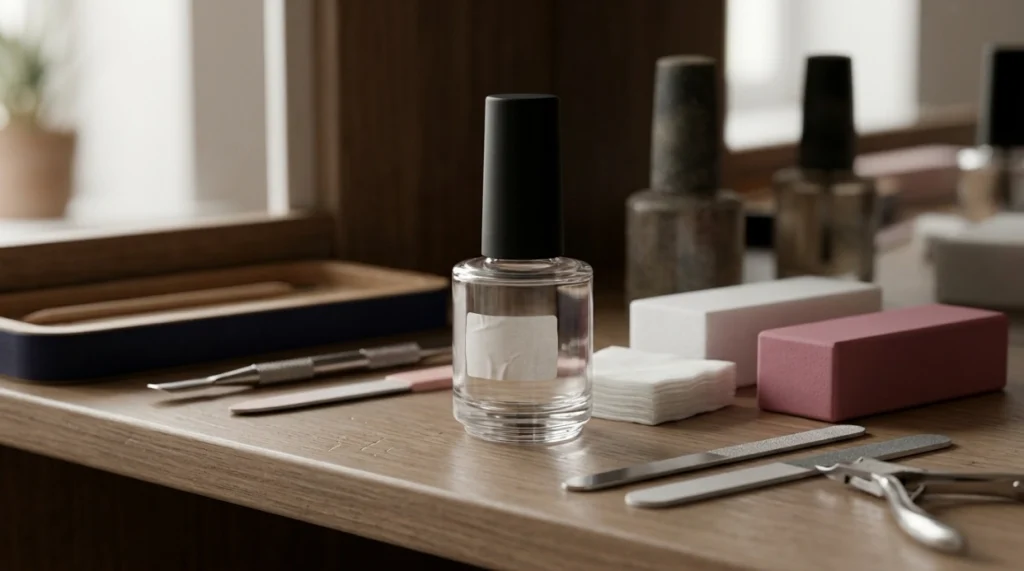
Good storage helps a dehydrator remain closer to its intended formula throughout its usable life. The most important habit is keeping the cap tightly closed.
I like to open the bottle only when I’m ready to apply it and close it as soon as the brush goes back inside. That small habit reduces unnecessary evaporation during a manicure.
- Keep it upright: This helps reduce leakage around the cap.
- Close it tightly: Volatile ingredients can evaporate through a poorly sealed bottle.
- Avoid direct sunlight: Store the bottle in a drawer, cabinet, or protected nail station.
- Avoid excessive heat: Do not leave it in a hot car or beside heat-producing equipment.
- Keep away from flames: Many nail products contain flammable solvents.
- Keep it clean: Wipe residue from the neck before closing the cap when necessary.
- Track the opening date: A small sticker makes future decisions easier.
For technicians who use nail chemicals frequently, ventilation is also important. The CDC/NIOSH guidance for nail technicians recommends measures such as good ventilation and keeping chemical containers closed to reduce exposure.
Storage cannot make an expired product new again. It simply helps prevent avoidable deterioration while the product is still within its intended life.
Frequently Asked Questions
Can I use nail dehydrator after the expiration date?
I would replace it once the manufacturer’s stated expiration or after-opening period has passed. Even when the liquid still looks normal, you cannot confirm its original performance simply by looking at it.
Does nail dehydrator go bad if it stays unopened?
An unopened bottle can still have a manufacturer-set shelf life. Check its use-by date, batch information, and storage instructions rather than assuming an unopened product lasts indefinitely.
What if my nail dehydrator has no expiration date?
Look for a period-after-opening symbol or batch code and check the brand’s instructions. In the U.S., cosmetic manufacturers generally are not required to print expiration dates, so you may need to contact the manufacturer.
Can expired nail dehydrator cause lifting?
An unreliable dehydrator could contribute to poor preparation and adhesion, but lifting has many possible causes. Incomplete cuticle removal, dust, oil, touching the prepared nail, incompatible products, and application technique can also matter.
Can I add alcohol to an old nail dehydrator?
No. Adding alcohol, acetone, or another liquid changes the manufacturer’s formula and creates an unknown mixture, so replacing the bottle is a better option.
Should nail dehydrator smell strong?
Many formulas contain volatile solvents and naturally have a noticeable odor. A strong smell alone does not prove that a product is expired, so compare it with the product’s normal characteristics and follow its label.
Is nail dehydrator supposed to dry completely?
Most traditional solvent-based dehydrators are designed to flash off before the next prep step. Follow the drying instructions for your exact brand because formulas and application directions can differ.
When Should You Replace Your Nail Dehydrator?
Replace your dehydrator when it passes the manufacturer’s date, exceeds its period after opening, develops unexplained changes, loses a reliable seal, or has an unknown storage history. Those are stronger reasons than trying to judge the product by smell alone.
For me, the easiest system is to write the opening date on every new bottle. It takes seconds and prevents the mystery-bottle problem months later.
- Check the label before each new bottle enters your kit.
- Record the date you opened it.
- Store it tightly closed and away from heat or sunlight.
- Replace questionable products instead of diluting or mixing them.
- Follow the complete nail system’s prep instructions for the best adhesion.
If you’ve been asking, can nail dehydrator expire, the answer is yes—but the exact timeline depends on the product. Treat the manufacturer’s date and storage instructions as your final authority, and replace a bottle whenever its age or condition leaves you unsure.
