
Can a Nail Salon Remove an Ingrown Toenail? What to Do Instead

If you’re hoping a nail salon can remove an ingrown toenail, the safest short answer is: not in the medical sense. A salon may be able to help with very mild, non-infected discomfort or keep the nail neatly trimmed, but it should not dig out, cut out, or “fix” an ingrown toenail the way a podiatrist can.
That distinction matters because an ingrown toenail is not just a cosmetic issue. Once the nail edge is pressing into skin, the toe can become inflamed, break open, and sometimes get infected. A salon visit can be comforting when the problem is minor; it can also make things worse if the toe is already swollen, red, or draining.
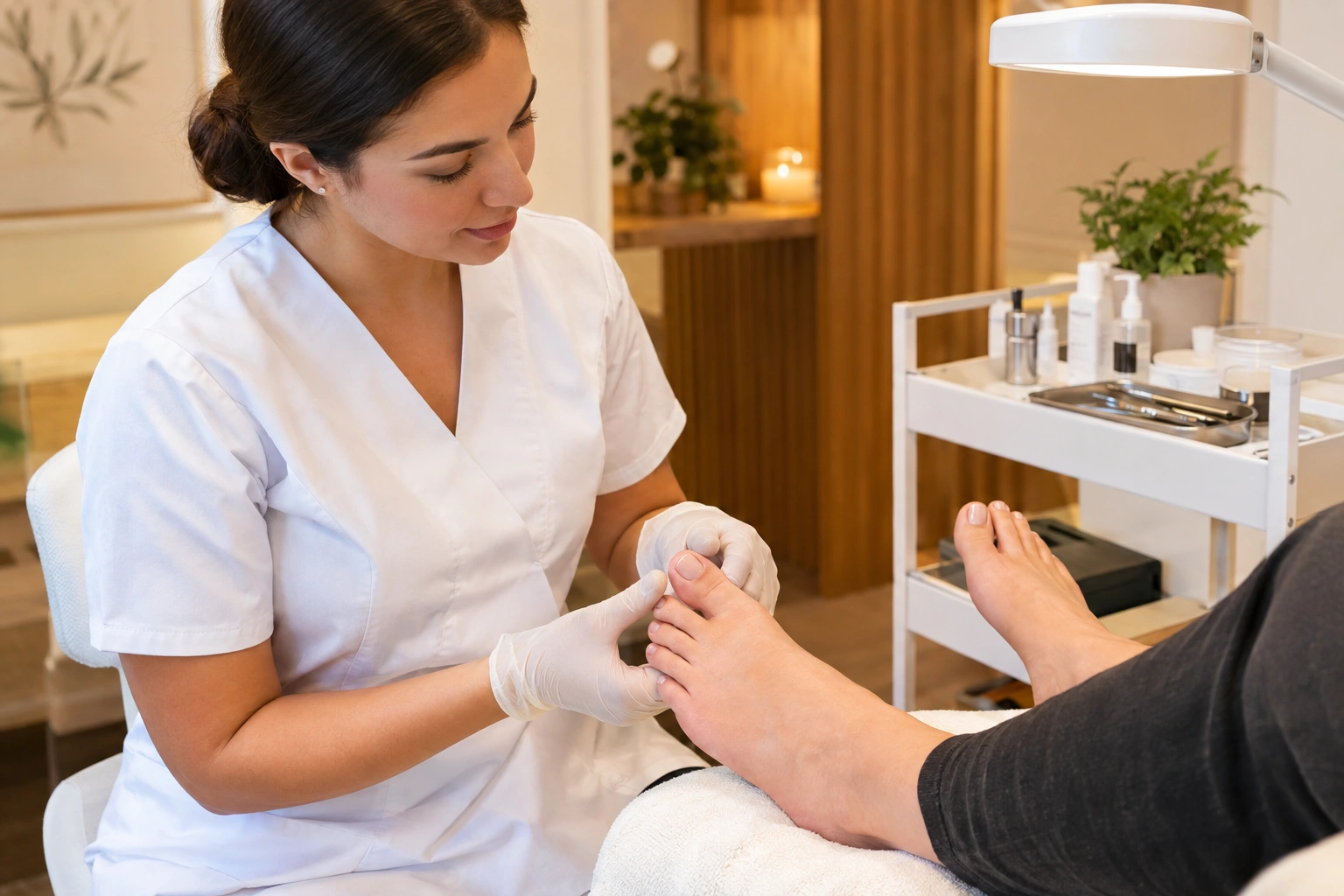
Here’s the practical rule I give clients: if the toe is tender but calm, a salon may be able to leave it alone or do very limited cosmetic work; if it looks angry, medical care comes first.
What an Ingrown Toenail Is and Why It Hurts
An ingrown toenail happens when the nail grows into the surrounding skin instead of over it. It most often affects the big toe, though any toe can be involved.
That pain comes from pressure. The nail edge acts like a tiny splinter, and every step pushes it deeper into the skin. The body responds with irritation, then swelling. If the skin breaks, bacteria can get in and infection can follow.
That is why “just trimming it a little more” is not a harmless fix. If the edge is already buried, cutting it at the wrong angle can leave a sharper point behind and create more pressure later.
Nail Salon Care vs. Medical Treatment: A Quick Comparison
| Option | Best for | What it can do | What it should not do | Best next step |
|---|---|---|---|---|
| Nail salon | Mild discomfort, no redness, no swelling, no drainage | Basic nail grooming, gentle cosmetic cleanup, advice to seek care | Deep cutting, digging, or medical removal | Book only if the toe is calm |
| Podiatrist or doctor | Painful, recurring, or inflamed ingrown toenail | Diagnose the problem and treat it safely | — | Choose this if the toe is red, swollen, or infected |
| Home care | Early, mild cases while waiting | Soaks, roomy shoes, keeping the toe clean | Cutting into the corner or picking at it | Use as a short-term bridge |
| Urgent care | Spreading redness, pus, fever, severe pain, trouble walking | Evaluate infection and decide next steps | Cosmetic nail care | Go now if symptoms are escalating |
A useful way to think about it: salons can support comfort; medical professionals treat the problem. That’s the line to keep in mind whenever you’re deciding where to go.
What a Nail Salon Can Safely Do vs. What It Should Not Do
A good nail technician can help in limited ways:
- keep surrounding nails neat without touching the inflamed edge
- gently clean and shape the nail if the skin is intact and calm
- notice when the toe looks unsafe and recommend medical care
- maintain hygiene and refuse service if the toe appears infected
What a salon should not do is try to perform a medical-style removal. A nail tech is not a medical professional, and once the problem involves broken skin, drainage, or significant swelling, the service has crossed into treatment territory.
That’s the key trade-off: a salon may offer temporary comfort, but the more the technician has to work around the nail edge, the more likely the visit is to irritate the tissue. If the toe already hurts when touched, that is usually a sign to stop and switch to medical care.
If the toe is painful but not infected, “leave it alone” usually means no digging, no lifting the corner, and no aggressive trimming into the side of the nail. At most, a technician might smooth a sharp edge or trim the rest of the nail straight across if doing so does not touch the sore area.
For general nail-health habits that reduce future problems, good nail care principles from NIH and CDC hygiene guidance are better references than salon folklore. They won’t diagnose your toe, but they do reinforce the bigger picture: clean tools, careful trimming, and prompt attention to worsening symptoms matter.
When a Pedicure Is Unsafe
A pedicure is not a good idea if the toe is:
- red or visibly inflamed
- swollen
- warm to the touch
- draining fluid or pus
- bleeding
- throbbing enough to hurt with light contact
- making walking uncomfortable
- has any open skin, even if nothing is draining yet
If a toe has only slight discomfort and no signs of redness, swelling, drainage, or open skin, a careful, non-invasive pedicure may offer temporary relief. But that is a narrow window. The moment the toe looks irritated, the goal changes from comfort to protection.
A simple decision rule helps here:
- Mild tenderness, skin intact, no redness: salon may be reasonable if they keep hands off the problem area
- Any redness, swelling, drainage, or increasing pain: skip the salon
- Pus, fever, spreading redness, or severe pain: seek medical care promptly
If you’re unsure, look at the toe in good light. If you would hesitate to let someone press on it firmly, that’s a strong sign it should not be handled like a routine pedicure.
Signs You Need a Podiatrist, Doctor, or Urgent Care Instead
See a podiatrist or doctor if the ingrown toenail is:
- getting worse instead of better
- happening again and again
- making it hard to wear shoes
- painful enough that you’re changing how you walk
- associated with skin that looks broken or infected
Go to urgent care sooner if you notice:
- pus or drainage
- rapidly spreading redness
- significant swelling
- severe throbbing pain
- fever
- trouble bearing weight
If the toe is infected, a doctor may prescribe antibiotics or recommend another treatment based on what they see. That does not mean every sore toe needs antibiotics. It does mean infection changes the situation from “salon problem” to “medical problem.”
People with diabetes, poor circulation, or immune issues should be especially careful. In those cases, even a small skin break can become a larger problem, so getting medical guidance first is the safer path.
Can a Nail Tech Cut Out the Ingrown Part of the Nail?
This is the question people ask most often, and the answer is generally no, not as a medical fix.
A technician may be able to trim the nail neatly or clean up the visible edge if the area is calm and unbroken. But cutting out the ingrown section, digging into the groove, or trying to lift out a deeply embedded corner can injure skin and increase the chance of infection.
Think of it this way: if the nail edge is already acting like a splinter, deeper cutting can leave the area more jagged, not less. The immediate relief can be misleading because the toe may feel better for a day and then flare up again.
If you’ve had a salon “fix” before and it seemed to help, that may have been temporary relief from reducing pressure, not a true correction of the underlying nail growth pattern.
What to Do at Home While You Wait for Treatment
If the problem is mild and not infected, home care can help you stay comfortable until you see the right professional.
Use these short-term steps:
- Keep the toe clean and dry.
- Wear roomy shoes or sandals that don’t press on the nail.
- Avoid cutting deeper into the corner.
- Do not pick at the skin or nail edge.
- Use gentle warm soaks if the toe is not open or draining, then dry carefully afterward.
Home care is useful because it reduces pressure, and pressure is what keeps irritating the skin. But it is not a cure if the nail is truly embedded. If symptoms continue or worsen, stop trying to manage it alone.
A practical example: if your toe is only sore after a long day in tight shoes, switching to wider footwear and avoiding aggressive trimming may be enough to calm it down. If it still throbs the next day, that’s a sign to escalate.
How to Choose a Salon and Ask the Right Questions
If you’re considering a salon for a mild, non-infected toe, ask questions before you book.
Good questions include:
- “Do you work on ingrown toenails, or do you refer those out?”
- “If the toe looks irritated, will you decline service?”
- “How do you clean and sterilize tools between clients?”
- “Do you use single-use items where appropriate?”
- “Will you avoid the affected corner if I ask for a gentle cleanup only?”
You’re not looking for a salon that promises to cure the problem. You’re looking for one that knows its limits.
A trustworthy technician should be comfortable saying, “This needs a podiatrist.” That answer is a good sign, not a bad one.
For broader salon hygiene habits, it can also help to understand how salons maintain prep and cleanliness in everyday services. If you want a general reference point for salon sanitation products, see this Nail Prime guide on salon prep cleanser. It’s not an ingrown-toenail treatment, but it does show how seriously clean prep matters in nail services.
When to See a Nail Technician or Doctor
If your toe is calm, intact, and only mildly uncomfortable, a nail technician may be able to help with cosmetic care that avoids the problem area. If the issue is recurring, painful, or suspicious for infection, a doctor or podiatrist is the better choice.
That difference is worth respecting. Cosmetic care is about appearance and comfort. Medical care is about the nail’s relationship to the skin and whether the tissue needs treatment.
If you are dealing with repeated ingrown nails, a podiatrist can also talk through longer-term options. Clinical guidance from sources such as NIH and specialty medical resources shows that persistent cases may need targeted treatment rather than repeated trimming.
Nail Salon vs. Podiatrist: Which Is the Better Choice?
Choose a nail salon only when:
- the toe is mildly tender
- there is no redness, swelling, drainage, or open skin
- you want cosmetic grooming, not removal
- the salon is willing to leave the area alone if needed
Choose a podiatrist or doctor when:
- the toe is inflamed
- the pain is getting worse
- there is drainage, pus, or bleeding
- the problem keeps coming back
- you have diabetes or circulation concerns
The trade-off is simple. A salon is usually easier to access and may help you feel better temporarily. A podiatrist is the safer choice when the nail has crossed from “annoying” into “injured or infected.”
The Bottom Line
A nail salon can sometimes offer limited, temporary comfort for a very mild ingrown toenail, but it should not be expected to remove or medically treat it. Once the toe is red, swollen, draining, or very painful, the safer move is to skip the salon and see a podiatrist, doctor, or urgent care.
If you remember only one thing, make it this: calm toe, cosmetic care; angry toe, medical care.
FAQs
Can a nail salon remove an ingrown toenail?
Not as a medical treatment. A salon may help with gentle cosmetic care in mild cases, but it should not dig out or cut out the ingrown portion.
Can a nail tech cut the ingrown part out?
That is not a safe expectation for salon care. Deep cutting or digging can worsen irritation or infection risk.
Is it safe to get a pedicure if my toe is swollen?
Usually no. Swelling is a sign the area is irritated, and a pedicure can make it worse.
What if my toe is red but not draining?
Redness alone is enough to be cautious. If it’s getting more painful or warm, medical care is the better choice.
Should I go to a salon or a podiatrist for an ingrown toenail?
Go to a podiatrist if the toe is painful, inflamed, infected, or recurring. A salon is only reasonable for very mild, non-infected grooming.
What should I do while waiting for an appointment?
Keep the toe clean, wear roomy shoes, avoid digging into the nail, and watch for worsening redness, swelling, or drainage.

