
Can You Get HIV From a Nail Salon? A Practical, Evidence-Based Guide

If you’re worried after a manicure or pedicure, the short answer is this: HIV transmission in a nail salon is extremely unlikely. HIV is not spread by casual contact, clean skin contact, air, water, towels, nail polish, or shared surfaces. For HIV to spread, there has to be exposure to certain body fluids and a route into the body, such as damaged tissue or the bloodstream. The CDC’s HIV overview is clear on that point.
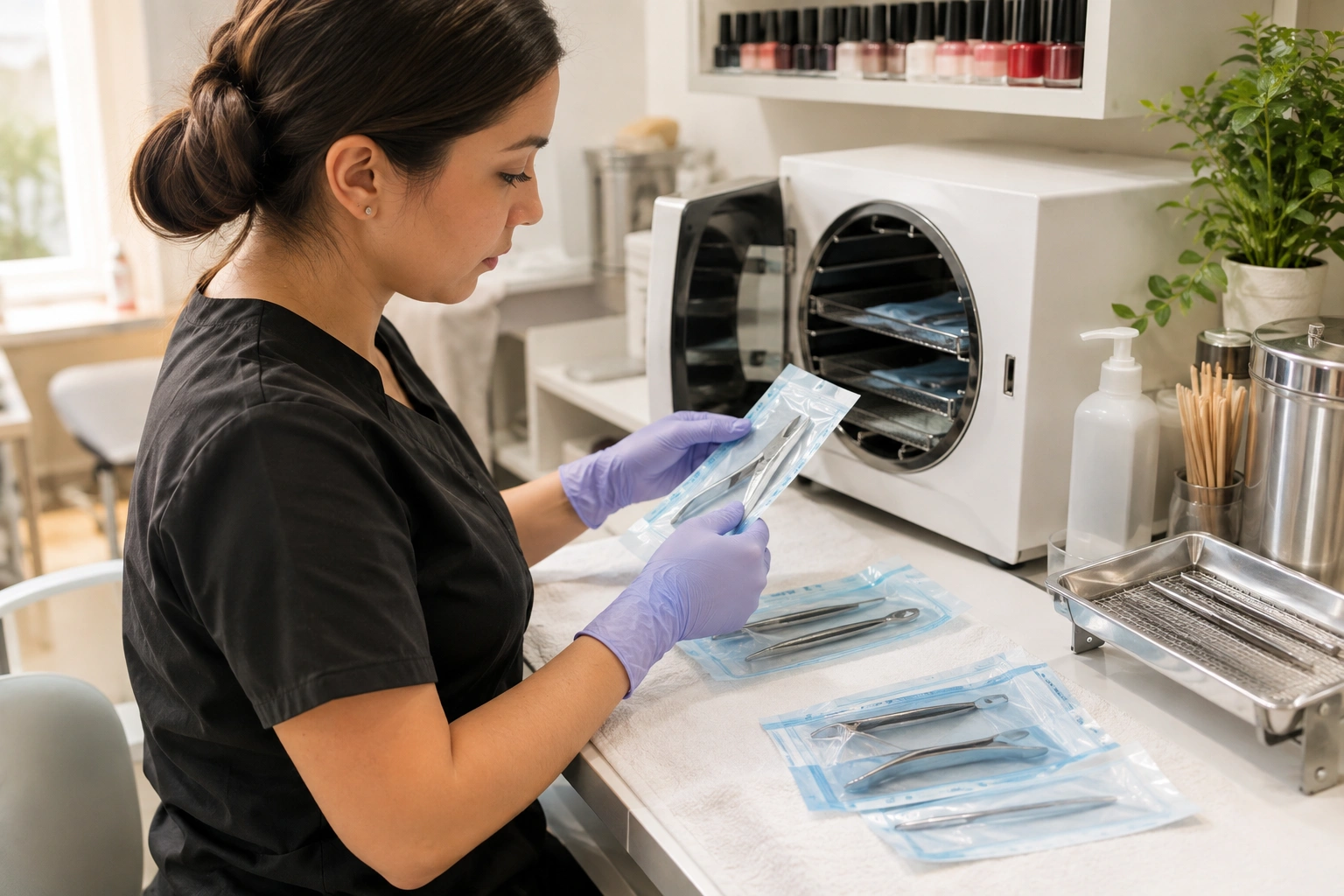
That said, “extremely unlikely” is not the same as “ignore sanitation.” Nail salons should still follow strong infection-control practices because other infections are more realistic concerns than HIV, especially if tools are reused, cleaning is sloppy, or there is visible blood.
How HIV Is Actually Transmitted
HIV spreads through specific body fluids from an infected person, including blood, semen, vaginal fluids, rectal fluids, and breast milk. Those fluids have to reach a mucous membrane, damaged tissue, or be directly injected into the bloodstream. That is why HIV is associated with sexual exposure, needle sharing, and certain blood-related exposures — not with ordinary salon contact.
This matters because a manicure table is not the kind of setting that usually creates the needed conditions. A dry surface, a towel, a bottle of polish, or a foot bath does not provide a realistic route for HIV transmission on its own.
A useful way to think about it: HIV needs a meaningful blood-to-blood or body-fluid-to-blood pathway. A small nick from a tool is not automatically that kind of exposure.
Why Nail Salons Are Not a Realistic HIV Transmission Route
Most salon exposures do not line up with how HIV spreads.
Here’s why:
- Intact skin is a strong barrier.
- Tools and surfaces are not the same as direct injection into the bloodstream.
- HIV does not spread through towels, polish bottles, or ordinary contact.
- Foot baths and manicure tables are not considered common HIV transmission routes.
Even if a salon is messy, that does not automatically mean HIV is present or that there was a transmission route. The virus has to be in the right fluid, in the right amount, and then introduced in the right way.
There is, however, a reason salons should still take hygiene seriously. Contaminated sharp tools should never be shared.
For context, HIV is common enough in the general population that salons should use good precautions, but not so common that a routine manicure becomes a high-risk event. In the U.S., HIV.gov reports that about 1.2 million people have HIV and about 13% do not know it. That supports careful hygiene — not panic.
What About Cuts, Nicks, or Bleeding During a Manicure or Pedicure?
This is the scenario that worries most people: a cuticle nipper slips, a file scrapes skin, or you notice a little blood.
A tiny nick by itself is usually not the same as a high-risk HIV exposure. Risk becomes more concerning when all of the following are true:
- There is visible blood.
- The tool was visibly contaminated or shared without proper cleaning.
- The exposure involved damaged skin or a deeper cut.
- The blood came from a person with HIV or unknown status.
If you get a small cut and there is no visible blood on the tool, no ongoing bleeding, and no reason to think contaminated blood was involved, HIV transmission is not a realistic concern.
If there was visible blood on a reusable tool, or you saw the technician use an item on another client without cleaning it first, that deserves more attention. Not because HIV is likely, but because bloodborne pathogen precautions were not followed.
Sterilization vs. Disinfection: What a Safe Nail Salon Should Do
A lot of salon confusion comes from treating sterilization and disinfection as if they mean the same thing. They don’t.
- Disinfection reduces many germs on surfaces and some tools.
- Sterilization is a stronger process that destroys all forms of microbial life, including spores.
- Single-use tools are meant to be discarded after one client and should not be reused.
For reusable metal instruments like cuticle nippers, clippers, and pushers, a reputable salon should be able to explain how those tools are cleaned and processed between clients. In many salons, that means thorough cleaning first, then sterilization when appropriate and required by local rules, often using an autoclave for metal instruments.
Concrete examples help:
- Single-use items: emery boards/files, buffers, wooden orangewood sticks, toe separators, cotton pads, and some sanding bands.
- Sterilized reusable tools: metal cuticle nippers, metal clippers, metal pushers, and other instruments that can withstand proper sterilization.
- Disinfected surfaces: manicure tables, armrests, pedicure chairs, basins, trays, and other noncritical surfaces that are cleaned with an EPA-registered disinfectant.
The most reassuring sign is not a vague promise that tools are “sanitized.” It is a process you can see or verify:
– tools removed from a sealed pouch,
– clean work surfaces,
– fresh liners or clean basin components,
– and staff who can explain what is disposable and what is reused.
If you want a deeper public-health reference for infection control standards, the CDC’s infection prevention guidance is a helpful place to start. For disinfectant standards, the EPA’s disinfectant information is also useful.
Hygiene Practices That Signal a Safer Salon
When you are choosing a salon, look for process, not just appearance. A spotless reception area does not guarantee safe tool handling.
Here’s a practical checklist:
- Single-use tools for items that cannot be safely sterilized, such as some files and buffers.
- Properly cleaned reusable metal tools between clients.
- EPA-registered disinfectant used on appropriate surfaces.
- Fresh liners or properly cleaned foot-bath components for pedicures.
- Handwashing or glove use when needed, especially if there is any broken skin.
- Sealed tool pouches opened in front of you for reusable instruments.
- No visible blood on tools or surfaces.
A salon that can calmly explain its sanitation routine is usually a better bet than one that answers vaguely or gets defensive. If a technician says, “We just wipe everything down,” that is not enough detail.
A practical decision rule: if the salon cannot explain how it handles reusable tools and blood exposure, assume the process is weak.
HIV Risk Versus More Common Nail Salon Infections
This is where many people overestimate the HIV risk and underestimate the everyday risks.
In nail salons, fungal, bacterial, and skin infections are much more plausible than HIV. That’s because those germs are more commonly associated with damp environments, minor skin trauma, or poorly cleaned tools and foot baths. If there is blood exposure, hepatitis B and hepatitis C are more realistic bloodborne concerns than HIV in this setting.
Here’s a quick comparison:
| Issue | How likely in a nail salon? | Typical route | What matters most |
|---|---|---|---|
| HIV | Extremely unlikely | Blood-to-blood or certain body-fluid exposure | Visible blood, contaminated sharp tools, damaged skin |
| Hepatitis B or C | More realistic than HIV in blood exposures | Blood contact with broken skin or mucous membranes | Bloodborne exposure, tool reuse, wound care |
| Bacterial infection | More plausible | Broken skin, contaminated tools, poor hygiene | Clean tools, hand hygiene, wound care |
| Fungal infection | More plausible | Shared surfaces, damp foot areas | Drying, cleaning, disposable items |
| Warts/skin viruses | Plausible | Skin contact, contaminated surfaces | Tool handling, avoiding shared abrasive items |
So if you leave a salon worried because of a tiny scrape, the more realistic issue is usually local irritation or a common skin infection, not HIV. If there was actual blood exposure, hepatitis B and C deserve attention too.
What to Do If You Were Cut or Had a Significant Blood Exposure
If a cut happens, handle it like a wound first — not like a crisis.
Immediate steps
- Wash the area with soap and water.
- Stop any bleeding with clean pressure.
- Do not let the same tool continue on you if it was contaminated.
- Ask what was used and whether it was cleaned or discarded.
When to seek prompt medical evaluation
Get medical advice promptly, the same day if possible, if:
– there was visible blood from another person on a tool or surface,
– a reused sharp instrument caused a deeper cut,
– blood contacted broken skin, the eyes, mouth, or another mucous membrane,
– the salon cannot confirm whether the tool was properly cleaned or discarded,
– or you are unsure whether the exposure involved someone else’s blood.
That evaluation matters most for hepatitis B, hepatitis C, and other bloodborne exposure questions. A clinician can help decide whether any follow-up testing or preventive care is needed based on the exact exposure.
If the cut was minor, there was no visible blood, and the tool did not appear contaminated, urgent medical evaluation is usually not necessary.
The important thing is not to guess from the size of the cut alone. A tiny cut can still deserve attention if blood contamination was involved. On the other hand, a larger-looking scrape with no blood exposure is often much less concerning than people fear.
How to Decide Whether to Return to the Salon
One bad moment does not always mean a salon is unsafe. Repeated sanitation lapses do.
Consider not returning if you see any of these:
– tools reused without cleaning,
– visible blood ignored,
– no sealed or clearly cleaned tools,
– dirty foot-bath practices,
– staff who cannot explain their sanitation process,
– or disposable items being reused.
If the salon made a mistake but handled it transparently, corrected it, and showed a clear infection-control routine, you may decide to give them another chance. If they minimized the problem or acted like hygiene questions were annoying, that is a strong sign to leave.
A salon’s willingness to answer simple questions is often the best test. A safe business does not need to be perfect, but it should be consistent and accountable.
When to See a Nail Technician or Dermatologist
See a nail technician, dermatologist, or other clinician if:
– a cut is not healing normally,
– you develop redness, swelling, pus, or increasing pain,
– you notice a rash or persistent nail changes after a service,
– or you are still worried because the exposure involved visible blood.
If your concern is mostly about infection control, a knowledgeable nail technician can also help you evaluate whether a salon’s routine is appropriate before your next visit.
FAQ
Can you get HIV from a nail salon if the tools were reused?
The risk is still extremely low, but reused sharp tools are not something to ignore. HIV would require contaminated blood or body fluid plus a route into damaged tissue or the bloodstream. Reused tools matter more because they can also spread hepatitis B, hepatitis C, and bacterial infections.
Can HIV live on nail tools or surfaces?
HIV is not spread by casual contact with surfaces. A salon table, towel, or polish bottle is not a realistic transmission route by itself. The concern is not the surface alone — it is direct exposure to infected blood in the right conditions.
What if I got cut by a cuticle nipper?
A small cut alone is usually not enough to suggest HIV exposure. Wash it, stop the bleeding, and think about whether there was visible blood on the tool or any reason to suspect contamination. If there was visible blood or a deeper cut, get prompt medical advice.
Are foot baths dangerous for HIV?
Foot baths are far more associated with cleanliness issues and other infections than HIV. HIV transmission would still require a bloodborne route, which a normal foot bath does not provide.
Is a salon safe if it uses disinfectant?
Disinfectant is part of the picture, but the key question is whether the salon uses the right cleaning method for the right tool. Some items should be single-use, reusable metal instruments should be sterilized when appropriate, and surfaces should be disinfected.
What should I do if I’m still anxious after a salon cut?
If there was no visible blood exposure, reassurance is usually appropriate. If there was visible blood, a reused sharp tool, or a deeper cut, speak with a healthcare professional for individualized advice.
The bottom line: a nail salon is not a realistic place to get HIV from ordinary service, but good sanitation still matters because it protects you from more common infections and from the rare situations that can create bloodborne risk.

