
Can You Go to the Nail Salon With Athlete’s Foot?

If you’re dealing with athlete’s foot, the safest answer is usually no for foot services, maybe for non-foot services. A manicure appointment is often a different conversation than a pedicure, but anything that involves soaking, filing, or handling your feet deserves caution.
Athlete’s foot, or tinea pedis, is a fungal infection that can spread through direct contact and contaminated surfaces. In a salon setting, that matters because feet are being touched, cleaned, and sometimes soaked in a warm, moist environment. That does not mean every salon visit is automatically off-limits, but it does mean you should think in terms of risk reduction, disclosure, and service type rather than convenience alone.
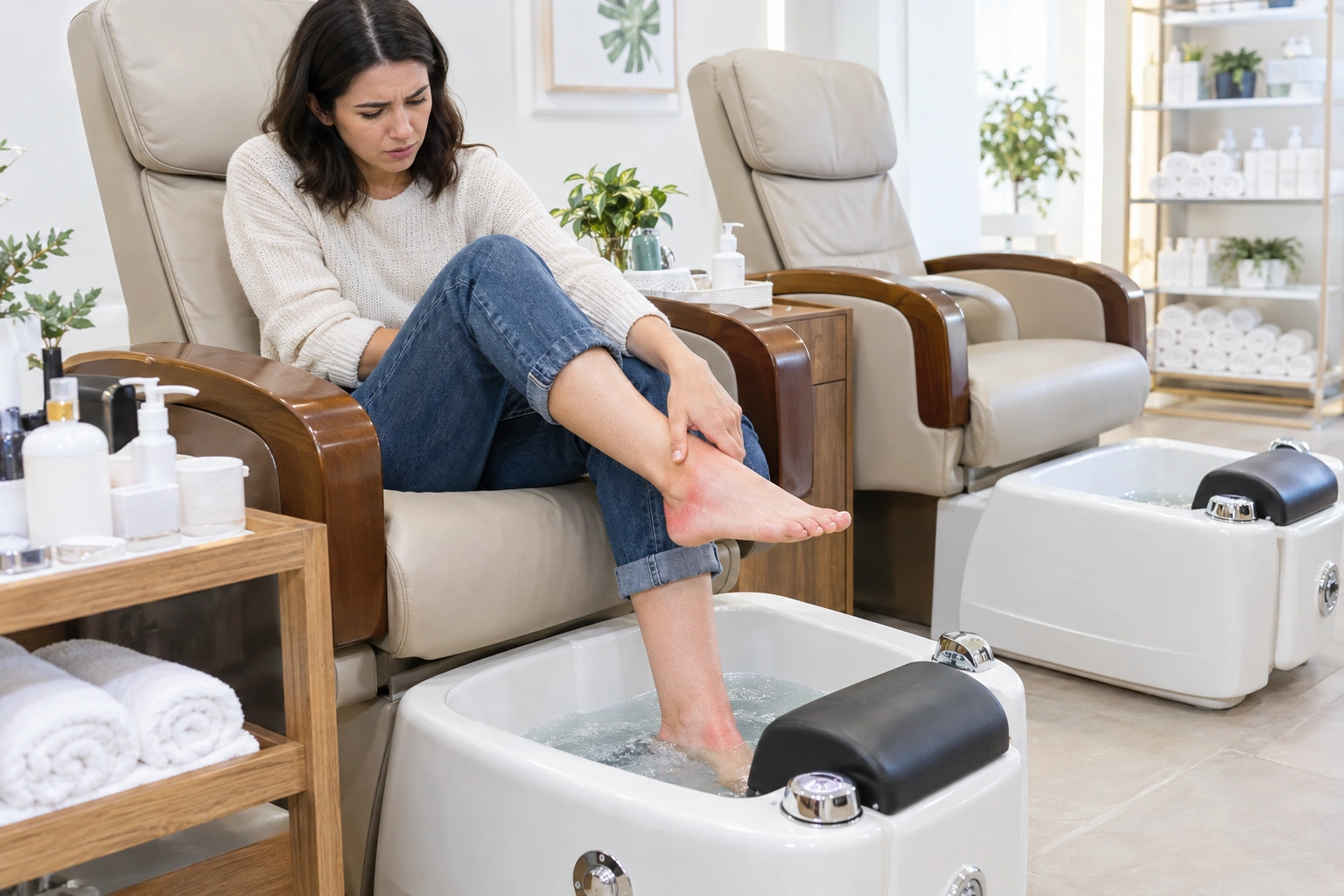
A practical rule: if the infection is active, visibly flaky, cracked, inflamed, or painful, postpone the pedicure and treat the infection first. If you only need hand services, call ahead and ask whether the salon is comfortable doing a manicure while you’re managing athlete’s foot. Salons may also have their own hygiene policies and can refuse service for active foot infections, especially if the skin is broken or inflamed.
For general diagnosis and treatment basics, Mayo Clinic notes that a healthcare professional or dermatologist can diagnose athlete’s foot and that you do not need to do anything special before an appointment to diagnose it. You can read that guidance here.
What Athlete’s Foot Is and Why Salons Care
Athlete’s foot is a fungal infection that usually affects the skin between the toes or on the soles of the feet. It often shows up as itching, peeling, scaling, cracking, or redness. Some cases are mild and annoying; others are uncomfortable enough that walking or soaking the feet becomes unpleasant.
Salons care because fungus spreads more easily when skin is already irritated and because feet are often exposed to shared surfaces, tools, towels, and basins. OSHA notes that nail salon workers can be exposed to biological hazards when they come into contact with infected skin, nails, or blood, and that workers can also get fungal infections such as athlete’s foot from clients. That’s one reason many salons treat active foot infections as a reason to pause foot services. See OSHA’s nail salon guidance here.
The key point is not that a salon is “dirty” by default. It’s that an active fungal infection changes the hygiene equation for foot care. Even a well-run salon has to think about protecting other clients, protecting staff, and avoiding further irritation to your own skin.
When You Should Postpone a Pedicure
A pedicure is the service most likely to be a problem if you have athlete’s foot. The combination of soaking, exfoliating, and close contact can make already irritated skin feel worse. In some cases, the infection can spread to other nails or become more painful.
A podiatry article from Michfoot specifically advises avoiding pedicures if you suspect toenail fungus, which is not exactly the same as athlete’s foot but reflects the same basic caution: when fungus is active around the toes or nails, salon foot services can be a poor fit. Their guidance is here.
Postpone the pedicure if any of these are true:
- the skin is cracked or peeling heavily
- the rash is red, inflamed, or tender
- there is open skin, drainage, or oozing
- walking or touching the area is painful
- the infection seems to be spreading
- you have not started treatment yet
A simple decision rule helps: mild itch plus dry, limited peeling may still be a reason to skip foot services, but cracked, open, or inflamed skin is a clear stop sign. If you’re unsure, rescheduling is the safer choice.
Can a Nail Salon Turn You Away?
Yes, a salon may reasonably ask you to reschedule a foot service if you arrive with an active fungal infection. That is not necessarily rude or overly strict; it is part of basic sanitation and risk management.
A reputable salon may do one of three things:
- Refuse the pedicure
- Offer to reschedule until the infection improves
- Suggest a different type of service that does not involve your feet
That is especially likely if the technician sees visible cracking, scaling, or open skin. From the salon’s perspective, this is about avoiding cross-contamination and protecting staff and other clients. From your perspective, it can also save you from spending money on a service that may make the problem worse.
This is where expectations matter. If a salon turns you away, that does not automatically mean they are judging you. In many cases, they are trying to keep the visit safe for everyone involved.
How to Tell the Salon Before Your Appointment
The best move is to call or message the salon before you arrive. A short, direct explanation is enough.
You can say:
- “I’m dealing with athlete’s foot right now. Can I still come in for a manicure only?”
- “I have a foot rash that may be athlete’s foot. Should I reschedule my pedicure?”
- “I want to be careful about sanitation. Is it okay if I book hand services and skip the foot portion?”
That kind of communication helps the salon decide whether to adjust the appointment, and it prevents awkwardness at check-in. It also gives the technician time to prepare if they do accept the service.
If you’re booking online, add a note in the comments or follow up with a phone call. The earlier you disclose, the easier it is for the salon to respond without pressure.
Can Athlete’s Foot Spread to Other Clients or Staff?
It can. Athlete’s foot is contagious, and salons are one of the places where spread is a concern because multiple people touch shared tools and surfaces over the course of the day.
That does not mean every salon visit will infect someone. It means the risk is real enough that postponing a foot service is usually the considerate choice when the infection is active. OSHA’s guidance is useful here because it recognizes that salon workers may be exposed to fungal infections from clients. That’s why many salons build conservative policies around visible foot infections.
If you have athlete’s foot, think beyond your own appointment. Even if you feel fine sitting in the chair, the next person to use the same basin, towel, or tool set may not be so lucky if sanitation is imperfect.
If You Still Go: Basic Precautions to Reduce Risk
Sometimes the practical answer is not perfect—it’s managed risk. If you decide to go anyway, keep the visit limited and low-contact.
Use these precautions:
- Skip the pedicure if the feet are actively infected
- Book a manicure only if the salon allows it
- Keep the affected area covered when possible
- Wear clean socks and closed-toe shoes to and from the salon
- Do not shave, pick, or scrub the rash before the appointment
- Tell the technician immediately if the skin is painful or broken
The goal here is not to “make it safe” in an absolute sense. The goal is to avoid adding irritation or exposure. If the skin is already inflamed, soaking and filing are more likely to aggravate it than help it.
If your salon offers a medical pedicure or podiatry-based foot care service, ask what they actually treat. Some providers may describe these services as being designed for certain foot concerns, but that does not mean they are appropriate for every active infection. Ask about their policies and whether they require a waiver, extra sanitation steps, or a refusal for active athlete’s foot. That may be a better fit than a standard cosmetic pedicure, but it still depends on your symptoms and the provider’s policies. One example is Signature Foot’s medical pedicure information, which explains how that type of service differs from a standard cosmetic visit.
Home Treatment to Start Before Returning for Nail Services
If the infection looks mild and you are not having severe pain or drainage, a basic at-home antifungal routine is usually the first step before you return to the salon.
A sensible home-care plan often includes:
- using an over-the-counter antifungal cream or spray used as directed on the label
- washing the feet gently and drying them carefully, especially between the toes
- changing socks daily, or more often if your feet sweat
- wearing breathable shoes when possible
- avoiding shared towels, shoes, or nail tools
The point is to reduce moisture and give the antifungal treatment a chance to work. Athlete’s foot tends to linger when feet stay damp. If your shoes trap sweat or you keep wearing the same socks, the infection may keep cycling.
A realistic benchmark matters here: if symptoms are still clearly active, worsening, or not improving after you’ve started treatment, that is usually not the moment to book a pedicure. Wait until the skin is calmer, less irritated, and no longer cracking or inflamed. If symptoms persist, spread, or worsen, get medical evaluation.
When to See a Nail Technician or Dermatologist
A nail technician can help you decide whether a salon service makes sense, but they should not be the person diagnosing or treating a worsening fungal infection. If the rash is spreading, painful, or not improving with basic care, it’s time to see a clinician.
See a dermatologist, podiatrist, or other healthcare professional if:
- the rash keeps coming back
- the skin is cracking deeply or bleeding
- redness is spreading beyond the foot
- there is swelling, warmth, or increasing pain
- you suspect the infection involves the nails as well
- home treatment has not helped
Mayo Clinic’s guidance is straightforward: a healthcare professional or dermatologist can diagnose athlete’s foot, and you do not need to do anything special before the appointment. That makes it easy to get checked without overpreparing or waiting too long.
Common Mistakes to Avoid
The biggest mistake is treating a salon visit like a workaround for the infection.
Other common errors include:
- hiding the condition and hoping no one notices
- getting foot services when the skin is open or very inflamed
- using the salon visit to remove all peeling skin aggressively
- assuming a little itching is “not contagious enough” to matter
- waiting until the infection becomes severe before starting treatment
If you’re torn between keeping the appointment and protecting your feet, choose the option that avoids irritation and limits spread. That often means rescheduling foot services and returning once the skin is improving.
Quick Comparison: Go, Reschedule, or Switch Services
| Situation | Best move | Why |
|---|---|---|
| Mild athlete’s foot, but you want a pedicure | Reschedule the pedicure | Reduces spread risk and avoids irritating the skin |
| Mild athlete’s foot, but you only want a manicure | Call first and ask about hand services only | Keeps the appointment without exposing feet |
| Cracked, inflamed, or open skin | Postpone all foot services | Skin is more vulnerable and harder to sanitize around |
| You’ve started treatment and symptoms are clearly improving | Ask the salon if they’ll accept a limited service | Some salons may be more comfortable once the infection is controlled |
| You’re unsure whether it’s athlete’s foot | See a clinician before booking foot care | Better than guessing and risking spread or worsening |
Frequently Asked Questions
Can I get a pedicure if I have athlete’s foot?
Usually, it’s better to wait. A pedicure can irritate the skin and may increase the chance of spreading the infection to other nails or surfaces.
Will a nail salon refuse me?
Some will, especially if the infection is visible or the skin is broken. Calling ahead is the easiest way to avoid surprises.
Can athlete’s foot spread in a salon?
Yes, it can spread through contact and contaminated surfaces if sanitation is not handled carefully. That is why active infections are a concern in shared foot-care settings.
Should I tell the salon before my appointment?
Yes. A quick heads-up gives the salon time to decide whether to adjust the service or reschedule you.
Is a medical pedicure better?
It may be a better fit for some foot concerns, but it is still not a substitute for medical treatment if the infection is active or worsening. Ask the provider exactly what they can and cannot treat.
Can I still get my nails done if I skip the pedicure?
Often, yes. A manicure-only appointment may be reasonable if the salon is comfortable with it and your feet are not being handled.
When should I see a doctor instead of waiting?
If the rash is spreading, painful, cracked, or not improving with home care, get checked by a dermatologist, podiatrist, or another clinician.
What if I already went to the salon?
Keep treating the infection, dry the feet carefully, and watch for worsening redness, pain, or spreading symptoms. If those show up, seek medical advice.
Bottom line
If you have athlete’s foot, the safest salon choice is usually to postpone pedicure services until the infection is improving. If you only need a manicure, call ahead and be direct. That one conversation can protect your feet, the staff, and the next client in the chair.

