
Can You Mix Nail Polish Colors? A Beginner’s Guide to Safer Custom Shades

Yes — you can mix nail polish colors in many cases. That’s the simple answer. The more useful answer is that some polishes blend well, some don’t, and the way you mix them matters just as much as the colors themselves.
If you want a custom shade, the safest beginner approach is to test a small amount first, usually in a separate palette instead of the bottle. That way, if the mix turns muddy, streaky, or too thick, you have not ruined a full polish.
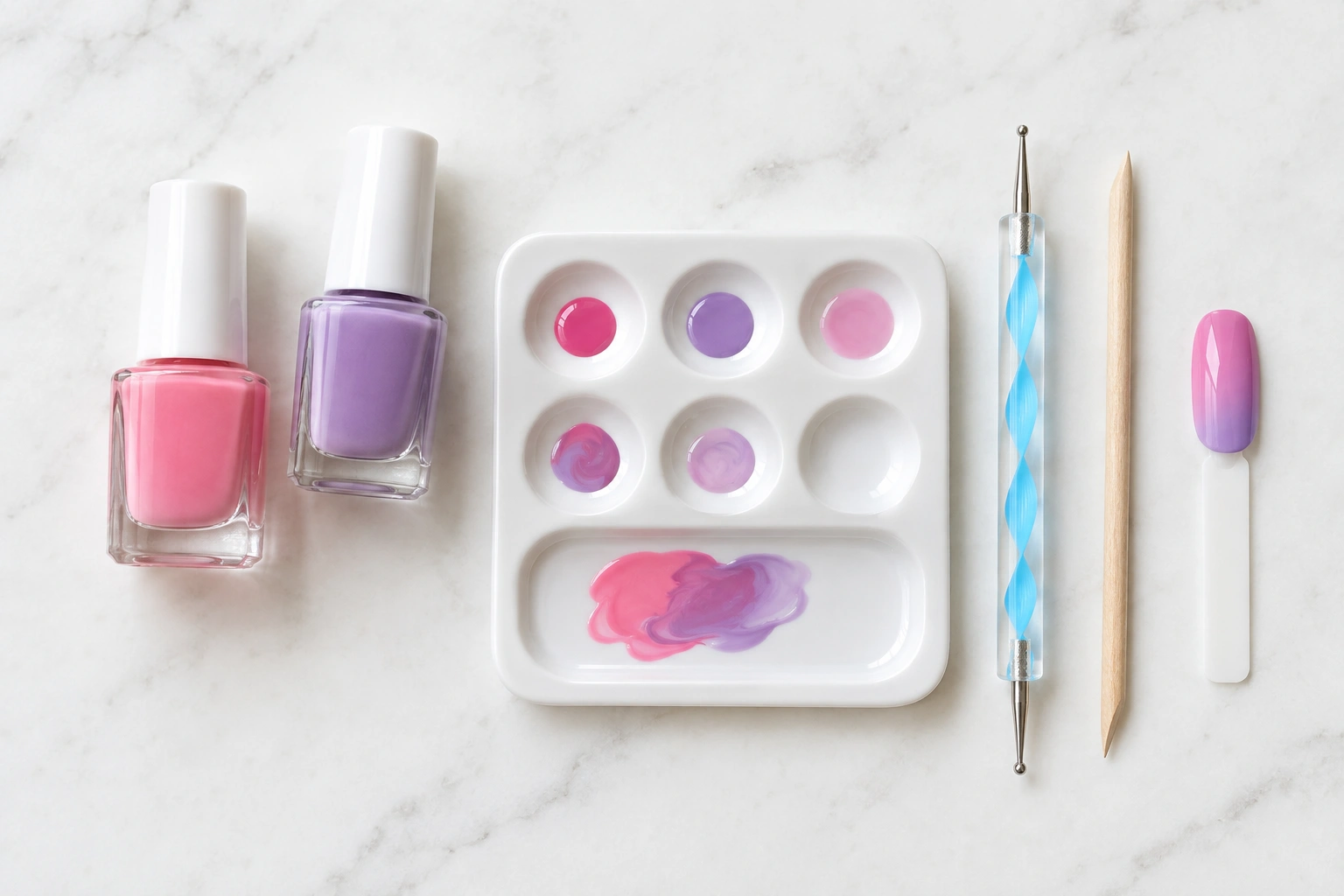
This guide keeps things practical: what can be mixed, what should be kept separate, and how to make a custom color without wasting polish.
Can You Mix Nail Polish Colors?
Yes, many regular nail polish colors can be mixed together. Creams, sheers, shimmers, and some glitter polishes can often be combined to create a new shade. But “can be mixed” does not mean every combination will behave nicely.
A mixed polish may dry differently than the wet color looks. It may also become more opaque, more sheer, thicker, or harder to apply smoothly. That is why beginners should treat mixing as a small experiment, not a full-bottle commitment.
For a simple rule, keep your first mixes to two polishes. That helps prevent the color from getting muddy, which is a common beginner problem.
What Happens When You Mix Different Nail Polish Colors
When you mix two polish colors, you are changing more than just the shade. You are also affecting the finish, coverage, and sometimes the way the polish flows from the brush.
Here is what can change:
- Shade: Red plus white makes a softer pink. Blue plus a little black can create a deeper navy.
- Opacity: A sheer polish mixed into a cream shade can make the result look lighter and more translucent.
- Finish: Glitter, shimmer, or metallic polish can change the look even if the color stays close.
- Application: A mix may spread differently if one formula is thicker than the other.
- Drying time: A custom blend may dry faster or slower depending on the formulas involved.
The main thing to remember is that the wet color is not always the final color. Let a test swatch dry before you decide the mix is right.
Which Nail Polish Types Can Be Mixed Safely
Some combinations are much more predictable than others. This quick comparison can help you decide whether to mix in a bottle or just for one manicure.
| Mix Type | Usually Okay? | Best Way to Test | Beginner Notes |
|---|---|---|---|
| Cream + cream | Yes | Palette first | Most predictable for custom shades |
| Cream + sheer | Usually | Palette first | Sheer polish can soften or lighten the color |
| Cream + shimmer | Usually | Palette first | Adds sparkle without changing the base too much |
| Cream + glitter | Usually, but use carefully | Palette first | Can get chunky if too much glitter is added |
| Different brands of regular polish | Sometimes | Palette first | Results may vary more because formulas differ |
| Regular polish + top coat | Limited use | Palette only | Top coat can change shine or texture, or slightly thin the look, but it does not create a true new color |
| Regular polish + nail polish thinner | Yes, for consistency | Bottle or palette | Thinner is for restoring flow, not creating color |
| Regular polish + gel polish | Avoid unless directions say otherwise | Do not mix casually | These formulas behave differently |
| Gel polish + gel polish | Only if the system allows it | Follow brand instructions | Gel chemistry can be brand-specific |
A good beginner rule: if the formulas seem similar, the mix is more likely to behave well. If the formulas are very different, test in a tiny amount first or skip the combination. Acrylic paint should not be mixed into nail polish for custom color-making.
If you want more general product-safety guidance, the FDA’s cosmetics page is a useful place to check how cosmetic products are regulated and why labels matter.
Mixing in a Bottle vs Mixing on a Palette
You can mix nail polish in the bottle, but that is the riskier option. A palette is better for beginners because it lets you test the shade before you commit.
Mixing on a palette
Use a palette if you want to:
– test a color first
– compare two shades side by side
– make a one-time manicure
– avoid wasting a full bottle
This is the safest route for beginners. If the color looks wrong, you can adjust it before it touches your polish bottle.
Mixing in a bottle
Mixing directly in the bottle works best when:
– you already know the formulas blend well
– you want to recreate the same custom shade later
– you are confident you will like the result
The trade-off is simple: bottle mixing is convenient, but if the formula separates or turns unusable, you have lost the whole bottle. For most beginners, that is too much risk for the first try.
Tools and Materials You’ll Need
You do not need fancy supplies. A few basic tools are enough to mix polish safely.
- 2 nail polish colors
- a clean mixing palette, foil square, or small disposable surface
- a dotting tool, orange stick, or clean toothpick
- a spare nail swatch, nail tip, or one test nail
- paper towel
- nail polish thinner, if needed
- base coat and top coat for the final manicure
A small palette is better than using the original bottle as a test lab. It keeps the process controlled and helps you avoid accidental overmixing.
How to Mix Nail Polish Colors Step by Step
Here is a simple beginner method that keeps the process manageable.
1. Choose two colors
Pick one main color and one adjustment color. For example:
– red + white for a softer pink
– blue + black for a deeper shade
– cream polish + a little shimmer for a subtle sparkle
2. Place small drops on a palette
Use tiny amounts at first. Two small drops are enough for a test mix. You can always make more later.
3. Blend slowly
Use a dotting tool or orange stick to stir until the color looks even. Slow mixing reduces bubbles and makes it easier to judge the result.
4. Swatch the color
Paint a small strip on a nail tip, spare swatch, or one nail. Let it dry fully before deciding if it works.
5. Adjust if needed
If the color is too dark, add a little white or sheer polish. If it is too pale, add a little more of the stronger color. If it looks too thick, stop and reassess before adding more polish.
6. Record the ratio
If you like the result, note the mix. Even a simple note like “2 drops pink + 1 drop white” can help you repeat it later.
How to Choose the Right Colors and Finishes
Color choice matters, but finish matters too. Two polishes can look similar in the bottle and very different once mixed.
Cream polish
Creams are the easiest to mix because they usually give the most even, opaque result. They are a good starting point for beginners.
Sheer polish
Sheer polish can soften a color or make it look more translucent. It is useful when you want a lighter wash of color rather than full coverage.
Glitter polish
Glitter adds sparkle, but it can also make the mix harder to apply smoothly. Use a small amount first so the polish does not become gritty or overloaded with particles.
Shimmer and metallic polish
These finishes can make a mix look brighter or more reflective. They are helpful when you want depth, but they may also change the shade more than expected.
A simple beginner rule: if you want a clean custom color, mix similar finishes first. Cream with cream is easier than cream with a heavy glitter polish.

How to Tell If the Mix Needs Adjustment
A mixed polish gives you clues right away if something is off.
Too thick
If the polish drags, leaves brush marks, or feels sticky on the palette, it may be too thick. That can happen when formulas do not blend evenly or when too much product has been mixed.
Too thin
If the polish looks watery, sheer in a bad way, or floods the brush, the mix may be too thin. That can make coverage uneven and may require extra coats.
Streaky or separated
If you see streaks, clumps, or little islands of color, the formulas may not be blending well. Some mixes also seem fine at first and then separate or apply poorly once they sit. For beginners, the safest move is to discard the test batch rather than trying to salvage a full bottle.
Looks different after drying
This is normal. A polish can look richer when wet and flatter when dry, or the opposite. Always let the test swatch dry before judging the final shade.
When to Use Nail Polish Thinner Instead of Mixing Colors
Nail polish thinner is for fixing consistency, not for making a new color.
Use thinner when:
– polish has become thick
– the formula is hard to brush on
– you want to restore flow in an older bottle
Add it sparingly, and only use thinner made for nail polish. It is not a general fix for every bad mix, and it will not create a new color; it only helps the polish apply more smoothly.
Also, do not confuse thinner with remover. Remover breaks down polish. Thinner is made to help polish keep its working texture.
Common Mistakes to Avoid When Mixing Nail Polish
A few mistakes come up again and again, especially for beginners.
Mixing too many colors
Once you add too many shades, the result can turn muddy fast. Keep the first experiment to two polishes.
Skipping the test swatch
A color that looks great in the palette may not look great on the nail. Test first, then commit.
Mixing regular polish with gel polish
These formulas are not meant to behave the same way. Unless the product instructions specifically allow it, keep them separate.
Using remover to thin polish
Remover is not a substitute for thinner. It can change the formula in ways that make application worse.
Overmixing
Stirring too aggressively can create bubbles or streaks. Blend just until the color looks even.
Filling a full bottle too soon
If you have not tested the formula, do not commit your entire bottle to the mix. A palette test saves polish and frustration.
If you use nail products regularly, Sally Beauty has a helpful general beauty education hub at sallybeauty.com that can be useful for comparing product types and tools.
When to See a Nail Technician or Dermatologist
See a nail technician if you want help matching a specific shade, especially for a special event or a full set of nails. A technician can also help if you are unsure whether two products are compatible.
See a dermatologist if you notice irritation, redness, itching, or other skin reactions after using nail products. Mixed polish should never be applied if it causes a reaction on your skin or nails.
FAQs About Mixing Nail Polish Colors
Can you mix nail polish colors together?
Yes, many regular nail polishes can be mixed together, especially similar formulas like creams, sheers, and some shimmers. Test a small amount first.
Can I mix different brands of nail polish?
Sometimes, yes. But different brands can use different formulas, so the result may separate, streak, or dry differently. A palette test is the safest approach.
Can I mix nail polish on the nail instead of in a bottle?
You can layer colors on the nail, but that is not the same as fully mixing them. Layering is better for trying a look quickly; palette mixing is better if you want one even custom shade.
Does mixing polish affect drying time?
It can. A custom blend may dry faster or slower depending on the formulas you combine. Always let one test nail dry before painting all ten.
Can I mix glitter polish with cream polish?
Usually yes, but use a small amount of glitter at first. Too much can make the polish uneven or hard to apply smoothly.
Is it safe to mix nail polish with top coat?
Top coat can change shine or texture, but it is not a true color mixer. Use it to adjust finish, not as your main way to create a new shade.
What should I do if the mix is too thick?
Try a small amount of nail polish thinner. If the texture still looks off, stop and test a different combination rather than forcing it.
Can I mix gel polish with regular polish?
No, not casually. They are different systems and may not work together properly unless the product instructions specifically say they can.
A Simple Rule to Remember
If you are new to mixing polish, keep it small, keep it simple, and test before you commit. Two colors, a palette, and one swatch are usually enough to tell you whether the mix is worth using.

