
The Truth About Treating Warts at Home: Can You Nail File a Wart?

Dealing with a stubborn wart on your finger or toe can be incredibly frustrating. When you are doing your regular at-home manicure or pedicure, it is tempting to just grab your trusty emery board and try to buff the problem away. After all, if a file can smooth down a rough callus, shouldn’t it work on a bumpy wart?
If you are wondering, can you nail file a wart, you are not alone. Many people assume that physically filing down the rough skin will make the wart disappear faster. However, treating warts requires a completely different approach than treating dry skin or calluses.
In this comprehensive guide, we will explain exactly why filing a wart is a bad idea, how it affects your overall nail health, and what safe alternatives you should use instead. Let’s protect your skin, your nails, and your favorite nail tools.
Quick Answer
Can you nail file a wart? No, you should never file a wart with a nail file or emery board. Warts are caused by the highly contagious Human Papillomavirus (HPV). Filing a wart creates micro-tears in your skin, allowing the virus to spread to surrounding areas. It also heavily contaminates your nail file, risking further infection to yourself or anyone else who uses it.
Understanding Warts and Why Filing Them is Dangerous
To understand why a nail file is the wrong tool for the job, you first need to understand what a wart actually is. Unlike calluses, which are just build-ups of dead skin caused by friction, warts are an active viral infection.
The Role of HPV
Warts are benign (non-cancerous) skin growths caused by the Human Papillomavirus (HPV). This virus thrives in warm, moist environments and enters the body through tiny cuts, scratches, or micro-abrasions in the skin.
Once the virus takes hold, it triggers extra cell growth, creating the rough, raised bump you recognize as a wart. Because it is a virus, it is highly contagious. According to the American Academy of Dermatology (AAD) guidance on warts, the virus easily spreads through direct skin-to-skin contact or by touching contaminated surfaces—including your beauty tools.
What Actually Happens When You File a Wart?
When you take an emery board or a glass file to a wart, you are not just removing dead skin. You are actively scraping an area teeming with contagious viral particles.
Here is exactly what happens when you attempt to file a wart:
- Autoinoculation: Filing creates tiny, invisible scratches in the healthy skin surrounding the wart. The file drags the virus into these fresh micro-tears, often causing a cluster of new warts to form weeks later.
- Tool Contamination: The porous surface of a standard emery board traps the virus particles. Every time you use that file again, you re-expose yourself to the virus.
- Bleeding and Pain: Warts have their own blood supply. If you file them down too far, they will bleed profusely, which is painful and increases the risk of a secondary bacterial infection.
The Hidden Dangers for Your Nails: Periungual Warts
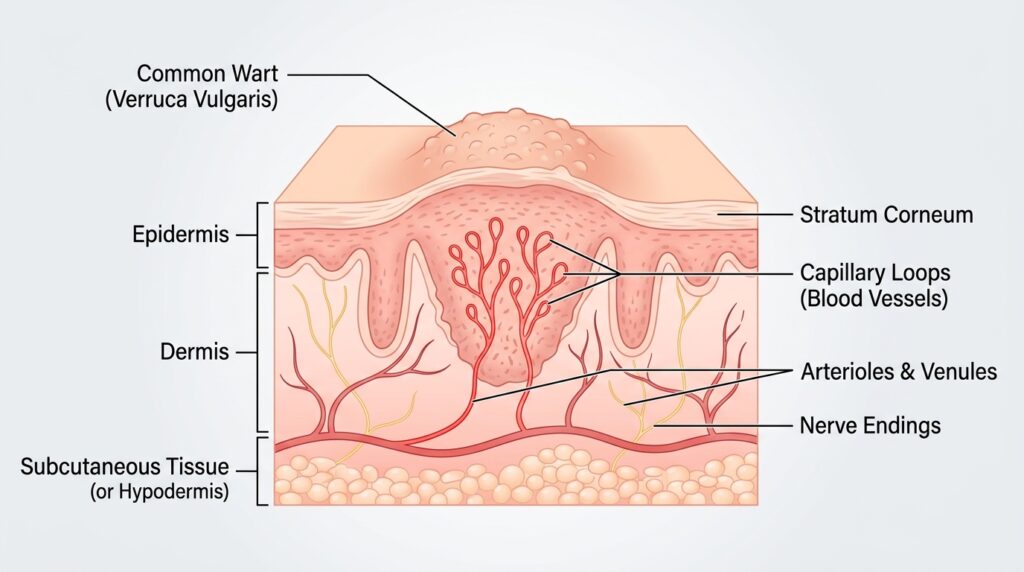
Warts that grow around or under the fingernails and toenails are called periungual warts. These are especially common among people who bite their nails or pick at their cuticles, as this habit constantly creates small wounds for the virus to enter.
Periungual warts pose a unique threat to your nail health. If left untreated, or if treated improperly by aggressive filing, they can cause permanent damage.
Risk of Nail Matrix Damage
The nail matrix is the root of your nail, hidden just under the skin at the base of your cuticle. If you aggressively file a periungual wart located near the cuticle, you risk traumatizing the nail matrix. Damage to this area can result in permanently deformed, ridged, or split nails.
Nail Plate Separation
Warts that grow under the nail bed can actually lift the nail plate away from the skin. Trying to dig a file under the nail to reach the wart will only separate the nail further, causing intense pain and opening the door for severe fungal or bacterial infections.
Safe and Effective Alternatives to Filing
Since we have established that you should never use a nail file on a wart, what should you do instead? Fortunately, there are several safe, effective, and hygienic ways to treat warts at home without risking your nail health.
Over-the-Counter Salicylic Acid
The most reliable at-home treatment for warts is salicylic acid. Available in liquid, gel, or patch form, this mild acid works by slowly peeling away the infected skin layers over time.
- How it works: It destroys the wart tissue without spreading the virus.
- Patience is key: This method can take several weeks of daily application to completely remove the wart.
- How to apply: Soak the wart in warm water for five minutes, dry it completely, and apply the acid directly to the wart, avoiding healthy skin.
At-Home Cryotherapy
You can purchase over-the-counter freezing kits that use a mixture of dimethyl ether and propane to freeze the wart. This mimics the cryotherapy you would receive at a doctor’s office, though it is slightly less cold. The freezing process kills the virus and causes a blister to form around the wart, which eventually falls off.
The Duct Tape Method
While it sounds like a myth, the “duct tape occlusion therapy” is a recognized home remedy. It involves keeping the wart covered with a small piece of silver duct tape for six days.
- After six days, you remove the tape, soak the wart, and gently rub it with a disposable, single-use pumice stone (that you immediately throw away).
- You leave it uncovered overnight and apply a new piece of tape the next day.
- The tape deprives the wart of oxygen and helps peel away the dead skin gently.
Expert Tip:
Never share your nail care tools—especially emery boards and buffers—with anyone else. If someone in your household has a wart, sharing a file is the fastest way to transmit the HPV virus to your own hands or feet. Always keep a personal set of manicure tools.
How to Handle Contaminated Nail Tools
If you have already filed a wart before reading this article, do not panic. However, you must take immediate action regarding the nail tools you used. The virus can survive on surfaces for a surprising amount of time.
Porous Tools Must Be Trashed
If you used an emery board, a wooden cuticle pusher (orange stick), or a sponge buffer on a wart, throw it away immediately. Because these items are highly porous, they cannot be fully sanitized. Using them again guarantees re-exposure to the virus.
Disinfecting Metal and Glass Tools
If you used a metal file, stainless steel nail clippers, or a tempered glass file, you can save them. However, they must be rigorously disinfected. Following basic Centers for Disease Control and Prevention (CDC) sterilization practices is crucial for preventing cross-contamination in personal care settings.
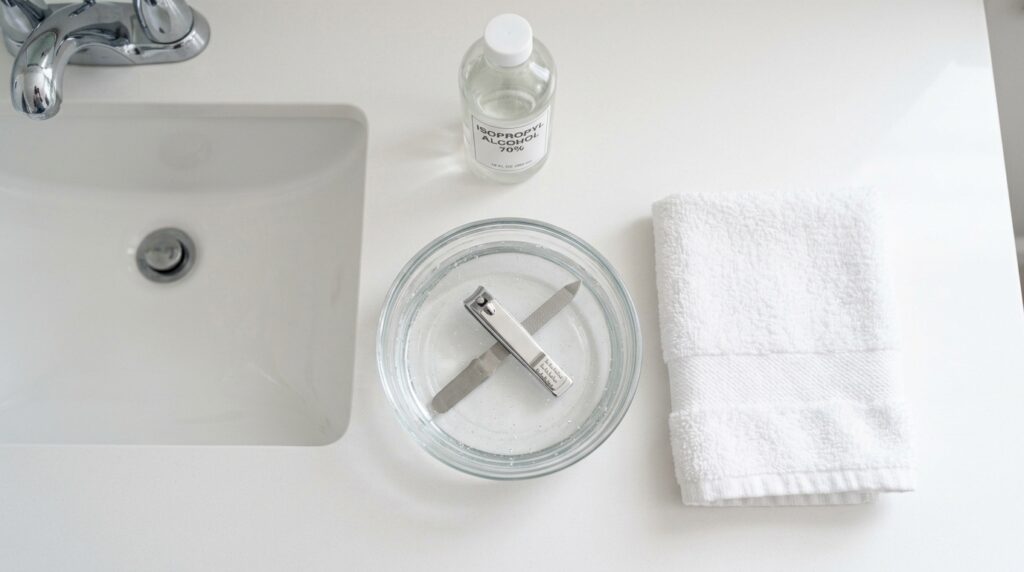
Steps to disinfect metal or glass tools:
- Wash thoroughly: Scrub the tool with hot water and antibacterial soap to remove any visible skin debris.
- Soak in alcohol: Submerge the tool completely in 70% to 90% isopropyl alcohol for at least 30 minutes.
- Dry completely: Remove the tool with clean hands and let it air dry entirely on a fresh paper towel before storing it.
Helpful Table: DIY Wart Removal vs. Professional Treatments
Deciding whether to treat a wart at home or seek professional help depends on the wart’s size, location, and your patience level. Use this comparison table to guide your decision.
| Treatment Method | Cost | Pain Level | Speed of Results | Risk of Spreading | Best For |
|---|---|---|---|---|---|
| Nail Filing (DIY) | Low | High | None (Makes it worse) | Very High | NEVER |
| OTC Salicylic Acid | Low | Low | Slow (Weeks to months) | Low (If used properly) | Small, new warts |
| At-Home Freezing | Medium | Moderate | Moderate (2-4 weeks) | Low | Common warts |
| Dermatologist Cryotherapy | High | Moderate | Fast (1-3 sessions) | Very Low | Stubborn, large warts |
| Laser Treatment (Pro) | High | Moderate | Very Fast | Very Low | Severe periungual warts |
Common Mistakes to Avoid
When dealing with a wart near your nails, avoiding bad habits is just as important as choosing the right treatment. Make sure you avoid these common missteps:
- Biting your nails: This easily transfers the wart virus from your fingers to your lips, mouth, or face.
- Picking at the wart: Picking breaks the skin and traps the virus under your fingernails, spreading it to everywhere you touch.
- Trimming with nail clippers: Cutting a wart with clippers can cause severe bleeding and contaminates the clippers.
- Covering it with nail polish: Painting over a periungual wart will contaminate your entire bottle of nail polish with the virus.
- Ignoring it completely: While some warts go away on their own, periungual warts rarely resolve without treatment and often spread under the nail.
When to See a Nail Technician or Dermatologist
It is vital to understand the difference between cosmetic nail care and medical dermatology when dealing with a skin infection.
Can a Nail Tech Remove a Wart?
No. It is actually against state board cosmetology regulations for a nail technician to diagnose, treat, or file a wart. Nail technicians are trained professionals in cosmetic beauty, not medical doctors.
If you have a visible wart on your hands or feet, your nail technician has the right—and the legal obligation—to refuse service on that specific area to prevent contaminating their station, their tools, and their other clients.
Salon Etiquette Tip: If you have an active wart, it is highly recommended to cancel your manicure or pedicure appointment until it is fully healed. If you must go, securely cover the wart with a waterproof bandage and inform your technician immediately so they can safely avoid the area.
When to See a Dermatologist
You should abandon at-home treatments and book an appointment with a board-certified dermatologist if:
- The wart is spreading rapidly or multiplying.
- The wart is extremely painful, bleeding, or oozing pus.
- The wart is growing underneath your nail plate and lifting the nail.
- You have diabetes or a weakened immune system, which makes foot and hand infections much more dangerous.
- At-home treatments have not worked after two months of consistent use.
FAQs
Can I cut a wart off with nail clippers?
No. Cutting a wart with nail clippers will cause painful bleeding, increase your risk of a bacterial infection, and contaminate your clippers with the HPV virus. This often leads to the wart growing back larger or spreading to other fingers.
Does filing a wart make it bigger?
Yes, it certainly can. Filing traumatizes the tissue and creates micro-tears in the surrounding healthy skin. The virus spreads into these fresh tears, often causing the original wart to grow larger or creating a cluster of new warts.
Can a nail technician work over a wart?
A licensed nail technician cannot legally treat, file, or cut a wart. If the wart is securely covered by a waterproof bandage, some technicians may perform a manicure on your other fingers, but they will completely avoid the affected finger to prevent cross-contamination.
Should I put clear nail polish on a wart to suffocate it?
Using clear nail polish to suffocate a wart is an old home remedy, but it is not recommended. The polish brush will become contaminated with the HPV virus, meaning you will infect yourself again the next time you use that bottle of polish. Stick to medical tape or salicylic acid.
How long does the HPV virus live on a nail file?
Viruses can survive on non-porous surfaces like glass or metal for several days, and they can remain trapped inside the gritty, porous surface of an emery board for even longer. This is why you must immediately throw away any emery board used on an infected area.
Conclusion
When faced with a stubborn skin bump, it is perfectly normal to wonder, can you nail file a wart? However, as we have explored, the answer is a definitive and absolute no.
Warts are active viral infections. Attacking them with an emery board or glass file will only cause painful bleeding, damage your nail bed, ruin your manicure tools, and spread the HPV virus to healthy skin.
Instead of turning to your manicure kit for a quick fix, take a smarter, safer approach to your nail health. Opt for proven over-the-counter treatments like salicylic acid, practice excellent tool hygiene, and never hesitate to consult a dermatologist for stubborn periungual warts. By leaving the files for shaping your nails and using proper medical treatments for your skin, you will keep your hands and feet healthy, beautiful, and completely wart-free.

