Can You Take Your Own Nail Polish to a Salon? A Practical Guide for Clients

Yes — in many salons, you can bring your own nail polish to your appointment. But it is not a universal rule, and the answer often changes depending on the salon, the technician, and the service you booked.
In practice, most salons fall into one of three groups: they welcome outside polish, they allow it with conditions, or they prefer you use their products only. That means the safest move is to ask before your appointment, especially if you want a specific shade, a vegan formula, or a product from a brand the salon does not carry.
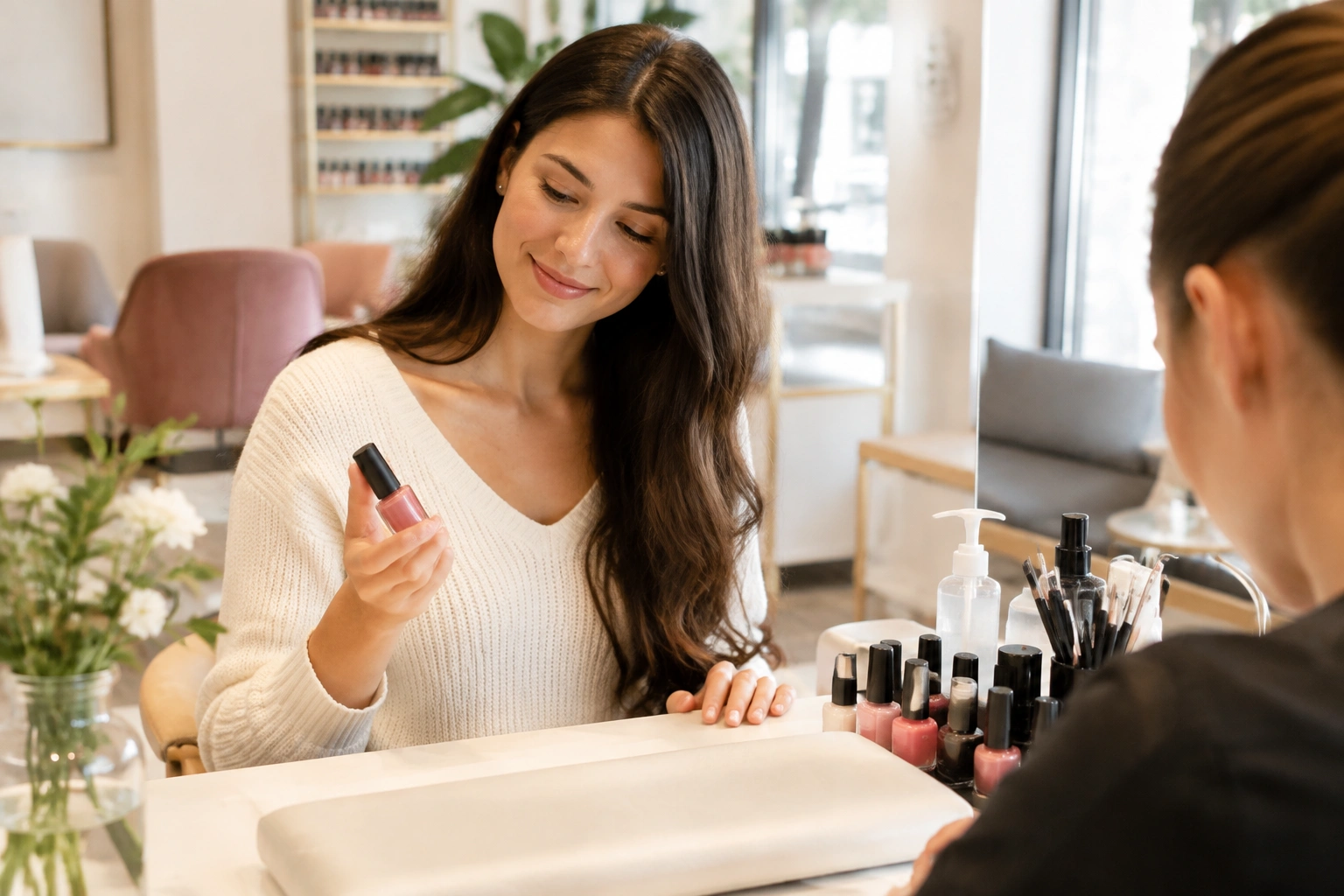
Image placeholder 1
If you are wondering whether bringing your own bottle is awkward, the short answer is: not usually, as long as you ask first and your polish is in good shape. Some salons are comfortable using client-supplied regular polish when it matches the booked service and the bottle is usable. Others allow outside polish only under specific conditions, and many salons do not accept client-supplied gel or dip products at all. That is especially true when the salon does not work with the exact system. See examples from Lemon Drop Nail Bar’s BYOP guide and Beyond Polish’s BYOP article.
Why Salons Allow or Refuse Outside Polish
A salon’s decision usually comes down to three practical issues: product compatibility, service quality, and risk management.
1) Product compatibility
A regular nail polish bottle is simple. A gel system or dip system is not. Those services often depend on a specific line of base products, curing steps, or application methods. If a salon does not work with your exact gel or dip brand, the tech may not be able to use it correctly.
That is why a salon may happily use your standard polish but decline your gel color. The issue is not attitude; it is whether the product fits the system they know and can stand behind.
2) Service consistency
When a salon uses its own products, the technician usually knows how that formula behaves: how thin it is, how fast it levels, how it dries, and how it wears. With outside polish, especially older bottles, the outcome is less predictable. A polish that has separated, thickened, or been stored poorly may apply unevenly, and that can affect the final look.
3) Hygiene and salon policy
Salons also think about whether they can verify the condition of a client-supplied bottle. If the polish has been opened, shared, contaminated, or stored improperly, they may refuse it for sanitation reasons. They may not be able to tell how the bottle was handled, whether it was exposed to contamination, or whether it could interfere with clean service practices.
If a client-supplied product performs badly, the salon may also not want to be responsible for a product they did not provide. That is why some salons set clear rules about outside products, even when they are generally open to them.
For a broader look at chemical and ventilation concerns in salon environments, OSHA’s nail salon health hazards guidance explains that salon products can contain chemicals that may cause breathing problems, irritated eyes, dry cracked skin, and other issues if safety precautions are not followed.
How Policies Differ for Regular Polish, Gel Polish, and Dip Products
This is where most confusion happens. The service type matters.
| Service type | Are salons more likely to accept client-supplied product? | Compatibility concerns | Pricing expectations | Result guarantee |
|---|---|---|---|---|
| Regular polish | Often yes | Low to moderate, depending on polish age and thickness | Usually standard service price | Usually limited |
| Gel polish | Sometimes, but many salons accept only their own gel system | Higher, because curing and brand systems matter | Often standard service price | Often limited or no guarantee |
| Dip powder | Less likely unless the salon already works with that exact system | High, because the salon may need its own matched products | Usually standard service price | Often limited |
| Base coat / top coat only | Sometimes, but salon may prefer its own | Moderate, because finish and wear can change | Usually no discount | Limited |
Regular polish
Regular polish is the easiest category. If the salon allows outside products, this is the most likely one they will accept. A tech can usually open the bottle and work with it if the formula is normal and the color is suitable for the appointment.
Gel polish
Gel is trickier. Even if a salon says “bring your own,” they may mean regular polish only. Many salons do not use client-supplied gel unless it is the same system they already carry and know how to cure properly. Gel often depends on the salon’s lamp, base coat, and top coat system. If your gel bottle is from a brand the salon does not use, the tech may decline it or ask to use only the color while keeping their own base and top products.
Dip powder
Dip is the most likely to be restricted. Many salons use a tightly matched system, and a client-supplied powder may not behave the same way or blend with the salon’s liquids. In many cases, salons will not use client-supplied dip unless they already work with that exact system. If you want to bring dip products, confirm in advance and be ready for a no.
If you are unsure which service to book, a basic manicure with regular polish gives you the best chance of having your own color used.
Will You Pay Less if You Bring Your Own Polish?
Sometimes, but not always — and often not by much.
Many salons do not discount the service when you bring your own polish. That makes sense from their side: the appointment still takes time, the technician still does the prep, application, cleanup, and finishing steps, and the salon still uses its tools and workspace.
In other words, bringing your own polish usually changes the product, not the service. If a salon does offer a reduced price, it is more likely to be a small adjustment than a major discount.
A useful rule: if your main reason for bringing polish is saving money, call first and ask whether the salon has a BYOP policy or a reduced-service option. If not, the benefit is usually getting the exact color or formula you want, not lowering the bill.
What to Ask the Salon Before Your Appointment
A quick phone call or message can save a lot of awkwardness at the chair. Ask these questions before you book or before you arrive:
-
Do you allow clients to bring their own polish?
This is the key question. Do not assume the answer from one location applies to another. -
Does your policy differ for regular polish, gel, or dip?
This matters more than most people expect. -
Do I need to bring the full bottle, or only the color?
Some salons want the complete product; others may also need you to bring matching base and top coats. -
Will you still charge the full service price?
Ask this directly if pricing matters to you. -
Do you have any condition requirements for the bottle?
For example, some salons may prefer sealed, clean, or recently purchased bottles. -
Can you use client-supplied polish on a pedicure?
Pedicure policies can differ from manicure policies. -
If you cannot use my polish, what would you recommend instead?
This helps you pivot without losing the appointment.
A simple message works well:
“Hi, I’m booked for a manicure next week and wanted to check whether you allow client-supplied regular polish. I have a bottle I’d love to use, and I wanted to confirm before I come in.”
That kind of question is clear, respectful, and easy for the salon to answer.
How to Prepare Your Polish So the Appointment Goes Smoothly
If the salon says yes, bring a bottle that is easy to work with.
Check the condition first
Open the bottle at home and look at the texture. If the polish is thick, stringy, separated, or difficult to brush on, it may not perform well at the salon. A tech can usually tell quickly if the formula is going to fight them.
Bring the exact bottle you want used
If you want a specific finish, bring the full bottle, not a decanted sample or a mystery container. The label helps the technician identify the product and judge whether it is suitable.
Keep it clean and closed
A dirty bottle or sticky cap is a small thing, but it can create a poor first impression. Wipe the outside of the bottle before your appointment and make sure the cap opens smoothly.
Be realistic about color and finish
A color can look different on the nail than it does in the bottle. Lighting, base color, and application thickness all matter. If you are very particular about the final shade, bring a reference photo and be open to the salon using their own base or top coat if needed.
Know when to leave a bottle at home
If the polish is old enough that it barely moves in the bottle, or if it has clearly gone off, it is better to choose another option. A fresh salon polish may give you a better result than a favorite bottle that is past its best.
What to Expect if the Salon Uses Your Polish
Even when a salon agrees to use your product, that does not always mean they will guarantee the same outcome as with their own stock.
A technician may still use the salon’s base coat, top coat, lamp, or prep products. They may also decline to guarantee wear time if your polish turns out to be incompatible or difficult to apply. That is normal and fair.
Here is the practical trade-off:
- Your polish gives you the exact color or formula you want.
- The salon’s polish gives you a more predictable service result.
If you bring your own bottle, be prepared for the technician to say that they can try it, but they cannot promise the same wear as their regular products. That is not a refusal; it is a realistic boundary.
For timing expectations around polish services, this guide on how long gel nail polish takes to dry can also help if you are comparing regular polish with gel.
If the Salon Declines Your Polish, What Are Your Best Options?
If the salon says no, keep it simple and polite. The staff is protecting their policy and their service standards.
Your best options are:
- Choose a salon color if they have something close.
- Reschedule if you want to call another salon that allows outside polish.
- Use your polish at a later appointment after confirming policy ahead of time.
- Book a regular polish service instead of gel or dip if your original plan was too restrictive.
If you feel disappointed, remember that a refusal usually means the salon is being consistent, not dismissive. A clear policy is better than a surprise at the chair.
Quick Decision Guide: Bring It, Ask First, or Use the Salon’s Polish?
Use this simple framework:
Bring your own polish if:
- You want a very specific shade or formula.
- The salon has already said client-supplied regular polish is okay.
- Your bottle is fresh, usable, and easy to apply.
Ask first if:
- You are booking gel or dip.
- You are unsure whether the salon accepts outside products.
- You want to know about pricing before you arrive.
Use the salon’s polish if:
- You want the most predictable result.
- Your bottle is old, thick, or questionable.
- The salon says outside products are not allowed.
If you are torn between convenience and control, think of it this way: salon polish usually gives you simplicity, while your own bottle gives you specificity. The right choice is the one that matches your priorities for that appointment.
When to See a Nail Technician or Dermatologist
If your nails are peeling, lifting, or reacting badly to products, a licensed nail technician can help you choose a service that is gentler and more appropriate. If you suspect a skin or nail condition rather than a product mismatch, a dermatologist is the better professional to ask.
And if you are mainly concerned about polish safety in general, the FDA’s cosmetics guidance is a useful place to review how cosmetic products are regulated and what to look for on labels.
Final Takeaway
So, can you take your own nail polish to a salon? Usually yes — but only if the salon allows it, the product fits the service, and you confirm the policy before your appointment.
For the smoothest experience, bring a clean, usable bottle and be flexible if the salon needs to use its own base, top coat, or system products. That small bit of preparation is what turns a potentially awkward request into an easy, professional appointment.