
Can You Use a Nail File on Dead Skin? A Complete Guide to Safe Exfoliation

Dealing with hard, peeling, or dry skin around your nails can be incredibly frustrating. When you are doing an at-home manicure and spot rough patches alongside your nail beds, it is tempting to grab the nearest tool to smooth things out. But can you use a nail file on dead skin?
While it might seem like a quick and harmless fix, using the wrong type of file on your delicate skin can cause micro-tears, painful irritation, and even dangerous infections. Understanding how to properly exfoliate the skin around your nails is essential for achieving a salon-quality look without risking your skin’s health.
In this comprehensive guide, we will explore whether filing skin is safe, exactly which types of nail files work best for skin, and the proper steps to keep your hands looking flawless and feeling healthy.
Quick Answer
Yes, you can use a nail file on dead skin, but you must use a fine-grit glass or crystal nail file. Coarse emery boards and metal files will tear delicate skin and cause irritation. Always file gently on completely dry skin, moving in one direction, and follow up immediately with a hydrating cuticle oil or thick moisturizer to protect the skin barrier.
Understanding the Skin Around Your Nails
Before you start filing away at rough spots, it is important to know exactly what kind of skin you are dealing with. The skin surrounding your nail plate serves a critical purpose: it acts as a protective barrier.
The tough, dry skin you often feel on the sides of your nails is usually a buildup of dead keratin cells. This buildup happens due to constant friction, frequent hand washing, exposure to cold weather, or a lack of daily moisture.
However, many people confuse dead skin on the sides of the nail with the cuticle. According to the American Academy of Dermatology’s guidelines on nail care, you should never forcefully push back or aggressively trim your cuticles, as this breaks the protective seal that prevents bacteria from entering your nail root.
The Right and Wrong Tools for Dead Skin
If you decide to file the dead skin around your nails, the tool you choose is the single most important factor. Using the wrong tool can turn a simple manicure into a painful experience.
Tools You Should NEVER Use on Skin
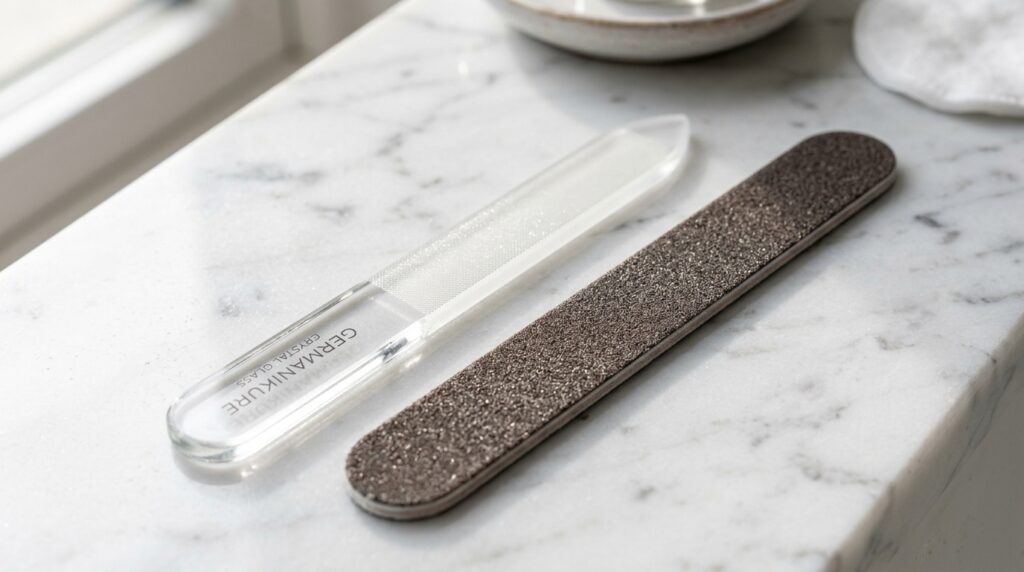
- Coarse Emery Boards: These are the common cardboard-backed files. Their grit is too aggressive and will shred living tissue, leaving your skin frayed and sore.
- Metal Nail Files: Metal files are incredibly harsh. They can easily slice into healthy skin and create microscopic cuts that invite bacteria.
- Dull or Dirty Tools: Using a file that has already been heavily used on acrylics or natural nails can introduce trapped bacteria into your skin.
The Best Tool: Glass or Crystal Nail Files
If you are wondering how to gently remove hard skin, glass or crystal nail files are the only safe option.
Glass files are manufactured with a uniformly smooth, finely etched surface. This microscopic precision allows the file to safely sand down dead skin without tearing or catching on the healthy, living tissue underneath. They are also non-porous, meaning they can be easily washed and sanitized to prevent infection.
How to Safely Remove Dead Skin Around Nails (Step-by-Step)
If you are ready to smooth out those rough, dry patches, follow this safe and effective method.
Step 1: Start with Completely Dry Skin
Unlike standard cuticle removal, which usually requires soaking, filing skin must be done while the skin is completely dry. Wet skin acts like rubber; if you try to file it, it will tear and rip rather than sand away smoothly.
Step 2: Clean Your Hands and Tools
Wash your hands thoroughly with soap and water, then dry them completely. Ensure your glass file has been washed with warm soapy water and dried before use. Always ensure your tools are clean and safe, keeping in mind the FDA guidance on cosmetic nail products regarding tool hygiene and consumer safety.
Step 3: Target the Callused Areas
Identify the hardened, white, or yellowed dead skin on the sidewalls of your nails. Do not touch the cuticle base (the thin skin closest to your knuckle).
Step 4: File Gently in One Direction
Hold the glass file at a slight angle against the hard skin. Using very light pressure, glide the file in one single direction. Do not saw back and forth, as the friction can cause heat spikes and irritation.
Step 5: Check Your Progress Frequently
Stop after every few swipes to feel the skin. Once the hard patch feels smooth and flush with the surrounding skin, stop filing immediately. Over-filing will expose raw, sensitive tissue.
Step 6: Rehydrate Deeply
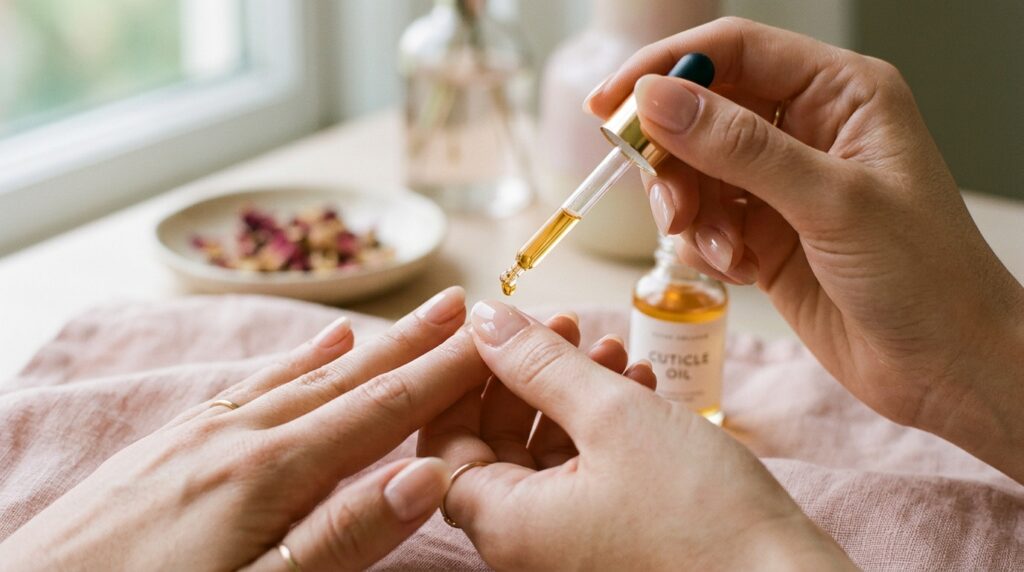
Filing removes the outermost protective layer of skin. You must immediately apply a high-quality cuticle oil (jojoba oil is highly recommended) and seal it with a thick hand cream to lock in the moisture.
Expert Tip:
Never file the skin on the tips of your fingers if they are peeling from dryness. Peeling skin is already compromised and tearing. Instead of filing peeling skin, use a sharp, sanitized pair of cuticle nippers to snip only the dead flap of skin, then apply a heavy ointment overnight.
Tool Comparison: Best Methods for Dead Skin Removal
To help you make the smartest choice for your nail care routine, here is a breakdown of common tools and how they impact your skin.
| Tool Type | Safe for Skin? | Best Used For | Risk Level |
| Glass / Crystal File | Yes | Gently smoothing dry, hardened sidewall skin. | Low (if used on dry skin) |
| Coarse Emery Board | No | Shaping thick artificial nails (acrylics, dips). | High (causes tearing) |
| Metal File | No | Avoid using completely; outdated and harsh. | Very High (causes cuts) |
| Pumice Stone | Yes (Feet only) | Removing thick calluses on heels and toes. | Low (for feet) |
| Cuticle Nippers | Yes (with skill) | Trimming only hanging, visibly dead skin/hangnails. | Medium (easy to cut living tissue) |
| Chemical Removers | Yes (with caution) | Dissolving dead cuticle tissue on the nail plate. | Medium (can cause chemical burns if left too long) |
What About Dead Skin on Toes and Feet?
You might be asking, can you use a nail file on dead skin on your feet? The skin on your feet is much thicker than the skin on your hands.
While a glass nail file can smooth out very small rough patches around your toenails, it will not be effective for larger foot calluses. If you are dealing with thick dead skin on your heels or the balls of your feet, recommendations from the American Podiatric Medical Association suggest using a dedicated pumice stone or a specialized foot file rather than standard manicure files. Always soak your feet first when using a pumice stone, which is the opposite rule of hand filing!
Common Mistakes to Avoid
When attempting to smooth out the skin around your nails at home, it is easy to make errors that lead to soreness. Keep these common mistakes in mind:
- Sawing back and forth: This creates painful friction burns and leaves the skin with jagged edges. Always file in one direction.
- Filing wet skin: Wet skin is incredibly fragile. Filing after a shower will likely rip healthy tissue away along with the dead skin.
- Over-filing: If the skin starts to look pink, red, or feels warm and tender, you have gone too far.
- Skipping moisturizer: Filing strips the skin’s natural oils. If you do not apply cuticle oil immediately, the skin will dry out and crack within hours.
- Using electric files (e-files) at home: Unless you are a trained professional, using an electric nail drill on your skin can cause severe damage and permanent nail bed grooves in a matter of seconds.
When to See a Nail Technician or Dermatologist
While gentle, at-home filing is safe for minor dryness, there are times when you should put the file down and seek professional help.
Visit a licensed nail technician if:
- You have thick calluses around your nails from manual labor or sports that a gentle glass file cannot handle.
- You want a safe, professional “Russian Manicure” (e-file manicure) performed by someone properly trained to safely exfoliate the eponychium.
See a board-certified dermatologist if you notice:
- Signs of infection: Redness, swelling, throbbing pain, or pus around the nail fold.
- Chronic peeling: Skin that constantly peels, bleeds, or cracks deeply despite regular moisturizing.
- Discoloration: Warts, dark spots, or unusual growths masquerading as standard dead skin.
Do not attempt to file away warts or infected skin, as this will spread the virus or bacteria to other parts of your hands and your nail tools.
FAQs
Is it bad to file the skin around your nails?
It is only bad if you use the wrong tool or use improper technique. Using a harsh emery board or sawing back and forth will damage the skin. Using a fine-grit glass file gently on dry skin is perfectly safe.
Can I use an emery board on my hard cuticles?
No. Emery boards are too abrasive for skin. They will create microscopic tears that can lead to inflammation, hangnails, and bacterial infections.
Why does the skin around my nails get so hard?
The skin hardens as a protective response to trauma or friction. Frequent hand washing, exposure to harsh cleaning chemicals, biting your nails, or cold weather strips the skin of moisture, causing keratin to build up and form hard patches.
Should I cut dead skin around my nails with clippers?
You should only use clean cuticle nippers to carefully snip away loose, dead hangnails. You should never cut flush living skin, as this triggers the skin to grow back thicker and harder to protect itself.
How do I soften the hard skin on the side of my nails?
The best way to soften hard sidewalls is through consistent hydration. Apply a jojoba-based cuticle oil two to three times a day, and wear a thick moisturizer with cotton gloves overnight for an intensive hydration treatment.
Is dry filing better than wet filing for skin?
Yes, when using a glass file on the skin around your fingernails, dry filing is vastly superior. Dry skin sands away cleanly as a fine powder, whereas wet skin becomes rubbery and is prone to tearing.
Conclusion
So, can you use a nail file on dead skin? The answer is a confident yes—provided you are armed with the right knowledge and the right tools.
By tossing out those harsh emery boards and investing in a high-quality glass nail file, you can safely and gently buff away annoying dry patches on your nail sidewalls. Remember that the secret to a flawless, salon-quality manicure at home isn’t just about removing the bad; it is about protecting the good. Always file gently on completely dry skin, work in a single direction, and never skip your hydrating cuticle oil.
Taking care of the delicate skin around your nails doesn’t require aggressive tools. Treat your hands with patience and gentle care, and you will notice softer, healthier, and more beautiful nails in no time.

