
Can You Use Nail Dehydrator on Fake Nails?

Quick Answer
Yes, but usually not on the fake nail itself; nail dehydrator is mainly meant for the natural nail plate before you attach press-ons, acrylics, gel tips, or other enhancements. If you are working with a cured or prefinished fake nail, use dehydrator only when the manufacturer recommends it; the FDA’s nail product safety guidance also recommends following product directions and warnings.
Where nail dehydrator belongs
- Natural nail plate: Yes. This is the main surface dehydrator is designed to prepare.
- Press-on underside: Usually no, unless the press-on brand specifically recommends it.
- Cured acrylic: Usually no. Use it on exposed natural regrowth during prep instead.
- Soft gel tip: Use dehydrator on the natural nail; prep the tip interior according to that gel-tip system.
- Finished nail surface: No. Dehydrator is not a topcoat cleaner, shine remover, or maintenance product.
Best rule to remember
- Prep the bonding surface: Remove oil and moisture from the natural nail, then use the adhesive, primer, base, or gel system as directed.
Fake nails lift for many reasons, and dehydrator is only one part of the prep. The key is knowing which surface needs dehydration and which surface needs a different kind of preparation.
In my own at-home press-on routine, I use one simple rule: prep the surface that must bond, not every plastic surface in sight. That keeps the routine cleaner and avoids adding solvents where they do not help.
In This Guide
- Should you put nail dehydrator on fake nails?
- What does a nail dehydrator actually do?
- Where should you use dehydrator with different fake nails?
- How do you use nail dehydrator before fake nails?
- Can nail dehydrator damage fake nails?
- Nail dehydrator vs alcohol, acetone, and primer
- What if your fake nails still lift?
- Frequently asked questions
- Final takeaway
Should You Put Nail Dehydrator on Fake Nails?
For most manicures, put nail dehydrator on the natural nail before the fake nail is attached. The dehydrator helps create a cleaner, drier bonding surface for glue, acrylic, gel, or another enhancement system.
Putting dehydrator on an already finished fake nail usually adds no benefit. Depending on its formula, the liquid may also alter some plastic materials or decorative finishes.
Why the wording gets confusing
People often say “fake nails” when they mean several different products. Press-ons, acrylic overlays, full-cover soft gel tips, hard gel, and plastic nail tips do not all use the same prep steps.
- Press-ons: The natural nail needs oil-free prep before glue or adhesive tabs.
- Acrylic nails: Dehydrator normally goes on exposed natural nail before primer and acrylic.
- Gel extensions: The natural nail is dehydrated, while the tip interior may need etching or a system-specific prep liquid.
- Plastic tips under acrylic: Dehydrator belongs on natural nail, not automatically across the whole plastic tip.
As of 2026, many branded systems sell a dehydrator, primer, and adhesive as separate steps. The safest approach is still to follow the exact order listed for that system.
The American Academy of Dermatology’s artificial-nail guidance also explains that artificial nail application can stress natural nails. That is another reason to avoid unnecessary filing or chemical steps.
Section Takeaway: Use nail dehydrator mainly on the natural nail plate. Only use it directly on a fake nail when the product or enhancement system clearly instructs you to do so.
What Does a Nail Dehydrator Actually Do?
A nail dehydrator is a fast-evaporating prep liquid used to reduce surface oil and moisture on the natural nail plate. It creates a drier surface so the next product can bond more reliably.
It is not glue. It is also not a primer, disinfectant, base coat, or curing product.
What it changes on the nail
The natural nail can hold small amounts of surface moisture and oil. Those can interfere with adhesion when you apply glue, acrylic, gel, or another coating.
- Reduces surface oil: This removes a common barrier between the nail and adhesive.
- Reduces temporary moisture: A drier plate can support more consistent bonding.
- Evaporates quickly: Most dehydrators air-dry instead of curing under a lamp.
- Prepares for the next step: Primer, base gel, glue, or acrylic follows according to the system.
What dehydrator does not do
Dehydrator cannot fix poor sizing, air pockets, excessive glue, product touching skin, or a badly prepared cuticle area. Those problems can still cause lifting even when the nail plate is dry.
It also does not sterilize the nail. If the nail looks green, painful, swollen, separated, or infected, covering it with another enhancement is not a good troubleshooting step.
Safety note: Stop using a nail product if you develop burning, swelling, blistering, or a persistent rash. A dermatologist can evaluate ongoing nail or skin changes.
Where Should You Use Dehydrator With Different Fake Nails?
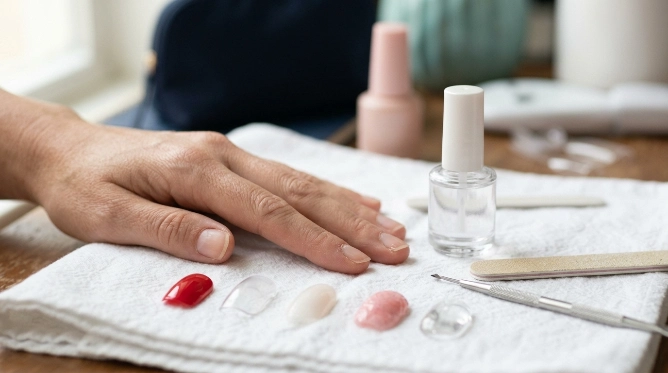
The correct placement depends on what you are wearing. The table below shows where dehydrator usually helps and where a different prep method makes more sense.
| Nail type | Use dehydrator on natural nail? | Use dehydrator on fake nail? | Better prep for the fake-nail surface |
|---|---|---|---|
| Press-on nails | Yes, usually | Usually no | Lightly buff or wipe the underside only if the brand directs it |
| Acrylic overlay | Yes | Not on cured acrylic as a routine step | File and rebalance the enhancement during a fill |
| Soft gel full-cover tip | Yes | Only if that system says so | Etch or use the brand’s tip-prep product |
| Plastic tip under acrylic | Yes | Usually unnecessary | Blend, file, or prep as required by the system |
| Cured gel or hard gel | Yes on new growth | Usually no | File the cured surface where new product must bond |
Press-ons
For press-ons, focus on the natural nail. Dehydrate after washing, drying, cuticle cleanup, and gentle surface prep, then let the liquid evaporate fully before glue.
If the press-on underside is glossy, some brands recommend light buffing or another prep step. Do not substitute dehydrator for that step unless the instructions allow it.
Acrylic and hard gel fills
During a fill, place dehydrator on the visible natural regrowth. The existing enhancement usually needs mechanical prep, such as careful filing, rather than another coat of dehydrator.
Soft gel tips
Soft gel systems often have two separate bonding surfaces: your natural nail and the inside contact area of the tip. Treat each surface according to the brand’s directions rather than assuming one liquid should do both jobs.
Section Takeaway: Natural nail and artificial nail surfaces need different prep. Dehydrator is strongest as a natural-nail prep step, while fake-nail surfaces often need filing, etching, or a dedicated prep product.
How Do You Use Nail Dehydrator Before Fake Nails?
Use a thin, controlled layer on the natural nail after basic prep and before the next bonding product. Avoid flooding the cuticle or sidewalls.
- Wash and dry your hands: Remove visible dirt, lotion, and residue, then dry thoroughly.
- Size the fake nails first: For press-ons or full-cover tips, choose sizes before applying liquids.
- Prepare the cuticle area: Keep dead skin off the nail plate without cutting living skin.
- Lightly refine the nail surface: Follow the enhancement system’s instructions and avoid aggressive thinning.
- Remove dust: Use a clean, lint-free method so dust does not sit under the product.
- Apply dehydrator: Brush a small amount over the natural nail plate only.
- Let it air-dry: Wait until the nail looks dry before moving to primer, glue, base, or gel.
- Apply the enhancement: Keep adhesive or uncured product off the surrounding skin.
I find the sizing step easiest to do before any dehydrator goes on. That way, I am not touching a freshly prepped nail repeatedly while searching for the right press-on.
How much dehydrator should you use?
More is not better. A thin coat is enough to wet the nail plate briefly and evaporate.
If the product pools around the cuticle, you are using too much. Wipe the brush against the bottle neck before application.
The AAD’s manicure and pedicure safety guidance recommends protecting the cuticle because it helps guard the nail area. That supports a careful prep routine rather than aggressive cutting or flooding chemicals around the skin.
Can Nail Dehydrator Damage Fake Nails?
It can affect some fake-nail materials or finishes, depending on the formula. Many dehydrators contain fast-evaporating solvents, and an artificial surface may react differently from a natural nail plate.
- Press-on finishes may change: Some liquids can affect gloss, clarity, or decorative coatings.
- Printed designs may dull: Decorative finishes can be more sensitive than bare nail material.
- Adhesive tabs may weaken: Liquid applied after placement can interfere with adhesive edges.
- Topcoat may lose shine: A prep solvent is not meant to refresh a finished manicure.
What about acrylic nails?
Do not treat cured acrylic like a natural nail just because both feel hard. Acrylic usually needs filing or buffing where fresh product must bond, especially during a rebalance or fill.
The Cleveland Clinic’s overview of acrylic nails explains that acrylic systems can irritate skin and affect natural nails. Keep prep products controlled and stop if your skin reacts.
When should you skip dehydrator entirely?
Skip it if the product label says not to use it with your system. Also stop if the nail or surrounding skin is cracked, bleeding, inflamed, or showing signs of a possible infection.
Safety note: Persistent redness, swelling, pain, nail separation, or a rash deserves medical attention rather than another layer of nail product.
Nail Dehydrator vs Alcohol, Acetone, and Primer
These products can all appear in nail prep, but they are not interchangeable. Each has a different job and different risks if overused.
| Product | Main job | Typical use before fake nails | Important caution |
|---|---|---|---|
| Nail dehydrator | Reduce surface oil and moisture | Natural nail plate | Do not flood skin |
| Isopropyl alcohol | Clean some surface residue | Used in some prep routines | Follow the system’s concentration and use directions |
| Acetone | Dissolve or remove certain nail products and oils | Sometimes used for cleansing or removal | Can dry skin and affect some fake-nail finishes |
| Primer or bonder | Promote bonding between nail and enhancement | Usually follows dehydration when required | Acid and acid-free formulas need careful label use |
Do you need both dehydrator and primer?
Sometimes. Many acrylic and gel systems pair them, while some press-on routines need only a clean, dry nail plus glue.
Do not add primer just because lifting occurs. A primer that is not designed for your adhesive or fake nail can create a new compatibility problem.
Think of dehydrator as surface prep and primer as a bonding aid. The exact chemistry varies by brand, so the product label matters more than a universal social-media routine.
What If Your Fake Nails Still Lift?

If fake nails lift after you dehydrate correctly, look at fit, skin contact, application pressure, and product compatibility. Dehydrator cannot compensate for a tip that is too small or an adhesive layer full of air pockets.
Check these causes before adding more products
- Wrong size: A press-on that must be forced flat can spring upward at the sides.
- Cuticle overlap: Glue or gel placed over skin creates a weak edge that can lift quickly.
- Dust left behind: Filing dust can interrupt direct contact between surfaces.
- Too much touching: Fingers can transfer oil back to the nail after prep.
- Too little pressure: Press-ons can trap air if you do not seat them firmly as directed.
- Too much adhesive: Excess glue can flood skin or prevent a clean fit.
- Water exposure too soon: Follow the adhesive brand’s aftercare window before soaking or prolonged washing.
- Mixed systems: Primer, glue, gel, and tips from different systems may not be designed to work together.
Should you buff the natural nail more?
Not automatically. More filing can thin the nail plate without solving the true cause of lifting.
If you already removed surface shine as instructed, check sizing and application first. The goal is controlled prep, not maximum roughness.
This is also where the fake nail type matters. A press-on that lifts at the sidewall is often a sizing problem, while gel lifting near the cuticle may point to skin contact or incomplete prep.
Section Takeaway: Persistent lifting is usually a system problem, not a signal to keep adding dehydrator. Troubleshoot fit, clean contact, application technique, and product compatibility in that order.
Frequently Asked Questions
Can you use nail dehydrator on press-on nails?
Use it mainly on your natural nails before applying press-ons. Applying dehydrator directly to the finished press-on is usually unnecessary and could affect the finish or material, so follow the press-on manufacturer’s prep directions.
Can you put nail dehydrator under nail glue?
Yes, if the dehydrator and glue directions support that order. Let the dehydrator air-dry completely, then apply glue to the clean natural nail or press-on according to the adhesive instructions.
Can you use nail dehydrator on acrylic nails?
Use dehydrator on exposed natural nail during initial prep or a fill. Do not routinely coat cured acrylic with dehydrator; cured acrylic usually needs filing or buffing where fresh product must bond.
Can you use dehydrator on Gel-X or soft gel tips?
Use dehydrator on the natural nail plate when the gel-tip system calls for it. Prepare the inside of the tip with the brand’s required etching, primer, or tip-prep step instead of assuming dehydrator is interchangeable.
Do you use nail dehydrator before or after primer?
Dehydrator usually comes first because it removes surface moisture and oil. Primer or bonder follows when your acrylic, gel, or extension system requires one.
Can I use acetone instead of nail dehydrator?
Some routines use acetone to remove oil, but it is not automatically an equal substitute for a formulated nail dehydrator. Acetone can also affect certain plastic tips and finished surfaces, so follow your system’s instructions.
What happens if nail dehydrator touches skin?
A small accidental touch may cause dryness or irritation, depending on the formula. Wipe or wash it off, stop using the product if burning or a rash develops, and seek medical advice for a persistent reaction.
Final Takeaway
So, can you use nail dehydrator on fake nails? You can use it as part of a fake-nail service, but the natural nail is usually the correct place to apply it.
For press-ons, acrylics, and gel tips, think in two surfaces. Dehydrate the natural nail, then prep the fake-nail surface in the way that specific system requires.
Avoid painting dehydrator over finished fake nails just because they are lifting. Fix the cause instead, whether that is sizing, cuticle overlap, dust, moisture, poor pressure, or incompatible products.
If your natural nails become painful, inflamed, unusually discolored, or persistently separated, remove the cosmetic variable and get professional medical advice. Healthy nails matter more than squeezing extra wear from a set.

