
Can You Use Nail Dehydrator on Natural Nails?

Quick Answer
Yes, you can use nail dehydrator on natural nails. It is designed to temporarily remove surface oil and moisture from the natural nail plate before gel, acrylic, builder gel, extensions, or some press-on systems. Use a thin coat, keep it off surrounding skin, and follow the product directions and general FDA nail-product safety guidance.
When nail dehydrator makes sense
- Gel manicures: It can improve bonding when natural nails are oily or prone to lifting.
- Acrylic sets: Dehydrating the natural nail is a common prep step before primer and acrylic application.
- Soft-gel tips: A clean, dry nail plate can help the adhesive system grip more consistently.
- Press-on nails: Some glue systems benefit from oil-free natural nails, although the product instructions should come first.
- Regular polish: It is usually optional because simple cleansing may be enough.
When to skip it
- Damaged nails: Avoid dehydrator on painful, inflamed, badly peeling, cracked, or visibly infected nails until the problem is addressed.
Yes, natural nails are exactly where many nail dehydrators are meant to be used. The product goes on the bare nail plate—your real nail—before certain enhancement or polish systems.
The important part is knowing how much to use and when it is unnecessary. In this guide, I’ll explain what a dehydrator does, how to apply it, and how to avoid over-prepping your nails.
In This Guide
- What does nail dehydrator do to natural nails?
- Is nail dehydrator safe on natural nails?
- How do you use nail dehydrator on natural nails?
- When should you use nail dehydrator?
- Nail dehydrator vs primer, alcohol, and acetone
- Can nail dehydrator damage natural nails?
- What if your natural nails are weak or sensitive?
- Frequently asked questions
- Should you use nail dehydrator on natural nails?
What Does Nail Dehydrator Do to Natural Nails?
A nail dehydrator removes or reduces temporary surface moisture and oil from the natural nail plate. This gives certain manicure products a cleaner surface to bond to.
It does not permanently “dry out” the inside of your nail. The main goal is short-term surface preparation before another product goes on.
Definition: A nail dehydrator is a fast-evaporating prep liquid used on the natural nail plate to reduce oils and moisture that can interfere with adhesion.
Why oil and moisture affect adhesion
Gel, acrylic, nail glue, and extension systems work best when they can bond directly to a properly prepared nail surface. Oil, lotion, dust, or moisture can create a barrier between the nail and the product.
That barrier can contribute to early lifting around the sidewalls, cuticle area, or free edge. Dehydrator helps create a more consistent starting surface.
- Surface oil: Can interfere with how well base products grip.
- Residual moisture: May reduce consistent adhesion in some systems.
- Lotion residue: Can leave a film after hand care.
- Nail dust: Should be physically removed before dehydrator is applied.
Does nail dehydrator thin the nail?
A properly used dehydrator does not work by filing away nail layers. That makes it different from aggressive buffing or over-filing.
However, repeated solvent exposure can contribute to dryness. That is why I prefer one controlled application instead of repeatedly brushing dehydrator over the same nail.
My rule is simple: if the nail already looks clean, matte, and oil-free, I do not keep adding prep products just because they are available. More prep is not automatically better prep.
Is Nail Dehydrator Safe on Natural Nails?
For intact natural nails, nail dehydrator is generally used as a standard manicure-prep product when the formula is used as directed. The safest approach is a thin application with minimal skin contact.
The formula matters. Some dehydrators rely on alcohols, acetone, ethyl acetate, or other fast-evaporating solvents, while ingredient lists vary by brand.
Where should dehydrator go?
Apply it to the hard nail plate only. Try not to flood the cuticle, sidewalls, or surrounding skin.
- Use on: Clean, intact natural nail plates.
- Avoid: Open cuts, irritated skin, bleeding cuticles, or damaged tissue.
- Apply lightly: One thin coat is normally enough unless your product says otherwise.
- Ventilate: Use nail products in a well-ventilated room.
The American Academy of Dermatology notes that gel manicures can contribute to brittleness, peeling, and cracking, especially with repeated wear and removal. Their gel manicure guidance also emphasizes giving nails recovery time and moisturizing between manicures.
Vet note: For nail health concerns, the appropriate professional is a dermatologist or other qualified healthcare provider. Seek medical advice for persistent pain, swelling, separation, discoloration, or suspected infection.
Does dehydrator need a UV or LED lamp?
Usually, no. Nail dehydrator normally air-dries because its solvents evaporate quickly.
Many formulas appear dry within roughly 10 to 30 seconds. Always follow your specific product label because formulas can differ.
How Do You Use Nail Dehydrator on Natural Nails?
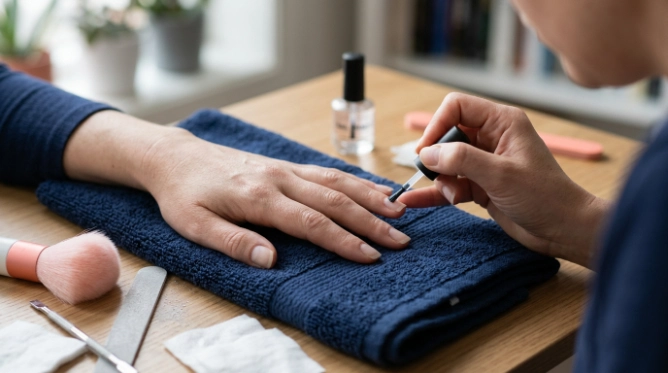
Use nail dehydrator near the end of your prep routine, after shaping and dust removal but before primer, base coat, glue, or enhancement product. Keep the sequence simple.
- Wash and dry your hands. Make sure the nails are fully dry before starting detailed prep.
- Shape the nails. File the free edge and complete any necessary length adjustments.
- Handle cuticles gently. Remove only non-living residue from the nail plate without cutting healthy skin.
- Buff only if required. Lightly remove surface shine if your gel, acrylic, or extension system specifically calls for it.
- Remove dust. Use a clean, lint-free method so no filing dust remains.
- Apply dehydrator. Brush on a thin layer across the natural nail plate.
- Let it air-dry. Wait until the surface looks dry before moving to the next step.
- Continue your system. Apply primer, bonder, base coat, glue, or enhancement according to that product’s directions.
How much nail dehydrator should you use?
You need less than many beginners expect. The nail should look lightly coated, not soaked.
Flooding the nail wastes product and increases skin exposure. It can also make it harder to control the rest of your prep.
Should you dehydrate before or after buffing?
Dehydrate after any required buffing and dust removal. Buffing after dehydrator would simply add fresh dust to the prepared surface.
A common sequence is shape, cuticle prep, light buffing, dust removal, dehydrator, then primer or base product. Your manicure system’s instructions should override a generic routine.
When Should You Use Nail Dehydrator?
Nail dehydrator is most useful when adhesion matters. It is less important when you are simply caring for bare nails or applying a short-wear traditional polish.
As of 2026, prep instructions still differ between gel, acrylic, press-on, and soft-gel systems. The product manufacturer’s directions should always be your first reference.
| Manicure Type | Use Dehydrator? | Typical Next Step | Main Reason |
|---|---|---|---|
| Gel polish | Often helpful | Base coat | Reduces surface oil that may contribute to lifting |
| Builder gel | Commonly used | Primer, bonder, or base | Creates a cleaner bonding surface |
| Acrylic | Commonly used | Primer | Supports adhesion before acrylic application |
| Soft-gel tips | Often helpful | Primer or extend gel | Helps reduce oil-related lifting |
| Press-on nails | Optional | Glue or adhesive tab | Glue often bonds better to an oil-free surface |
| Regular nail polish | Usually optional | Base coat | Simple cleansing is often enough |
| Bare nail care | Usually unnecessary | Moisturizer or cuticle oil | There is no adhesion layer to prepare for |
Do oily nails need dehydrator more?
If your manicure repeatedly lifts despite proper application, surface oil may be one factor. A dehydrator can be worth adding before the bonding products.
Still, lifting has several causes. Poor cuticle cleanup, incomplete curing, product touching skin, incompatible systems, or incorrect removal can also shorten wear.
Section Takeaway: Use dehydrator when your manicure system benefits from a clean, oil-free bonding surface. Skip unnecessary solvent steps when you are simply maintaining bare natural nails.
Nail Dehydrator vs Primer, Alcohol, and Acetone
A dehydrator and primer are not the same product. Dehydrator cleans and dries the surface, while primer is designed to promote adhesion between the natural nail and the enhancement system.
Nail dehydrator vs primer
- Dehydrator: Temporarily removes surface oil and moisture.
- Primer: Helps the next product bond to the nail.
- Order: Dehydrator normally goes first, followed by primer when the system requires both.
Some manicures need both. Others use a base product or bonder that makes a separate primer unnecessary.
Nail dehydrator vs rubbing alcohol
Isopropyl alcohol can clean the nail surface and remove some oils. Some professional dehydrators also contain alcohol, but their formulas may include other solvents.
That means rubbing alcohol is not automatically a one-for-one replacement for every branded dehydrator. Check the instructions for the gel, acrylic, or adhesive system you are using.
Nail dehydrator vs acetone
Acetone is a powerful solvent and can remove oils, but it is better known for polish and enhancement removal. Repeated exposure can leave nails and surrounding skin dry.
For routine prep, I prefer using the product designed for that manicure system instead of repeatedly wiping nails with strong remover. It keeps the routine easier to control.
Can Nail Dehydrator Damage Natural Nails?
Nail dehydrator can contribute to dryness if you overuse it, repeatedly reapply it, or combine it with aggressive filing and frequent solvent exposure. The problem is often the whole prep-and-removal cycle rather than one light coat.
Mayo Clinic recommends limiting harsh nail products and notes that frequent exposure to nail-polish remover can contribute to nail damage. Its healthy fingernail guidance also recommends moisturizing nails and cuticles.
Signs you may be over-prepping
- Chalky appearance: The nail stays unusually dry-looking between manicures.
- Peeling layers: Thin surface layers begin separating near the free edge.
- Increased brittleness: Nails snap or split more easily than usual.
- Skin irritation: The cuticle area becomes red, sore, itchy, or dry.
- Persistent sensitivity: Nails feel tender even after the manicure is removed.
How to reduce unnecessary dryness
Use only the prep steps your system requires. Avoid automatically stacking alcohol, acetone, dehydrator, primer, and repeated buffing when one or two steps will do the job.
After removing your manicure, give dry nails some care. Hand cream, cuticle oil, or petroleum jelly can help reduce the dry feeling around the nail and cuticle area.
Vet note: Persistent brittleness, nail separation, pain, swelling, or unusual color changes deserve medical evaluation rather than more cosmetic prep.
What If Your Natural Nails Are Weak, Peeling, or Sensitive?
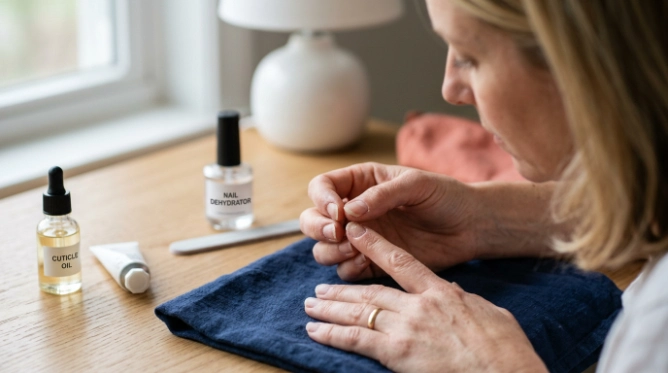
If your nails are already thin, peeling, or tender, focus on protecting the nail plate before worrying about maximum manicure adhesion. Dehydrator cannot repair a damaged nail.
The American Academy of Dermatology advises reducing repeated artificial-nail stress and allowing nails time to recover when needed. Its guidance on reducing artificial nail damage also highlights the effects of repeated filing and removal.
When I would skip dehydrator
- Active peeling: Layers are visibly separating from the nail plate.
- Open cracks: The nail or nearby skin is broken.
- Pain or throbbing: The area feels sore before you even begin prep.
- Green, yellow, or dark changes: Unexplained discoloration should be assessed before covering the nail.
- Swelling or drainage: These can signal a problem that should not be sealed under enhancements.
If a nail product causes itching, redness, swelling, blistering, or a rash, stop using it. Cosmetic reactions can occur even after you have used a product successfully before.
The FDA explains that cosmetic allergies may cause itchy, red rashes or contact dermatitis and recommends medical advice when a reaction is suspected. You can review its cosmetic allergen guidance for more detail.
Can you moisturize before using dehydrator?
I would avoid applying cuticle oil or hand cream immediately before adhesion prep. Those products can leave oils on the nail surface that you then have to remove again.
Moisturize after the manicure is finished instead. Keep oil around the skin and cuticle area unless your enhancement manufacturer says otherwise.
Section Takeaway: A dehydrator is an adhesion tool, not a nail treatment. If your natural nails are already compromised, protecting them matters more than forcing a longer-wearing manicure.
Frequently Asked Questions
Can you put nail dehydrator directly on natural nails?
Yes. Nail dehydrator is normally applied directly to a clean natural nail plate before products such as gel, acrylic, builder gel, or some nail adhesives.
Use a thin layer and avoid getting it on broken skin or irritated cuticles.
Can I use nail dehydrator without primer?
Sometimes. Gel polish, press-ons, or certain base systems may not require a separate primer after dehydrator.
Acrylic, builder gel, and extension systems often have more specific prep requirements. Follow the instructions for the exact products you are using.
Can nail dehydrator be used before regular nail polish?
Yes, but it is usually optional. Traditional polish often needs only a clean, dry, oil-free nail followed by a suitable base coat.
If your regular polish already wears well, adding dehydrator may not provide a noticeable benefit.
How long should nail dehydrator dry?
Most nail dehydrators air-dry quickly, often within about 10 to 30 seconds. The nail should look dry before you continue with primer, base coat, or another bonding product.
Do not cure dehydrator in a lamp unless the manufacturer specifically instructs you to do so.
Can I use nail dehydrator every time I do my nails?
You can use it when your manicure system calls for it, but repeated unnecessary solvent exposure may contribute to dryness. Use the smallest effective amount and avoid repeated coats.
Give brittle or peeling nails a break from intensive prep when they need recovery.
Is nail dehydrator the same as nail prep?
Sometimes brands use “nail prep” as a label for a dehydrating product, but the terms are not always identical. Read the ingredient list and directions rather than relying on the product name alone.
A “prep” product may be a cleanser, dehydrator, bonder, or combination formula.
Should I use dehydrator before press-on nails?
It can help when you are using liquid nail glue because an oil-free surface often gives glue a better chance to bond. Alcohol cleansing may be enough for some press-on systems.
If you use adhesive tabs, follow the tab manufacturer’s prep directions because excessive solvent prep may not be necessary.
Should You Use Nail Dehydrator on Natural Nails?
Yes, you can use nail dehydrator on natural nails when you are preparing for a manicure system that benefits from stronger adhesion. It is especially common before acrylic, builder gel, soft-gel extensions, and many gel applications.
The best results come from using a thin, controlled layer on a healthy nail plate. Let it air-dry, keep it off the surrounding skin, and continue with the bonding products your system requires.
- Use it for adhesion: Gel, acrylic, extensions, and some press-ons are the main reasons.
- Do not overuse it: One proper application is better than repeatedly drying the nail.
- Protect weak nails: Skip aggressive prep if nails are peeling, painful, or visibly damaged.
- Follow the label: Brand-specific instructions matter more than a universal routine.
- Moisturize afterward: Support the surrounding skin and cuticles between manicures.
If your manicure keeps lifting, dehydrator can be a useful part of the solution. Just remember that clean application, correct curing, compatible products, and gentle removal matter just as much.

