
Can You Use Nail Dehydrator on Toenails? Safe Prep Guide

Quick Answer
Yes, you can use nail dehydrator on healthy toenails before gel polish, soft-gel tips, acrylic, or similar nail enhancements. Apply a thin layer only to the natural nail plate, let it evaporate completely, and follow sensible manicure and pedicure safety practices.
How to use it safely
- Start clean: Wash and thoroughly dry your feet before beginning nail preparation.
- Use it sparingly: Brush one thin coat over the natural toenail instead of soaking the nail.
- Avoid skin: Keep dehydrator away from cuticles, broken skin, and irritated areas.
- Let it evaporate: Wait until the toenail looks dry before applying primer, base coat, or another system step.
- Check the nail first: Skip cosmetic application when a toenail is painful, badly discolored, thickened, crumbling, or lifting.
One important limitation
- Dehydrator is prep, not treatment: It removes temporary surface moisture and oils but does not treat toenail fungus or other nail disease.
Toenails can be dehydrated before a pedicure enhancement, but they deserve more caution than a quick swipe of product. Feet spend hours inside shoes, and toenail changes are sometimes caused by pressure, injury, or infection rather than poor nail preparation.
My rule is simple: prepare a healthy toenail, but don’t use cosmetic prep to hide a questionable one. This guide explains what nail dehydrator does, how to apply it, when to skip it, and what should come next.
In This Guide
- Can you use nail dehydrator on toenails?
- What does nail dehydrator do to a toenail?
- How do you use nail dehydrator on toenails?
- Is dehydrating toenails different from fingernails?
- When should you not use nail dehydrator on toenails?
- What mistakes should you avoid?
- What comes after nail dehydrator?
- Frequently asked questions
- Final takeaway
Can You Use Nail Dehydrator on Toenails?
Yes. A nail dehydrator can normally be used on healthy natural toenails when your gel, acrylic, press-on, or extension system calls for it.
The goal is better adhesion, not aggressive drying. You usually need only a light coat across the nail plate.
What counts as a healthy toenail?
For cosmetic preparation, I want the nail to look intact and the surrounding skin to be calm. Minor natural variations aren’t automatically a problem.
- Good candidates: Smooth, attached nails without pain, swelling, drainage, or obvious damage.
- Use caution: Nails recently bruised by tight shoes, sports, or impact.
- Stop and investigate: Thick, crumbly, lifting, painful, unusually discolored, or inflamed nails.
This distinction matters because toenails can develop fungal infections more often than fingernails. Nail fungus can cause color, thickness, texture, and attachment changes.
A dehydrator may make a nail surface look temporarily drier, but that doesn’t diagnose or remove an infection.
What products can dehydrator be used before?
Always follow the instructions for your particular nail system. Some products require dehydrator, while others have preparation built into their base or primer.
- Gel polish
- Builder gel
- Soft-gel toenail tips
- Acrylic enhancements
- Some press-on or nail-glue systems
- Some pedicure base-coat systems
Using extra products isn’t automatically better. If the manufacturer doesn’t call for a separate dehydrator, unnecessary layers may add complexity without improving wear.
What Does Nail Dehydrator Do to a Toenail?
A nail dehydrator is a nail-preparation product that temporarily reduces surface moisture and oil on the natural nail plate. That creates a cleaner surface for compatible coatings and enhancement products to grip.
It isn’t designed to permanently remove water from the nail. Most dehydrators evaporate quickly after application.
Dehydrator versus primer
These products are often placed next to each other in nail kits, but they don’t necessarily perform the same job. Think of dehydrator as surface preparation and primer as an adhesion step.
- Nail dehydrator: Reduces surface oil and moisture before product application.
- Nail primer: Helps certain enhancement systems bond to the prepared nail.
- Base coat: Forms the first coating layer beneath color or another enhancement.
The exact chemistry varies by brand. Check the product label or safety information rather than assuming every dehydrator contains the same solvents.
Does dehydrator prevent toenail fungus?
No. Nail dehydrator is not an antifungal medication, disinfectant, or treatment for onychomycosis.
If a toenail becomes yellow, white, brown, thick, brittle, distorted, crumbly, or separated from the nail bed, get appropriate advice before covering it. The Cleveland Clinic’s nail fungus overview explains common changes associated with fungal nail infections.
Medical note: Persistent toenail changes need individual assessment. A dermatologist, podiatrist, pharmacist, or other qualified healthcare professional can help determine whether fungus, trauma, psoriasis, or another condition is involved.
How Do You Use Nail Dehydrator on Toenails?
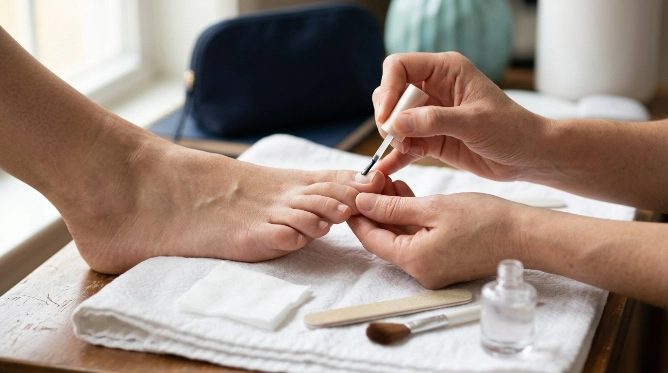
Use the smallest amount needed to coat the clean natural nail. Your toenail should be completely dry before you begin.
Step-by-step toenail preparation
- Remove old product. Take off existing polish or enhancement according to its removal instructions.
- Inspect the bare nail. Look for unusual discoloration, lifting, swelling, broken skin, or soreness.
- Trim appropriately. Keep toenails tidy and avoid digging deeply into the corners.
- Clean the nail. Remove dust and visible debris, then let the foot and nail dry thoroughly.
- Prepare the surface. If your enhancement system requires light buffing, follow its directions without aggressively thinning the nail.
- Apply dehydrator. Wipe excess product from the brush and paint a thin coat over the natural nail plate.
- Avoid surrounding skin. Don’t flood the sidewalls, cuticle area, or skin beneath a lifted nail.
- Allow evaporation. Wait for the surface to look dry before continuing.
- Continue your system. Apply primer, base, gel, or enhancement only in the order recommended by its manufacturer.
Should you wash your feet immediately before dehydrator?
Clean feet matter, but trapped water works against nail preparation. If you soak or wash your feet first, give the nails enough time to dry.
I prefer preparation that keeps the nail clean without leaving it waterlogged. A long foot soak immediately before enhancement application can make consistent adhesion harder to judge.
Do you need two coats?
Usually, flooding a toenail with dehydrator isn’t the goal. Start with one thin, even application unless your product specifically instructs otherwise.
More solvent doesn’t automatically create more adhesion. Excess product also increases the chance of contacting surrounding skin.
Is Dehydrating Toenails Different From Fingernails?
The basic principle is the same, but the environment around toenails is different. Toenails grow more slowly and spend much more time inside socks and shoes.
That makes inspection especially important before covering a toenail for weeks.
| Prep factor | Toenails | Fingernails |
|---|---|---|
| Dehydrator amount | One thin coat is generally enough when required by the system. | One thin coat is also commonly used. |
| Moisture exposure | Sweat, socks, shoes, showers, and foot soaking deserve extra attention. | Frequent handwashing and household water exposure are common concerns. |
| Growth rate | Slower growth means damage or discoloration can remain visible for months. | Fingernails generally replace themselves faster. |
| Pressure | Shoes can press against thick enhancements or long toenails. | Shoe pressure isn’t a concern. |
| Pre-application check | Check closely for fungus-like changes, trauma, lifting, and ingrown edges. | Check for lifting, damage, irritation, or product sensitivity. |
Why does slower toenail growth matter?
Toenails take substantially longer to grow out than fingernails. That means damage from trauma or aggressive preparation can remain visible for a long time.
It also makes me more conservative with buffing. Dehydrator needs a clean surface, not an excessively filed one.
The same principle applies during removal. The American Academy of Dermatology notes that acetone contact should be limited to the nail as much as practical because surrounding skin can become irritated.
When Should You Not Use Nail Dehydrator on Toenails?
Skip dehydrator and cosmetic enhancement when the nail or surrounding tissue looks injured, infected, or significantly abnormal. Covering a problem can make it harder to monitor changes.
Warning signs to check before application
- Pain or tenderness: Especially pain that is new, worsening, or triggered by light pressure.
- Swelling or redness: These may signal irritation, trauma, an ingrown nail, or infection.
- Open skin: Avoid putting cosmetic nail chemicals on cuts, sores, or bleeding areas.
- Nail lifting: Product should not be pushed beneath a nail that has separated from its bed.
- Thick or crumbly texture: This can occur with fungal nail disease and other conditions.
- Unexplained color changes: Yellow, green, brown, white, or dark changes deserve attention when persistent or unusual.
- New dark streak: Don’t simply cover a new or changing pigmented streak with polish.
The American Academy of Dermatology recommends professional evaluation for several significant changes in nail color, shape, or texture. Cosmetic prep should never replace that assessment.
What if you think it’s toenail fungus?
Don’t rely on dehydrator, primer, or gel polish to solve the problem. Fungal nail infections can resemble damage from pressure, psoriasis, or other nail conditions.
If you’re already using a topical antifungal treatment, adding polish or an enhancement may also interfere with the treatment plan. Ask the clinician or pharmacist managing it first.
Medical note: Seek professional advice sooner if you have diabetes, poor circulation, reduced sensation in your feet, immune-system problems, significant pain, drainage, or spreading redness.
What Mistakes Should You Avoid?
Most problems come from over-prepping, touching skin, or using dehydrator on a nail that should have been left bare. A careful pedicure doesn’t need aggressive chemistry.
1. Flooding the cuticle and sidewalls
Nail dehydrator belongs on the nail plate. Load the brush lightly and leave the surrounding skin alone.
2. Applying it to wet toenails
A dehydrator isn’t a shortcut for a water-soaked foot. Dry your feet properly before starting the coating system.
3. Using it as a disinfectant
A nail dehydrator isn’t automatically a registered disinfectant simply because it contains fast-evaporating solvents. Clean tools and maintain proper hygiene separately.
4. Over-buffing before dehydrator
You don’t need to carve into the natural nail to make dehydrator work. Excessive filing can thin the nail plate and create unnecessary sensitivity.
5. Covering suspicious discoloration
A fresh coat of gel can hide a nail change for weeks. Inspect bare toenails before each new application instead.
6. Assuming every brand has the same formula
Ingredient lists and application directions differ. Follow the label for the dehydrator and the enhancement system you’re pairing with it.
7. Reapplying dehydrator repeatedly
If adhesion fails, don’t automatically add more prep liquid. Look at moisture exposure, nail condition, surface contamination, curing, product compatibility, and application thickness.
What Comes After Nail Dehydrator?
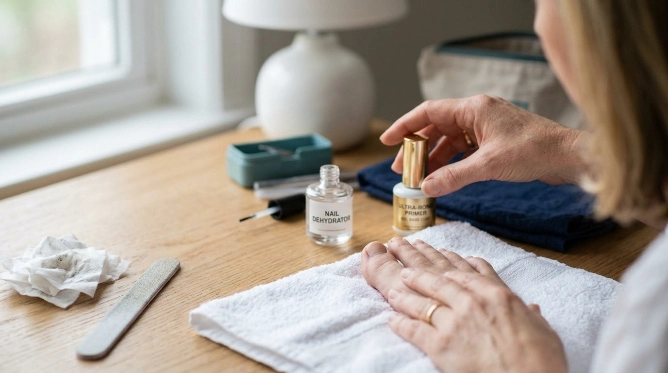
The next step depends on the nail system you’re using. Dehydrator should be completely evaporated before another product goes on top.
Typical preparation order
- Inspect the natural toenail.
- Clean and dry it.
- Shape and lightly prepare the surface if required.
- Remove dust.
- Apply nail dehydrator.
- Let it evaporate fully.
- Apply primer if your system requires one.
- Apply the recommended base, gel, acrylic, adhesive, or enhancement.
Don’t automatically copy a routine from another brand. Acid primers, acid-free primers, bonding gels, and base coats can have different instructions.
What about gel pedicures?
Keep gel off the skin and cure it according to the manufacturer’s lamp and timing instructions. Proper application matters more than piling on extra preparation products.
Between services, examine the natural nails and give irritated skin time to recover. The American Academy of Dermatology’s gel manicure guidance also emphasizes gentle removal and nail care between applications.
What if the gel keeps lifting?
Repeated lifting isn’t always caused by insufficient dehydration. Fixing the real cause is more useful than repeatedly drying the nail.
- Check moisture: Avoid beginning with recently soaked toenails.
- Check contamination: Dust, oil, lotion, and skin contact can affect adhesion.
- Check product compatibility: Use preparation products intended for the coating system.
- Check curing: Gel needs the correct lamp compatibility and exposure.
- Check application: Thick layers, flooded edges, or product touching skin can cause problems.
- Check the nail itself: Lifting natural nail, trauma, or disease requires a different response.
As of 2026, the practical rule hasn’t changed: dehydrator is one small part of preparation. Healthy nails, correct technique, clean tools, and compatible products matter just as much.
Frequently Asked Questions
Can you put nail dehydrator directly on toenails?
Yes. Apply a thin coat directly to the clean, dry natural toenail when your nail system calls for dehydrator.
Keep the liquid on the nail plate rather than the cuticle, sidewalls, broken skin, or tissue beneath a lifted nail.
Can I use the same nail dehydrator on fingers and toes?
Usually, yes, if the product is labeled for natural nail preparation. You don’t normally need a special formula only for toenails.
Still, follow the manufacturer’s instructions because formulations and intended uses vary.
Do you need nail dehydrator for gel polish on toes?
Not every gel system requires a separate dehydrator. Some benefit from one, while other systems specify their own cleanser, bonder, primer, or base preparation.
Follow the instructions for the gel brand you’re applying rather than adding extra steps automatically.
Can nail dehydrator get rid of toenail fungus?
No. Nail dehydrator is a cosmetic preparation product, not an antifungal treatment.
If you suspect fungus because a toenail is thickened, discolored, brittle, crumbly, distorted, or lifting, seek appropriate diagnosis and treatment rather than covering it.
Can nail dehydrator damage toenails?
Reasonable use on an intact nail is intended as a temporary preparation step. Problems are more likely when products are overused, repeatedly placed on irritated skin, or combined with aggressive filing and removal.
Stop if you experience persistent burning, redness, swelling, or another reaction.
Can you use acetone instead of nail dehydrator?
Acetone can remove oils and moisture, but that doesn’t make it an exact substitute for every commercial nail dehydrator. Nail systems are formulated and tested around specific preparation steps.
Use the preparation method recommended by your gel, acrylic, or enhancement manufacturer whenever possible.
Should I dehydrate toenails after a pedicure soak?
It’s better to let the nail plate dry thoroughly first. A quick dehydrator application shouldn’t be used as the only solution for a toenail that has just spent a long time soaking in water.
For enhancement services, consider doing nail preparation without a prolonged soak immediately beforehand.
Final Takeaway
Yes, you can use nail dehydrator on toenails when those nails are healthy and your chosen gel, acrylic, or enhancement system calls for it. One thin coat on the natural nail plate is normally the goal.
The more important step happens before you open the bottle. Inspect each toenail for pain, lifting, unusual color, thickening, crumbling, swelling, or broken skin.
- Healthy nail: Clean it, dry it, dehydrate lightly, and continue with your compatible nail system.
- Questionable nail: Leave it uncovered until you understand what’s causing the change.
- Damaged skin: Keep nail-prep chemicals away until the area has healed.
- Possible infection: Treat the underlying problem rather than trying to dry or conceal it.
Good toenail prep isn’t about using the strongest product or the most steps. It’s about doing only what the nail needs and knowing when cosmetic application should wait.

