
Can You Use Nail File on Calluses? A Complete Guide to Foot Care

When you notice a rough patch of skin on your foot, it is completely natural to reach for whatever tool you have nearby. For many of us, that tool is a standard emery board. But can you use nail file on calluses safely? The short answer is yes, but it is not always the best or safest method for your skin.
Calluses are hard, thickened areas of skin that develop from repeated friction and pressure. While a nail file can smooth out very minor roughness in a pinch, using the wrong type of file can cause micro-tears, irritation, or even infection. In this comprehensive guide from NailPrime, we will cover exactly how to smooth your feet safely, when to use a nail file, and when you should upgrade to proper foot care tools.
Quick Answer
Can you use nail file on calluses? Yes, you can use a clean, fine-grit nail file to gently smooth minor, superficial calluses in a pinch. However, standard nail files are designed for hard keratin (nails), not skin. For thicker calluses and optimal foot health, a dedicated foot file or pumice stone is a safer and much more effective choice.
Understanding Calluses and Nail Files
Before you start filing away at your heels, it helps to understand what you are working with. Calluses are your body’s natural defense mechanism. They form to protect the underlying skin from continuous rubbing, usually caused by tight shoes, walking barefoot, or high-impact activities.
Nail files, on the other hand, are abrasive tools made specifically to shape and shorten the hard keratin plate of your fingernails and toenails. They come in varying grits, which measure how rough the abrasive surface is.
Why People Reach for Nail Files
- Convenience: Most people already have an emery board in their bathroom drawer.
- Precision: The small, slender shape makes it easy to target tiny calluses, like those on the side of a toe.
- Gentleness: A fine-grit nail file can feel less aggressive than a sharp metal foot scraper.
While it is a quick fix, using a nail file on thick, stubborn calluses is usually a waste of time. It simply does not have the surface area or the correct abrasive texture to safely remove larger patches of dead skin.
The Difference Between Nail Files and Foot Files
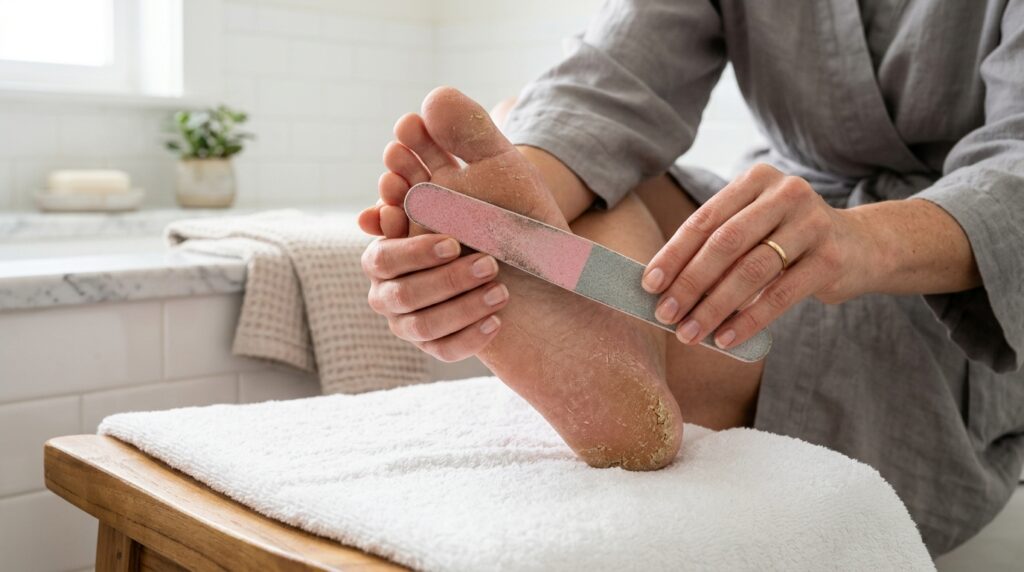
If you want smooth feet, you need the right tools. Using a nail file as a makeshift foot file can lead to frustration. Here is how standard nail tools differ from dedicated foot tools:
Grit and Texture
Nail files usually range from 100-grit (coarse) to 240-grit (fine). A coarse nail file is sharp and designed to tear through hard nail quickly. If used on skin, it can easily cause microscopic cuts. Foot files have a different abrasive structure—often laser-etched metal or crushed stone—designed specifically to lift and roll away dead skin cells without slicing the healthy tissue underneath.
Surface Area
A standard nail file is about half an inch wide. Trying to file a large heel callus with it will take a very long time and likely result in uneven, patchy exfoliation. A foot file or pumice stone has a large, wide surface area that smoothly and evenly levels out thick skin.
Hygiene and Sanitization
Paper or cardboard emery boards are porous. If you use one on your feet, it will trap dead skin cells and bacteria, making it impossible to truly sanitize. If you then use that same file on your fingernails, you risk transferring foot fungus or bacteria to your hands.
How to Safely Use a Nail File on Minor Calluses
If you only have a minor patch of dry skin—such as a small bump on the side of your toe—and no other tools are available, you can use a nail file safely by following these steps.
- Wash and dry your feet: Never file dirty skin. Wash your feet with soap and water, and dry them completely. Dry skin is easier to file safely because you can see exactly how much you are removing.
- Choose the right grit: Use a fine-grit emery board (220 or 240 grit). Never use a coarse 100-grit file or a metal nail file, as these will tear the skin.
- File in one direction: Gently glide the file across the rough patch in one direction. Do not aggressively saw back and forth, as this creates heat and friction that can damage the skin.
- Stop before you hit soft skin: You only want to remove the very top layer of dead skin. If you feel any heat, sensitivity, or pain, stop immediately.
- Moisturize: Apply a thick foot cream containing urea or salicylic acid to lock in moisture and help soften the remaining hard skin.
- Throw the file away: Because emery boards cannot be sanitized, you must throw the file away after using it on your feet to prevent bacterial growth.
Better Alternatives to Nail Files for Foot Calluses
For the safest and most effective results, you should leave the emery boards for your manicures and invest in proper foot care tools.
Pumice Stones
A pumice stone is a lightweight, porous volcanic rock. The American Academy of Dermatology recommends soaking the skin in warm water for 5 to 10 minutes before gently using a pumice stone. This is one of the safest and most natural ways to slowly reduce callus thickness over time.
Laser-Etched Foot Files
These files look like small, flat paddles with a textured metal surface. They are incredibly effective at removing dry, cracked skin on the heels. Unlike standard sandpaper, the laser-etched surface is designed to safely shave off micro-layers of skin without tearing.
Exfoliating Foot Peels
If you want to avoid filing altogether, chemical foot peels are a great alternative. These plastic booties contain alpha-hydroxy acids (AHAs) that break down the bonds between dead skin cells. Over the course of a week, the hard calluses simply peel away.
Callus Softening Gels
These fast-acting gels contain highly concentrated ingredients that temporarily break down tough calluses. You apply the gel, wait a few minutes, and then gently wipe or lightly file the dead skin away.
Expert Tip:
Never share foot care tools. Whether it is a pumice stone, a foot file, or an emery board, sharing abrasive tools is a fast track to spreading fungal infections and warts. Always use your own tools, and wash reusable items with soap and hot water after every single use.
Comparing Foot Smoothing Tools
To help you make the best choice for your at-home pedicure routine, here is a breakdown of the most common tools used for calluses.
| Tool Type | Best Used For | Safety Level | Pros | Cons |
|---|---|---|---|---|
| Nail File (Fine Grit) | Tiny, superficial dry patches on toes. | Moderate | Convenient, cheap, good for small areas. | Ineffective on thick heels, cannot be sanitized, can tear skin. |
| Pumice Stone | Daily or weekly gentle maintenance. | High | Natural, very safe, hard to over-do it. | Requires soaking feet first, takes time to see results. |
| Metal Foot File | Thick, stubborn, dry heel calluses. | Moderate | Works quickly, covers large areas, easy to wash. | Can cause severe damage if used too aggressively. |
| Chemical Foot Peel | All-over foot exfoliation without scrubbing. | High (for healthy skin) | Zero manual labor, leaves feet incredibly soft. | Skin sheds messily for a week, not safe for open cracks. |
Common Mistakes to Avoid
Even with the correct tools, removing calluses at home can go wrong if you rush the process. Avoid these common pitfalls to keep your feet healthy and pain-free.
- Filing healthy skin: Only file the thick, discolored, dead skin. If you file the soft pink skin surrounding the callus, it will become raw and inflamed.
- Using cheese-grater style razors: Never use a tool that contains actual razor blades to slice off skin. These are incredibly dangerous, highly prone to infection, and are actually banned in salons in many states.
- Over-filing: Your feet need a certain amount of thickened skin to protect them from the friction of walking. If you remove the entire callus, walking will become incredibly painful.
- Ignoring the root cause: If you have severe calluses, it is usually because your shoes do not fit correctly. Filing the callus won’t stop it from returning unless you fix your footwear.
- Forgetting to moisturize: Filing dry skin without moisturizing afterward will cause the skin to quickly harden and crack again.
When to Avoid Using a Nail File on Your Feet

There are certain health conditions where you should never attempt to file your own calluses, whether with a nail file, a pumice stone, or a foot file.
If you have diabetes, neuropathy (nerve damage), or poor blood circulation in your legs, DIY foot care is highly risky. According to the Mayo Clinic’s guide on corns and calluses, properly managing hard skin is crucial for people with these conditions, because even a minor cut can quickly turn into an infected ulcer that will not heal.
Additionally, avoid filing any skin that is:
- Cracked and bleeding
- Red, warm, or swollen
- Leaking fluid or pus
- Causing severe, shooting pain
When to See a Nail Technician or Dermatologist
Sometimes, at-home treatments are simply not enough. Knowing when to put the tools down and seek professional help is the most important part of your beauty routine.
Book an appointment with a Nail Technician if:
- You want a thorough, safe, and relaxing callus reduction.
- You are unsure how to use foot files safely.
- You want professional-grade callus softeners applied before filing.
- You struggle to comfortably reach your own feet.
See a Dermatologist or Podiatrist if:
- You suspect the “callus” is actually a plantar wart (warts have tiny black dots in them and hurt when squeezed).
- The callus causes pain when you walk.
- You have diabetes or circulation issues.
- The skin is deeply cracked, bleeding, or shows signs of infection.
A medical professional can safely remove the callus using sterilized surgical tools, and can offer custom orthotics to prevent the friction from happening again.
FAQs
Can you use a glass nail file on calluses?
Yes, a glass nail file is actually much safer than an emery board for minor calluses. Glass files have a very fine, completely smooth abrasive surface that will not tear the skin. Plus, glass files can be washed and sanitized with hot water and soap, making them much more hygienic.
Should I file my calluses wet or dry?
It depends on the tool you are using. If you are using a standard emery board, file the skin dry so you can see what you are doing. If you are using a pumice stone, you should always soak the skin in warm water first. Professional metal foot files can usually be used on both wet and dry skin, but dry filing often produces less skin tearing.
Why do my calluses come back so fast after filing?
If you over-file a callus, your body recognizes the sudden loss of protection as an “injury.” In response, the skin will rapidly produce more keratin to protect the area, causing the callus to return thicker and harder than before. Always leave a thin layer of hardened skin for protection.
Can I use an electric nail drill on foot calluses?
Nail technicians use specialized e-files (electric drills) with specific pedicure bits to safely smooth calluses. However, doing this yourself at home without training is highly dangerous. You can easily burn the skin, grind down to the nerve, or cause permanent damage. Stick to manual tools for DIY care.
Is it better to cut a callus off or file it?
You should never try to cut a callus off at home with scissors, clippers, or razor blades. Cutting the skin dramatically increases your risk of severe infection and deep tissue damage. Always gently file or chemically exfoliate the skin instead.
Conclusion
So, can you use nail file on calluses? While it is possible to use a fine-grit emery board for tiny, superficial dry patches, it is far from the ideal solution. Standard nail files are too small, often too abrasive, and impossible to properly sanitize after touching your feet.
For the safest, smoothest, and most hygienic results, upgrade your at-home pedicure kit. Invest in a quality pumice stone or a laser-etched foot file, take the time to soak your feet, and always follow up with a thick, hydrating foot cream.
If your calluses are thick, painful, or you have underlying health conditions, put the tools away and seek the help of a professional. Making smart, safe decisions about your nail and foot care is the best way to keep your feet looking beautiful and feeling pain-free all year round.

