
What Happens If You Cut Your Toenails Too Deep?

Cutting your toenails can go from routine to uncomfortable in one quick snip. Maybe you trimmed until there was almost no white edge left, clipped into the corner, or accidentally caught the skin and saw a little blood.
So, what happens if you cut your toenails too deep? Most minor mistakes cause temporary tenderness and grow out without a major problem. But cutting into living skin can cause bleeding, irritation, and a possible infection. Cutting the nail extremely short or digging into the corners can also make an ingrown toenail more likely.
Here is what to watch for, what to do immediately, and how to trim more safely next time.
Quick Answer
If you cut your toenails too deep, the toe may become sore, sensitive, or bleed if you nick the skin underneath or beside the nail. Cutting toenails extremely short can also increase the risk of an ingrown nail. Keep the area clean, protect broken skin, and avoid further cutting until it heals.
What Does Cutting a Toenail “Too Deep” Actually Mean?
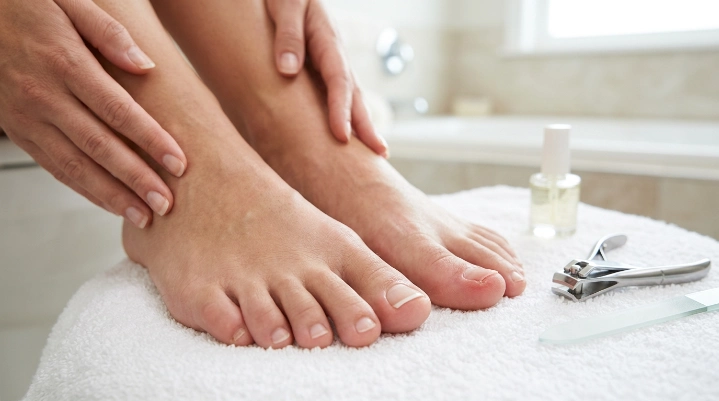
Your visible toenail is a hard nail plate made mostly from keratin. The nail plate itself does not hurt when you trim it normally.
The sensitive part is the living skin beneath and around the nail.
When someone says they cut a toenail too deep, they usually mean one of three things:
- They cut away nearly all of the white free edge.
- They clipped deeply down one or both sides of the nail.
- They accidentally cut or tore the skin underneath or next to the nail.
The nail bed is the living tissue underneath the attached nail plate. Near the tip is another area of skin beneath the free edge. These tissues contain nerves and blood vessels, which is why accidentally clipping them can hurt or bleed.
A nail cut very short without broken skin may simply feel tender. A cut that actually breaks the skin needs more careful attention.
What Can Happen If You Cut Your Toenails Too Deep?
How your toe reacts depends on exactly where and how much you trimmed.
1. The Toe May Feel Tender or Throb
An extremely short toenail leaves less nail protecting the sensitive tissue near its tip.
Pressure from socks, sneakers, heels, or even your bedsheets may suddenly feel uncomfortable.
You may notice:
- Tenderness when you press the toe
- A mild throbbing sensation
- Sensitivity inside closed shoes
- Stinging when water touches the area
Mild tenderness that gradually improves is generally less concerning than pain that becomes stronger over time.
2. You May Cause Bleeding
If the clipper catches living skin instead of only nail, you can create a small cut.
It may bleed immediately or leave a tiny raw area along the edge of the nail.
Do not keep trimming to “even it out.” Once skin has been cut, additional clipping can enlarge the injury.
The American Academy of Dermatology’s guidance on caring for an injured nail recommends protecting an injured nail and seeking dermatologic care when it is not improving after several days.
3. Broken Skin Can Become Infected
Healthy skin creates an important barrier against bacteria and other microorganisms.
When clipping creates a cut beside or underneath the toenail, germs have an easier route into the skin.
Possible warning signs include:
- Increasing redness
- Swelling
- Warmth
- Worsening pain
- Pus or drainage
- An unpleasant smell
- Redness spreading beyond the nail area
A small amount of soreness immediately after accidentally cutting yourself does not automatically mean infection. Symptoms that worsen instead of improve deserve more attention.
4. Cutting Too Short Can Encourage an Ingrown Toenail
An ingrown toenail happens when part of the nail grows into or presses painfully against the surrounding skin.
Cutting very short is one known risk factor. Digging down the sides and rounding the corners aggressively can create additional problems.
According to the Mayo Clinic’s ingrown toenail guidance, cutting toenails too short or failing to trim straight across can contribute to ingrown toenails. Mayo Clinic recommends keeping toenails at a moderate length and trimming straight across.
The problem may not appear immediately. You might feel fine after trimming and develop tenderness along one corner as the nail starts growing forward again.
5. The Nail Edge May Become Sharp or Uneven
Trying to fix an over-trimmed toenail can sometimes create another problem: a thin, pointed corner.
That sharp edge may catch on socks or press into nearby skin.
If there is no open wound near the edge, a clean nail file can gently remove a snag. Do not aggressively file into the corner or against exposed skin just to make the nail look perfectly shaped.
What Should You Do Immediately After Cutting Too Deep?
If you realize you have gone too far, stop cutting and assess the toe.
1. Stop Trimming
Put the clipper or nipper down.
Trying to make both sides symmetrical after one side has been cut too deeply can leave the entire nail excessively short.
2. If It Is Bleeding, Apply Gentle Pressure
Use clean gauze or a clean cloth and apply gentle, steady pressure.
Give the area time to stop bleeding instead of repeatedly lifting the gauze to check it every few seconds.
If bleeding is heavy, will not stop, or the injury appears deep, seek medical advice.
3. Gently Clean the Area
Wash your hands first.
Gently clean the toe with mild soap and water, then carefully dry it.
Avoid aggressively scrubbing underneath the nail.
4. Protect Broken Skin
If you created a small cut, a clean light bandage can help protect it from rubbing and contamination.
Change the dressing when it becomes wet or dirty.
5. Reduce Pressure on the Toe
Choose roomy shoes, sandals, or other footwear that does not squeeze the injured nail.
Pressure from a tight toe box can make an already-sensitive nail much more uncomfortable.
6. Leave the Nail Alone
This is often the hardest part for anyone who likes perfectly shaped nails.
Do not:
- Keep clipping the nail
- Dig beneath the corners
- Pull loose nail pieces
- Pick at tender skin
- Push sharp tools under the nail
- Try to cut out a developing ingrown edge yourself
The NHS guidance for ingrown toenails specifically advises against picking at an affected toe and recommends avoiding shoes that are tight around the toes.
Expert Tip: If you cannot clearly tell where the nail ends and sensitive skin begins, stop trimming. A slightly longer toenail is much easier to correct later than an injured nail or cut toe.
How Long Will a Toenail Cut Too Deep Hurt?
A minor trimming mistake may stay tender for a short time and then gradually feel better as the irritated skin settles.
The nail itself takes much longer to grow forward.
That means you cannot instantly fix an extremely short nail. Your best strategy is usually to protect it and allow natural growth to restore a safer free edge.
Pay attention to the direction of your symptoms.
Improving soreness is reassuring. Increasing swelling, warmth, redness, drainage, or pain is not something to simply wait out indefinitely.
Can You File a Toenail That Was Cut Too Deep?
Sometimes—but only if you are filing healthy nail, not injured skin.
A file can be useful when there is a tiny rough edge that may snag on socks.
The American Academy of Dermatology’s nail-trimming recommendations advise trimming toenails straight across and smoothing rough edges with a nail file or emery board.
If the nail is bleeding, extremely tender, or surrounded by broken skin, skip cosmetic filing until the area has settled.
Nail Tool and Safety Comparison
| Tool | Best Use | Cost Level | Main Safety Consideration |
|---|---|---|---|
| Toenail clippers | Routine healthy toenails | Low | Avoid inserting blades deeply down the sides |
| Nail nippers | Thick or difficult nails | Low to moderate | Very sharp; easier to remove too much nail |
| Emery board | Smoothing small rough edges | Low | Replace when worn or dirty |
| Glass nail file | Controlled smoothing and shaping | Moderate | Use gently around short or sensitive nails |
| Metal nail file | Stronger filing | Low to moderate | Can feel aggressive on thin or damaged nails |
A basic home nail-care kit is usually inexpensive compared with repeated professional pedicures. However, the cheapest tool is not automatically the safest tool. Good grip, sharp cutting edges, easy control, and proper cleaning matter more than getting the lowest-priced clipper.
Hygiene Matters More When You Have Cut the Skin
A tiny opening beside your toenail can become irritated if dirty tools, sweaty footwear, or repeated touching introduce microorganisms.
For safer nail care:
- Wash your hands before handling an injured toe.
- Keep the toe reasonably clean and dry.
- Do not share toenail clippers or files.
- Clean reusable tools regularly.
- Allow cleaned metal tools to dry completely before storage.
- Discard disposable files when they become dirty or heavily worn.
- Do not use the same dirty file repeatedly around broken skin.
If your skin is especially sensitive, avoid pouring harsh cosmetic products onto a fresh cut. Acetone, fragranced products, and some polish-related products can sting irritated skin.
Give the area time to recover before your next full pedicure.
What About Nail Polish After Cutting Too Deep?
If the skin is intact and the nail is simply shorter than you intended, polish is mainly a cosmetic decision.
If you have bleeding, raw skin, swelling, or significant tenderness, it is smarter to postpone polish and other pedicure steps.
That includes avoiding aggressive:
- Cuticle work
- Buffing
- Filing
- Scraping beneath the nail
- Gel removal around injured skin
A fresh pedicure can wait. Protecting the toe comes first.
Common Mistakes to Avoid
After cutting a toenail too deep, avoid trying to repair the appearance immediately.
Common mistakes include:
- Cutting the other nails extremely short to match. Each nail should be trimmed according to its own safe length.
- Digging out the corners. This can injure skin and contribute to ingrown-nail problems.
- Ripping off a partly attached nail edge. Use controlled trimming only when it is safe to do so.
- Aggressively filing a sensitive nail. Filing should smooth a snag, not remove another layer of nail.
- Using dirty clippers. Nail tools should be kept clean and dry.
- Sharing personal nail tools. Shared tools can transfer nail and skin debris.
- Wearing tight shoes afterward. Toe pressure can worsen pain and irritation.
- Ignoring pus or spreading redness. Those are signs that the problem may be more than simple trimming sensitivity.
- Trying to perform DIY surgery on an ingrown corner. Painful or infected ingrown nails may need professional care.
DIY Care vs. Salon or Medical Care
Not every short toenail requires professional help.
| Situation | DIY Care | Nail Technician | Medical Professional |
|---|---|---|---|
| Nail slightly shorter than intended | Usually appropriate | Optional later | Usually unnecessary |
| Small rough edge without skin injury | Gentle filing may help | Optional | Usually unnecessary |
| Minor skin nick that is improving | Basic wound protection | Postpone pedicure until healed | Usually unnecessary |
| Difficult cosmetic shaping | Possible | Helpful | Usually unnecessary |
| Repeatedly ingrown nail | Limited | Not medical treatment | Recommended |
| Increasing redness or swelling | Not enough | Postpone service | Recommended |
| Pus or drainage | Not appropriate alone | Do not rely on salon treatment | Recommended |
| Severe or persistent pain | Not appropriate alone | Not diagnostic | Recommended |
| Diabetes, poor circulation, or reduced foot sensation | Extra caution needed | Follow healthcare guidance | Ask your healthcare professional |
A licensed nail technician can help with routine cosmetic maintenance when the skin and nail are healthy.
A nail technician cannot diagnose an infection, prescribe medication, or replace a dermatologist, podiatrist, or other healthcare professional.
When to See a Nail Technician or Dermatologist
A nail technician may be useful once your toe is healthy when you want help maintaining a neat shape without repeatedly over-trimming it.
For health concerns, choose a medical professional instead.
Consider contacting a dermatologist, podiatrist, or other qualified healthcare professional if you have:
- Pain that is getting worse
- Significant swelling or warmth
- Pus or drainage
- Redness spreading around the toe
- Bleeding that will not stop
- A nail lifting substantially from the nail bed
- A painful ingrown nail
- Repeated ingrown toenails
- A major new nail color or shape change
- An injury that is not improving
Seek medical guidance sooner if you have diabetes, poor circulation, reduced sensation in your feet, or another condition that makes foot injuries harder to notice or heal.
Those situations are not good candidates for aggressive DIY nail trimming.
How to Prevent Cutting Your Toenails Too Deep Next Time
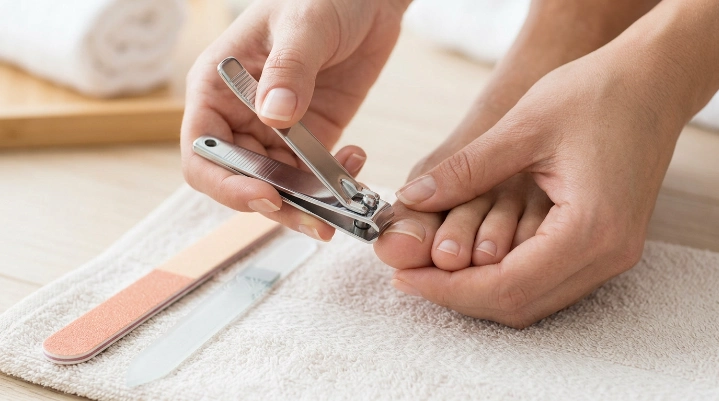
A little technique makes a big difference.
1. Use the Right Tool
Choose toenail clippers designed for the thicker, wider shape of toenails.
If a nail is unusually thick, do not force a small clipper through it.
2. Trim When the Nail Is Easier to Cut
Toenails may be easier to trim after bathing or showering because they are softer.
Dry your hands so the tool does not slip.
3. Make Several Controlled Cuts
Do not try to cut a wide toenail in one giant squeeze.
Smaller cuts give you better control.
4. Cut Mostly Straight Across
Avoid carving a deep curve down the sides.
The corners should remain visible instead of being buried below the surrounding skin.
5. Leave Some Nail at the Tip
Do not chase the shortest possible length.
The goal is neat and comfortable—not completely removing every trace of the white edge.
6. File Only What Needs Smoothing
If a corner is slightly sharp, use a clean file to soften the snag rather than cutting deeper.
7. Stop if Something Hurts
Normal nail trimming should not involve cutting through painful living tissue.
Pain is a signal to stop and reposition the tool.
FAQs
Can cutting your toenail too deep cause an infection?
Yes. If the clipper cuts living skin, the resulting opening can allow bacteria or other microorganisms to enter. Keep the area clean and watch for worsening redness, swelling, warmth, pain, pus, or drainage.
What should I do if my toenail bleeds after cutting it?
Stop trimming, apply gentle pressure with clean gauze or cloth, clean the area gently, and protect it from rubbing. Seek medical help if bleeding is heavy or does not stop.
Will a toenail grow back after being cut too short?
Yes, a toenail that was simply cut too short should continue growing from its growth area. It will take time for the free edge to become visible again, so avoid repeatedly trimming it while waiting.
Can cutting toenails too short cause ingrown nails?
It can increase the risk. Cutting very short and digging into the corners can make it easier for the growing edge to irritate or enter the surrounding skin.
Should I put nail polish over a toenail I cut too deep?
If the surrounding skin is broken, bleeding, swollen, or very sensitive, postpone polish and pedicure treatments until it heals. A healthy but merely short nail does not necessarily require the same restriction.
Can I file the corner instead of cutting it again?
If the skin is intact and you only have a rough nail edge, gentle filing is often better than cutting farther into the corner. Do not file against raw or bleeding skin.
When should I worry about a toenail cut?
Get professional advice if pain worsens, redness spreads, the toe becomes noticeably swollen or hot, pus appears, bleeding will not stop, or the injury is not improving. People with diabetes, circulation problems, or reduced foot sensation should be especially cautious.
Conclusion
So, what happens if you cut your toenails too deep? A minor mistake may cause temporary tenderness, while cutting into living skin can cause bleeding and create an opportunity for infection. Extremely short or deeply rounded trimming can also contribute to painful ingrown toenails.
Once you realize you have gone too far, the smartest move is usually to stop cutting, keep the toe clean, protect any broken skin, reduce shoe pressure, and let the nail grow forward naturally.
For future trims, use clean, easy-to-control tools, cut mostly straight across, and leave enough nail that you are not digging into sensitive skin or corners.
Your toenails do not need to be ultra-short to look neat. A slightly more conservative trim is usually the prettier—and safer—choice.

