
How Long Does a Damaged Toenail Take to Grow Out?

You stubbed your toe, dropped something on it, wore shoes that were a little too tight, or removed polish and discovered a toenail that suddenly looks bruised, ridged, cracked, or partly detached. Now comes the frustrating question: How long does a damaged toenail take to grow out?
Unfortunately, toenails are slow growers. A damaged toenail may take many months to look normal again, and a completely new toenail can take around 12 to 18 months to replace the old one.
The exact timeline depends on which toenail was injured, how badly it was damaged, whether the nail matrix was affected, and whether problems such as infection are slowing recovery.
Below, you’ll learn what a realistic toenail recovery timeline looks like, how to care for a damaged nail safely, which nail tools can help, and when it’s better to stop DIY care and see a professional.
Quick Answer
How long does a damaged toenail take to grow out? A mildly damaged area may take several months to reach the tip and be trimmed away. If the whole toenail needs to replace itself, expect roughly 12 to 18 months. Growth can take longer if the nail matrix was injured or another nail condition is present.
How Fast Do Toenails Actually Grow?
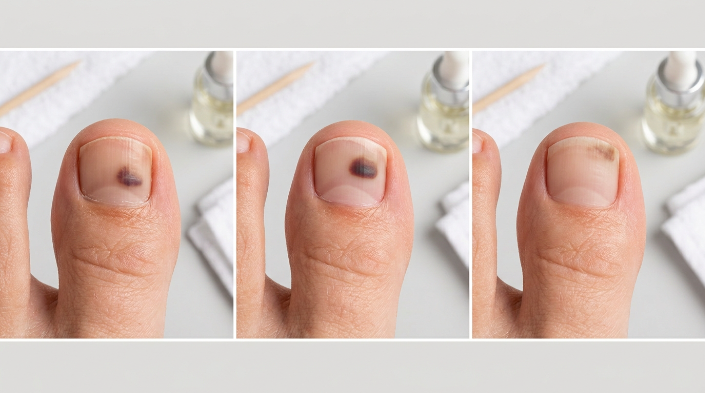
Toenails grow much more slowly than fingernails.
A study of healthy young adults published in PubMed found an average toenail growth rate of about 1.62 mm per month. That is only a tiny amount of visible growth from week to week.
This slow pace explains why a damaged spot can seem as though it is not moving at all. You may notice a bruise, ridge, or discolored area for months before it finally reaches the free edge of the nail.
A full replacement takes even longer. The American Academy of Dermatology notes that toenails can take 12 to 18 months to grow back after an entire nail has been removed.
So patience really is part of toenail recovery.
| Type of Damage | Approximate Timeline | What You May Notice |
|---|---|---|
| Small damaged area near the tip | Weeks to a few months | Damage gradually reaches the edge |
| Damage around the middle of the nail | Several months | Healthy nail appears behind damaged area |
| Damage close to the nail base | Many months | Most of the nail must grow before damage disappears |
| Entire toenail lost or removed | About 12–18 months | New nail slowly replaces the old nail |
| Nail matrix significantly injured | Variable | Nail may grow slowly, unevenly, or abnormally |
These are general estimates rather than deadlines. Your individual growth rate can be different.
Why Does Toenail Damage Take So Long to Disappear?
The visible toenail is a hard plate made largely of keratin. Once part of that plate is damaged, your body does not simply repair the damaged section like it would repair a small cut in your skin.
Instead, new nail has to grow forward.
Think of a dark bruise halfway down your big toenail. If the nail continues growing normally, that dark area should gradually move toward the tip until you can safely trim it away.
That process happens slowly because toenails grow only a small amount each month.
Where the Damage Happens Matters
Damage near the tip usually disappears sooner because it has less distance to travel.
Damage near the base of the toenail can take much longer.
This is also where the nail matrix matters. The matrix is the growth center beneath the skin near the base of your nail. It produces the nail plate.
A surface-level chip is very different from a deep injury that affects this growth center. Significant matrix damage can cause the new toenail to develop ridges, splits, unusual thickness, or other lasting changes.
What Does Normal Healing Look Like?
One of the most reassuring signs is healthy-looking nail appearing from the base.
For example, imagine your toenail developed a dark area after you hit your toe. Over the following months, you may see:
- A small strip of normal nail growing behind the damaged area
- The dark spot gradually moving toward the tip
- Less tenderness as the original injury heals
- The damaged section eventually reaching a point where it can be trimmed
- Temporary ridges or texture changes associated with the injury
Taking a clear photo once every four weeks can make progress easier to see. Daily checking usually makes toenail growth feel even slower.
However, don’t assume every dark, yellow, thickened, or lifting nail is simply growing out from an injury. Nail infections and some skin conditions can cause similar changes.
How to Care for a Damaged Toenail While It Grows Out

If the injury is mild and does not require medical care, the goal is simple: protect the toe and avoid creating more damage while healthy nail grows forward.
1. Keep the Toenail Clean
Gently wash the toe with soap and water, especially if the skin was injured.
Don’t aggressively dig beneath the nail with a metal tool. This can irritate the nail bed and potentially introduce bacteria into damaged skin.
2. Trim Only What Is Safe to Trim
If a portion of the nail is completely loose and no longer attached to the skin, it may be possible to carefully trim the loose edge.
The American Academy of Dermatology’s advice for injured nails recommends gently trimming away the part of a hanging nail that is no longer connected to the skin.
Do not pull or tear off a section that is still attached.
If you’re unsure where the attached portion begins, leave it alone.
3. File Sharp Edges Carefully
A nail file can be useful when a damaged toenail has a rough or snagging edge.
Use a clean file and gentle pressure. The goal is to smooth the free edge—not grind through the damaged nail.
A fine or medium-grit file is generally easier to control than an extremely coarse file for minor smoothing.
File the part that is safely beyond the skin and stop if you feel pain, heat, or sensitivity.
Never aggressively file a bruised, lifting, painful, or infected-looking area.
4. Protect the Toe From Repeated Pressure
Shoes matter more than you might think.
A toenail that keeps hitting the front of a tight shoe can experience repeated trauma. Choose footwear with enough room around your toes so the damaged nail is not constantly rubbing or being compressed.
This is particularly important for runners, hikers, dancers, and anyone who spends long periods on their feet.
5. Keep Your Nail Tools Clean
Don’t share toenail clippers, files, or other nail tools.
Clean reusable tools appropriately after use and allow them to dry fully before storing them. Disposable files should be replaced rather than shared between people.
If one toenail appears infected, consider keeping the tools used on that nail separate from those used on healthy nails until you know what is causing the problem.
Should You File Down a Damaged Toenail?
Sometimes—but only for the right reason.
Filing is helpful when you have a minor rough or sharp free edge that keeps catching on socks.
It is not a treatment for an underlying nail injury.
You should be particularly careful when a nail is:
- Painful
- Bleeding
- Split deeply
- Separating from the nail bed
- Surrounded by swollen or irritated skin
- Very thick
- Yellow, green, black, or unusually discolored without an obvious explanation
Don’t try to make a damaged toenail look normal in one filing session. Removing too much nail can leave the area thin, sensitive, and more vulnerable to further trauma.
Expert Tip: When filing a damaged toenail, think smooth, not thin. Remove only enough from a safe free edge to stop snagging. If you have to file aggressively to change how the nail looks, that’s a sign to stop.
What Can Slow Toenail Growth or Recovery?
Your toenail does not grow on an exact schedule.
Age and circulation can influence nail growth, and an injury itself can temporarily disrupt normal nail production.
Several other factors can make the recovery process seem longer.
Repeated Trauma
If your shoes continue pressing on the same toe, the new nail may keep getting damaged.
This is one reason someone may think, “My toenail has been damaged for a year,” when the toe has actually experienced repeated minor injuries.
Nail Matrix Damage
Because the matrix produces the nail plate, significant damage in this area can affect how the new nail develops.
A severe crush injury is not the same as superficial peeling or a chipped corner.
Nail Fungus
Fungal infections can cause discoloration, thickening, crumbling, and separation of the nail.
Importantly, filing the nail does not eliminate an infection. The American Academy of Dermatology explains that filing cannot remove all nail fungus because the fungi can live within the nail and the tissue underneath it.
If you suspect fungus, don’t simply keep filing away the unusual-looking nail. Getting the correct diagnosis matters.
Ongoing Pressure From Shoes
Even healthy new nail growth can be affected by repeated rubbing or pressure.
Check whether your shoes have enough width and length for your toes, especially during exercise when feet may shift inside the shoe.
Can You Put Nail Polish on a Damaged Toenail?
It depends on the condition of the nail.
If the nail is intact, comfortable, and simply has an old cosmetic imperfection growing out, polish may sometimes be reasonable.
However, covering a nail that is painful, lifting, bleeding, inflamed, or showing unexplained color changes can make it harder to monitor what is happening.
Avoid using polish, gel, acrylic, press-ons, or nail glue as a way to “hold together” a significant injury.
If the nail needs to be observed for infection or healing, leaving it visible makes changes easier to notice.
And if you are unsure whether the discoloration is from trauma, fungus, or something else, consider getting it checked before covering it.
DIY Care vs. Professional Help
Not every damaged toenail requires a salon or doctor’s visit. But knowing the limits of home care can prevent a small problem from becoming a bigger one.
| Situation | DIY Care May Be Reasonable | Professional Help Is Better |
|---|---|---|
| Tiny rough edge | Yes | Usually unnecessary |
| Mild old bruise growing outward | Often | If it doesn’t move with nail growth |
| Slight snagging | Gentle filing may help | If nail is deeply split |
| Major nail lifting | No | Dermatologist or other medical professional |
| Suspected fungus | Filing won’t cure it | Dermatologist/healthcare provider |
| Painful swollen skin | No | Medical evaluation |
| Cosmetic shaping of healthy regrowth | Yes | Nail technician can help |
| Severe injury or heavy bleeding | No | Medical evaluation |
A nail technician can help with cosmetic maintenance of an otherwise healthy nail, but a nail technician should not replace a medical professional when you have signs of injury, infection, or disease.
Common Mistakes to Avoid
Waiting for a damaged toenail to grow out can test your patience. Avoid trying to speed things up with aggressive DIY fixes.
Common mistakes include:
- Pulling off a partially attached nail. This can cause more trauma and pain.
- Over-filing the nail. Making the plate thinner doesn’t make it grow faster.
- Digging underneath a lifting nail. This can further separate the nail and irritate the skin.
- Using unclean nail tools. Clippers and files should be kept clean and should not be shared.
- Ignoring shoe pressure. Repeated rubbing can keep damaging the same toenail.
- Assuming every discoloration is a bruise. Unexplained or changing nail color deserves attention.
- Covering concerning changes with polish. Cosmetic coverage can make monitoring difficult.
- Expecting visible improvement every week. Toenail growth is slow, so compare progress over months instead.
When to See a Nail Technician or Dermatologist
A nail technician can be helpful once an injury has healed and you simply need assistance safely shaping or maintaining an awkward toenail.
A dermatologist or other qualified healthcare professional is more appropriate when the problem involves pain, injury, infection, persistent nail separation, or unexplained changes.
The American Academy of Dermatology recommends medical attention for certain significant nail injuries, including situations where blood covers more than half the nail, the nail becomes black or purple, the injury is particularly painful, or you cannot bend the affected toe.
You should also seek medical advice if you notice:
- Increasing pain instead of improvement
- Redness or swelling around the nail
- Pus or drainage
- Warm skin around the toe
- Persistent or unexplained nail lifting
- A new or changing dark streak
- A nail that seems to have stopped growing
- Significant thickening or crumbling
- An injury that isn’t improving after several days
- Repeated nail problems without an obvious cause
Don’t try to diagnose a persistent nail problem based on appearance alone. Trauma, fungal infection, inflammatory conditions, and other nail disorders can sometimes look surprisingly similar.
If you have diabetes, circulation problems, reduced sensation in your feet, or another condition that affects wound healing, get individualized medical guidance rather than aggressively treating a damaged toenail yourself.
FAQs
Can a damaged toenail grow back normally?
Yes. Many damaged toenails eventually grow out normally, especially when the nail’s growth center has not been seriously injured. Severe damage to the nail matrix can sometimes result in lasting ridges, splitting, thickening, or other changes.
How long does a big toenail take to grow back?
A complete toenail can take approximately 12 to 18 months to grow back. You may see healthy growth at the base much sooner, but replacing the entire visible nail takes considerably longer.
Can I make my toenail grow faster?
There is no reliable at-home trick that will suddenly make a toenail grow out in a few weeks. Focus instead on protecting the nail, avoiding repeated trauma, wearing properly fitting shoes, and maintaining sensible foot and nail care while it grows.
Should I remove a damaged toenail?
Don’t pull off a toenail that is still attached. If a small section is completely detached, it may be possible to carefully trim the loose portion. Major lifting, significant pain, bleeding, or a serious injury should be professionally evaluated.
Will a black toenail eventually grow out?
A dark area caused by a simple bruise may gradually move toward the tip as the toenail grows. However, don’t assume every black or dark nail is a bruise. New, changing, persistent, or unexplained dark pigmentation should be examined by a dermatologist.
Can I file a damaged toenail while it grows?
You can gently smooth a minor rough free edge if the area isn’t painful or actively injured. Avoid aggressive filing, filing beneath a lifted nail, or thinning the nail in an attempt to remove discoloration.
Why isn’t my damaged toenail growing out?
Toenails grow slowly, so progress can be difficult to notice over a few weeks. Repeated trauma, significant matrix injury, nail disease, and other health factors can also affect growth. If you see no apparent progress over time or the nail becomes painful, swollen, increasingly discolored, or distorted, seek medical advice.
The Bottom Line
So, how long does a damaged toenail take to grow out? For a small damaged section, you may wait several months for it to reach the edge. If the entire toenail must be replaced, a realistic timeframe is roughly 12 to 18 months.
During that time, resist the temptation to pull, peel, or aggressively file the damaged nail. Keep it clean, smooth only safe rough edges, protect it from shoe pressure, and watch for healthy new nail appearing at the base.
Most importantly, pay attention to what the nail is telling you. A cosmetic imperfection that’s steadily moving toward the tip is very different from increasing pain, swelling, drainage, persistent lifting, or unexplained discoloration.
Protect the new growth, give it time, and get professional help when the problem looks like more than ordinary cosmetic damage.

