
Do They Make Nail Files for Dogs? Safe Options Explained

““““““““If you have ever looked at your own manicure tools and wondered, do they make nail files for dogs, the answer is yes. Dog nails can be filed rather than clipped, and several tools are made specifically for that job.
The confusing part is choosing between a simple manual file, an electric nail grinder, and a scratchboard. Dogs also have a sensitive area inside each nail called the quick, so filing still needs to be done carefully.
Below, we’ll explain which dog nail files actually work, how they compare with clippers, how to use them safely, and when it is better to let a groomer or veterinarian handle your dog’s nails.
Quick Answer
Yes, they make nail files for dogs. Options include manual pet nail files, electric nail grinders, and scratchboards that let a dog wear down its own nails. A file can smooth sharp edges or gradually shorten nails, but you still need to avoid the sensitive quick and stop if your dog becomes uncomfortable.
What Kind of Nail Files Do They Make for Dogs?
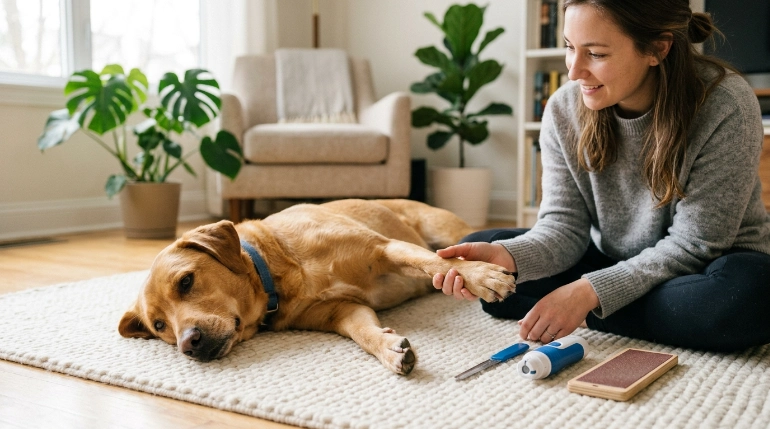
Dog nail-care tools work on the same basic principle as a human nail file: an abrasive surface gradually removes nail material.
The difference is that dog nails can be much thicker than human fingernails. For that reason, pet-specific tools are often stronger or more efficient.
Veterinary guidance from VCA Animal Hospitals on filing and grinding dog nails confirms that handheld files and grinders are both options for wearing down the end of a dog’s nail. Filing can also leave the finished edge smoother than clipping alone.
The three main choices are:
Manual Dog Nail Files
A manual dog nail file is the simplest option. It usually has a rough abrasive surface designed to smooth or remove small amounts of nail.
Manual files can be helpful for:
- Smoothing sharp edges after clipping
- Maintaining already-short nails
- Small dogs with relatively thin nails
- Dogs that dislike the noise of an electric grinder
- Owners who want maximum control
The downside is speed. Filing a thick nail entirely by hand can take quite a while.
Electric Dog Nail Grinders
An electric grinder uses a rotating abrasive wheel or sanding surface to gradually shorten the nail.
This is probably what most pet owners mean when they search for an electric dog nail file.
According to the ASPCA’s dog grooming guidance, grinders can provide good control and are an alternative for dogs that do not tolerate traditional nail clippers. The organization also notes that some dogs dislike the sound and vibration.
Grinders are especially useful for dogs with:
- Thick nails
- Dark nails where the quick is harder to see
- Rough edges after clipping
- Nails that need frequent light maintenance
They are faster than most manual files but require more careful handling.
Dog Nail Scratchboards
A scratchboard is essentially a larger filing surface that the dog scratches with its paws.
Instead of you holding each nail against a file, the dog learns to drag its paws over an abrasive board.
The American Kennel Club’s grooming guidance describes teaching dogs to scratch a sandpaper board as one way to wear down the nails, particularly for dogs that are sensitive about having their feet handled.
Scratchboards are clever, but they have an important limitation: they usually work most naturally on the front nails. Dewclaws and rear nails may still need individual attention.
Dog Nail File vs. Grinder vs. Clippers
There is no single best tool for every dog.
The right choice depends on nail thickness, your dog’s temperament, your confidence level, and how much nail needs to be removed.
| Tool | Best For | Speed | Noise | Main Limitation |
|---|---|---|---|---|
| Manual dog nail file | Smoothing and light maintenance | Slow | None | Labor-intensive on thick nails |
| Electric nail grinder | Gradual shortening and smoothing | Medium | Moderate | Vibration, heat, hair-entanglement risk |
| Scratchboard | Paw-sensitive dogs and front nails | Medium | Very low | Limited control over individual nails |
| Dog nail clippers | Quickly shortening long nails | Fast | Very low | Easier to cut the quick accidentally |
Some owners use more than one method.
For example, you might clip off a small amount of excess length and then use a file to round the sharp edges. Others skip clipping altogether and maintain the nails with frequent grinding.
Why Use a Nail File Instead of Clippers?
One of the biggest advantages of filing is control.
A clipper removes a piece of nail immediately. A file or grinder removes the nail gradually, so you can check your progress frequently.
VCA notes that filing or grinding can produce smooth edges and may reduce the risk of damaging the quick compared with taking larger cuts using clippers. However, grinders have their own safety concerns and still require proper technique.
Filing Can Smooth Sharp Nail Edges
Freshly clipped nails can sometimes feel surprisingly sharp.
That matters if your dog likes jumping onto your lap, sleeping in bed, or pawing at you during play.
A few gentle passes with a file can round the edge.
Some Dogs Tolerate Filing Better
A dog that becomes anxious when it hears clippers snap may tolerate gradual filing.
But the opposite can also happen.
Some dogs are perfectly comfortable with clippers and hate the vibration of an electric grinder. There is nothing wrong with choosing whichever safe method causes the least stress.
It Gives You More Time to Watch Your Progress
The quick contains sensitive living tissue, including blood vessels and nerves. Cutting into it hurts and causes bleeding.
On light-colored nails, the quick may be easier to see. Dark dog nails require more caution because you cannot simply look through the nail to judge its location.
The AKC’s guide to safely trimming dog nails recommends removing only a small amount at a time and using grinders designed for dogs.
How to Use a Dog Nail File Safely
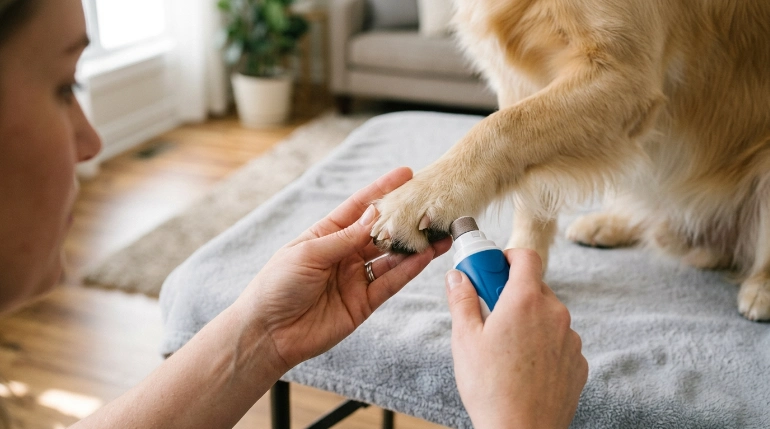
You do not need to finish every nail in one session.
In fact, shorter sessions are often much easier for both you and your dog.
1. Examine the Paw First
Before filing, look at the paw, toes, pads, and nails.
Do not file a nail that is:
- Cracked deeply
- Partially torn off
- Bleeding
- Swollen around the nail bed
- Producing discharge
- Obviously painful
- Growing into the paw pad
Those problems can require veterinary care rather than routine grooming.
2. Let Your Dog Investigate the Tool
Allow your dog to sniff the file.
For an electric grinder, initially turn it on several feet away. Reward calm behavior.
Gradually bring the sound closer over multiple short sessions.
AKC recommends introducing dogs step by step to the appearance, sound, and vibration of nail tools before expecting them to tolerate an actual trim.
3. Hold One Toe Gently
Support the toe without squeezing it.
You want enough control to prevent sudden movement without painfully restraining the paw.
If your dog continuously pulls away, growls, panics, or tries to bite, stop the session.
4. Remove Only a Small Amount
With a manual file, use controlled passes over the tip and rough edges.
With a grinder, touch the abrasive surface to the nail for short periods instead of pressing continuously.
Do not aggressively grind toward the center of the nail.
The goal is gradual maintenance, not removing as much nail as possible in one session.
5. Check Frequently
Stop every few passes and look at the nail.
With dark nails especially, a conservative approach is safer.
If you are uncertain where to stop, leave the nail slightly longer and ask a veterinarian, veterinary technician, or experienced groomer to demonstrate the technique.
6. Reward Your Dog
Give treats, praise, or another reward your dog enjoys.
You want nail care to become a predictable routine rather than a wrestling match.
Important Grinder Safety Considerations
Electric dog nail files can be convenient, but they are not risk-free.
Watch Long Fur
Rotating grinding surfaces can catch loose hair.
VCA specifically warns that the spinning file of a grinder can become tangled in a long-haired dog’s fur.
Before grinding:
- Move paw hair away from the nail.
- Keep long coat hair away from the rotating head.
- Maintain a secure grip on the toe.
- Stop immediately if hair gets too close.
Avoid the Skin
A spinning abrasive surface that slips off the nail can injure the skin.
Never treat the grinder like a polishing buffer that can casually touch the surrounding paw.
Do Not Grind Continuously
Friction creates heat.
Work in brief touches and continually move between nails instead of holding the grinder against one spot.
If your dog suddenly jerks away or seems unusually sensitive, stop and inspect the nail.
Consider Nail Dust
Grinding creates fine nail dust.
VCA notes that this dust may be irritating, which is one reason good ventilation or working outdoors can be sensible.
Expert Tip: If you are new to dog nail filing, make your first goal smoothing one or two nail tips—not completing all four paws. Short, successful sessions are much more useful than forcing your dog through a stressful full manicure.
Can You Use a Human Nail File on a Dog?
Technically, a sturdy human nail file can smooth a dog’s nail, particularly on a small dog with relatively thin nails.
The ASPCA even recommends using an emery board to smooth rough edges after trimming.
However, a standard disposable human emery board is usually not ideal for shortening thick dog nails.
It may:
- Wear out quickly
- Take too long
- Bend during use
- Be too fine for thick claws
- Require excessive rubbing
A durable pet file or dog nail grinder is usually more practical when significant filing is needed.
Also keep pet grooming tools separate from your personal manicure supplies for basic hygiene.
How Often Should You File a Dog’s Nails?
There is no perfect schedule for every dog.
Nail growth and natural wear vary according to activity level, walking surfaces, breed, age, and individual nail growth.
A practical visual check is more useful than blindly following a calendar.
The ASPCA advises trimming when a dog’s nails are approaching the ground during walking or are clicking and snagging.
Check the paws regularly and pay attention to:
- Clicking on hard floors
- Nails touching the floor while standing
- Nails catching on fabrics or carpet
- Sharp points
- Curving or overgrown dewclaws
Filing small amounts regularly can be easier than waiting until the nails become significantly overgrown.
What Should a Dog Nail File Cost?
Price depends heavily on the tool rather than simply whether it is labeled for dogs.
A manual file is generally the lowest-cost option and has no batteries or replacement motor to worry about.
A scratchboard can also be relatively simple, although the abrasive surface eventually needs replacing.
An electric grinder generally costs more because you are paying for the motor, battery or power system, grinding heads, speed controls, and sometimes safety guards or lights.
Do not choose purely by price.
More useful buying factors include:
- Appropriate size for your dog’s nails
- Comfortable grip
- Easy-to-control grinding head
- Replacement abrasive parts
- Manageable noise level
- Safety guard if you prefer one
- Easy cleaning
- Reliable charging or power
For a nervous dog, a quieter tool you can control confidently may be worth more than a powerful grinder with features you never use.
Hygiene and Cleaning Matter Too
Dog paws come into contact with sidewalks, soil, grass, household floors, and outdoor debris.
That means your dog’s nail tools should not become part of your personal manicure kit.
After use:
- Brush or wipe visible nail debris from the tool.
- Follow the manufacturer’s cleaning instructions.
- Allow washable parts to dry fully before storage.
- Store pet grooming equipment separately from human nail tools.
- Replace worn or damaged abrasive surfaces.
Never submerge an electric grinder unless its manufacturer specifically says the relevant component is waterproof.
If multiple pets use the same tool, clean it between animals, especially if one has a paw or nail problem.
Common Mistakes to Avoid
Even simple filing can go wrong when owners rush.
Avoid these common mistakes:
- Trying to shorten extremely long nails in one session. The quick may extend farther into an overgrown nail.
- Holding a grinder against one spot for too long. Friction can create uncomfortable heat.
- Ignoring paw hair. Long hair can become caught in rotating equipment.
- Filing damaged or infected-looking nails. Pain, swelling, discharge, or major cracks deserve veterinary attention.
- Forcing a frightened dog. Panic makes accidental injuries more likely.
- Using a very worn file. You may end up applying more pressure because the surface no longer removes nail efficiently.
- Grinding too close to the quick. Filing gradually does not eliminate the possibility of going too far.
- Sharing the dog’s file with your own nail kit. Keep pet and personal grooming tools separate.
- Forgetting dewclaws. Because they do not normally touch the ground, dewclaws may not receive natural wear.
When to See a Nail Technician or Dermatologist
For human nails, a nail technician or dermatologist may be appropriate depending on whether the concern is cosmetic or medical.
For your dog’s nails, however, neither should be your first professional.
A dog with routine overgrown nails can usually be helped by an experienced dog groomer, veterinarian, or veterinary technician.
Contact a veterinarian when you notice:
- Persistent bleeding
- A nail torn near its base
- Limping or obvious pain
- Redness or swelling around a toe
- Pus or unusual discharge
- Repeated nail splitting
- Multiple abnormal or deformed nails
- A nail growing into the paw pad
- Sudden changes in nail quality
Broken nails can expose sensitive tissue and may require veterinary treatment. VCA’s guidance on first aid for broken dog nails explains that more significant breaks can be painful and may need professional removal and protection against infection.
DIY filing is for routine grooming—not diagnosing or treating an injured nail.
FAQs
Do they make nail files for dogs with thick nails?
Yes. Electric dog nail grinders are particularly useful for thick nails because the rotating abrasive surface removes nail material more efficiently than a basic manual emery board.
Are dog nail grinders better than clippers?
Not always. Grinders offer gradual control and smooth edges, while clippers are faster. The better option is the one you can use safely and that your dog tolerates comfortably.
Can I file my dog’s nails instead of clipping them?
Yes. VCA notes that handheld files and grinders can be used instead of clipping. Regular filing works best when you maintain the nails before they become severely overgrown.
Can filing a dog’s nails hurt them?
It can if you file too deeply, touch the skin with a grinder, create excessive heat, catch long hair in a rotating tool, or continue while the dog is struggling. Used carefully, filing can be a gentle grooming method.
Can I use an emery board on my dog’s nails?
You can use an emery board for smoothing small rough areas, and the ASPCA mentions using one after clipping. A human emery board may be too slow for shortening thick nails significantly.
What if my dog hates the nail grinder?
Do not force it. Introduce the grinder gradually using treats and very short sessions. You can also try a manual file, dog clippers, a scratchboard, or professional grooming.
What happens if I accidentally file into the quick?
Stop immediately. The nail may become painful and bleed. Styptic powder is commonly kept with dog nail-care supplies for minor quick injuries. If bleeding persists, the injury is substantial, or your dog remains painful, contact your veterinarian.
Conclusion
So, do they make nail files for dogs? Absolutely. You can choose from manual pet files, electric nail grinders, and even scratchboards that allow some dogs to help maintain their own nails.
A manual file works well for smoothing and light maintenance, while a dog nail grinder is usually more practical for thicker nails. Whichever option you choose, work slowly, protect the quick, watch for heat and irritation, and never force a frightened dog through the process.
Most importantly, recognize the limits of DIY care. A healthy nail can usually be maintained at home, but a broken, bleeding, swollen, infected-looking, or painful nail belongs in the hands of a veterinarian.
Choose the tool that gives you good control and keeps your dog comfortable, then make gentle nail maintenance part of a regular grooming routine.

