
Do You Need Nail Dehydrator for Gel X?

Quick Answer
Yes, proper dehydration is an important part of Gel X nail prep because oils and surface moisture can interfere with adhesion. However, you may not need a separate bottle labeled “nail dehydrator” if your system already includes a product that performs that job, such as the Aprés pH Bonder used in the Gel-X system.
What matters most for Gel X adhesion?
- Remove surface oil: The natural nail should be clean, dry, and free from oily residue before gel application.
- Use thin prep layers: Saturating the nail with dehydrator is unnecessary and can make prep harder to control.
- Prep the tip too: Dehydrating the natural nail and etching the inside of the Gel X tip are separate steps.
- Follow your system: Some kits call the dehydration product a pH bonder, nail prep, or dehydrator.
- Avoid the skin: Keep prep liquids and uncured gel away from surrounding skin whenever possible.
Simple rule
- If your Gel X manufacturer includes a dehydration or pH-balancing step, don’t skip it when you want dependable retention.
If you’re wondering, “Do you need nail dehydrator for Gel X?”, the short answer is usually yes—but the product name can make the process confusing. A dedicated dehydrator, pH bonder, primer, and Gel X tip prep all do different jobs.
This guide breaks those jobs apart so you can build a cleaner Gel X prep routine without piling unnecessary products onto your nails.
In This Guide
- Do You Need Nail Dehydrator for Gel X?
- What Does Nail Dehydrator Do for Gel X?
- Nail Dehydrator vs Primer vs pH Bonder vs Gel-X Prep
- How Do You Prep Nails for Gel X?
- Can You Do Gel X Without a Separate Dehydrator?
- Why Does Gel X Still Lift After Using Dehydrator?
- How Much Nail Dehydrator Should You Use?
- Is Nail Dehydrator Safe for Gel X Prep?
- Frequently Asked Questions
- Final Takeaway
Do You Need Nail Dehydrator for Gel X?
Most Gel X applications benefit from a dehydration step because the extension needs to bond to a clean, oil-free natural nail. For the Aprés Gel-X system, that function is performed by pH Bonder, which the company describes as dehydrating and rebalancing the natural nail.
That distinction matters. You don’t necessarily need to buy another bottle specifically called “nail dehydrator” if your Gel X system already contains an equivalent prep product.
What is a nail dehydrator?
A nail dehydrator is a prep liquid designed to temporarily remove surface oils and moisture from the natural nail before an enhancement is applied. It normally air-dries and does not need curing in a nail lamp.
The goal isn’t to permanently dry the nail. You’re creating a cleaner surface immediately before the bonding products go on.
Why does Gel X need careful prep?
Gel X uses a full-cover soft gel tip bonded over the natural nail. That means poor preparation can affect a large bonding area rather than one small section.
Common prep-related problems include:
- Natural oils remaining on the nail plate
- Invisible cuticle tissue left near the cuticle line
- Dust remaining after filing or buffing
- Touching the prepared nail with your fingers
- Using a tip that is too small
- Failing to etch the underside of the extension
- Using too much or too little gel adhesive
Aprés also identifies inadequate natural-nail preparation as a common reason Gel-X tips pop off. For oily nail beds, its guidance notes that an additional coat of pH Bonder may sometimes help.
Section Takeaway: Gel X needs an oil-free bonding surface, but a separate dehydrator bottle isn’t mandatory when your system already includes a dehydrating pH bonder.
What Does Nail Dehydrator Do for Gel X?
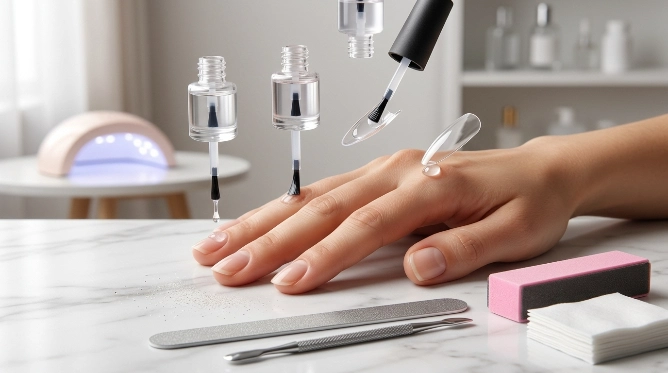
Nail dehydrator prepares the natural nail for the products that create the actual bond. It is a preparation step rather than the adhesive itself.
Think of it as cleaning the foundation before building on top of it.
It removes temporary surface oils
Natural nails can collect oil from the skin, cuticle products, lotions, hair products, and normal hand contact. Even a freshly washed hand may pick up oil again quickly.
A dehydrating prep helps leave the nail surface temporarily drier before the next product is applied.
It helps create consistent prep
Some people naturally have oilier nail plates than others. Daily habits can also change how much contamination reaches the nail surface.
Using a consistent prep process makes it easier to troubleshoot retention because you’re removing one major variable.
It does not replace every other Gel X step
This is where many beginners get confused. Dehydrator does not automatically replace primer, tip etching, gel adhesive, or correct curing.
Each product should have a clear job. More bottles aren’t automatically better.
- Dehydrator or pH bonder: Prepares the natural nail surface.
- Primer: Promotes adhesion when required by the system.
- Tip prep: Etches or prepares the underside of the Gel X tip.
- Extend gel or gel adhesive: Creates the cured bond between nail and tip.
If your manufacturer combines some of these functions, follow that system rather than mixing routines from several brands.
Nail Dehydrator vs Primer vs pH Bonder vs Gel-X Prep
These products sound similar, but they are not interchangeable. The biggest difference is whether a product prepares the natural nail, promotes bonding, or prepares the artificial tip.
| Product | Where It Goes | Main Purpose | Lamp Needed? | Same as Dehydrator? |
|---|---|---|---|---|
| Nail dehydrator | Natural nail | Removes surface oil and moisture before bonding products | Usually no | Yes, this is the dehydration step |
| Aprés pH Bonder | Natural nail | Dehydrates and rebalances the natural nail | No curing step listed | Fills the dehydrating role in the Aprés system |
| Nail primer | Natural nail | Promotes adhesion between nail and enhancement | Depends on formula | No |
| Gel-X Prep | Inside the Gel-X tip | Chemically etches the tip for adhesion | Not used as the cured adhesive | No |
| Extend Gel | Between nail and tip | Bonds the soft gel extension to the nail | Yes; Aprés specifies a full LED cure after flash curing | No |
The important distinction is that Gel-X Prep is for the artificial tip, not a replacement for dehydrating the natural nail. Aprés describes Gel-X Prep as a chemical etching product for the underside of its tips.
Likewise, primer shouldn’t automatically replace dehydrator unless your product manufacturer specifically says the formula performs both functions.
How Do You Prep Nails for Gel X?
A good Gel X prep routine should leave the natural nail clean and lightly prepared without aggressively thinning it. The exact order can vary by brand, so product instructions should take priority.
For a typical full-cover soft gel extension routine, the process looks like this:
- Start with clean, dry hands. Avoid applying hand cream or cuticle oil immediately before the service.
- Gently manage the cuticle area. Remove loose non-living tissue from the nail plate without cutting aggressively into healthy skin.
- Shape the free edge. Keep the natural nail short enough to fit comfortably beneath the extension.
- Lightly remove surface shine. Use the file or buffer recommended by your nail system and avoid over-filing.
- Remove all dust. Dust trapped around the cuticle or sidewalls can interfere with the bond.
- Apply dehydrator or pH bonder. Use a thin, controlled coat across the natural nail while avoiding surrounding skin.
- Use primer if your system requires it. Don’t add one simply because another tutorial uses it.
- Choose the correct tip size. The tip should cover the nail from sidewall to sidewall without being forced flat.
- Etch the tip’s contact area. Use mechanical etching or a compatible chemical tip prep as directed.
- Apply and cure the gel adhesive correctly. Prevent uncured gel from flooding onto the skin.
Don’t touch the nail after dehydrating it
Once the nail is prepared, avoid touching the plate with your fingertips. Skin contact can put fresh oils back onto the surface you just cleaned.
If you accidentally touch a nail, it’s safer to clean and prep it again rather than hoping the contamination won’t matter.
Match the tip to the natural nail
Preparation alone cannot compensate for a badly fitted tip. A tip that is too small may create pressure and lifting along the sidewalls.
Aprés recommends choosing a tip that comfortably spans the natural nail instead of forcing a smaller size into position.
Section Takeaway: Dehydrator works best as one part of a complete prep routine. Clean cuticle work, correct tip sizing, proper etching, controlled gel placement, and complete curing all affect retention.
Can You Do Gel X Without a Separate Dehydrator?
Yes, you can sometimes do Gel X without a bottle specifically labeled “dehydrator” when your nail system supplies another product designed to perform that prep function. What you shouldn’t do is automatically remove the dehydration step from a system that calls for one.
For example, the Aprés Gel-X Signature Kit includes pH Bonder rather than requiring a generic dehydrator from another brand.
Check the instructions before adding extra products
Mixing dehydrators, primers, bonders, base gels, and adhesives from several systems can make troubleshooting harder. It can also create combinations the manufacturers haven’t tested together.
A simpler approach is:
- Identify what your kit uses to clean or dehydrate the natural nail.
- Check whether primer is required, recommended, or optional.
- Find the product intended to prepare the inside of the tip.
- Use the compatible gel adhesive.
- Follow the stated lamp and curing instructions.
What about alcohol or acetone?
Some technicians use a cleanser or high-percentage alcohol during prep, but that doesn’t mean it is automatically interchangeable with every branded dehydrator or bonder. Formulas and system instructions differ.
If retention matters, follow the prep products recommended for the system you’re using rather than building the routine from unrelated tutorials.
Why Does Gel X Still Lift After Using Dehydrator?
Dehydrator cannot fix every cause of Gel X lifting. If tips still pop off, look at the entire application instead of repeatedly adding more dehydrator.
Aprés specifically points to nail preparation, tip sizing, and tip etching as important factors in retention.
Common causes of Gel X lifting
- Cuticle left on the nail: Gel may bond to loose tissue instead of the solid nail plate.
- Tip is too small: A narrow tip can pull against the sidewalls and lift.
- Tip isn’t etched: A smooth contact surface can reduce mechanical or chemical grip.
- Air pockets remain: Poor placement can leave gaps beneath the extension.
- Gel touches skin: Flooding can create lifting and increases unwanted skin exposure to uncured product.
- Insufficient curing: The adhesive must receive the cure required by its manufacturer.
- Nail was touched after prep: Finger oils can contaminate the prepared surface.
- Wrong product combination: Products from unrelated systems may not perform as expected together.
What if your nails are naturally oily?
An oily nail plate may need closer attention during preparation. Aprés states that users with excessively oily nail beds may benefit from a second coat of its pH Bonder.
That doesn’t mean everyone should automatically apply multiple coats. Start with the manufacturer’s standard directions and adjust only when the system itself recommends it.
Section Takeaway: If Gel X lifts despite dehydration, don’t assume you need a stronger dehydrator. Tip fit, cuticle prep, etching, gel placement, and curing may be the real cause.
How Much Nail Dehydrator Should You Use?
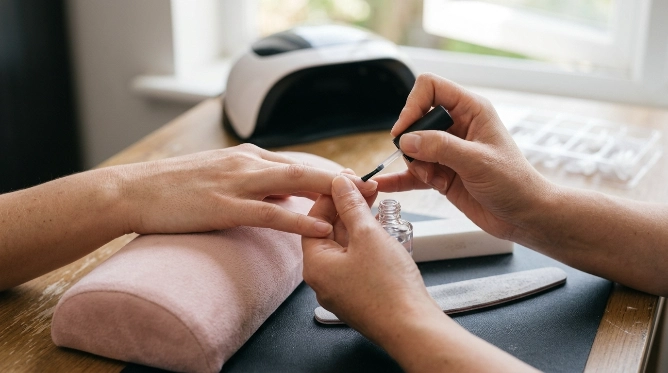
Use enough nail dehydrator to cover the natural nail in a thin, controlled layer. The nail shouldn’t be dripping or surrounded by pooled liquid.
Dehydrator is a prep product, not a coating that becomes stronger when applied thickly.
A practical application method
- Wipe excess liquid from one side of the bottle brush.
- Apply a thin coat over the natural nail plate.
- Stay away from the skin and cuticle folds.
- Allow the product to air-dry as directed.
- Continue with the next step in your nail system.
If your manufacturer’s instructions specify another application method, follow those directions instead.
Do you need two coats?
Most people shouldn’t assume they need two coats. Extra applications should have a specific reason and should be compatible with the product instructions.
For the Aprés system, a second pH Bonder coat is suggested specifically as a troubleshooting option for excessively oily nail beds.
Is Nail Dehydrator Safe for Gel X Prep?
Nail prep products should be used according to their labels and kept away from the skin, eyes, and mouth. The FDA advises consumers to follow nail-product directions and warning statements and to use appropriate ventilation.
You can review the FDA’s nail care product safety information for broader guidance on cosmetic nail products and common ingredients.
Avoid over-filing the natural nail
More filing doesn’t automatically create better adhesion. Repeated aggressive filing can leave natural nails thinner and more fragile.
The American Academy of Dermatology’s artificial nail guidance notes that roughening and repeated artificial-nail services can contribute to weaker nails.
Keep uncured gel off your skin
Prevent uncured gel and prep chemicals from sitting on the surrounding skin. If product floods the cuticle or sidewall, remove it before curing.
Nail products can trigger irritation or allergic contact dermatitis in some people. The AAD’s gel manicure guidance also explains steps for reducing nail and skin problems associated with repeated gel services.
Health note: Stop using a product if you develop persistent burning, itching, swelling, blistering, nail separation, or a rash. Seek advice from a dermatologist or other qualified healthcare professional when symptoms are significant or do not improve.
Frequently Asked Questions
Do you need dehydrator and primer for Gel X?
Not every Gel X system requires both. Dehydrator removes surface oils and moisture, while primer promotes adhesion. Check your specific system because some kits use a pH bonder, make primer optional, or combine prep functions differently.
Is pH Bonder the same as nail dehydrator?
Not every pH bonder and dehydrator has an identical formula. However, Aprés specifically describes its pH Bonder as a product that gently dehydrates and rebalances the natural nail, so it performs the dehydration role in its Gel-X routine.
Is Gel-X Prep a nail dehydrator?
No. Aprés Gel-X Prep is designed to chemically etch the inside of the Gel-X tip. The pH Bonder is used on the natural nail for dehydration, so the two products handle different parts of the application.
Can I use Gel X without primer?
Possibly, depending on the system. Some Gel X routines make an additional primer optional, while others may recommend one. Follow the instructions for your adhesive and prep products rather than assuming every Gel X set uses the same sequence.
Can I use alcohol instead of nail dehydrator for Gel X?
Alcohol can clean oils and residue from nails, but it isn’t automatically equivalent to every professional dehydrator or pH bonder. If your Gel X system specifies a particular prep liquid, that product is the safer choice for predictable compatibility.
Why do my Gel X nails pop off after one day?
Early popping can come from incomplete nail prep, remaining cuticle, poor tip sizing, insufficient tip etching, air pockets, contamination after dehydrating, or curing problems. Check each step before blaming the adhesive or applying extra prep products.
Should I dehydrate the Gel X tip too?
The natural nail is dehydrated, while the inside of a Gel X tip is usually etched or chemically prepared. These are different steps. For Aprés Gel-X tips, Gel-X Prep is designed specifically to etch the tip’s contact area.
Final Takeaway
So, do you need nail dehydrator for Gel X? You generally need a proper dehydration step, but you may not need a separate bottle carrying that exact name.
In the Aprés Gel-X system, pH Bonder handles natural-nail dehydration, while Gel-X Prep handles tip etching. Other brands may organize those steps differently.
As of 2026, the safest approach is still the simplest one: follow your Gel X system’s current instructions, prepare the natural nail carefully, use correctly fitted tips, keep uncured products off the skin, and cure the adhesive exactly as directed.
Good retention comes from the whole process. Dehydrator helps, but it can’t compensate for poor fit, incomplete prep, or improper curing.

