
Do You Need to Replace Nail Files? A Simple Hygiene Guide

If you have a favorite nail file that has been sitting in your manicure kit for months, you may eventually wonder: do you need to replace nail files, or can you keep using the same one indefinitely?
The answer depends mostly on the type of file you own.
Disposable emery boards wear out relatively quickly and can be difficult to clean thoroughly because they are porous. Glass, crystal, and some metal nail files can last much longer when they are kept clean and undamaged.
Knowing when to replace a nail file matters for more than getting a smooth manicure. A worn or contaminated file may work poorly, snag the nail, or spread unwanted germs between nails or people.
This guide explains how long different nail files can last, the warning signs that yours needs replacing, how hygiene changes the answer, and when upgrading to a reusable file makes sense.
Quick Answer
Yes, you need to replace nail files when they become worn, damaged, dirty, or difficult to clean. Disposable emery boards generally need replacing much more often than glass, crystal, or metal files. Never share a personal nail file, and discard porous files after using them on a nail that may have an infection.
Why Nail Files Do Not Last Forever
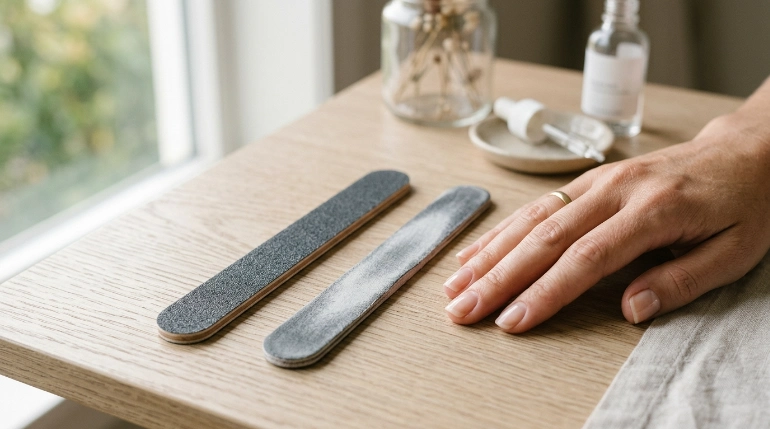
A nail file works by using a textured abrasive surface to gently remove tiny amounts of nail material.
Every time you file your nails, that abrasive surface experiences wear. Nail dust, polish residue, oils, moisture, and skin debris can also collect on the file.
Eventually, one of two things happens:
- The file becomes too smooth to shape your nails efficiently.
- The file becomes too difficult to keep hygienically clean.
The first problem affects your manicure. The second can affect nail and skin health.
The American Academy of Dermatology’s healthy nail recommendations include using an emery board to keep nails shaped and free of snags. However, the condition of the file matters. A file with damaged, uneven, or heavily worn grit will not perform like a fresh one.
How Often Should You Replace a Nail File?
There is no universal calendar rule such as replacing every nail file exactly once a month.
Condition matters more than age.
Someone who files long acrylic nails every week will wear out a disposable file much faster than someone who lightly shapes short natural nails twice a month.
Here is a practical comparison.
| Nail File Type | Typical Replacement Approach | Replace When |
|---|---|---|
| Emery board | Replace regularly | Grit becomes smooth, board bends, surface looks dirty, or edges fray |
| Disposable foam file | Replace regularly | Abrasive coating wears down, foam tears, or file cannot be cleaned |
| Buffing block | Replace relatively often | Surface becomes smooth, stained, torn, or contaminated |
| Glass/crystal file | Long-term reusable | Cracked, chipped, permanently roughened, or otherwise damaged |
| Metal file | Long-term reusable | Rusted, bent, damaged, or abrasive surface stops working properly |
| Electric-file sanding band | Disposable | Replace after use as directed; do not treat disposable bands as permanent accessories |
These are practical guidelines rather than expiration dates. Always follow the manufacturer’s instructions when your specific file includes cleaning or replacement recommendations.
Signs Your Nail File Needs to Be Replaced
You usually do not need to guess. A worn file gives several clues.
The Grit Feels Smooth
This is the most obvious sign.
Run a clean finger gently over the abrasive surface. If an emery board that once felt noticeably textured now feels almost smooth, it has lost much of its filing ability.
You may notice yourself applying more pressure or making many more passes across the nail.
Replace it instead of pressing harder.
Too much filing pressure can make it easier to over-file thin or fragile nails.
The File Is Fraying or Peeling
Disposable files often begin separating around their edges.
You may see:
- Paper layers peeling apart
- Loose abrasive particles
- Torn foam
- Frayed edges
- A bent center
- Sections of missing grit
Once the surface becomes uneven, filing can feel rough and unpredictable.
A fresh file is inexpensive compared with repeatedly snagging or stressing your nails.
The File Looks Permanently Dirty
Some nail dust can simply be brushed away. Reusable files may also be washable if their manufacturer allows it.
A porous emery board is different.
If it remains stained, has polish or product embedded in its surface, smells unusual, or has obvious debris that cannot be removed, replacing it is usually the simplest choice.
It Takes Much Longer to Shape Your Nails
A good file should remove nail material gradually without requiring excessive force.
If your normal shaping routine suddenly takes twice as long, the abrasive surface may simply be worn out.
Do not compensate by aggressively sawing back and forth.
Replace the file first and see whether normal filing becomes easier again.
The File Has Been Used on a Suspicious Nail
Be more cautious if you have filed a nail that is:
- Thickened
- Yellow or unusually discolored
- Crumbling
- Lifting from the nail bed
- Painful
- Surrounded by inflamed skin
Those changes can have many causes, and appearance alone cannot diagnose an infection.
However, if fungal or another infectious nail problem is possible, do not keep using the same porous file on healthy nails.
The American Academy of Dermatology advises against sharing nail-grooming tools as part of its guidance for preventing nail fungus.
Disposable vs. Reusable Nail Files
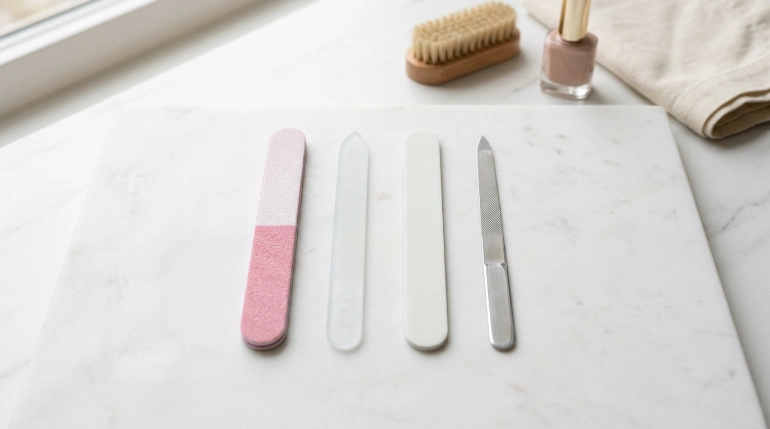
Choosing the right file can make replacement decisions much easier.
Emery Boards
Traditional emery boards are affordable, lightweight, and convenient.
They are especially useful when you want:
- Several grit options
- An inexpensive manicure tool
- Files for travel
- Disposable tools for occasional use
Their weakness is durability.
Because many emery boards are porous, they are not designed for indefinite reuse.
Professional sanitation standards illustrate this distinction clearly. For example, Maryland’s nail technician sanitation requirements state that an emery board or disposable file should be discarded after use on a client, while washable files may be disinfected for reuse. You can review those official nail technician sanitation requirements.
Your personal at-home manicure is not the same as a professional salon service, but the rule highlights why porous and nonporous tools are treated differently.
Glass and Crystal Nail Files
A quality glass or crystal nail file can be a better long-term option.
Instead of an abrasive paper coating glued to a flexible board, the filing texture is created on the glass surface.
Advantages may include:
- Longer lifespan
- Easy cleaning
- Consistent filing surface
- Less disposable waste
- Good control for natural nails
The main downside is cost. A glass file generally costs more upfront than a basic emery board.
It can also break if dropped on a hard floor.
Still, if you regularly replace disposable files, a reusable glass file may be more economical over time.
Metal Nail Files
Metal files are another reusable option.
They are durable and easy to wipe or clean when the manufacturer permits it. However, some metal files are relatively coarse, which may feel aggressive on thin or peeling natural nails.
Choose the grit and tool according to what you are filing rather than assuming the strongest file is automatically the best.
Buffing Blocks
Buffing blocks deserve special attention because they can look usable even after their abrasive surfaces are worn.
A buffer generally contains different surfaces designed to smooth or polish the nail.
Replace it when:
- The surfaces no longer feel distinct
- The block tears or breaks down
- Product becomes embedded in it
- It stays visibly dirty
- It has been used on a potentially infected nail
Buffing too aggressively can thin the nail plate, so a worn buffer is not a reason to press harder.
Can You Clean a Nail File Instead of Replacing It?
Sometimes.
The correct answer depends on the file material and the manufacturer’s directions.
Glass, Crystal, and Washable Files
Many reusable glass or similar nonporous files can be cleaned after use.
A basic home routine may involve:
- Removing visible nail dust.
- Washing the file according to its care instructions.
- Rinsing thoroughly if washing is permitted.
- Allowing it to dry completely.
- Storing it in a clean, dry case or drawer.
If the manufacturer provides specific cleaning or disinfection instructions, follow those rather than improvising with harsh chemicals.
Emery Boards and Other Porous Files
A disposable emery board is harder to clean thoroughly because debris can settle into its textured, porous surface.
Trying to stretch one board indefinitely to save a small amount of money is usually not worth it.
Once it becomes heavily worn or contaminated, replace it.
Expert Tip: Keep one file only for your own natural fingernails and another for toenails if you want an easy way to reduce cross-use. Labeling their storage sleeves can prevent accidental mix-ups.
Why Nail File Hygiene Matters
Your hands and nails naturally encounter microorganisms throughout the day.
The CDC’s guidance on nail hygiene notes that dirt and germs can live underneath fingernails and recommends keeping nails clean.
A nail file repeatedly moves across the nail edge and may occasionally touch nearby skin. If the skin is cut, irritated, or inflamed, good tool hygiene becomes even more important.
Do Not Share Personal Nail Files
Sharing manicure tools is an unnecessary hygiene risk.
Keep your nail file personal, just like other grooming tools.
This is particularly important when someone has:
- A known or suspected fungal nail infection
- Broken skin around the nail
- Bleeding
- Unexplained nail discoloration
- Inflamed nail folds
If another person has already used your disposable file, replacing it is the simplest option.
What If You Have Gel, Acrylic, or Dip Nails?
Artificial enhancements can wear files down faster than natural nails.
A file used to shape acrylic or remove bulk product may experience substantially more abrasion than one used only to smooth the free edge of a natural fingernail.
You may therefore need to replace disposable files more frequently if you regularly maintain:
- Acrylic nails
- Dip powder
- Builder gel
- Hard gel
- Thick press-on extensions
The grit also matters.
A coarse file designed for reducing artificial product can be unnecessarily harsh on a thin natural nail.
Do not use aggressive filing to remove enhancement products unless you understand the removal process. Over-filing can reach the natural nail plate and leave it thin, sensitive, or sore.
When you are uncertain, professional removal is safer than repeatedly grinding away product at home.
What Does Replacing Nail Files Cost?
Fortunately, basic nail files are among the less expensive manicure tools.
Disposable emery boards are commonly sold in multipacks, making the cost per file low. Professional-quality reusable glass, crystal, or metal files generally cost more initially but may last substantially longer.
Think about cost per use rather than purchase price alone.
For example, someone who frequently goes through inexpensive disposable boards may eventually spend more than someone who buys one durable reusable file and cares for it properly.
However, durability should never override hygiene.
A cheap file is not worth keeping once it is badly worn or contaminated.
Nail File Replacement for Sensitive or Fragile Nails
If your nails are thin, peeling, brittle, or sensitive, the condition of your file becomes especially important.
A worn file may tempt you to press harder. A very coarse file may remove more nail than intended.
Instead:
- Choose a finer grit intended for natural nails.
- File gently.
- Stop if the nail becomes warm, sore, or uncomfortable.
- Replace files with uneven surfaces.
- Avoid repeatedly buffing already-thin nails.
- Keep the surrounding skin moisturized and protected.
The goal is shaping the nail, not grinding away large amounts of the nail plate.
Common Mistakes to Avoid
Even simple manicure tools are easy to misuse. Avoid these common habits:
- Keeping an emery board forever. Replace it once the abrasive surface stops working properly.
- Sharing nail files. Keep personal grooming tools personal.
- Using the same contaminated file on every nail. Discard porous files used on a nail with a possible infection.
- Pressing harder when the file becomes dull. A fresh file is safer and more efficient.
- Using very coarse grit on thin natural nails. Match the grit to the job.
- Storing damp reusable files in closed containers. Allow cleaned tools to dry properly before storage.
- Filing painful or visibly damaged nails. Pain, swelling, bleeding, or major nail changes deserve more attention than a cosmetic fix.
- Trying to file off every nail problem. Discoloration, thickening, or lifting may have an underlying cause that filing cannot solve.
When to See a Nail Technician or Dermatologist
A nail file is a grooming tool, not a treatment for nail disease.
A licensed nail technician can help when your main concern is cosmetic maintenance, such as shaping an enhancement or safely removing certain manicure products.
A dermatologist is the better choice when you notice possible medical warning signs.
Consider medical advice if you have:
- Persistent nail pain
- Swelling or redness around the nail
- Pus or drainage
- Significant nail lifting
- Thick, crumbling nails
- Green, yellow, brown, or black discoloration without an obvious cosmetic cause
- Repeated nail changes that do not grow out
- Bleeding or an injury that is not healing
- A suspected fungal infection
- Nail changes alongside other skin symptoms
Do not repeatedly file a suspicious nail to make it look thinner or smoother. That may hide the appearance temporarily without addressing the underlying problem.
How to Build a More Hygienic Nail File Routine
You do not need a complicated sanitation station for a basic personal manicure.
A few habits make a big difference.
- Start with clean hands and nails.
- Inspect your file before using it. Look for dirt, peeling, cracks, rust, or worn grit.
- Use gentle pressure.
- Keep your file for personal use only.
- Clean reusable files according to their manufacturer’s directions.
- Allow reusable tools to dry completely.
- Store clean tools away from used cotton, nail dust, and product spills.
- Replace porous files when they are dirty, damaged, worn, or potentially contaminated.
This routine keeps your manicure kit simpler while helping your tools perform consistently.
FAQs
Do nail files expire?
Most nail files do not have a specific expiration date. Instead, replace them according to condition. If the grit is worn, the file is damaged, or it cannot be kept clean, it is time for a new one.
How many times can you use an emery board?
There is no reliable fixed number for personal use because wear depends on nail thickness, grit, filing pressure, and how much shaping you do. Replace an emery board once the abrasive surface becomes smooth, damaged, or dirty rather than counting uses.
Can I wash an emery board?
Some products may be marketed as washable, but traditional porous disposable emery boards are generally better replaced when heavily soiled. Follow the manufacturer’s instructions for your specific file rather than assuming every emery board can be washed and reused.
How long does a glass nail file last?
A well-made glass file can last much longer than a disposable emery board when cared for properly. Replace it if it develops chips, cracks, or damage that makes filing uncomfortable or unsafe.
Should I throw away a file after using it on a fungal nail?
For a porous disposable file, replacing it is the safer choice. Do not continue using the same disposable file across healthy nails when an infection is suspected. If you have ongoing nail changes, consult a dermatologist instead of relying on filing.
Can two people share a glass nail file?
It is still better for each person to have personal nail-grooming tools. If a reusable professional tool is shared in a salon, proper cleaning and disinfection procedures are expected between clients. At home, individual files are simpler and reduce unnecessary cross-use.
Should I replace my nail file if it still looks good?
Not necessarily. If a reusable file is intact, performs normally, can be properly cleaned, and has not been contaminated, it may still be perfectly usable. Replacement should be based on the file’s material and condition rather than age alone.
Conclusion
So, do you need to replace nail files? Yes—but how frequently depends on the type you use.
Disposable emery boards and porous buffers should be replaced whenever they become worn, damaged, dirty, or potentially contaminated. Glass, crystal, and suitable metal files can generally remain part of your manicure kit much longer when they are intact and cared for according to the manufacturer’s instructions.
Pay attention to how your file looks and feels. If you need extra pressure because the grit has disappeared, the edges are peeling, or the surface no longer seems clean, replacing it is easier than trying to squeeze out a few more manicures.
And if your nail itself looks painful, infected, unusually discolored, thickened, or damaged, put the file down and address the nail problem first.
Check your manicure kit today, retire any worn-out files, and keep the tools you use on your nails clean, personal, and appropriate for the job.

