
Does Nail Dehydrator Expire? Shelf Life, Warning Signs, and Storage Tips

Quick Answer
Yes, nail dehydrator can eventually become too old or degraded to perform as intended. However, there is no universal expiration period for every formula, and the FDA explains that cosmetic shelf life depends on formulation, use, and storage.
Signs your nail dehydrator may need replacing
- Changed smell: An odor that is noticeably different from when the bottle was new can signal a change.
- Unexpected appearance: Cloudiness, particles, discoloration, or residue deserve attention.
- Major evaporation: A rapidly falling fill level may mean the cap is not sealing properly.
- Poor nail prep: The product no longer leaves the nail surface clean, dry, and ready for the next step.
- New retention problems: Lifting begins even though your preparation and application technique have not changed.
Best rule to follow
- Follow the manufacturer’s printed expiration date or period-after-opening guidance whenever one is provided.
Nail dehydrator is easy to forget about because one small bottle can sit on a manicure shelf for months. Then one day, you notice lifting and wonder whether that half-used bottle is part of the problem.
As of 2026, the safest answer is more nuanced than simply saying every dehydrator expires after a fixed number of months. This guide explains what changes, what warning signs matter, and when replacing the bottle makes sense.
In This Guide
- Does Nail Dehydrator Expire?
- How Long Does Nail Dehydrator Last?
- How Can You Tell if Nail Dehydrator Has Gone Bad?
- Why Does Nail Dehydrator Change Over Time?
- Does Storage Affect Nail Dehydrator Shelf Life?
- Is Expired Nail Dehydrator Safe to Use?
- Nail Dehydrator vs. Primer: What’s the Difference?
- How Do You Make Nail Dehydrator Last Longer?
- Frequently Asked Questions
Does Nail Dehydrator Expire?
Yes. A nail dehydrator can eventually change enough that replacing it is the smarter choice, even when the bottle has no printed expiration date.
The important point is that there isn’t one expiration timeline that applies to every brand. Formula, packaging, storage, and how often you open the bottle all matter.
Definition: A nail dehydrator is a nail-preparation liquid designed to remove or reduce surface moisture and oils before gel, acrylic, builder gel, dip, or another enhancement system is applied.
Many current dehydrators contain fast-evaporating solvents such as isopropyl alcohol, ethyl acetate, and isobutyl acetate. Formulas differ, so your own ingredient label remains the best reference.
The dehydrator usually goes on after physical nail preparation and cleaning. It air-dries before primer, bonder, base coat, or another product required by your system.
I would never throw away a bottle only because somebody online says all dehydrators expire after exactly 12 or 24 months. I would check the manufacturer’s directions and the condition of the product first.
Section Takeaway: Nail dehydrator does not have one universal expiration date. Product-specific instructions and visible performance changes matter more than a generic calendar rule.
How Long Does Nail Dehydrator Last?
The exact shelf life depends on the manufacturer. If the bottle provides an expiration date, batch guidance, or period-after-opening symbol, follow that information first.
U.S. cosmetic regulations generally do not require every cosmetic to carry an expiration date. That means an undated bottle is not unusual.
- Unopened bottle: Keep it sealed and follow any manufacturer storage and shelf-life instructions.
- Opened bottle: Write the opening date on the bottom or side with a permanent marker.
- Frequently used salon bottle: Watch the fill level and cap seal because repeated opening increases solvent loss.
- Old bottle with no date: Inspect smell, clarity, evaporation, and performance before trusting it on a new set.
Don’t assume a 12-month, 18-month, or 24-month recommendation from another brand applies to yours. Manufacturers can use different solvent blends and packaging.
A bottle may also be emptied through normal use before age becomes a concern. Home users often keep the same small bottle much longer than busy professionals.
Does the opening date matter?
Yes. Every opening allows volatile ingredients to interact with air, and some solvent can escape before the cap closes again.
A simple date label removes guesswork. For example, writing “Opened: September 2026” immediately tells you how long the bottle has been in active use.
How Can You Tell if Nail Dehydrator Has Gone Bad?
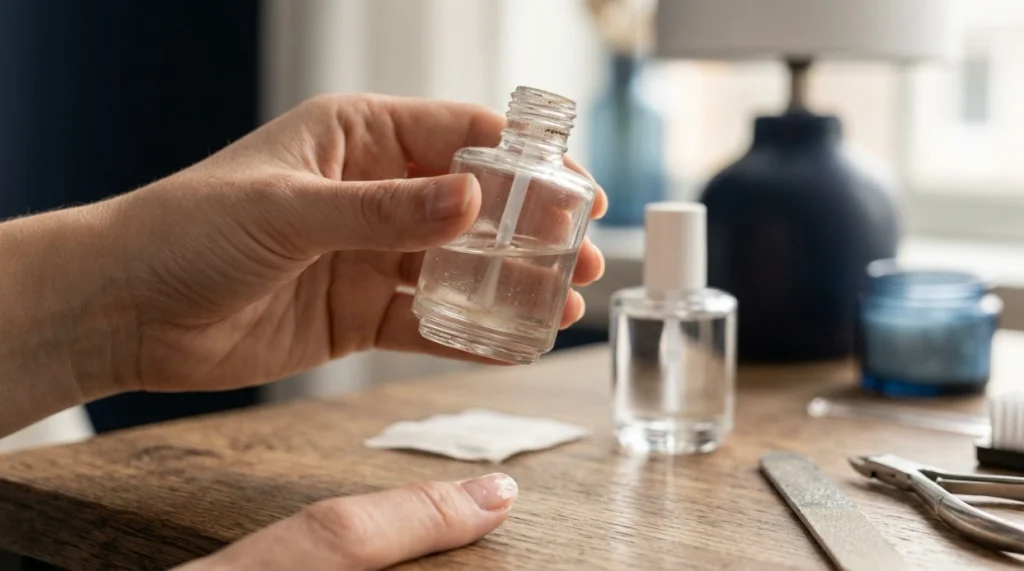
Look for changes rather than relying on age alone. A questionable bottle often gives you several clues.
| What to Check | Normal Bottle | Reason to Replace or Investigate |
|---|---|---|
| Appearance | Matches the product’s usual clear or expected appearance | New cloudiness, particles, discoloration, or unexplained residue |
| Smell | Consistent with previous uses | Noticeably different or unusual odor |
| Fill level | Falls gradually with use | Drops unexpectedly while stored |
| Drying behavior | Air-dries as expected | Behavior differs clearly from normal |
| Retention | Consistent with your normal prep routine | Sudden lifting appears without another obvious cause |
Performance is particularly useful when everything else in your routine stays constant. Don’t blame the dehydrator immediately, though.
Lifting can also come from cuticle residue, touching the nail after prep, product on the skin, incompatible systems, or incorrect curing.
What if the liquid level keeps dropping?
Solvent-based nail products can evaporate when containers are not tightly closed. Check the cap, threads, neck, and bottle for residue or damage.
Do not pour random alcohol, acetone, or another solvent into an old bottle to “restore” it. You could change the manufacturer’s intended formula.
Why Does Nail Dehydrator Change Over Time?
Nail dehydrator often contains volatile ingredients. Volatile simply means they evaporate readily at normal conditions.
That quick evaporation is useful during nail preparation. It also makes good bottle closure and storage important.
- Air exposure: Repeated opening gives volatile ingredients more opportunities to escape.
- Heat: Hot storage conditions can accelerate changes in many cosmetic products.
- Sunlight: Direct sun can heat the bottle and may affect product stability.
- Contamination: Dirty brushes, bottle rims, or improper handling can introduce unwanted material.
- Loose caps: Even a small sealing problem can increase evaporation during storage.
The FDA recommends keeping cosmetic containers clean and tightly closed. It also advises protecting cosmetics from temperature extremes.
That’s especially sensible for a fast-drying nail-prep liquid. A bottle can look perfectly clean outside while its composition slowly changes through solvent loss.
Does Storage Affect Nail Dehydrator Shelf Life?
Yes. Proper storage gives your dehydrator the best chance of remaining consistent throughout its intended life.
The safest approach is simple: follow the storage directions printed by the manufacturer.
- Close the bottle immediately. Don’t leave it open while filing, shaping, or working on another hand.
- Keep the neck clean. Product buildup can prevent the cap from sealing correctly.
- Store it upright. This reduces unnecessary contact between liquid and the cap assembly.
- Avoid direct sunlight. Use a cool, dry storage area instead of a sunny windowsill.
- Keep it away from heat and flames. Many nail-prep solvents are flammable.
- Record the opening date. One small label makes future decisions much easier.
The CDC’s NIOSH guidance for nail technicians also stresses controlling exposure to nail-product chemicals. Good ventilation and closed chemical containers are sensible habits.
Practical tip: Keep dehydrator at your workstation only while you need it. Close it before moving to primer, base, gel, or acrylic.
Section Takeaway: Heat, sunlight, repeated air exposure, and a poor cap seal can shorten useful product life. Cool storage and immediate recapping are simple safeguards.
Is Expired Nail Dehydrator Safe to Use?
If the manufacturer says the product has expired, replacing it is the safest choice. The same applies when the formula looks, smells, or behaves differently.
There is little benefit in gambling on a questionable prep product. Dehydrator is used to improve the reliability of the manicure, not add uncertainty.
The FDA’s nail-care safety guidance recommends following product directions and warning statements. Good ventilation is also important when using nail products.
Safety note: Stop using a nail product if it causes unexpected burning, redness, swelling, rash, or another reaction. Seek medical advice when needed.
Can old dehydrator damage your manicure?
A degraded product may not prepare the nail surface as consistently as expected. That could contribute to adhesion problems.
However, poor retention alone does not prove your dehydrator is expired. Nail preparation and product compatibility should be checked at the same time.
Nail Dehydrator vs. Primer: What’s the Difference?
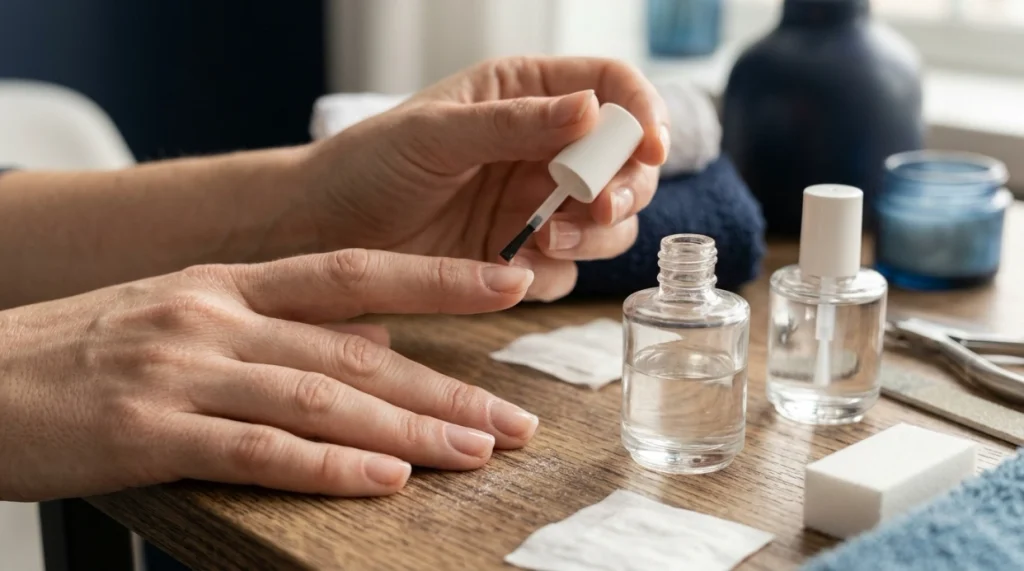
Nail dehydrator and primer are not the same product. Dehydrator handles moisture and oils, while primer or bonder supports adhesion in systems that require it.
The usual sequence is dehydrator first, then primer. Always follow the order specified by your particular nail system.
| Feature | Nail Dehydrator | Nail Primer |
|---|---|---|
| Main job | Reduces surface moisture and oils | Supports bonding between the nail and enhancement system |
| Usual order | First | After dehydrator when required |
| Drying | Usually air-dries quickly | Varies by formula and system |
| Can it age? | Yes | Yes |
| Interchangeable? | No | No |
Do not judge primer and dehydrator by identical signs. Primers can use substantially different chemistry depending on whether they are acid-based or acid-free.
When one product in a matched system is questionable, replacing that product is usually better than trying to modify it yourself.
How Do You Make Nail Dehydrator Last Longer?
The best strategy is preventing unnecessary evaporation and contamination. You don’t need complicated storage equipment.
- Open only when needed: Finish filing, cuticle work, and dust removal before opening the bottle.
- Work efficiently: Apply the dehydrator, close the bottle, and continue with your system.
- Protect the cap: Wipe product from the neck if buildup prevents a tight seal.
- Keep products separated: Avoid transferring primer, gel, dust, or cleanser into the dehydrator bottle.
- Store consistently: Don’t move it repeatedly between a hot car, sunny room, and cool cabinet.
- Track changes: Note the opening date and replace the bottle when performance changes materially.
One habit has saved me more guesswork than anything else: I write the opening month and year directly on products that lack clear dating. It takes five seconds.
If lifting suddenly begins, I then know the bottle’s age instead of trying to remember when I bought it.
Frequently Asked Questions
Does nail dehydrator expire if it has never been opened?
It can still have a finite shelf life. An unopened bottle is better protected from repeated air exposure, but you should still follow any manufacturer expiration date, storage instructions, or batch information printed on the packaging.
Can I use nail dehydrator after the expiration date?
I wouldn’t recommend ignoring a manufacturer-provided expiration date. Replacing an expired bottle removes uncertainty about performance and avoids relying on a product outside its stated useful period.
Why did my nail dehydrator bottle become half empty?
Evaporation is a likely explanation if the product contains volatile solvents and the cap was loose or damaged. Check the bottle and closure for leaks, residue, or a poor seal before continuing to use it.
Can I add alcohol to old nail dehydrator?
No. Adding alcohol, acetone, or another solvent changes the original formulation and concentration. Replace a questionable bottle instead of trying to rebuild the formula at home.
Does nail primer expire too?
Yes, nail primer can also have a shelf life, but its chemistry differs from dehydrator. Follow the primer manufacturer’s date and storage instructions rather than applying the dehydrator’s rules to both products.
Can expired dehydrator cause lifting?
A degraded dehydrator could contribute to poor preparation and retention, but lifting has many possible causes. Check cuticle removal, nail cleanliness, product contact with skin, system compatibility, curing, and application technique too.
How should I store nail dehydrator?
Keep it tightly closed, upright, and away from direct sunlight, excessive heat, and ignition sources. Follow any brand-specific storage warnings, and use adequate ventilation while working with nail products.
The Bottom Line
So, does nail dehydrator expire? Yes, it can age or degrade, but there is no reliable one-size-fits-all expiration period for every bottle.
Use the manufacturer’s date when available. Otherwise, track when you opened it and watch for changes in appearance, smell, evaporation, and performance.
If you are unsure about an old bottle, replacement is usually the simplest choice. Fresh, properly stored prep products remove one more variable from your manicure routine.
Final takeaway: Keep the bottle tightly closed, store it correctly, record the opening date, and don’t attempt to dilute or restore a product that has changed.
