Does Nail Polish Remover Damage Nails? A Beginner-Friendly Guide

If you’ve ever taken off polish and thought, “Why do my nails feel dry and rough now?”, you’re not imagining it. Nail polish remover can make nails and the skin around them feel temporarily dry, but that does not always mean your nails are permanently damaged.
The short answer is this: remover can be drying, especially if you use it often or leave it on too long, but most of the effect is usually moisture loss rather than true structural harm to the nail. In other words, your nails may feel weaker for a while without actually being ruined.
The good news is that you can use remover more gently. The way you remove polish matters just as much as the formula you choose.
How Nail Polish Remover Works on Nails
Nail polish remover works by dissolving the polish so it can be wiped away. That’s why it’s effective: it breaks down the polish instead of forcing you to scrape it off.
The trade-off is that the same solvents that loosen polish can also lift some of the natural oils from the nail plate and the skin around it. That’s why nails often look dull or feel a little “stiff” right after removal. Poison Control notes that acetone, the most common remover ingredient, can irritate skin and leave nails and cuticles drier, and repeated overexposure can make nails seem more brittle over time. You can read more about that on Poison Control’s nail polish remover guidance.
A helpful way to think about remover is this: it doesn’t usually “eat” the nail, but it can leave the nail surface drier than before. That dryness is what makes nails feel less flexible for a bit.

Temporary Dryness vs. Real Nail Damage
A lot of people use “damage” to describe any rough feeling after polish removal, but those are not always the same thing.
Temporary dryness usually looks like:
- Nails feeling rough or dull
- A chalky or dry surface
- Cuticles looking a little tight
- Mild brittleness that improves after moisturizing
Real nail damage is more likely to show up as:
- Persistent peeling
- Splitting that doesn’t improve
- Cracking
- Pain, redness, or burning around the nail
- Nail changes that keep getting worse
After removing polish, nails often feel drier, duller, and more brittle. That does not automatically mean the nail plate has been permanently harmed. It often means the nail needs moisture back. A good general explanation of this difference is also covered by Typology’s overview of remover and nail dryness.
For beginners, this is the key question to ask: “Does my nail just feel dry, or is it actually changing shape, splitting, or becoming painful?” Dryness is common. Ongoing peeling or cracking deserves more attention.
Acetone vs. Non-Acetone Remover: Which Is Gentler?
This is one of the most common beginner questions, and the answer depends on what you’re removing.
| Remover type | What it does well | Main downside | Best for |
|---|---|---|---|
| Acetone remover | Removes polish quickly and efficiently | Can be more drying to nails and skin | Regular polish, glitter, tougher formulas |
| Non-acetone remover | Often feels gentler on the skin | May need more rubbing and more time | Regular polish when you want a milder option |
Acetone is usually the faster choice. That matters because shorter contact time can mean less rubbing, which is often gentler in practice. At the same time, acetone can feel harsher because it removes polish so efficiently that it may leave nails and cuticles drier.
Non-acetone remover can be a better fit if your nails already feel dry or fragile and you’re only taking off standard polish. But if you have to scrub longer to get the polish off, the extra rubbing can cancel out some of that gentler feeling. Sinclair Dermatology notes that non-acetone removers still contain chemicals and that scrubbing to remove polish can also damage nails. Their explanation is useful if you’re trying to weigh “gentler formula” against “more effort.” You can find it here.
A simple buying rule
- Choose acetone if you remove glitter polish, long-wear polish, or polish often.
- Choose non-acetone if you usually wear regular polish and want to reduce the drying feel.
What Parts of the Nail Area Can Be Affected?
Remover does not only affect the nail plate. It can also dry out the cuticles and the skin around the nails.
That matters because many beginners focus only on the nail itself. In reality, the cuticle area often shows the first signs of overuse:
– tight or flaky skin
– redness around the nail folds
– hangnails
– a stinging feeling after removal
If your nails look fine but your cuticles feel irritated, remover may still be too harsh for your current routine. The skin around the nails is thinner and more sensitive than the nail plate, so it often complains first.
This is also why “my nails are damaged” is sometimes really “my skin is dehydrated.” The fix is different. Nails need less friction and more moisture; cuticles usually need immediate rehydration.
How to Remove Polish with Less Harm
You do not need a complicated routine to be gentler on your nails. A few small habits make a real difference.
Use less remover than you think
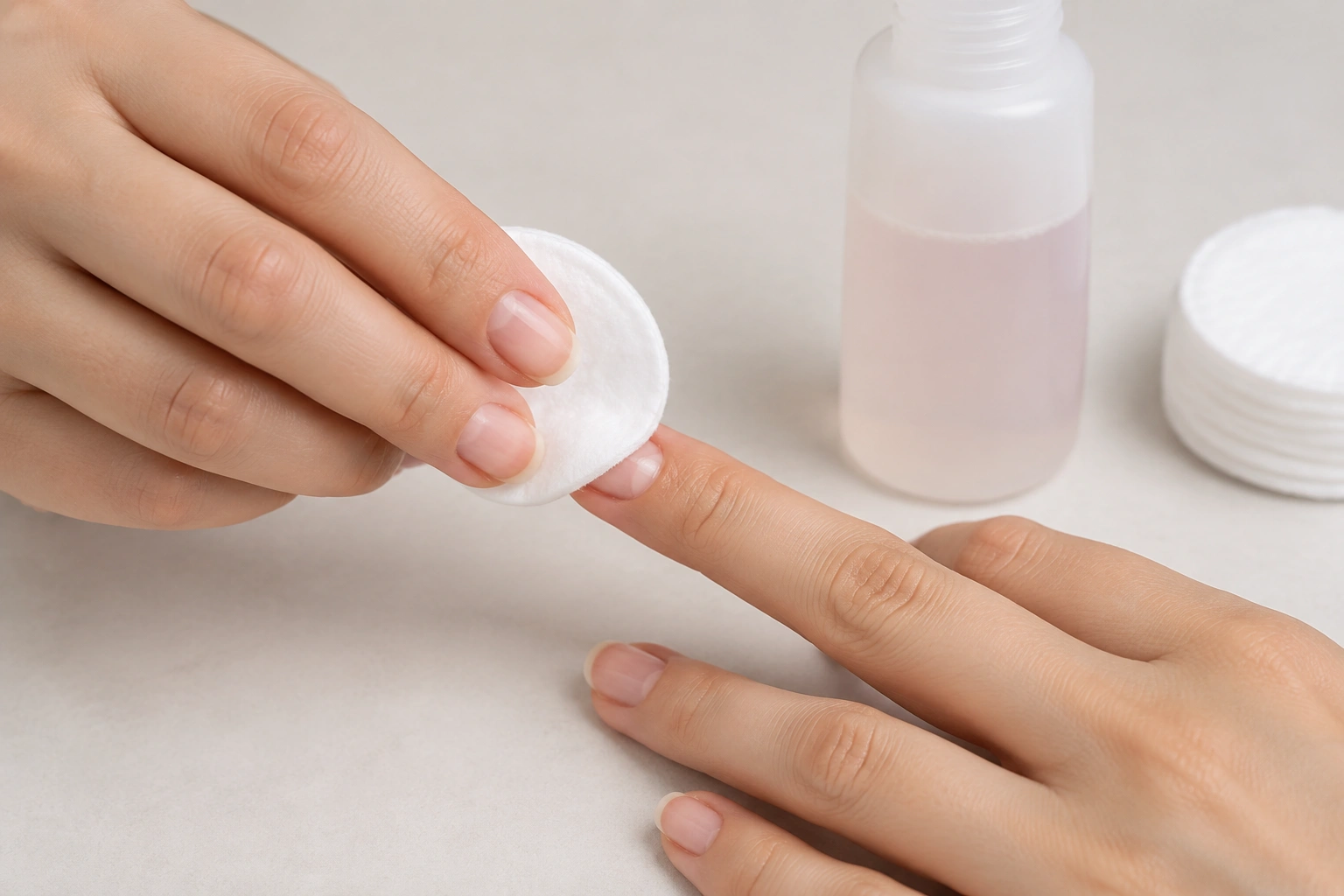
Soak the cotton pad enough to remove polish, but avoid dripping-wet pads that sit on the nail for too long. Too much liquid can keep the nail and skin exposed longer than needed.
Press, don’t scrub
Hold the pad on the nail for a few seconds, then wipe. Repeating a light press-and-wipe motion is usually better than aggressive rubbing. If the polish is stubborn, give it another short press rather than scrubbing harder.
Work one nail at a time
This keeps remover from evaporating before it can do its job. It also prevents you from letting remover sit on your nails longer than necessary while you move between hands.
Stop when the polish is lifting
Once the polish is loose, remove it. There is no reward for extra rubbing after the job is already done.
Wash and dry your hands after removal
This helps remove leftover solvent from the skin, which can reduce that tight, dry feeling.
If you want a gentle technique to copy, think: short contact, light pressure, minimal rubbing. That approach usually protects nails better than trying to force polish off quickly.
How Often Can You Use Nail Polish Remover Safely?
There isn’t one perfect number that fits everyone. Frequency matters, but so does the type of remover, the polish you wear, and how dry your nails already are.
A practical rule for beginners is this: occasional use is usually fine if your nails and cuticles feel normal between removals. If you’re changing polish several times a week, or if every removal leaves your nails feeling dry, rough, or stingy, that’s a sign to cut back, switch formulas, or improve aftercare.
Frequent polish changes can increase dryness simply because you’re exposing the nail and surrounding skin to solvent more often. That does not mean you must stop wearing polish. It does mean you may need:
– a gentler remover
– less rubbing
– more aftercare
– fewer back-to-back removals
If you remove polish once in a while, your nails may bounce back quickly. If you change color several times a week, the cumulative drying effect is more likely to show up.
Why Gel and Glitter Polishes Can Be Harder on Nails
Regular polish is usually easier to remove than glitter or long-wear formulas. That’s important because the harder a polish is to remove, the more likely you are to rub, soak, or repeat the process.
Glitter polish often clings stubbornly to the nail, so people keep wiping until it comes off. That extra friction can be rough on the nail surface and the skin around it.
Gel polish is a different story. Regular non-acetone remover is generally made for traditional nail polish, not gel. Trying to remove gel with the wrong remover can lead to picking or peeling, which is much more damaging than careful removal. Dr. Dana’s nail care guidance makes this point clearly: regular non-acetone remover is for traditional polish, not gel, and forcing removal can cause severe damage. Their explanation is here.
If you wear gel, shellac, acrylic, or SNS-style manicures, the safest choice is usually the correct removal method for that product. If you’re unsure, it’s better to ask a nail technician than to peel it off at home.
What to Do After Using Remover
This is the step many beginners skip, and it’s the one that helps most with the dry feeling.
A simple aftercare routine
- Wash your hands with mild soap and water.
- Pat them dry.
- Apply cuticle oil around each nail.
- Follow with a hand cream or moisturizer.
- Reapply moisturizer later in the day if your hands still feel tight.

Cuticle oil helps soften the skin around the nail, while moisturizer supports the rest of the hand. If your nails feel especially dry, a thicker hand cream at night can be helpful. For very dry nails, you can also seal the cuticle oil with a thin layer of petroleum jelly or another occlusive product before bed to help lock in moisture.
Think of aftercare as replacing what remover took away. You’re not trying to “treat” damage in a dramatic way; you’re simply restoring comfort and flexibility.
Signs You May Be Overusing Remover
Your nails usually give clear signals when they need a break.
Watch for:
– persistent peeling
– cracking at the edges
– redness around the nail folds
– burning or stinging after removal
– cuticles that keep splitting
– nails that feel thinner or more fragile over time
One dry removal session is not a crisis. Repeated irritation is the bigger concern. If the same symptoms keep showing up, your routine is probably too aggressive, or the remover you’re using may not suit your nails well.
If the remover itself seems to cause itching, burning, swelling, or a rash around the nails, that can point to irritation or contact sensitivity rather than simple dryness. In that case, the formula may not be a good fit.
When to See a Nail Technician or Dermatologist
If your nails stay brittle, painful, or visibly damaged even after you stop overusing remover and start moisturizing, it’s time to get help.
See a nail technician if:
– you’re unsure how to remove a stubborn polish safely
– you keep peeling off gel or long-wear products
– your nails need a gentler removal plan
See a dermatologist if:
– redness, swelling, or burning keeps happening
– nails are splitting deeply or lifting
– the problem does not improve after a break from polish and remover
– you suspect a reaction to remover ingredients, especially if you notice itching, rash, or persistent stinging
That distinction matters. Routine dryness can often be improved at home. Ongoing nail changes that do not settle down should not be ignored.
FAQ: Nail Polish Remover and Nail Health
Does nail polish remover permanently damage nails?
Usually, no. For most people, remover causes temporary dryness rather than permanent damage. Problems are more likely when remover is used often, rubbed aggressively, or left on too long.
Is acetone worse than non-acetone remover?
Acetone is often more drying, but it also removes polish faster. Non-acetone can feel gentler, yet it may require more rubbing. The better choice depends on your polish type and how dry your nails already are.
How can I remove polish without drying out my nails?
Use the least amount of remover needed, press instead of scrub, and moisturize right after. Short contact time and gentle wiping usually matter more than trying to force polish off quickly.
Can I use remover every week?
Many people do, especially if they paint their nails regularly. If weekly removal leaves your nails dry or brittle, switch formulas or improve aftercare rather than pushing through the dryness.
Why do my nails feel weak after removing polish?
That weak feeling is often dehydration. The nail and cuticle area can lose moisture during removal, which makes nails feel less flexible for a while.
Bottom Line
So, does nail polish remover damage nails? It can dry them out, and repeated rough removal can cause real problems, but most beginners are dealing with temporary dehydration rather than permanent harm. The safest routine is simple: choose the right remover for the polish, keep contact time short, avoid scrubbing, and rehydrate your nails and cuticles right after.
If you treat removal as part of nail care instead of the thing you rush through, your nails usually stay in much better shape.