
What Should You Do for Healthy Toenail Growth?

If your toenails seem slow to grow, keep splitting at the edges, or never look as smooth and healthy as you want, it is tempting to search for a product that promises faster growth. In reality, healthy toenail growth usually depends less on a “miracle” treatment and more on protecting the new nail as it forms.
So, what should you do for healthy toenail growth? Focus on gentle trimming and filing, good foot hygiene, comfortable footwear, regular moisturizing, balanced nutrition, and early attention to unusual nail changes.
Toenails naturally grow slowly. That means improvements can take months to become visible, especially if a nail has been damaged. The goal is not to force the nail to grow unnaturally fast. It is to create conditions that allow healthy nail to grow without repeatedly breaking, peeling, becoming infected, or being injured.
Quick Answer
For healthy toenail growth, keep your feet clean and dry, trim toenails straight across, gently smooth rough edges with a fine nail file, moisturize dry nails and surrounding skin, wear properly fitting shoes, eat a balanced diet, and avoid repeated nail trauma. See a professional if a toenail becomes painful, thick, discolored, swollen, or distorted.
What Healthy Toenail Growth Actually Looks Like
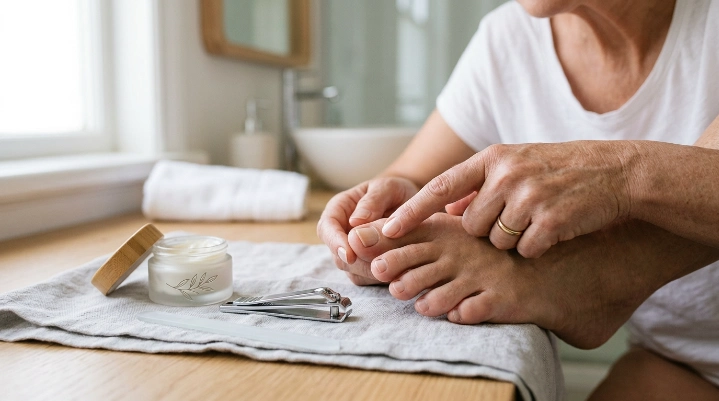
A healthy toenail does not have to look perfectly glossy or completely uniform. Minor ridges and small differences between toes can be normal.
Generally, healthy growth means you can see new nail gradually moving forward from the base without significant:
- Crumbling
- Deep splitting
- Persistent yellow or brown discoloration
- Separation from the nail bed
- Swelling around the nail
- Pain
- Bleeding or drainage
Toenails are much slower to replace than fingernails. The NHS notes that a toenail lost after injury may take up to 18 months to grow back completely.
That slow timeline is important. A routine you started two weeks ago may already be protecting the new nail, but you might not see a dramatic cosmetic difference yet.
1. Trim Toenails the Right Way
Regular trimming prevents the free edge of the nail from becoming long enough to catch inside socks, press against shoes, or split.
For most healthy toenails:
- Trim after a shower or bath if the nails are particularly hard.
- Use clean, sharp toenail clippers.
- Cut straight across rather than digging deeply into the corners.
- Leave a small visible free edge rather than cutting the nail extremely short.
- Smooth any sharp areas gently with a nail file.
The American Academy of Dermatology’s nail-trimming guidance recommends cutting toenails straight across to help reduce the risk of ingrown nails. It also advises smoothing rough edges with a nail file rather than repeatedly sawing aggressively at the nail.
Avoid cutting deeply down the sides of the nail. Doing so can irritate the surrounding skin and may encourage the nail edge to grow into it.
2. Use a Nail File Without Thinning the Toenail
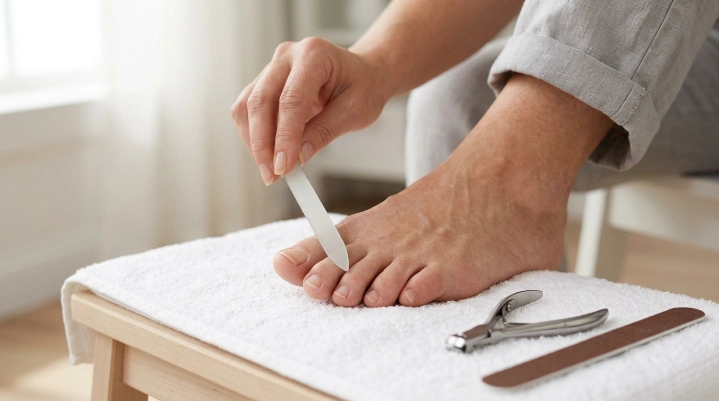
A nail file can be very helpful for maintaining healthy toenails, but the technique matters.
The file’s job is normally to smooth and shape the free edge, not grind away large amounts of the nail plate.
For natural toenails, a fine or medium-fine file is usually easier to control than an extremely coarse file.
Common Nail File Options
Glass or crystal file: Smooth, reusable, washable, and useful for controlled shaping.
Fine emery board: Affordable and easy to replace, although it wears out faster and should not be shared.
Metal file: Durable but can feel aggressive on thin or brittle nails if too much pressure is used.
Buffer block: Intended mainly for surface smoothing. Over-buffing can thin the nail, so it should be used sparingly.
File with light pressure and stop once the rough edge is smooth.
Expert Tip: Clip most of the excess length first, then use the nail file only for finishing. Filing away a large amount of toenail length creates unnecessary friction and makes it easier to over-file.
Never share a nail file that cannot be thoroughly disinfected. The AAD recommends keeping nail-grooming tools personal because fungal infections can spread through contaminated items.
3. Keep Feet Clean—but Also Dry
Healthy toenail care is not about soaking your feet constantly.
Wash your feet regularly, rinse away soap, and dry carefully around and between the toes. Shoes and socks that remain sweaty for long periods create a warm, damp environment in which fungi can thrive.
The American Academy of Dermatology’s healthy-nail recommendations emphasize keeping nails clean and dry because prolonged moisture can encourage bacterial and fungal problems.
Practical habits include:
- Changing damp socks after workouts
- Allowing shoes to dry before wearing them again
- Rotating pairs of shoes when possible
- Wearing shower sandals in communal locker rooms or pool areas
- Avoiding sharing nail clippers, files, shoes, or towels
If you frequently wear closed shoes, breathable footwear and moisture-managing socks can make everyday toenail care easier.
4. Moisturize Dry Toenails and Surrounding Skin
Keeping feet dry does not mean allowing the nails and skin to become dehydrated.
If your toenails are dry and prone to splitting, apply a simple moisturizer to the nail surface and surrounding skin after bathing. This can help keep the nail more flexible.
You do not need to flood the spaces between the toes with heavy cream, especially if your feet tend to stay damp. Concentrate moisturizer around dry nail folds, heels, and the nail plate itself.
Avoid cutting the cuticle simply because it looks dry. The cuticle helps form a protective seal near the growing portion of the nail.
5. Make Sure Your Shoes Have Enough Toe Room
Your daily shoes can influence how healthy your toenails look.
A shoe that repeatedly pushes the toenail against the front or squeezes the toes together can cause small amounts of trauma every time you walk. Over time, that may contribute to:
- Tender nails
- Dark spots after trauma
- Nail lifting
- Splitting
- Thickening
- Ingrown nail edges
Your toes should have enough room to move without repeatedly striking the shoe.
Pay particular attention to athletic shoes. Running, hiking, court sports, and long periods of walking increase the number of times your toes contact the inside of the shoe.
If a toenail repeatedly turns dark after exercise, your footwear fit deserves attention rather than simply covering the nail with polish.
6. Support Nail Growth With Everyday Nutrition
Toenails are made primarily of keratin, a structural protein. A balanced eating pattern provides the protein, vitamins, minerals, and energy your body needs to produce normal tissues, including nails.
For most people, the practical approach is simple:
- Eat adequate protein.
- Include vegetables and fruits.
- Eat iron- and zinc-containing foods.
- Include healthy fats.
- Avoid extremely restrictive diets unless medically supervised.
You may see biotin marketed heavily for nail growth. Supplements are not automatically better than food, and taking large amounts simply because your toenails grow slowly is unnecessary for most people.
A slow-growing toenail is not proof that you have a vitamin deficiency.
If several nails suddenly become unusually brittle, thin, spoon-shaped, or otherwise different, discussing the change with a healthcare professional is more useful than randomly purchasing multiple supplements.
7. Protect Toenails From Repeated Cosmetic Damage
Polish itself does not automatically prevent a toenail from growing. The bigger concern is what happens during repeated removal, scraping, buffing, or artificial-nail application.
To protect the nail:
- Avoid scraping polish off with another tool.
- Do not aggressively buff the surface until it feels paper-thin.
- Stop if the nail becomes sore during filing.
- Be cautious with repeated artificial nail removal.
- Keep reusable pedicure tools clean.
- Never allow a technician to work aggressively on painful or visibly infected skin.
If you regularly wear toenail polish, periodically removing it also gives you an opportunity to look closely at the natural nail.
Useful Toenail-Care Tool Guide
| Tool | Best Use | Typical Cost | Main Safety Point |
|---|---|---|---|
| Toenail clipper | Removing length | $5–$20 | Use sharp, clean blades |
| Glass nail file | Smoothing edges | $8–$20 | Use light pressure |
| Emery board | Basic shaping | $2–$10 | Replace when worn; do not share |
| Buffer block | Light surface smoothing | $3–$10 | Do not over-buff |
| Foot moisturizer | Dry nail/skin care | $5–$20 | Keep heavy cream away from persistently damp toe spaces |
Prices vary by brand and retailer. You do not need an expensive pedicure kit to maintain healthy toenails. A clean clipper, gentle file, and basic moisturizer are enough for many everyday routines.
Signs Your Toenail Problem May Be More Than Slow Growth
Sometimes a nail that appears to be “growing badly” is actually affected by trauma, infection, an ingrown edge, or another nail condition.
Watch for:
- Yellow, white, brown, or unusual dark discoloration
- Progressive thickening
- Crumbling edges
- Nail lifting away from the skin underneath
- Redness or swelling around the nail
- Warmth
- Drainage
- Persistent pain
- Bad odor
- Several nails changing at approximately the same time
The Mayo Clinic’s overview of nail fungus lists thickening, discoloration, brittleness, crumbling, misshapen nails, and separation from the nail bed among common fungal-nail symptoms.
Do not assume every yellow or thick toenail is fungal, though. Injuries and other conditions can sometimes create similar changes.
When to See a Nail Technician or Dermatologist
A nail technician can be useful when the toenail is basically healthy and you want help with cosmetic shaping, polishing, or routine pedicure care.
A nail technician should not be expected to diagnose or medically treat an infection, unexplained discoloration, significant inflammation, or a painful nail condition.
Consider seeing a dermatologist, podiatrist, or other appropriate healthcare professional if:
- The toenail is increasingly painful.
- Redness or swelling is spreading.
- There is pus or drainage.
- A nail becomes markedly thickened or distorted.
- The nail repeatedly grows into the surrounding skin.
- A new dark streak or unexplained pigment change appears.
- The nail separates substantially from the nail bed.
- You suspect fungal infection and home care is not helping.
- Several nails suddenly change without an obvious reason.
The NHS guidance on nail problems recommends medical evaluation when a nail changes shape or color without a clear reason, or when the skin around it becomes sore, red, swollen, and warm.
If you have diabetes, poor circulation, reduced sensation in your feet, or another condition that makes foot injuries harder to detect or heal, seek professional guidance before aggressively cutting, thinning, or treating a problematic toenail yourself.
Common Mistakes to Avoid
Even a well-intended pedicure routine can work against healthy toenail growth.
- Cutting toenails extremely short: This can make the surrounding skin easier to irritate.
- Rounding deeply into the corners: It may increase the chance of an ingrown edge.
- Filing aggressively back and forth: Too much friction can weaken an already fragile edge.
- Buffing until the nail is very thin: Thinner is not healthier.
- Picking underneath the nail with sharp tools: This can injure the tissue beneath it.
- Cutting healthy cuticles: The cuticle helps protect the growing nail area.
- Ignoring tight shoes: Repeated pressure can damage a nail faster than a beauty product can repair it.
- Sharing pedicure tools: This can spread fungal or bacterial organisms.
- Covering unexplained discoloration indefinitely with polish: Check what the natural nail looks like instead.
- Expecting instant growth: A healthy toenail takes time to move from the base to the tip.
FAQs
How long does it take a toenail to grow?
Toenails grow slowly. If an entire nail is lost, complete replacement can take roughly 12–18 months, according to dermatology guidance. Smaller damaged areas will gradually move forward as the nail grows.
Does filing toenails make them grow faster?
No. Filing does not directly stimulate the nail root to produce nail faster. Its benefit is preventing rough edges from catching, splitting, and breaking, which can help you preserve healthy growth.
Is it better to clip or file toenails?
Usually both work best together. Clip excess length straight across, then use a gentle file to smooth sharp or uneven edges. Trying to remove substantial length using only a file can lead to unnecessary friction.
What vitamins make toenails grow faster?
There is no single vitamin guaranteed to make normal toenails grow dramatically faster. Protein and nutrients such as iron and zinc contribute to normal body function, but supplements are most useful when there is an actual dietary deficiency or medical reason for taking them.
Why is one toenail growing differently from the others?
A single unusual nail can sometimes reflect repeated shoe pressure, an old injury, an ingrown edge, or infection. If it becomes painful, thick, discolored, crumbly, or increasingly distorted, have it evaluated rather than assuming slow growth is the only problem.
Can toenail polish stop nails from growing?
Polish does not normally stop nail production at the root. However, repeated scraping, aggressive buffing, harsh removal, or covering a damaged nail for long periods can make it harder to notice or protect an underlying problem.
Can a damaged toenail become healthy again?
Often, the damaged section itself does not “repair” like skin. Instead, healthier nail grows forward from the base and gradually replaces the damaged portion. That is why preventing additional trauma during the growth period matters so much.
Conclusion
If you are wondering what should you do for healthy toenail growth, keep the routine simple: trim straight across, file rough edges gently, protect your toes from tight shoes, keep feet clean and dry, moisturize dry nails, eat a balanced diet, and give the nail time to grow.
Most importantly, pay attention to changes instead of treating every nail problem as cosmetic. Healthy toenail care is about protecting new growth—not forcing it.
Start by checking your toenails today for rough edges, shoe pressure, dryness, and unusual changes, then build those few simple habits into your regular pedicure routine.

