
How Do Tight Shoes Cause Ingrown Toenails? Pressure, Signs, and Prevention

A pair of shoes can look perfect and still be a problem for your toenails. If your big toe feels sore after wearing narrow sneakers, heels, boots, or other snug footwear, the pressure inside the shoe may be doing more than making your feet uncomfortable.
So, how do tight shoes cause ingrown toenails? Tight shoes squeeze the toes and press the nail edges against the surrounding skin. Repeated pressure can irritate the nail fold and make it easier for the edge or corner of the toenail to grow into or press painfully against the skin.
Footwear is not the only cause. Cutting toenails too short, rounding the corners, toe injuries, naturally curved nails, and other nail problems may also contribute.
This guide explains how shoe pressure affects your toenails, what early warning signs look like, which nail-care habits can make the problem worse, and when DIY care should stop.
Quick Answer
Tight shoes can contribute to ingrown toenails by squeezing the toes and pressing the surrounding skin against the edges of the nail. Repeated pressure, especially when combined with nails that are cut too short or rounded at the corners, may cause the nail edge to dig into the skin and become painful, swollen, or inflamed.
How Do Tight Shoes Cause Ingrown Toenails?
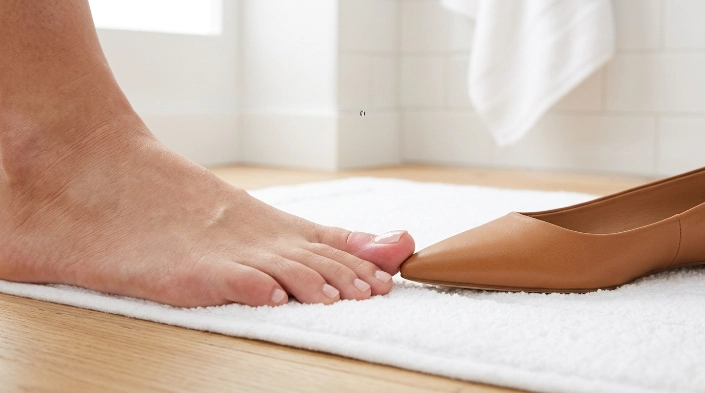
An ingrown toenail develops when the edge or corner of a toenail presses into the soft skin beside it instead of growing comfortably above the skin.
The big toe is affected most often.
The Mayo Clinic lists footwear that crowds the toenails as one of the common causes of ingrown toenails. It also identifies trimming nails too short, injuries, unusually curved nails, infections, and certain medical conditions as possible contributing factors. Mayo Clinic guide to ingrown toenails
1. Tight Shoes Squeeze the Toes Together
Shoes with a narrow toe box leave less room for your toes to sit naturally.
Instead of spreading slightly as you walk, your toes may be pushed together. That means the skin along the sides of your big toenail can be forced against the nail edge.
This pressure may not cause an ingrown toenail after wearing tight shoes once. The bigger concern is repeated pressure over days or weeks.
Think of it as constant irritation. Every step adds another small amount of pressure between the nail and surrounding skin.
2. Short Shoes Push the Toe Against the Front
Width is not the only part of shoe fit that matters.
A shoe can be wide enough but still be too short.
If your longest toe repeatedly hits the front of the shoe, the nail experiences pressure from the front while the surrounding tissue is compressed around it.
Running, long walks, downhill walking, sports, and activities that make your foot slide forward may increase this repeated trauma.
If you have noticed other changes after wearing restrictive footwear, NailPrime’s guide to how shoes can damage toenails explains how pressure and rubbing can also contribute to soreness, discoloration, thickening, splitting, and other nail changes.
3. Shoe Pressure Can Make a Poorly Trimmed Nail Worse
Imagine that you trim the sides of your toenail deeply because you want a neat, rounded pedicure.
The corner is now very short.
Put that toe into a tight shoe, and the shoe pushes the skin toward the newly shortened edge. As the nail grows forward, the corner may begin pressing into the skin instead of growing cleanly past it.
The Mayo Clinic specifically advises trimming toenails straight across and keeping them at a moderate length. It notes that when toenails are cut too short, shoe pressure may direct the nail toward surrounding tissue.
This is why tight shoes plus aggressive trimming can be a particularly troublesome combination.
For safer grooming habits, NailPrime’s guide to common toenail trimming mistakes covers over-trimming, rounded corners, over-filing, and other mistakes worth avoiding.
What Is Actually Happening Around the Nail?
Your nail plate is the hard part you can see. Along each side is a fold of skin called the lateral nail fold.
When the nail edge repeatedly presses into this fold, the tissue can become irritated and inflamed.
The American Family Physician review of ingrown toenail management describes an ingrown nail as trauma to the skin beside the nail caused by the adjacent nail plate. Constricting footwear and repetitive toe trauma are recognized contributing factors. American Family Physician ingrown toenail review
This explains why changing your shoes can matter even when the nail itself initially looks fairly normal.
Removing the pressure gives the irritated area a better chance to settle rather than being squeezed with every step.
Signs Your Shoes May Be Putting Too Much Pressure on Your Toenails
Pay attention to how your feet feel both while you are wearing shoes and after you take them off.
Possible warning signs include:
- Tenderness along one side of the big toenail
- Redness around the nail edge
- Mild swelling beside the nail
- Pain when shoes press against the toe
- A nail corner that appears to disappear into the skin
- Skin beginning to overlap the edge of the nail
- Repeated soreness after wearing one particular pair of shoes
- Blisters or rubbing around the toes
- Nail thickening or discoloration after repeated pressure
- Drainage or pus in a more advanced problem
Pain, inflammation, swelling, and infection are among the symptoms associated with ingrown toenails.
Do not judge severity only by how the nail looks. A small corner can become surprisingly painful when pressure is concentrated in one spot.
How to Tell Whether Your Shoes Are Too Tight
A shoe does not need to feel painfully small to be causing trouble.
Watch what happens when you walk normally.
Your toes should not feel squeezed together, and your longest toe should not repeatedly hit the front of the shoe. The upper portion of the shoe should not press heavily onto your toenails.
The American Academy of Dermatology recommends properly fitting shoes with a wide toe box to reduce rubbing and nail injury. American Academy of Dermatology nail-injury guidance
Pay particular attention to:
Toe-box width: Your toes should have room rather than being compressed sideways.
Shoe length: Your toenails should not repeatedly strike the front.
Heel stability: If your foot slides forward constantly, your toes can still become crowded even when the shoe initially feels roomy.
Activity: Shoes that feel comfortable while sitting may feel very different during a long walk or workout.
Socks: Thick socks take up additional room and can make an already snug shoe tighter.
Tight Shoes vs. Other Ingrown Toenail Causes
Tight footwear may contribute to the problem, but it is rarely useful to focus on shoes while ignoring everything else.
| Possible Factor | How It Can Contribute | Practical Response |
|---|---|---|
| Tight or narrow shoes | Compress the toes and increase pressure around the nail edge | Choose a wider, properly fitting toe box |
| Shoes that are too short | Cause repeated contact between the toe and shoe | Check shoe length and foot movement |
| Cutting nails too short | Leaves the surrounding skin more able to press around the nail edge | Keep a moderate nail length |
| Rounded nail corners | Can encourage the corner to grow toward surrounding skin | Trim mostly straight across |
| Repeated toe trauma | Irritates the nail and nearby tissue | Protect toes and adjust footwear/activity |
| Naturally curved nails | May make the nail edge more likely to contact skin | Monitor carefully and seek professional advice if recurring |
| Nail infection or other nail disease | Can alter nail shape or thickness | Get the underlying problem properly evaluated |
If one toenail keeps becoming ingrown despite changing your shoes and grooming habits, the cause may be more than footwear alone.
What to Do if a Tight Shoe Is Irritating Your Toenail
For mild tenderness without pus, severe swelling, significant bleeding, or spreading redness, start by removing the source of pressure.
Step 1: Stop Wearing the Problem Shoes
Do not keep wearing the same tight shoes hoping your toe will simply adjust.
Switch temporarily to footwear with plenty of room around the toes. Open-toe footwear may be comfortable when appropriate and safe for your activity.
The NHS specifically advises wearing wide, comfortable shoes or sandals and avoiding tight, pointy shoes when dealing with an ingrown toenail. NHS ingrown toenail guidance
Step 2: Leave the Nail Corner Alone
A painful nail corner often creates a strong urge to cut deeper into the side.
That can backfire.
Do not dig down the side of the nail with clippers, scissors, tweezers, or a nail file.
Removing more of the corner may provide temporary relief but can leave a sharp edge that grows back into the skin.
Step 3: Keep the Toe Clean
Wash the foot gently and dry it thoroughly.
Moisture trapped around irritated or broken skin is not helpful, especially if the area is already inflamed.
Use clean socks and avoid sharing pedicure tools.
Step 4: Monitor the Toe
A mildly irritated toe should not steadily become more painful, swollen, or red.
If symptoms worsen despite removing shoe pressure, stop treating the problem as a simple footwear issue.
NailPrime’s overview of toenail damage warning signs can also help you recognize changes that deserve professional evaluation.
Can You Use a Nail File on an Ingrown Toenail?
A nail file can help smooth a normal rough free edge, but it is not a treatment for an ingrown toenail.
Avoid trying to file deeply into the painful sidewall or underneath the nail.
That can:
- Irritate already inflamed skin
- Create tiny cuts
- Introduce bacteria through broken skin
- Make the nail edge thinner or sharper
- Cause additional pain
For normal maintenance, a fine-grit emery board or glass file can gently smooth a rough edge after trimming.
Keep reusable tools clean. If a disposable file has contacted broken skin, blood, drainage, or a suspected infection, replacing it is the safer option.
Do not use aggressive filing to “dig out” an ingrown corner.
Expert Tip
Expert Tip: If a toenail becomes tender every time you wear one specific pair of shoes, treat that discomfort as an early warning. Changing footwear before the nail becomes deeply irritated is much easier than trying to manage an established ingrown toenail later.
How to Prevent Tight Shoes From Causing Future Problems
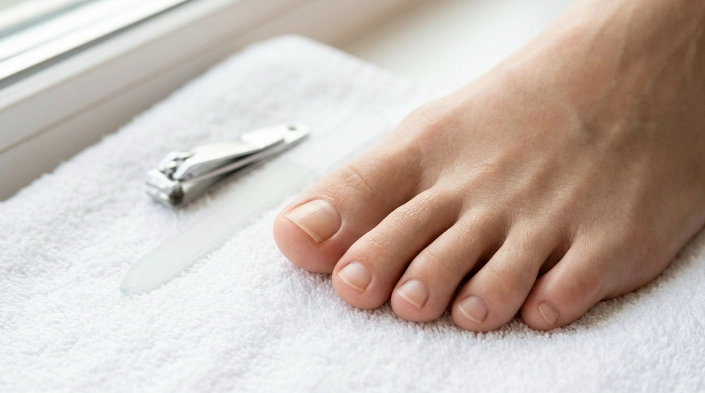
Prevention mostly comes down to reducing unnecessary pressure while allowing the nail to grow normally.
Choose Shoes for Your Toes, Not Just Your Shoe Size
Two shoes labeled the same size can fit very differently.
Look for enough width around the toes and enough length that your nail does not hit the front during normal movement.
Be particularly cautious with pointed shoes and heels that push the foot forward.
Trim Toenails Straight Across
Avoid carving deep curves into both corners.
You do not need to make the nail perfectly square, but cutting deeply down the sides can create problems as the nail grows back.
Do Not Cut Toenails Extremely Short
Leave enough nail that the end is approximately level with the end of the toe rather than buried below the surrounding skin.
Use Clean, Appropriate Tools
For everyday toenail grooming, use a clean toenail clipper that can cut the nail without crushing or tearing it.
A fine file can smooth rough edges afterward.
Stainless-steel reusable tools are practical because they are durable and easier to clean than porous or damaged tools. Disposable emery boards should not be shared.
Give Repeatedly Irritated Nails Time to Recover
If a toe is sore, switching from tight shoes for only one evening may not be enough.
Continued pressure can keep restarting the irritation.
Common Mistakes to Avoid
Even simple DIY nail care can make an irritated toenail worse when you become too aggressive.
Avoid these common mistakes:
- Continuing to wear shoes that clearly squeeze the painful toe
- Cutting a deep V shape into the center of the nail
- Digging underneath the corner with a metal tool
- Rounding the side edges too deeply
- Filing irritated skin along with the nail
- Pulling or tearing off a nail corner
- Covering worsening redness or drainage with polish and ignoring it
- Sharing toenail clippers or files
- Assuming every painful toenail is caused only by shoes
- Trying to perform your own nail-removal procedure
The goal of home care is to reduce pressure and prevent additional trauma, not perform minor surgery on yourself.
DIY Care vs. Salon or Medical Care
For ordinary grooming, home care can be inexpensive and straightforward. A clipper, fine file, clean socks, and comfortable footwear may be all you need for prevention.
A salon pedicure costs more and can be useful for cosmetic grooming, but a nail technician should not be your substitute for medical evaluation when there is significant pain, pus, spreading redness, or another health concern.
Medical care may cost more depending on your insurance, location, examination, and whether a procedure is required. However, repeatedly spending money on pedicures, corrective tools, or home products does not solve a nail problem that actually requires diagnosis or treatment.
The safest choice depends on what the toe is doing, not simply which option costs less.
When to See a Nail Technician or Dermatologist
A licensed nail technician can help with routine cosmetic trimming and grooming of a healthy toenail, but an actively painful or infected-looking ingrown toenail needs a healthcare professional rather than an ordinary pedicure.
A dermatologist, podiatrist, primary-care clinician, or other qualified healthcare professional should evaluate the toe if you have:
- Severe or increasing pain
- Pus or drainage
- Spreading redness or inflammation
- Significant swelling
- Bleeding or open skin that is not healing
- A recurrent ingrown toenail
- A nail that is becoming significantly thickened, distorted, or discolored
- Symptoms that continue despite reducing shoe pressure
Mayo Clinic recommends seeking medical care for severe discomfort, pus, or inflamed skin that appears to be spreading. It also warns that people with diabetes or conditions that reduce blood flow to the feet have a higher risk of complications.
If you have diabetes, poor circulation, nerve damage in your feet, or another condition that affects wound healing, do not aggressively self-treat an ingrown toenail.
FAQs
Can tight shoes cause an ingrown toenail even if I trim my nails correctly?
Yes. Proper trimming lowers one risk factor, but shoes that repeatedly compress your toes can still place pressure between the nail and surrounding skin. Footwear fit and trimming habits both matter.
Why does my big toenail hurt only when I wear shoes?
Pressure from the shoe may be pushing irritated skin against the nail or pressing directly on a damaged nail. Remove the pressure and monitor the toe. Persistent pain, swelling, redness, or drainage deserves professional evaluation.
Can high heels cause ingrown toenails?
They may contribute when the shoe is narrow or when the foot repeatedly slides forward and crowds the toes. The issue is primarily pressure and restricted space rather than the heel height alone.
Should I cut out the painful corner of an ingrown toenail?
Avoid digging deeply into the corner yourself. Aggressive cutting can injure the skin and create another problematic nail edge as the nail grows.
Will an ingrown toenail disappear after I stop wearing tight shoes?
Removing pressure may help a mild problem settle, especially early on, but not every ingrown toenail resolves simply by changing shoes. Persistent, recurrent, or worsening symptoms should be professionally assessed.
Can I file down an ingrown toenail instead of cutting it?
Do not file deeply into the painful side of the nail. Filing is appropriate for gently smoothing a normal rough free edge, not removing an ingrown section from irritated skin.
What shoes are best if I am prone to ingrown toenails?
Choose shoes that fit securely without squeezing your toes, provide sufficient length, and have a roomy toe box. Your toes should be able to sit naturally without constant pressure from the sides or front.
Conclusion
So, how do tight shoes cause ingrown toenails? The main issue is repeated pressure. Shoes that squeeze, crowd, or push your toes forward can force the skin and nail edge together, increasing irritation and making an ingrown toenail more likely—especially when the nail has also been cut too short or rounded deeply at the corners.
Prevention does not require complicated products. Wear properly fitting footwear, give your toes room, trim toenails mostly straight across, keep your tools clean, and use nail files only for gentle smoothing.
Most importantly, listen to your toe.
Early tenderness after wearing tight shoes is a reason to change the source of pressure. Increasing pain, swelling, drainage, spreading redness, or recurring problems are reasons to stop experimenting with DIY fixes and get qualified professional care.
Protecting the nail early is easier than dealing with a painful problem later, so make comfortable footwear and gentle toenail care part of your regular routine.

