
How Fast Do Toenails Grow? A Practical Guide to Toenail Growth

If you have ever chipped a toenail, cut it shorter than you meant to, or waited impatiently for damaged polish to grow out, you have probably wondered: How fast do toenails grow?
Toenails grow surprisingly slowly compared with fingernails. That can make a damaged, discolored, or uneven toenail feel like it is taking forever to improve.
The good news is that slow growth is usually normal. Understanding the average toenail growth rate can help you set realistic expectations, plan pedicures, care for damaged nails, and recognize when a nail may need professional attention.
This guide explains how quickly toenails grow, what affects their growth, how long a complete toenail takes to replace itself, and what you can realistically do to support healthy growth.
Quick Answer
Toenails usually grow about 1 to 1.6 millimeters per month, although the rate varies from person to person. A completely new toenail may take roughly 12 to 18 months to grow from the base to the tip. Big toenails may grow somewhat faster than smaller toenails.
How Fast Do Toenails Grow on Average?
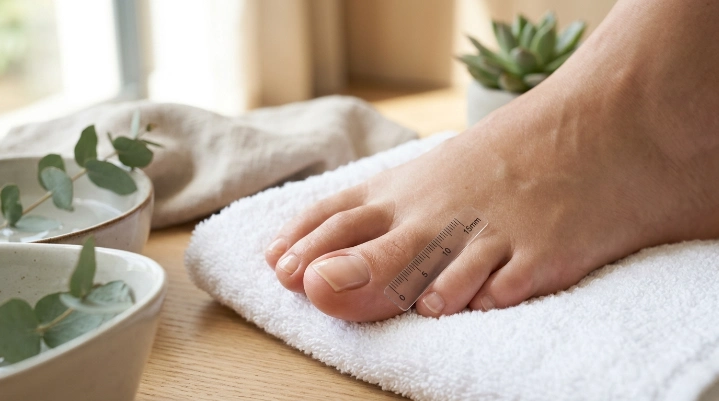
Toenails grow continuously from an area underneath the skin at the base of the nail called the nail matrix. The matrix produces new nail cells, which harden into keratin and gradually push the visible nail plate forward.
According to Cleveland Clinic’s guide to nail anatomy, toenails generally grow about 1.5 millimeters per month, while fingernails grow about 3 millimeters per month.
Research involving healthy young adults found a similar average toenail growth rate of approximately 1.62 millimeters per month.
That means visible changes happen slowly. If you mark a healthy toenail near its base today, you may notice only a tiny amount of movement after several weeks.
Toenail Growth at a Glance
| Situation | Typical Time or Growth Rate |
|---|---|
| Average toenail growth | About 1–1.6 mm per month |
| Growth over 3 months | Roughly 3–5 mm |
| Complete toenail replacement | About 12–18 months |
| Fingernail growth for comparison | Around 3 mm per month |
| Damaged or removed toenail | Often many months to fully replace |
These numbers are averages rather than deadlines. Your nails may naturally grow slightly faster or slower.
Why Do Toenails Grow More Slowly Than Fingernails?
Your fingernails and toenails are made from the same main protein—keratin—but they do not grow at the same speed.
Fingernails generally receive more stimulation through everyday hand use, and the fingers have strong blood circulation. Toenails, especially the smaller ones, usually grow more slowly.
Your toes also spend much of the day inside shoes, where repeated pressure and minor trauma can affect the nail.
This difference explains why a chipped manicure may disappear within a few months while toenail damage can remain visible for most of a year.
It also explains why toenail treatments require patience. When the goal is to grow out a damaged or discolored portion of nail, you cannot expect dramatic changes within a week or two.
How Long Does It Take a Toenail to Grow Back Completely?
For many healthy adults, complete toenail replacement takes approximately 12 to 18 months.
That does not mean every minor chip or rough edge takes a year to fix. A small damaged section near the tip can simply be trimmed away as it grows forward.
However, damage close to the base of the nail has much farther to travel.
For example, if you notice a small white mark caused by minor trauma near your cuticle area, that spot may remain visible for months before finally reaching the free edge.
The same principle applies after losing a toenail.
A new nail begins forming underneath, but it may take more than a year before the entire nail plate looks fully grown again. The exact result also depends on whether the nail matrix was injured.
Damage to the nail matrix can cause the new nail to grow differently, more slowly, or with ridges or an altered shape.
Do Big Toenails Grow Faster?
Your big toenail often grows somewhat faster than the smaller toenails.
One study of healthy American young adults found that the great toenail grew faster than the other toenails.
Even so, big toenails are also larger. Because there is more nail to replace, complete regrowth can still take a long time.
This is why losing a big toenail after running, hiking, tight shoes, or accidentally hitting your toe can be especially frustrating.
Do not assume the nail has stopped growing simply because progress is difficult to notice week to week.
What Factors Affect How Fast Toenails Grow?
No two people have exactly the same toenail growth rate. Several everyday and health-related factors can influence what you see.
Age
Nail growth generally becomes slower with age.
A younger adult may notice faster growth than an older adult, although individual differences matter more than any single birthday.
Slow growth alone is not necessarily a sign that something is wrong.
Blood Circulation
The nail matrix needs nutrients and oxygen supplied through the bloodstream to make new nail cells.
Conditions that reduce circulation to the feet may contribute to slower growth and make nail injuries more important to monitor.
If you have diabetes, poor circulation, or reduced sensation in your feet, avoid aggressive DIY trimming or digging around a painful nail.
Nail Injury
Stubbing your toe, dropping something on it, wearing tight shoes, or repeatedly pressing the nail during running can temporarily affect its appearance and growth.
Minor injuries usually grow out.
More serious trauma can damage the nail matrix and change how the nail returns.
Overall Health
Illness, nutritional problems, certain medical treatments, and some health conditions can influence nail growth or appearance.
However, slow toenail growth by itself cannot diagnose a vitamin deficiency or medical condition.
Be cautious with supplements marketed as instant nail-growth solutions. Healthy nails require adequate nutrition, but more of a vitamin does not automatically make toenails grow dramatically faster.
Nail Infection
A fungal infection can make a toenail thicker, brittle, crumbly, yellowish, or otherwise discolored.
Because toenails grow slowly, treatment also takes time. The NHS guidance on fungal nail infections notes that improvement may take several months and that healthy nail growth from the base is an important sign of recovery.
Do not repeatedly file away a suspicious nail change and assume you have removed the underlying problem.
Pressure From Shoes
Shoes with narrow or shallow toe boxes can repeatedly push against the toenails.
That pressure may contribute to soreness, bruising, thickening, or ingrown nails.
If a nail keeps becoming damaged despite careful pedicures, your footwear may deserve as much attention as your nail routine.
Can You Make Toenails Grow Faster?
There is no reliable beauty trick that turns slow-growing toenails into fast-growing fingernails.
What you can do is create conditions that allow the nail to grow normally without unnecessary damage.
1. Protect the Nail From Repeated Trauma
Wear shoes that leave enough room around your toes.
If your toenails constantly hit the front of your shoes while walking or running, repeated impact can interfere with healthy-looking growth.
2. Eat a Balanced Diet
Nails are made largely of keratin, a protein.
A balanced diet containing adequate protein, vitamins, minerals, healthy fats, fruits, and vegetables supports overall health, including nail production.
You usually do not need an expensive “nail growth” supplement unless a healthcare professional identifies a reason for one.
3. Keep Feet Clean and Dry
Warm, damp environments encourage fungal growth.
Dry between your toes after bathing, change sweaty socks, and allow shoes to dry between wears.
4. Trim Toenails Correctly
According to the American Academy of Dermatology’s healthy nail-care recommendations, toenails should be trimmed regularly, and proper nail care helps reduce trauma and infection risks.
Cut mainly straight across rather than deeply rounding the corners.
Leave enough nail to protect the toe.
5. Smooth Snags Instead of Picking Them
A rough edge can catch on socks and tear farther down the nail.
Use a clean, fine nail file or glass file to gently smooth the free edge. Filing should improve the shape, not aggressively thin the entire nail plate.
Expert Tip: If you are monitoring a damaged toenail, take one clear photo every four weeks under similar lighting. Monthly photos make slow growth much easier to see than checking the nail every day.
How to Track Your Own Toenail Growth
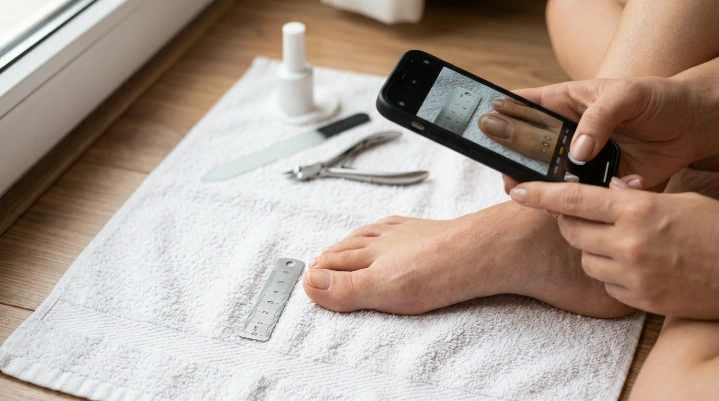
If you are curious about your personal growth rate, you can track it at home.
- Choose one healthy toenail. The big toe is easiest to observe.
- Take a clear close-up photo showing the base and tip.
- Record the date.
- Wait about four weeks without aggressively buffing the nail surface.
- Take another photo from roughly the same angle.
- Compare the position of a natural mark, ridge, or polish boundary.
If you use polish for tracking, do not scrape the nail surface to create a permanent marker.
The point is simply to observe growth without damaging the nail.
Remember that a few weeks of measurements cannot tell you everything about your health. Nail growth naturally varies.
Should You File Toenails While They Grow?
Yes, but gently.
A nail file is useful for smoothing sharp corners, removing snags, and refining the free edge after clipping.
For natural toenails, choose a fine emery board or smooth glass nail file rather than a very coarse abrasive intended for artificial enhancements.
Avoid aggressive sawing over the top of a healthy nail.
Excessive filing can thin the nail plate and make it more vulnerable to splitting.
After trimming, lightly smooth any sharp edges while maintaining a mostly straight shape.
Clean reusable files according to their material and manufacturer’s directions. Disposable porous files should not be shared between people.
Toenail Growth After Damage, Polish, or Pedicures
A pedicure does not make the nail itself grow faster.
However, good grooming can keep the growing nail comfortable and reduce snagging.
Regular polish also does not stop the nail matrix from producing new nail. As the nail grows, you will see an unpainted gap appear near the cuticle.
That gap is one of the easiest ways to see your growth progress.
If you have bruising, lifting, suspected fungus, inflammation, or unexplained discoloration, avoid simply covering the area with opaque polish indefinitely.
Seeing the natural nail makes it easier to notice whether the condition is improving.
Healthy Growth vs. Warning Signs
Slow growth is usually harmless. Changes in the nail’s quality, however, deserve more attention.
| What You Notice | Possible Next Step |
|---|---|
| Slow but otherwise normal nail | Usually monitor and continue routine care |
| Small old bruise moving toward the tip | Allow it to grow out |
| Thick, yellow, brittle or crumbly nail | Consider medical evaluation for fungus or another cause |
| Painful red skin around nail | Check for irritation, infection, or an ingrown nail |
| Nail lifting from the nail bed | Avoid pulling it and seek advice if significant |
| New or changing dark streak | Have a dermatologist evaluate it |
| Pus, spreading redness or increasing swelling | Seek medical care |
A nail can reveal changes slowly because toenails take so long to grow.
That makes persistent or progressive changes more important than a single imperfect pedicure.
Common Mistakes to Avoid
When you are waiting for a toenail to grow, impatience can cause more problems than the slow growth itself.
Avoid these common mistakes:
- Cutting the nail extremely short to “start fresh.” This may increase tenderness and ingrown-nail risk.
- Digging into the corners. Removing deep side edges can injure the surrounding skin.
- Aggressively filing thick nails. Excess pressure can thin or damage healthy nail.
- Picking at a partially detached nail. You can tear attached tissue and create an opening for infection.
- Sharing clippers or files. Nail tools can spread microorganisms between people.
- Covering unexplained changes continuously with polish. You may miss progression of discoloration or lifting.
- Expecting supplements to produce instant results. Toenail growth is naturally slow.
- Ignoring painful redness or pus. These can indicate infection or an ingrown nail.
The Mayo Clinic’s guidance on ingrown toenails also recommends avoiding overly short or rounded toenail trimming because these habits can encourage the nail edge to grow into the surrounding skin.
At-Home Care vs. Salon or Professional Care
Basic maintenance is usually easy to handle at home.
A simple toenail kit might contain sharp toenail clippers, a washable glass file or disposable emery board, soap, and moisturizer. You do not need expensive tools just to support normal growth.
A professional pedicure costs more but may be worthwhile if you have difficulty reaching your feet or want cosmetic shaping. Choose a clean salon where instruments are properly disinfected and technicians follow safe hygiene practices.
A nail technician, however, cannot diagnose or treat a medical nail condition.
Thickened nails, recurring ingrown nails, unexplained discoloration, infection, or significant pain may be better evaluated by a dermatologist, podiatrist, or other healthcare professional.
When to See a Nail Technician or Dermatologist
A nail technician can help with ordinary cosmetic maintenance, polish, gentle shaping, and basic pedicure care when your nails and surrounding skin are healthy.
Choose medical care instead when you notice:
- Persistent pain or tenderness
- Increasing redness, warmth, or swelling
- Pus or drainage
- A nail that repeatedly grows into the skin
- Significant nail lifting
- A thick, brittle, or crumbly nail that may be infected
- Unexplained changes in color or shape
- A new or changing dark streak
- A nail that does not seem to recover after an injury
- Repeated problems despite changing your grooming habits
If you have diabetes, reduced circulation, nerve problems, or another condition that makes foot injuries more serious, ask your healthcare team about appropriate foot and nail care rather than attempting aggressive DIY treatment.
FAQs
How much do toenails grow in one week?
At an average rate of about 1–1.6 millimeters per month, toenails grow only a fraction of a millimeter in one week. The change can be difficult to see without photographs or measurements.
How much do toenails grow in three months?
A typical toenail may grow approximately 3–5 millimeters over three months. Your individual rate can be somewhat faster or slower.
Why is my big toenail taking so long to grow back?
Big toenails naturally grow slowly, and full replacement can take 12–18 months. Significant injury to the nail matrix can make regrowth slower or change the new nail’s appearance.
Do toenails grow faster in summer?
Some research has investigated seasonal differences in nail growth, but everyday variations are usually too small to make summer a reliable nail-growth strategy. Protecting the nail from injury matters more.
Does cutting toenails make them grow faster?
No. Cutting removes the free edge of the nail but does not significantly speed up production in the nail matrix underneath the skin.
Can nail polish slow toenail growth?
Regular nail polish does not usually stop the nail matrix from producing nail. However, repeatedly damaging the nail during polish removal, aggressive filing, or product application can affect its condition.
Why does one toenail grow differently from the others?
Individual toenails can grow at slightly different rates. Previous injury, pressure from footwear, infection, natural nail shape, or damage to the matrix can also make one nail look different. Persistent unexplained changes should be evaluated.
Conclusion
So, how fast do toenails grow? For most healthy adults, the answer is only about 1 to 1.6 millimeters per month, with full replacement commonly taking 12 to 18 months.
That slow pace is normal.
Instead of trying to force faster growth, focus on protecting the nail you have. Trim toenails carefully, smooth sharp edges with a clean file, wear comfortable shoes, keep your feet dry, and give damaged areas enough time to grow forward.
Most importantly, do not treat every nail problem as purely cosmetic. If a toenail becomes painful, swollen, infected, unusually thick, detached, or develops unexplained discoloration, choose professional evaluation over an aggressive DIY fix.
Healthy toenails are a long game. Give them consistent care, watch for meaningful changes, and let normal growth do the rest.

