
How Long Do Ceramic Nail Files Last? Lifespan, Care, and Replacement Signs

If you have switched from disposable emery boards to a ceramic nail file, you may be wondering whether that slightly higher upfront cost is actually worth it. More importantly, how long do ceramic nail files last before they need replacing?
The good news is that a well-made ceramic nail file can stay useful for years when it is cleaned, stored, and handled correctly. Unlike paper-based files that gradually lose their abrasive surface, ceramic is designed to be durable and reusable. Manufacturers such as ZWILLING describe their ceramic nail files as durable, washable tools with both coarse and fine filing surfaces.
Still, ceramic files are not indestructible. Drops, chips, cracks, buildup, and improper storage can shorten their useful life. Here is how to know what to expect—and when it is finally time to replace yours.
Quick Answer
How long do ceramic nail files last? A quality ceramic nail file can often last several years with normal personal use and proper care. There is no universal replacement date. Instead, replace it when the ceramic develops cracks or chips, feels noticeably less effective, or can no longer be cleaned properly.
Why Ceramic Nail Files Last So Long
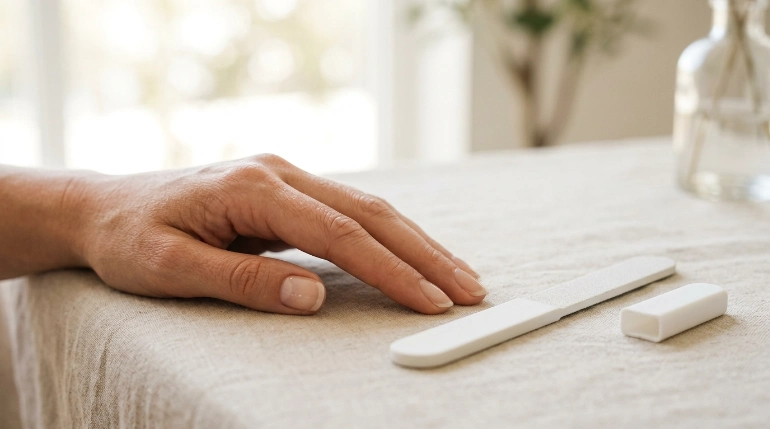
A ceramic nail file is different from a traditional emery board because the working surface is made from hard ceramic material rather than abrasive particles attached to disposable cardboard or foam.
That construction gives ceramic files several practical advantages.
They generally:
- Keep their filing texture much longer than disposable boards
- Resist moisture better than paper-based files
- Can usually be washed and reused
- Do not rust like some metal tools can
- Create a controlled filing surface for natural nails
- Produce less disposable waste over time
Some ceramic files are designed with two textures. A coarser area removes length, while a finer area smooths and finishes the edge.
For example, ZWILLING describes its TWINOX ceramic file as having coarse and fine-grained surfaces and a protective cap for storage. Another manufacturer, Vitry, markets its ceramic file as washable and durable and even provides a lifetime guarantee for that particular product.
That does not mean every ceramic file will literally last a lifetime. Quality, construction, frequency of use, cleaning habits, and accidental damage all matter.
How Many Years Can a Ceramic Nail File Last?
There is no medically established number of years after which every ceramic nail file must be discarded.
For personal at-home use, the more useful rule is to judge the condition and performance of the file, rather than automatically throwing it away after a certain number of months.
A high-quality file that is used once every week or two, washed properly, and stored in its protective case may remain useful for years.
A cheaper file that is used heavily, tossed loose into a manicure bag, dropped on tile, or repeatedly knocked against metal tools may need replacement much sooner.
What Affects Its Lifespan?
Several factors make the biggest difference.
1. How Often You File Your Nails
Someone who shapes ten natural fingernails every week puts much less wear on a file than a nail technician using tools throughout the day.
For occasional home manicures, wear can be very gradual.
If you frequently shorten thick nails or use the same file on harder nail enhancements, the filing surface may lose effectiveness sooner.
2. The Quality of the Ceramic
Not every product labeled “ceramic” has identical construction.
A well-made ceramic file should have an even abrasive surface without sharp, irregular patches. Better construction also tends to mean better resistance to everyday wear.
The protective case matters too. It may seem like simple packaging, but it protects the brittle ceramic surface from impacts inside drawers, cosmetic bags, and purses.
3. Whether You Drop It
This is probably the biggest practical weakness of ceramic.
Ceramic is hard, but hardness is not the same thing as impact resistance. A file can perform beautifully for years and then chip after one unlucky drop onto tile or a hard bathroom counter.
Never continue using a ceramic file that has developed a sharp chipped edge. That damaged area may scratch your skin or catch unpredictably on the nail.
4. How You Clean It
Nail dust, polish residue, skin oils, and other debris can settle into the filing surface.
Sometimes a file that seems “worn out” is actually just clogged.
Cleaning it may restore much of its filing ability.
5. How You Store It
Loose storage exposes ceramic files to unnecessary impacts.
A fitted cap, sleeve, or small manicure-tool case is safer than dropping the file into a crowded drawer alongside clippers, scissors, tweezers, and bottles.
Ceramic vs. Other Nail Files: Which Lasts Longer?
Here is a practical comparison for home nail care.
| Nail File Type | Typical Durability | Washable/Reusable? | Main Limitation | Best For |
|---|---|---|---|---|
| Ceramic | Very long-lasting with proper care | Usually yes | Can chip or break if dropped | Regular natural nail shaping |
| Glass/crystal | Very long-lasting | Usually yes | Can break from impact | Fine, gentle shaping |
| Emery board | Shorter lifespan | Usually limited | Abrasive surface wears down | Cheap, convenient touch-ups |
| Metal | Long-lasting | Usually yes | Can feel aggressive on delicate nails | Durable grooming tool |
| Foam/buffer file | Moderate to short | Depends on product | Surface gradually loses grit | Smoothing and finishing |
The best option is not automatically the one that lasts the longest.
For beauty-conscious home users, comfort, nail condition, grit, hygiene, and technique matter just as much as durability.
How to Tell When a Ceramic Nail File Needs Replacing
You do not need to replace a ceramic file simply because you have owned it for a year.
Instead, watch for these signs.
The Filing Surface Barely Works
Try cleaning and drying the file first.
If a previously effective surface now slides over your nail without shaping it—even after thorough cleaning—the abrasive texture may be too worn for useful filing.
You Can See a Crack
A visible crack is enough reason to retire the tool.
Even if the file has not separated into pieces, a cracked ceramic tool may break unexpectedly under pressure.
An Edge Has Chipped
Small chips can create sharp or uneven areas.
Do not try to “work around” a dangerous section simply to save the file.
Replacing a chipped file is cheaper than risking a scratch around the nail fold or damaging the nail edge.
Filing Has Become Uneven
A good file should give you predictable feedback.
If one section files normally while another suddenly catches, skips, or scratches, inspect the ceramic closely.
It Cannot Be Cleaned Properly
A reusable beauty tool is only useful if you can maintain it hygienically.
If residue is permanently trapped in damaged areas or the tool has become contaminated in a way that cannot be safely cleaned, replacement is sensible.
How to Make a Ceramic Nail File Last Longer
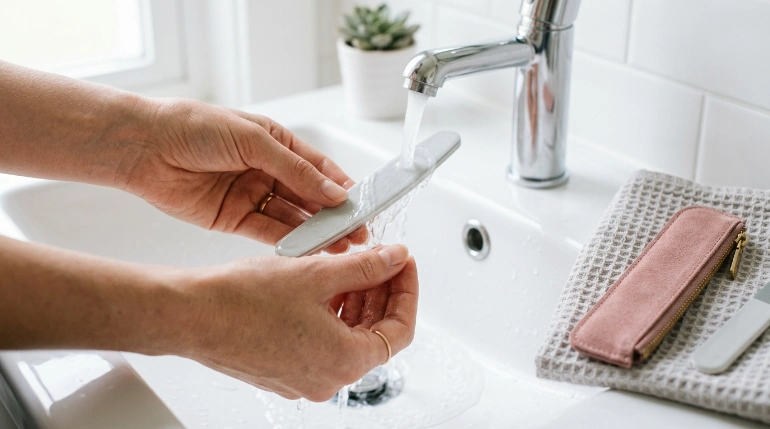
Good maintenance is simple.
1. Use Light Pressure
You should not need to force the file against your nail.
Let the abrasive surface do the work. Heavy pressure gives you less control and can be unnecessarily rough on the nail edge.
2. Shape With Controlled Strokes
The American Academy of Dermatology recommends smoothing rough nail edges with a file or emery board and advises filing in the same direction rather than aggressively sawing back and forth. Its nail-trimming guidance also emphasizes careful nail grooming and proper tool hygiene.
For most natural nails, slow, controlled filing is easier to manage than fast back-and-forth scrubbing.
3. Clean Off Nail Dust
Follow your file manufacturer’s cleaning directions.
For a washable ceramic file, this may involve rinsing away nail dust and allowing the tool to dry fully before storage.
Do not assume every handle, decoration, adhesive, or case can tolerate prolonged soaking.
4. Dry It Before Storing
Even though ceramic itself handles moisture well, storing beauty tools wet is not a good routine.
Let the tool dry fully before returning it to its sleeve or case.
5. Keep It in Its Protective Case
This small habit may add more useful life than almost anything else.
A case protects the ceramic from:
- Drops
- Hard impacts
- Scratches from other tools
- Dirt
- Makeup or polish spills
- Damage during travel
6. Keep It as a Personal Tool
If possible, do not casually share nail tools.
The American Academy of Dermatology’s healthy nail recommendations emphasize keeping nails clean and practicing healthy grooming habits to reduce opportunities for bacteria and fungi to cause problems.
At home, the simplest hygiene rule is often to give each person their own file.
Does Cleaning a Ceramic Nail File Wear It Out?
Normal cleaning should not be what ruins a well-made washable ceramic file.
In fact, cleaning can help maintain performance because compacted nail dust can make the surface seem smoother than it really is.
The important point is to follow the instructions for your specific product.
If the file has:
- A plastic handle
- Painted decoration
- Attached embellishments
- Adhesive components
- A special coating
the entire tool may not tolerate the same cleaning method as the ceramic portion.
Avoid harsh improvised chemicals unless the manufacturer says they are suitable.
Can You Sanitize a Ceramic Nail File?
Many ceramic files are sold specifically as reusable and easy to clean. That makes them more practical for repeated personal use than porous disposable boards.
However, home cleaning and professional salon disinfection are not automatically the same thing.
A licensed nail salon should follow the sanitation and disinfection requirements that apply in its state and to the exact tool being used.
If you are simply maintaining your personal ceramic file at home, follow the manufacturer’s cleaning directions rather than improvising a salon sterilization process.
Is a Ceramic Nail File Worth the Cost?
For someone who regularly shapes natural nails, it often can be.
The initial cost is typically higher than buying one inexpensive emery board, but lifespan changes the value calculation.
Suppose you repeatedly buy packs of disposable files because they lose their texture, bend, get dirty, or become damaged. A reusable ceramic tool may reduce how often you need replacements.
The value is strongest when you:
- File your nails regularly
- Prefer reusable tools
- Take care of your manicure supplies
- Keep the file protected
- Want a file that can be cleaned
- Have natural nails that benefit from controlled, gentle shaping
It may be a poorer choice if you constantly lose nail tools or tend to drop fragile items onto hard bathroom floors.
In that case, inexpensive disposable files may be less stressful.
Are Ceramic Nail Files Safe for Thin or Brittle Nails?
Ceramic files can be gentle, but the word ceramic does not automatically make every file appropriate for every nail.
Look at the texture and how your nails respond.
A fine ceramic surface used with light pressure may work well for natural nails. A very coarse surface—or an aggressive filing technique—can remove more nail than you intended.
The broader principles of healthy nail care still apply. Mayo Clinic recommends careful trimming, keeping nails clean and dry, moisturizing nails and cuticles, and avoiding habits that damage the nail or surrounding skin. You can review its fingernail care recommendations for additional guidance.
If your nails are already peeling, painfully thin, or separating from the nail bed, repeatedly filing them is not a substitute for finding out why.
Expert Tip: If your ceramic file suddenly feels ineffective, clean and dry it before buying another one. Nail dust can clog the textured surface and make a perfectly usable file feel dull.
How to File Natural Nails Safely With a Ceramic File
A simple routine is usually enough.
- Start with clean nails. Remove obvious dirt and old product residue.
- Inspect the file. Check for cracks, chips, or sharp damaged areas.
- Choose the finer surface when unsure. Especially if your nails are thin or flexible.
- Hold the file comfortably. Avoid gripping so tightly that you automatically use excess pressure.
- Shape with short, controlled strokes. Work gradually rather than trying to remove lots of length quickly.
- Stop if you feel pain or heat. Filing should not hurt.
- Check the nail edge. It should feel smooth rather than fuzzy, shredded, or extremely thin.
- Clean the file afterward. Follow the manufacturer’s care directions.
- Allow it to dry.
- Return it to its protective case.
If you need to remove substantial length, clipping first and then filing the edge may be easier than grinding away the entire free edge with a fine file.
Common Mistakes to Avoid
Even a durable nail file can give poor results when it is used incorrectly.
- Throwing the ceramic file loose into a drawer. Hard objects can chip it.
- Continuing to use a cracked file. A damaged tool is not worth the risk.
- Using excessive pressure. More force does not necessarily produce a better shape.
- Trying to file painful or inflamed nails. Pain, redness, and swelling require more caution than cosmetic shaping.
- Assuming a clogged file is worn out. Clean it before replacing it.
- Sharing your personal file without considering hygiene.
- Using the coarsest side on very thin natural nails.
- Filing the nail plate repeatedly to remove ridges. Over-buffing can make nails thinner.
- Using your nail file for unrelated scraping jobs. Keep manicure tools for their intended purpose.
- Ignoring changes in your nails because you think filing will fix them. Cosmetic tools cannot treat infections or underlying nail disease.
When to See a Nail Technician or Dermatologist
A nail technician can help when your main issue is cosmetic—such as choosing a shape, safely maintaining a manicure, or understanding which file and grit work best with your nail enhancement.
A dermatologist or other healthcare professional is the better choice when the nail or surrounding skin looks unhealthy.
Consider medical advice if you notice:
- Persistent pain
- Redness or swelling
- Pus or drainage
- Bleeding around the nail
- Nail separation
- Significant thickening
- Unexplained discoloration
- A new dark streak
- Major changes in nail shape
- A nail problem that does not improve
Mayo Clinic specifically recommends medical evaluation for changes such as unusual nail color or shape, thinning or thickening, nail separation, bleeding, swelling, pain, or failure of a nail to grow normally.
Do not file aggressively over a nail that appears infected, injured, or partially detached. A manicure tool can improve an edge, but it cannot diagnose or treat a medical nail condition.
FAQs
How often should I replace a ceramic nail file?
There is no fixed replacement schedule for a personal ceramic file. Keep using it while the surface works properly and the file remains clean, intact, and free from cracks or chips. Replace it when performance drops noticeably or physical damage appears.
Can a ceramic nail file last for years?
Yes. Quality ceramic is designed for long-term use, and some manufacturers describe ceramic files as highly durable. Actual lifespan depends heavily on construction, frequency of use, cleaning, and whether the file is protected from drops.
Do ceramic nail files become dull?
They can gradually become less effective, although buildup can also make a file feel dull. Clean and dry the surface first. If it still takes much more effort than it used to, replacement may be appropriate.
Can I wash a ceramic nail file?
Many ceramic files are washable, but follow the care instructions for your specific product. Handles, decorative parts, and adhesives may have different cleaning limitations than the ceramic filing surface itself.
Are ceramic nail files better than emery boards?
They are better for some people, especially those who want a reusable, washable, longer-lasting file. Emery boards still have advantages: they are inexpensive, lightweight, easy to replace, and convenient for travel or disposable use.
Can I use a ceramic nail file on natural nails?
Yes, provided the filing surface is appropriate and you use light, controlled strokes. If your natural nails are thin or peeling, choose the gentler side and avoid excessive filing.
Should I throw away a ceramic file if I drop it?
Not automatically. Inspect it closely under good light. If you see a crack, chipped edge, loose section, or sharp damaged spot, replace it rather than continuing to use it.
Conclusion
So, how long do ceramic nail files last? There is no single expiration date, but a good-quality ceramic file can remain part of your nail kit for years when you use gentle pressure, keep it clean, let it dry, and protect it from impacts.
Rather than replacing yours according to the calendar, check its condition. A clean ceramic file that still shapes smoothly and has no chips or cracks can keep doing its job. A damaged, unpredictable, or ineffective file should go.
For the smartest at-home nail routine, choose a file that suits your natural nail strength, treat it as a personal grooming tool, and never use filing to cover up pain, infection, or unusual nail changes.
Take a look at your ceramic file today: clean it, inspect the edges, test its performance, and replace it only when its condition tells you it is time.

