
Gel nails are a popular choice for those who want a long-lasting, polished look without constant touch-ups. Typically, gel nails last between two to three weeks, depending on factors like application, nail care, and the type of gel used. This makes them a strong option for anyone looking to keep their manicure intact through daily activities.
The lifespan of gel nails can vary. Professional applications tend to last longer, while at-home gels may chip or wear down sooner. How well someone cares for their nails after the application also plays a big role in keeping the gel looking fresh and shiny.
Understanding what affects gel nail durability can help people get the most out of their manicure. Knowing when to remove or reapply gel nails is just as important as proper aftercare and choosing the right gel type for lasting results.
Key Takeways
- Gel nails usually last two to three weeks with proper care.
- Professional application and good nail maintenance extend gel durability.
- Recognizing wear signs helps avoid damage to natural nails.
Typical Lifespan of Gel Nails
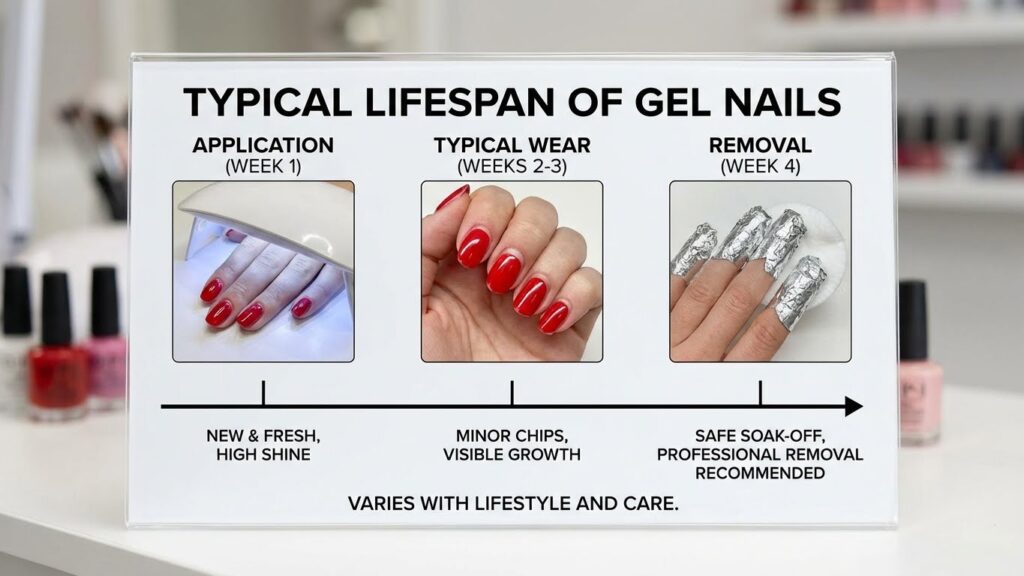
Gel nails last longer than regular polish but their lifespan varies by nail type and care. Factors like nail growth speed and activity level also affect how long the gel stays intact. Below are details on how long gel nails usually last in different settings.
Average Duration on Natural Nails
Gel nails on natural nails typically last between 2 to 3 weeks without chipping. The exact time depends on how fast the person’s natural nails grow and the quality of the products used. Slower nail growth means the gel manicure looks fresh for longer.
Proper application and curing under UV or LED light are important for durability. Daily activities like typing or washing dishes can cause earlier wear. Regular moisturizing and gentle care can help maintain the gel for the full 3 weeks or slightly more in some cases.
Lifespan on Acrylic Extensions
When gel polish is applied over acrylic extensions, it generally lasts about 3 to 4 weeks. Acrylic nails provide a stronger base, so gel polish adheres better and resists chipping more than on natural nails.
However, acrylic nails grow out too, creating a visible gap between the cuticle and polish after a few weeks. This means a refill or touch-up is usually needed around the 4-week mark to keep nails looking painted and polished.
| Factor | On Natural Nails | On Acrylic Extensions |
|---|---|---|
| Typical Duration | 2–3 weeks | 3–4 weeks |
| Durability | Good with care | Very good due to strong base |
| Maintenance Needed | Re-filing or reapplication | Refills after 4 weeks |
Comparison With Regular Polish
Gel nails last significantly longer than regular nail polish, which often chips within a few days. Regular polish typically lasts 3 to 7 days before visible wear appears.
The gel’s durability comes from its chemical makeup and curing process, which creates a hard, flexible layer. This makes gel resistant to cracks and peeling compared to traditional polish.
| Nail Type | Typical Wear Time | Main Advantage |
|---|---|---|
| Gel Nails | 2–3 weeks (or longer) | Long-lasting, chip-resistant |
| Regular Polish | 3–7 days | Easy to apply and remove |
Key Factors Affecting Gel Nail Longevity
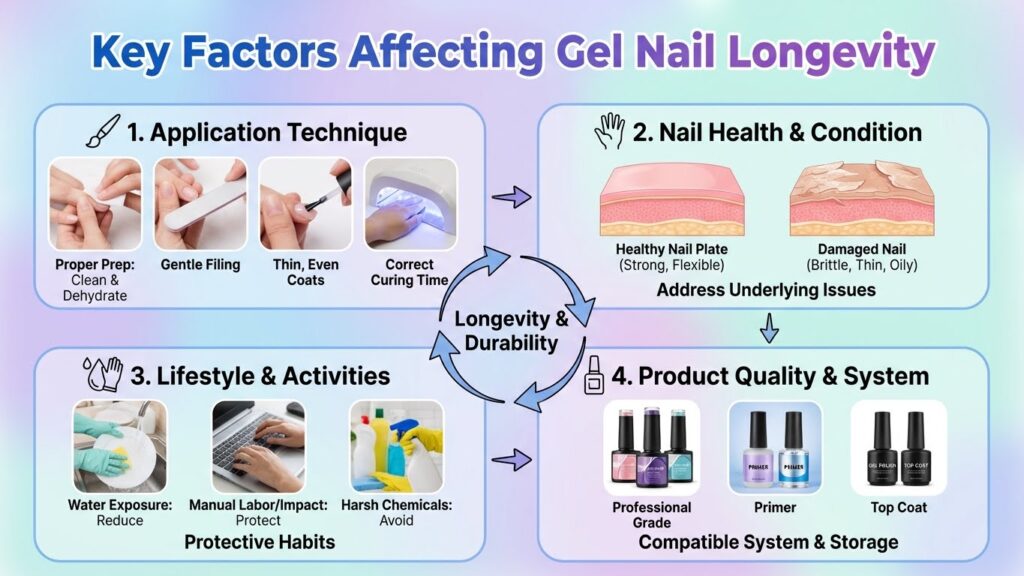
The durability of gel nails depends on how well they are applied, the natural condition of the nails, and the daily activities of the wearer. Each of these areas plays a clear role in how long the manicure stays intact without chipping or peeling.
Quality of Application Process
The way gel nails are applied is critical for their lasting power. Proper nail preparation includes cleaning and lightly buffing the nail surface to help the gel polish stick better. Skipping this step can cause lifting or peeling within days.
Curing the gel under the correct LED or UV light for the right amount of time is also essential. Insufficient curing can leave the gel soft, reducing its ability to withstand regular wear. Using high-quality gel products designed for durability impacts longevity too.
A careful application involves thin, even layers of gel. Thick layers tend to peel faster. Professionals who follow these steps typically create manicures lasting 2-3 weeks or more.
Nail Health and Condition
Healthy nails provide a better foundation for gel polish. Nails that are dry, brittle, or damaged make it harder for gel to bond properly. For example, nails affected by peeling or cracks will cause the gel to lift sooner.
Moisturized cuticles and nails improve gel adhesion and prevent premature chipping. Regular nail care, such as using cuticle oil, helps maintain nail flexibility and strength.
Also, the natural growth rate of nails matters. As new nail grows out, the gel nail will lift from the base. Faster nail growth means the manicure looks less fresh quicker, often requiring removal or touch-ups sooner.
Daily Habits and Activities
How a person uses their hands daily impacts gel nail durability. Activities involving frequent water exposure, harsh chemicals, or rough surfaces can cause gel to chip.
Wearing gloves during housework or gardening helps protect the polish. Repetitive tapping or picking at nails shortens gel nail life.
Using nails as tools to open cans or scratch can also break the gel coating. Gentle handling extends the wear time, keeping nails looking smooth and chip-free longer.
Gel Nail Aftercare for Enhanced Durability
Proper care after getting gel nails is key to keeping them strong and looking fresh. Taking simple steps can prevent lifting, chipping, and damage. Hydrating the nails, protecting them during daily activities, and following a good upkeep routine all help extend the life of a gel manicure.
Moisturizing and Nail Care
Using nail oil regularly is crucial. Nail oil keeps both the cuticles and nails hydrated, stopping them from drying out or cracking. Applying oil daily helps maintain nail flexibility and prevents brittle nails under the gel.
Moisturizing the skin around the nails with hand cream also supports nail health. Hydrated skin reduces irritation and peeling near the nail beds. Avoid harsh chemicals and soaps that can strip moisture. Gentle washing and moisturizing help keep the gel intact longer.
Protecting Nails During Tasks
Everyday activities can damage gel nails if not careful. Wearing gloves when doing dishes or cleaning will shield nails from water and harsh chemicals that cause lifting.
Avoid using nails as tools for opening cans or scratching surfaces. These actions increase the risk of chipping and weakening. Keeping nails short or at a manageable length also reduces accidental damage.
Daily habits matter. Being mindful when typing, cooking, or gardening prevents unnecessary pressure on nails, which keeps the gel polish safe.
Recommended Maintenance Routines
Regular maintenance helps gel nails last. Reapplying nail oil at least once a day is essential. It keeps nails nourished and the cuticles soft.
Scheduling touch-ups or fills every two to three weeks prevents lifting and keeps the manicure looking fresh. Overgrown nails weaken the gel and risk damage to the natural nails beneath.
Using an acetone-based remover properly and avoiding peeling or picking at gel polish protects the nail beds. Professional removal is best to avoid harm and maintain nail health.
Signs Gel Nails Need Removal or Reapplication
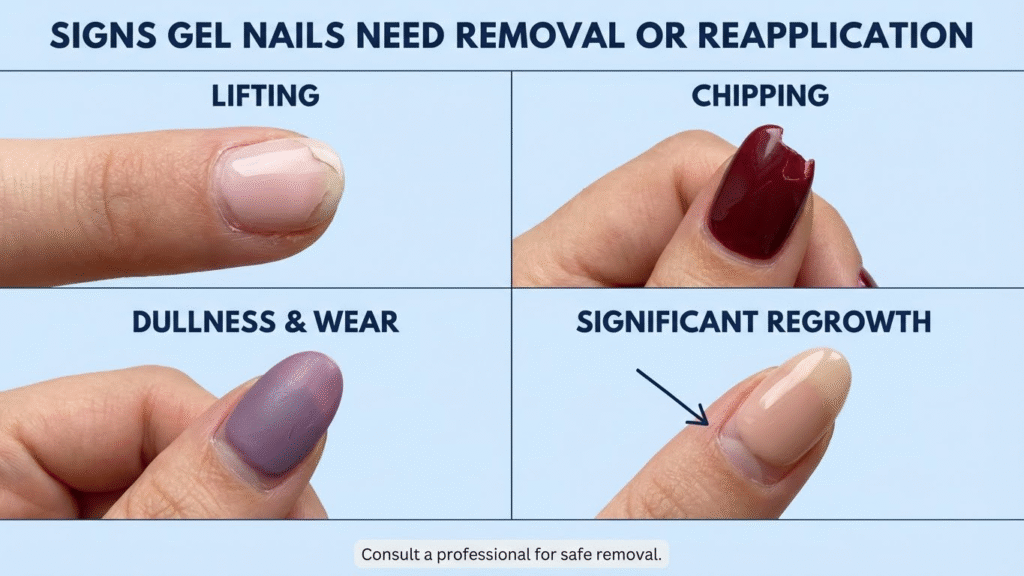
Gel nails require careful attention to avoid damage or infection. Several clear signs indicate when it’s time to remove or refresh the gel manicure to protect natural nails. These signs help prevent weakening, discoloration, and other nail issues.
Visible Lifting and Peeling
Lifting occurs when the gel polish starts to separate from the natural nail, often at the edges or cuticle area. This lifts the gel surface, creating gaps where dirt and moisture can collect, increasing the risk of infection.
Peeling or chipping also signals that the polish is no longer fully adhered to the nail. These issues usually appear within two to three weeks after application if the gel begins to fail.
Signs of lifting and peeling include:
| Symptom | Description | Risk if Ignored |
|---|---|---|
| Edges lifting | Gel slightly raised at nail tips | Dirt buildup, infection risk |
| Large gaps | Visible space between gel and nail | Bacteria growth, discomfort |
| Peeling polish | Small chips or flakes come off | Nail damage, uneven surface |
Removing or refilling gel nails when lifting starts helps maintain healthy nails and prevents further problems.
Discoloration or Damage
Discoloration under gel nails can appear as yellowing or dark spots, caused by trapped moisture, bacteria, or fungus. This is a clear sign the gel polish should be removed quickly.
Damage to the natural nail often shows up as brittleness, thinning, or peeling of the nail plate. These problems can occur if gel nails are left on too long without maintenance.
Warning signs of damage and discoloration include:
- Yellow or brown staining beneath the gel
- Nail brittleness or flaking
- Pain or sensitivity around the nail bed
Continuing to wear gel nails with these signs can worsen nail health and slow recovery.
Proper Timelines for Safe Removal
Most gel manicures last between two and three weeks before needing removal or a fill. Waiting longer than three weeks increases the chances of nail weakening and discoloration.
| Time Since Application | Recommended Action |
|---|---|
| Up to 2 weeks | Gel nails can remain intact with minimal wear |
| 2 to 3 weeks | Schedule removal or fill to avoid damage |
| More than 3 weeks | Immediate removal recommended to protect nails |
Regular removal and reapplication following this timeline keeps nails healthy and prevents problems from prolonged gel wear.
Effects of Different Gel Types on Wear Time
The type of gel used can change how long a gel manicure lasts. Some gels are made for strength and durability, while others focus on easier removal. These qualities affect both the wear time and the overall experience.
Hard Gel vs. Soft Gel Performance
Hard gel is thicker and stronger. It is often used to build the nail shape and add reinforcement. Because of its durability, hard gel can last up to three weeks or more without chipping or lifting. It bonds tightly to the natural nail, which helps prevent damage and keeps nails looking polished longer.
Soft gel, often called soak-off gel, is thinner and more flexible. It provides a glossy finish but does not add as much strength as hard gel. Soft gel typically lasts around 10 to 20 days. It is less durable but easier to remove and less likely to cause damage when taken off properly.
Soak-Off Gel Longevity
Soak-off gel is designed to be dissolved with acetone for removal. This type makes frequent changes convenient. Though it is less strong than hard gel, soak-off gel still offers a wear time of about two weeks. Proper application and aftercare can stretch this time closer to three weeks.
The longevity of soak-off gel depends on nail growth, lifestyle, and how well the nails are cared for. Avoiding harsh chemicals and using gloves for chores reduce lifting and chipping. Gel nails will last longer when applied over clean, dry nails with good prep.
How Professional and At-Home Gel Manicures Differ
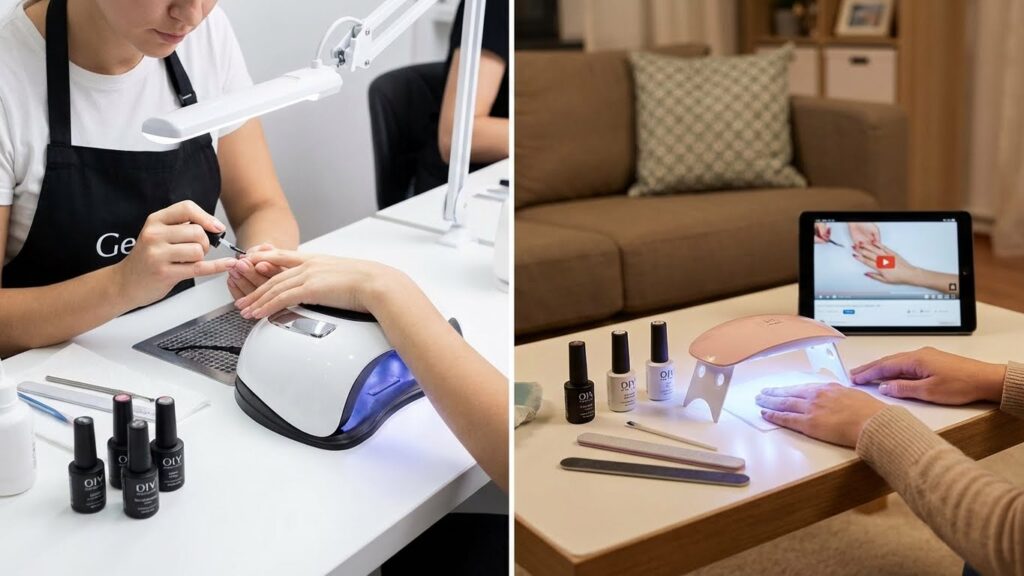
Gel manicures done in salons and at home vary in their quality and longevity. The difference mainly comes from the materials used, the skill of application, and the tools involved. These factors greatly affect how long the gel manicure lasts without chipping or lifting.
Durability of Salon Applications
Professional gel manicures usually last two to three weeks without significant chipping. This is because salons use high-quality gel products and proper nail preparation steps, like cleaning and buffing the nail surface before application.
The skill of a nail technician also plays a big role. They apply thin, even layers and cure each coat properly under a UV or LED lamp. This prevents premature peeling.
Daily habits like avoiding harsh chemicals and using gloves while cleaning help keep salon gel manicures intact longer. The manicure’s durability also depends on natural nail health and growth.
At-Home Gel Kits Effectiveness
At-home gel kits can last about one to two weeks, but this varies widely. These kits usually include gel polish and a small UV or LED lamp. The quality of the gel polish is often lower than professional products.
Users may struggle with proper nail prep steps or curing, which can lead to quicker peeling or chipping. It’s harder to ensure thin, even layers without experience.
Despite this, at-home gel kits are a convenient option for many. Proper care, such as avoiding water exposure soon after curing and applying a topcoat, can help extend the life of at-home gel manicures.
Tips to Make Gel Nails Last Longer
Proper care before, during, and after the gel manicure helps extend its life. Avoiding mistakes during application and using the right products both play key roles. Following simple steps can keep polish from chipping and lifting.
Avoiding Common Mistakes
One key mistake is skipping nail prep. Nails must be clean, dry, and free of oils before starting. Not pushing back or removing cuticles can cause lifting. Filing the nails into shape prevents cracks that cause chips.
Applying too thick a layer of gel polish leads to uneven curing and peeling. Thin, even coats work best. Curing each layer under the UV or LED light for the full time is important. Rushing this step weakens the polish.
Using hands harshly after the manicure also shortens the life of gel nails. Wearing gloves when doing chores and avoiding picking at nails help prevent damage.
Recommended Products for Longevity
Some products are designed to make gel nails last longer. A bonding base coat helps the polish stick better to the nail. Using a top coat with a strong seal keeps the polish shiny and protected.
Cuticle oils and moisturizers softens skin and nails, which avoids dryness and cracking around the manicure. Products labeled for gel nail aftercare work best.
| Product Type | Purpose | Key Features |
|---|---|---|
| Bonding base coat | Improves adhesion to nail | Prevents lifting and peeling |
| Top coat | Seals and protects polish | Adds shine and hardness |
| Cuticle oil | Moisturizes and nourishes skin | Prevents dryness and damage |
| Nail moisturizer | Hydrates nail and surrounding skin | Maintains nail flexibility |
Using these products regularly can extend the manicure’s life by days or even weeks.
Potential Risks of Overextending Gel Nails
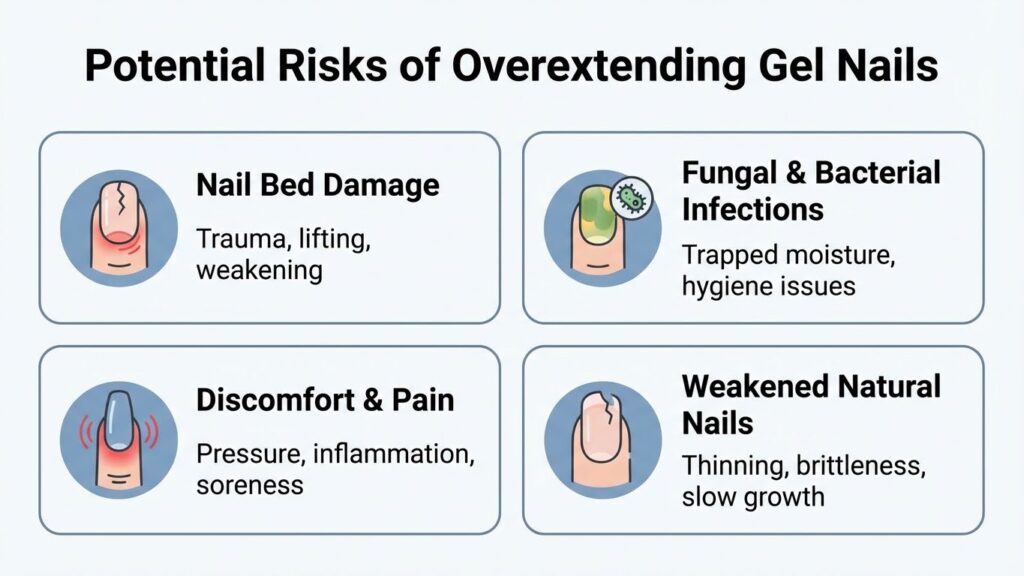
Wearing gel nails past their recommended time can lead to several problems. These include weakening of the natural nails and increased chances of infection. Proper care and timely removal are important to prevent these issues.
Nail Weakness and Damage
Leaving gel nails on too long can cause the natural nails underneath to become weak and brittle. The gel polish seals the nail, which traps moisture and limits air exposure. This can lead to peeling or splitting of the natural nail as it grows.
The removal process is also risky when gel nails stay on for extended periods. Nails may need to be soaked or filed down harshly, which can thin the natural nail plate. Over time, repeated damage like this can slow natural nail growth and cause permanent weakening.
Using cuticle oil and gentle filing techniques can reduce damage, but the best way to protect nails is to remove gel nails every two weeks, following typical recommendations.
Infection Concerns
Extending gel nails beyond the suggested wear time raises the risk of infections. As the natural nail grows, gaps appear between the gel and cuticle area. These gaps can trap dirt, bacteria, and moisture.
This trapped material creates a breeding ground for fungal or bacterial infections. Symptoms might include redness, swelling, discomfort, or discoloration under the nail.
Proper cleaning during and after gel wear is essential, but once gaps form, the risk increases. If infection is suspected, the gel nails should be removed immediately, and a healthcare professional may need to be consulted.
FAQs
How long do gel nails usually last?
Gel nails typically last between 10 days to 3 weeks. The exact time depends on factors like the type of gel used, how well they are applied, and proper care after the appointment.
What affects the lifespan of gel nails?
Several things influence how long gel nails stay intact. These include nail growth rate, daily activities, and the quality of the gel product. Proper application and gentle aftercare also play a big role.
Can gel nails last longer at home or in a salon?
Gel nails done by professionals tend to last longer—usually 2 to 3 weeks—because of better application techniques and higher-quality products. At-home applications may last 1 to 2 weeks.
Is it safe to keep gel nails on for a long time?
Leaving gel nails on too long without removal can harm natural nails. It’s important to remove or refresh them regularly to keep nails healthy and avoid damage.
What is the difference between hard gel and soft gel?
Hard gel forms a thicker, stronger layer that lasts longer. Soft gel is more flexible but may wear out sooner. Knowing the difference can help in choosing the right gel for one’s needs.
How can gel nails be kept fresh longer?
Avoid harsh chemicals, wear gloves when cleaning, and moisturize cuticles regularly. These small steps help maintain gel nails’ shine and prevent chipping.
Conclusion
Gel nails usually last between 2 to 3 weeks when applied professionally. Their durability depends on factors like nail growth, daily activities, and how well the nails are cared for after application.
To keep gel nails in good shape, regular maintenance is important. Using a top coat, cuticle oil, and gentle filing can extend their life. These small steps help protect both the gel and the natural nails underneath.
Leaving gel nails on for more than two weeks may harm natural nails. Removal at or before the 14-day mark is recommended to maintain nail health. Proper removal prevents damage that can come from lifting or peeling gels.
A simple table can show typical gel nail wear times:
| Application Type | Expected Lasting Time |
|---|---|
| Professional salon | 2 to 3 weeks |
| At-home application | 1 to 2 weeks |
Careful application combined with mindful daily habits results in the best gel nail experience. This ensures nails look good without risking their strength or condition.