
How Long Does an Ingrown Toenail Take to Heal?

A sore, red toenail can make something as simple as putting on shoes uncomfortable. And once you notice the nail digging into the skin, one question usually comes first: How long does an ingrown toenail take to heal?
For a mild ingrown toenail, improvement may begin within several days, but complete healing often takes longer because the nail needs time to grow beyond the irritated skin. Conservative treatment may need roughly 2 to 12 weeks. If part of the nail has to be removed, full nail regrowth can take 2 to 4 months.
The exact timeline depends on how deeply the nail is embedded, whether infection is present, your footwear, how you trim your nails, and whether you keep irritating the toe.
This guide explains what healing really looks like, what you can safely do at home, what can slow recovery, and when it is smarter to stop DIY care and see a professional.
Quick Answer
How long does an ingrown toenail take to heal? A mild case may start feeling better within a few days, but the nail may need 2 to 12 weeks to grow safely beyond the surrounding skin. More severe cases or toenails treated with partial nail removal may take weeks to settle and several months to fully regrow.
What Does “Healed” Actually Mean?
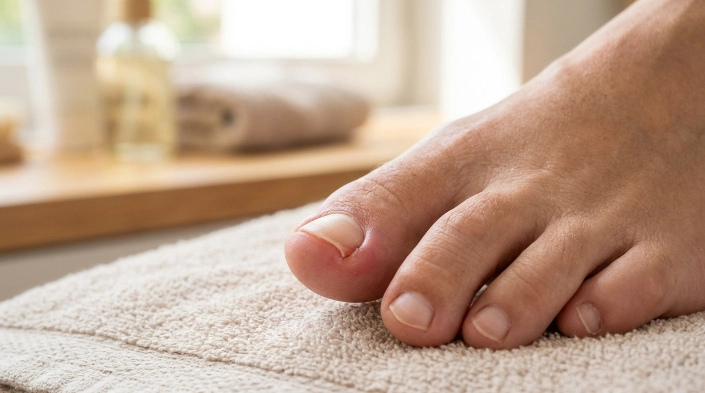
One reason healing times can sound confusing is that feeling better and being completely healed are not always the same thing.
You may notice less soreness and swelling fairly quickly after removing pressure from the toe. However, the nail itself grows slowly. The troublesome edge may still need weeks to move forward far enough that it no longer presses into the skin.
You can think of healing in three stages:
- Pain and tenderness improve. The toe becomes more comfortable when walking and wearing shoes.
- Redness and swelling settle. The surrounding skin looks calmer and is less sensitive.
- The nail grows past the irritated skin. This is the longer stage and is important for preventing the problem from returning.
According to the Mayo Clinic’s guidance on ingrown toenail treatment, conservative methods that help the nail grow above the skin may need to be continued for several weeks.
So even if your toe feels much better after a week, continue treating it gently.
Ingrown Toenail Healing Timeline
The following table gives a practical overview.
| Situation | Typical Recovery Pattern | What to Expect |
|---|---|---|
| Mild irritation | Symptoms may begin improving within days | Nail still needs time to grow past the skin |
| Mild-to-moderate ingrown nail treated conservatively | About 2–12 weeks for the nail to grow beyond the nail fold | Gradual reduction in tenderness and inflammation |
| Infected or badly inflamed nail | Varies depending on severity and treatment | Medical treatment may be needed before normal healing can continue |
| After partial nail removal | Initial wound recovery occurs much sooner than nail regrowth | Toenail regrowth may take around 2–4 months |
| After a nail-removal procedure | Many normal activities may resume within 1–2 weeks, depending on professional instructions | Sports and activities that pressure the toe may take longer |
These are general ranges rather than deadlines.
If pain, redness, or swelling keeps increasing instead of improving, do not simply give the nail more time.
Why Some Ingrown Toenails Heal Faster Than Others
How Severe the Ingrown Nail Is
A nail that has only started pressing into the skin usually has a simpler recovery than one that is deeply embedded.
Mild cases might involve tenderness and slight redness.
More advanced cases may involve:
- Significant swelling
- Persistent pain
- Drainage or pus
- Thickened tissue around the nail
- Repeated bleeding
- Difficulty wearing normal shoes
Once significant inflammation or infection develops, DIY nail care becomes less appropriate.
Whether You Keep Putting Pressure on the Toe
Tight shoes can repeatedly push the nail against irritated skin.
Even good home care may accomplish very little if you spend the rest of the day in narrow shoes that squeeze your toes together.
The NHS ingrown toenail guidance recommends roomy, comfortable shoes or sandals while the area is recovering.
Look for enough space that your toes can rest naturally without rubbing against the front or sides of the shoe.
How the Nail Is Trimmed
Improper trimming is one of the biggest preventable contributors to ingrown toenails.
Cutting deeply down the corners can leave a sharp nail edge that grows into the surrounding skin.
The American Academy of Dermatology’s nail-trimming recommendations advise cutting toenails straight across rather than rounding the corners.
Avoid cutting the nail extremely short.
Repeated Picking or Digging
When a corner hurts, it can be tempting to grab clippers, tweezers, scissors, or a metal manicure tool and dig underneath it.
That can create additional injury.
You may temporarily remove a painful nail point but also damage the skin beside it, increasing irritation and creating an opening where bacteria can enter.
Do not perform your own deep nail surgery.
How to Help a Mild Ingrown Toenail Heal

For a mild ingrown toenail without severe pain, spreading redness, pus, or other infection warning signs, simple care may reduce irritation while the nail grows forward.
1. Soak the Toe
Soaking your foot in comfortably warm water can soften the surrounding area and make the toe feel less tender.
Mayo Clinic recommends warm, soapy water for about 10 to 20 minutes several times daily as one conservative option.
Afterward, dry your foot carefully.
Do not leave damp socks or shoes against the irritated toe for hours.
2. Reduce Shoe Pressure
Choose sandals or wide-toe shoes when practical.
You do not necessarily need to stop normal daily activities because of a very mild ingrown toenail, but avoid footwear that makes the toe throb, rub, or feel more painful.
If a shoe hurts the area every time you take a step, it is working against the healing process.
3. Leave the Painful Corner Alone
Avoid trying to cut deeply underneath the side of the nail.
The MedlinePlus ingrown toenail guide specifically advises against attempting to cut out the ingrown portion yourself because it can make the problem worse.
Let the nail grow forward.
4. Keep the Toe Clean and Dry
Wash normally and dry carefully afterward.
Cleanliness matters even more if the surrounding skin has become irritated because damaged skin is less effective as a protective barrier.
Use clean socks and avoid sharing pedicure tools.
5. Watch the Trend, Not Just One Day
A healing toe should generally be moving in the right direction.
Ask yourself:
- Is walking becoming easier?
- Is swelling decreasing?
- Is redness staying localized rather than spreading?
- Is the toe less tender?
- Can I wear roomy shoes more comfortably?
If the answer keeps being “no,” home care may not be enough.
Expert Tip: Take a clear photo of the toe every few days in similar lighting. Comparing photos can make gradual changes in swelling and redness easier to notice than checking it constantly.
Should You File an Ingrown Toenail?
Because a rough nail edge may catch or feel sharp, reaching for a nail file can seem logical.
A file can be useful for gently smoothing the free edge of a toenail, but it should not be used to dig underneath an ingrown corner.
If you use a file:
- Make sure it is clean.
- Smooth only accessible rough edges.
- Do not force it between the nail and swollen skin.
- Stop immediately if filing causes pain or bleeding.
- Do not aggressively thin the side of the nail.
For routine nail care, the American Academy of Dermatology recommends smoothing rough edges with a nail file or emery board and keeping tools clean.
Glass files can be easy to clean, while disposable emery boards can be replaced regularly. The exact material matters less than keeping the tool clean and using it gently.
An active, painful ingrown nail is not the time for aggressive shaping.
How You Can Tell an Ingrown Toenail Is Healing
Healing usually looks gradual rather than dramatic.
Positive signs include:
- Less tenderness when touching the side of the toe
- Reduced swelling
- Redness becoming lighter rather than spreading
- Less pressure when wearing shoes
- No new drainage
- The nail visibly growing forward instead of deeper into the skin
Mild sensitivity can remain even while the toe is improving.
What matters is the overall direction.
Signs the Toenail May Be Infected
An ingrown nail can sometimes progress from simple irritation to infection.
Watch for:
- Pus or cloudy drainage
- Increasing redness
- Redness spreading beyond the immediate nail fold
- Increasing warmth or swelling
- Worsening rather than improving pain
- Fever, chills, or feeling unwell
The NHS advises seeking medical care when an ingrown toenail is painful and swollen with pus, or when symptoms are accompanied by feeling hot, cold, or shivery.
Do not keep cutting at an infected-looking nail hoping to release pressure yourself.
What Can Slow Down Healing?
Several everyday habits can repeatedly irritate the nail.
Cutting the Nail Too Short
Toenails do not need to be trimmed flush with the skin.
Leaving an appropriate length allows the nail edge to grow forward instead of being trapped underneath the surrounding skin.
Wearing Tight Shoes
Pointed shoes, tight athletic shoes, or footwear that forces the toes together can maintain pressure exactly where you are trying to reduce it.
Picking at the Nail
Repeatedly lifting, cutting, or tearing the nail corner can restart inflammation.
Poor Tool Hygiene
Dirty clippers and files can introduce microorganisms to damaged skin.
Clean reusable tools regularly and let them dry completely before storage.
Returning to High-Pressure Activities Too Quickly
Running, dancing, hiking, or sports can put repetitive pressure on a sore toe.
If an activity noticeably increases pain afterward, give the area more time.
DIY Care vs. Professional Treatment
| Factor | Mild DIY Care | Professional Care |
|---|---|---|
| Best for | Mild tenderness without major infection signs | Severe, recurrent, infected, or persistent ingrown nails |
| Tools | Clean toenail clippers, basic foot-care supplies, roomy footwear | Sterile clinical instruments and local anesthetic when needed |
| Cost | Usually relatively low | Varies by provider, procedure, insurance, and location |
| Recovery | Usually gradual as the nail grows | Depends on treatment performed |
| Limitations | Cannot safely correct every deeply embedded nail | Clinician can lift, partially remove, or treat the problematic nail edge |
| Infection concerns | DIY care is limited | Medical evaluation is safer when infection is suspected |
Professional treatment does not always mean removing the entire toenail.
Depending on severity, a clinician may lift the nail edge, use a splinting technique, remove only the troublesome section, or address part of the nail-producing tissue when ingrown nails repeatedly return.
When to See a Nail Technician or Dermatologist
A nail technician can help with cosmetic nail maintenance, but an infected or deeply ingrown toenail is a health issue rather than a routine pedicure problem.
Do not ask a nail technician to aggressively cut underneath swollen, bleeding, or pus-filled skin.
A dermatologist, podiatrist, or other qualified healthcare professional is more appropriate when:
- Pain is severe.
- Redness is spreading.
- Pus is present.
- The problem keeps returning.
- Home care is not improving the nail.
- Walking is becoming difficult.
- The toe is significantly swollen.
- The area repeatedly bleeds.
You should also seek professional advice promptly if you have diabetes, poor circulation, or nerve problems affecting the feet. These conditions increase the importance of careful foot care and make unsupervised treatment riskier.
A nail technician can become useful again once the medical problem has settled and you want help maintaining an appropriate nail shape.
Common Mistakes to Avoid
- Cutting a V into the middle of the toenail. This does not reliably make the sides grow inward toward the center.
- Rounding both corners deeply. This can encourage the new edge to press into the surrounding skin.
- Cutting the nail extremely short. Give the nail enough length to grow over the skin.
- Digging underneath the nail with sharp tools. This can cause cuts, bleeding, and additional inflammation.
- Continuing to wear painful shoes. Constant pressure can keep the toe irritated.
- Ignoring pus or spreading redness. These are not signs to simply “wait out.”
- Using dirty nail tools. Clean clippers and files before working near irritated skin.
- Getting an aggressive pedicure while the toe is inflamed. Cosmetic shaping can wait until the area is healthy.
How to Reduce the Chance of Another Ingrown Toenail
Prevention is usually easier than dealing with another painful episode.
Trim toenails straight across and avoid cutting them extremely short. Wear shoes that fit your foot shape rather than forcing your toes into a narrow toe box.
Keep toenail tools clean, and use a nail file only to smooth accessible rough edges instead of carving down the sides.
If your nails naturally curve sharply or you repeatedly develop ingrown nails despite careful trimming, discuss the pattern with a podiatrist or dermatologist. Recurring problems sometimes need more than a change in pedicure technique.
FAQs
Can an ingrown toenail heal in a week?
A mild ingrown toenail may feel much better within a week, but complete resolution can take longer. The nail may require several weeks to grow beyond the irritated skin, with conservative treatment commonly continuing for 2 to 12 weeks.
How do I know if my ingrown toenail is getting better?
Pain, redness, swelling, and sensitivity should gradually decrease. Walking and wearing roomy shoes should become easier, and the nail should begin growing forward rather than becoming more deeply embedded.
Why is my ingrown toenail still sore after two weeks?
The nail may still be pressing against irritated tissue, especially because toenails grow slowly. Persistent or worsening pain after attempted home care deserves professional evaluation, particularly when swelling, drainage, or spreading redness is present.
Should I cut out the corner of an ingrown toenail?
No. Avoid digging into the painful corner yourself. Cutting too deeply can injure the surrounding skin and may worsen the problem. MedlinePlus advises against trying to cut out the ingrown portion at home.
Can I get a pedicure while I have an ingrown toenail?
It is better to avoid aggressive pedicure work on a painful, swollen, bleeding, or infected-looking toe. A nail technician is not a substitute for medical treatment. Once the toe is healthy, careful professional maintenance may help you keep an appropriate nail shape.
How long does a toenail take to grow back after ingrown toenail removal?
After partial removal, the toenail may take approximately 2 to 4 months to grow back. The surrounding skin and procedure site may feel better much sooner than complete nail regrowth occurs.
When is an ingrown toenail serious?
Seek medical care when you have severe pain, significant swelling, pus, spreading redness, fever or chills, or symptoms that keep worsening. People with diabetes, poor circulation, or nerve problems in the feet should get professional advice rather than relying on unsupervised home treatment.
Conclusion
So, how long does an ingrown toenail take to heal? Mild cases may start becoming more comfortable within days, but the nail often needs several weeks to fully grow beyond the irritated skin. Conservative treatment may continue for about 2 to 12 weeks, while complete toenail regrowth after partial removal can take roughly 2 to 4 months.
The safest approach is to reduce pressure, wear roomy footwear, keep the toe and your tools clean, and resist the urge to dig underneath the nail.
Most importantly, pay attention to how the toe is changing. Improving tenderness and swelling are reassuring. Increasing pain, pus, spreading redness, or repeated ingrown nails mean it is time to move beyond DIY care.
Treat the nail gently now, and use straight-across trimming and properly fitting shoes going forward to give your next toenail growth cycle a better chance of staying comfortable.

