
How Long Does Nail Dehydrator Take to Dry?

Quick Answer
Most nail dehydrators air-dry in about 10–30 seconds when applied in a thin coat. Some fast-evaporating formulas dry in only a few seconds, while others may need closer to 30–60 seconds. You normally do not cure nail dehydrator under a UV or LED lamp; follow the product label and basic nail product safety guidance.
How to know it is ready
- Wait 10–30 seconds: This is a useful general range for a thin layer of many liquid dehydrators.
- Let it air-dry: Most nail prep dehydrators rely on fast evaporation rather than lamp curing.
- Check the shine: Wet-looking patches should disappear before you move to the next prep step.
- Use a thin coat: Flooding the nail can slow evaporation and increase skin contact.
- Read the label: Exact drying instructions can differ between formulas and brands.
One important distinction
- Dehydrator usually dries completely, while some primers are designed to remain slightly tacky.
If you’re wondering how long nail dehydrator takes to dry, the answer is much shorter than the drying time for regular polish. A properly applied dehydrator usually disappears from the nail surface within seconds.
The bigger question is knowing when it’s safe to continue. In this guide, I’ll explain drying times, application order, lamp use, primer differences, and the mistakes that can lead to lifting.
In This Guide
- How long should nail dehydrator dry?
- What changes nail dehydrator drying time?
- How do you apply nail dehydrator correctly?
- Nail dehydrator vs primer: which one should dry first?
- How do you know when nail dehydrator is dry?
- What mistakes can cause lifting after dehydrator?
- Is nail dehydrator safe to use?
- Frequently asked questions
- Final takeaway
How Long Should Nail Dehydrator Dry?
A nail dehydrator generally needs only 10–30 seconds of air-drying time. Fast-evaporating formulas can disappear sooner, while a heavier application may take closer to a minute.
A nail dehydrator is a liquid prep product that temporarily removes surface moisture and oils from the natural nail. That cleaner surface helps the next nail product make better contact with the nail plate.
Does nail dehydrator need to dry completely?
In most systems, yes. Let the visible liquid evaporate before applying primer, bonder, base gel, acrylic, or adhesive.
You shouldn’t see puddles or wet streaks. The nail may look temporarily duller, more matte, or slightly chalky after the solvent evaporates.
Do all dehydrators dry at the same speed?
No. Drying time depends on the formula, how much you apply, room conditions, and the manufacturer’s directions.
For example, some commercial products advertise drying times of only a few seconds. Others specifically instruct users to allow around 30 seconds before continuing.
| Example instruction | Approximate time | Drying method |
|---|---|---|
| Fast-air-dry prep formula | About 3–10 seconds | Air-dry |
| Typical thin dehydrator coat | About 10–30 seconds | Air-dry |
| Heavier coat or slower formula | Up to roughly 30–60 seconds | Air-dry |
These ranges are practical guides, not universal cure times. Your product’s instructions should always take priority.
What Changes Nail Dehydrator Drying Time?
The biggest factors are coat thickness, formula, temperature, and airflow. A thin application usually evaporates faster and more evenly.
How much product you apply
You only need enough dehydrator to lightly coat the natural nail plate. More product doesn’t necessarily create better adhesion.
Flooding the nail can leave wet areas around the sidewalls and cuticle. It also increases the chance of getting the product on your skin.
The solvent formula
Many dehydrators use volatile solvents designed to evaporate quickly. Products containing ingredients such as isopropyl alcohol or acetate-based solvents can feel dry within seconds.
That doesn’t mean every bottle behaves identically. Always check the directions because manufacturers formulate nail prep products differently.
Room temperature and airflow
A comfortable, ventilated room usually allows solvents to evaporate normally. Very cold conditions or excessive product can make evaporation seem slower.
Good ventilation also matters when working with nail chemicals. Keep bottles closed when you’re not using them.
Condition of the natural nail
An oily nail plate may look different after dehydration than a naturally dry nail. The goal isn’t to make every nail look identical.
You simply want the prep liquid to evaporate completely. Don’t keep adding coats because one nail looks slightly shinier than another.
How Do You Apply Nail Dehydrator Correctly?
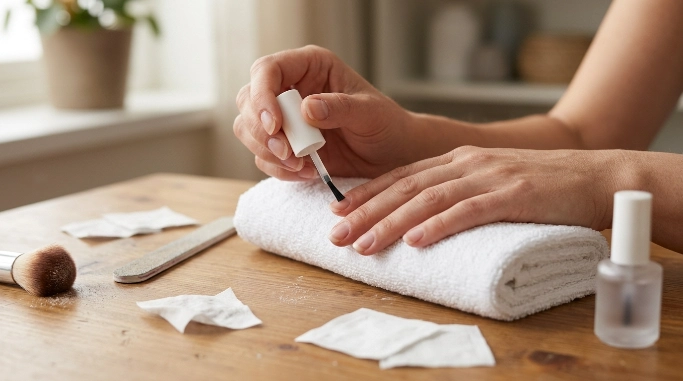
Use nail dehydrator after basic nail preparation and dust removal but before primer or most adhesion products. A thin, controlled application is enough.
- Wash and dry your hands. Make sure the natural nails are thoroughly dry before starting.
- Prepare the nail. Shape the free edge and complete the prep required for your manicure system.
- Remove dust. Don’t trap filing dust underneath your enhancement.
- Apply a thin coat. Brush dehydrator over the natural nail without flooding the cuticle or skin.
- Let it air-dry. Give it roughly 10–30 seconds, or use the exact time stated on your product.
- Continue with your system. Apply primer, bonder, base coat, adhesive, acrylic, or another next step as directed.
Should you touch the nail after dehydrating it?
Try not to. Touching the prepared nail with your fingertip can transfer natural skin oils back onto the surface.
If you accidentally touch it, follow your product system’s instructions for reprepping the nail. Don’t automatically keep stacking multiple layers of dehydrator.
Should you wipe dehydrator off?
Usually, no. Most brush-on nail dehydrators are designed to evaporate rather than be wiped away.
However, products labeled as cleansers or prep solutions can have different instructions. The bottle label is the final authority.
Nail Dehydrator vs Primer: Which One Should Dry First?
Dehydrator comes first in systems that use both products. After it evaporates, primer or bonder is normally applied as the next adhesion step.
What does nail dehydrator do?
Dehydrator focuses mainly on temporary surface moisture and oil removal. Think of it as preparing a cleaner surface for whatever comes next.
What does nail primer do?
Primer is an adhesion-promoting product. Depending on the formula, it can create a surface that helps acrylic, gel, or another enhancement bond more effectively.
Acid-free primers often behave differently from dehydrators. Some remain slightly tacky even after their recommended air-drying period.
| Product | Main job | Typical next-step signal | Lamp? |
|---|---|---|---|
| Nail dehydrator | Temporarily removes surface oil and moisture | Visible liquid has evaporated | Usually no |
| Nail primer | Promotes adhesion | May be dry-looking or slightly tacky, depending on formula | Usually no, unless instructed |
| Gel base coat | Creates the foundation for a gel manicure | Manufacturer’s stated cure cycle is complete | Usually yes |
This distinction prevents a common beginner mistake. A dehydrator’s drying time should not be confused with a gel product’s lamp-curing time.
How Do You Know When Nail Dehydrator Is Dry?
Look for the disappearance of visible liquid rather than watching the clock alone. The nail should no longer look freshly wet from the dehydrator.
- No liquid shine: Wet streaks or beads have disappeared.
- No pooling: Product isn’t sitting near the cuticle or sidewalls.
- Matte appearance: Some nails temporarily look duller after dehydration.
- Correct wait time: You’ve followed the manufacturer’s stated air-dry period.
What if the nail still looks shiny?
Natural nails don’t always become completely chalky or white after dehydration. A little natural-looking shine isn’t automatically proof that the product failed.
Focus on whether the liquid itself has evaporated. If you’ve applied a thin coat and followed the directions, you can normally proceed.
Can you use a fan to dry nail dehydrator faster?
You generally shouldn’t need one. Nail dehydrator is formulated to evaporate quickly on its own.
Using excessive airflow can also spread vapors around your workspace. Normal room ventilation is the better approach.
What Mistakes Can Cause Lifting After Dehydrator?
Drying time is only one part of nail retention. A dehydrator won’t compensate for poor preparation, product on the skin, or an incompatible application system.
- Applying too much: A soaked nail takes longer to evaporate and increases unnecessary skin exposure.
- Touching the nail: Fingertips can transfer oils back onto a freshly prepared nail plate.
- Leaving dust behind: Filing debris can interfere with clean product contact.
- Skipping proper prep: Dehydrator isn’t a replacement for the preparation required by your nail system.
- Flooding the cuticle: Product touching skin can contribute to poor application and irritation.
- Confusing primer with dehydrator: The two products perform different jobs and may have different drying cues.
- Curing the wrong product: Don’t put an air-dry prep liquid under a lamp unless its manufacturer specifically directs you to.
Does waiting longer make dehydrator work better?
Not usually. Once the solvent has completely evaporated, leaving the nail sitting for several extra minutes doesn’t automatically improve adhesion.
In fact, touching the nail or contaminating it while you wait can undo part of your prep. Move to the next step once the surface is ready.
Is Nail Dehydrator Safe to Use?
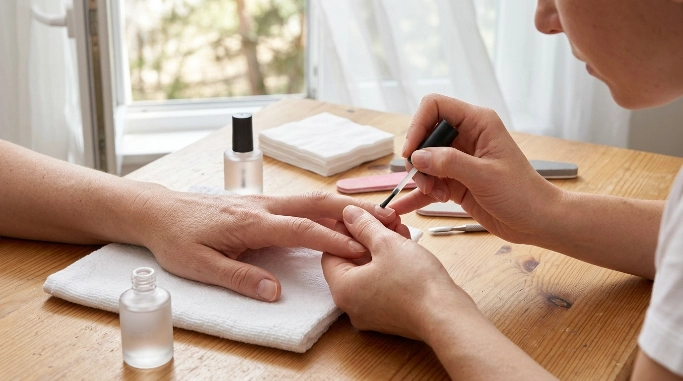
Nail dehydrators are cosmetic prep products, so they should be used according to their labels and kept away from eyes, broken skin, and unnecessary skin contact. Good ventilation is also sensible when working with volatile nail products.
The Occupational Safety and Health Administration recommends ventilation and careful handling around salon chemicals. Close bottles promptly to reduce unnecessary vapor and spills.
Can nail dehydrator dry out your natural nails?
A dehydrator temporarily removes surface moisture and oil. Repeated or excessive exposure to strong solvents may leave nails or nearby skin feeling dry.
Use only the amount needed for your manicure. After removing your finished manicure, regular nail and cuticle moisturizing can help with dryness.
What if dehydrator burns or irritates your skin?
Stop using the product if you experience burning, swelling, persistent redness, or another reaction. Don’t continue applying it because discomfort is not a required part of nail preparation.
The American Academy of Dermatology recommends seeking professional medical advice for persistent nail or surrounding-skin problems.
Health note: If irritation, blistering, swelling, pain, or another nail problem continues, contact a dermatologist or healthcare professional rather than covering the area with another nail product.
Frequently Asked Questions
How long does nail dehydrator take to dry before gel polish?
Most thin applications air-dry in roughly 10–30 seconds before the next gel-prep step. Some formulas dry faster, so follow the bottle instructions and wait until the visible liquid has evaporated.
Do you cure nail dehydrator under a UV or LED lamp?
Usually, no. Most nail dehydrators are volatile air-dry products, while gel base coats and gel colors require lamp curing according to their specific instructions.
Can I apply primer immediately after nail dehydrator?
Yes, once the dehydrator has completely air-dried. In systems that use both products, dehydrator normally goes first and primer follows.
How long should nail dehydrator dry before acrylic?
Allow the dehydrator to evaporate completely, which often takes around 10–30 seconds for a thin coat. Then apply the primer or acrylic prep step required by your system.
Can nail dehydrator stay wet for too long?
A thick application can take longer to evaporate than expected. If you’re seeing obvious wetness after a normal drying period, check whether you used too much product and review the manufacturer’s instructions.
Should nail dehydrator feel sticky?
Dehydrator usually shouldn’t leave the same tacky feel associated with some adhesion primers. If your product remains sticky, confirm that you’re using dehydrator rather than primer or a combined prep product.
Can I skip dehydrator and just use primer?
That depends on the nail system. Some systems call for both products, while others have different preparation instructions, so follow the directions for the specific gel, acrylic, dip, or extension system you’re using.
Final Takeaway: How Long Should You Wait?
For most manicures, a good working estimate is about 10–30 seconds for a thin coat of nail dehydrator to air-dry. Some fast formulas need only a few seconds, while others may take closer to a minute.
Don’t rely on the timer alone. Wait until the visible liquid has evaporated, avoid touching the prepared nail, and follow your specific product instructions before applying primer, bonder, base coat, acrylic, gel, or nail adhesive.
As of 2026, you’ll find dehydrators with noticeably different advertised drying times. That’s why the most reliable rule is simple: apply thinly, let it air-dry completely, and use the manufacturer’s directions whenever they differ from a general timing guide.

