
How Long Opened Nail Polish Lasts: A Beginner’s Guide to Shelf Life and Storage

If you’ve opened a bottle of nail polish and are wondering whether it’s still good, you’re not alone. The short answer is that opened nail polish usually lasts until it starts to change in a way that makes it hard to use well. That might be thickening, stringiness, separation that won’t mix back together, or a finish that stops looking smooth on the nail.
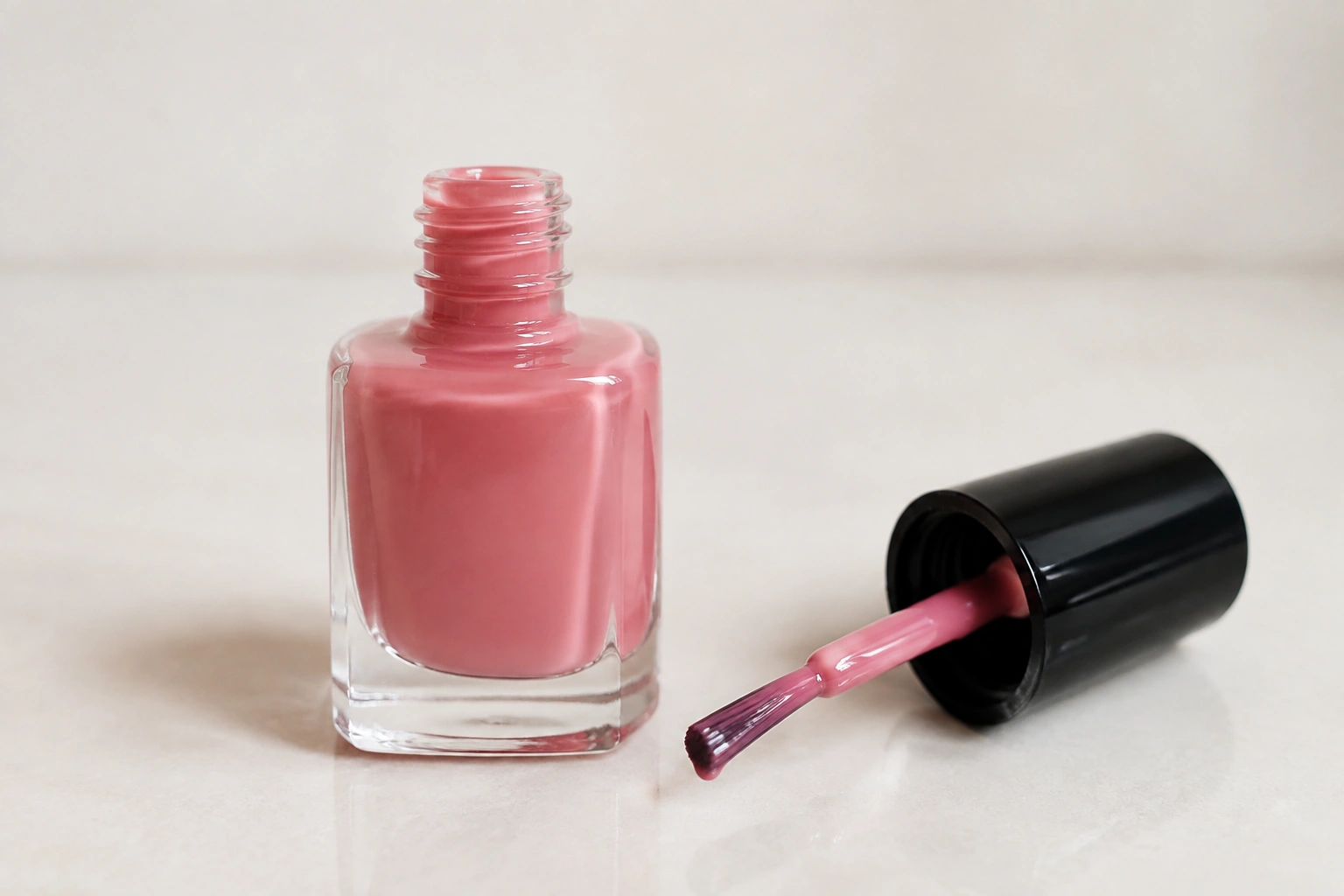
A practical rule of thumb: regular polish often stays usable for about 1 to 2 years after opening, while gel polish can often last longer if stored well and kept tightly closed. Base coats and top coats usually land somewhere in the same general range as regular polish, though they may show performance changes sooner if the bottle is opened often. Storage can shorten or extend any of these timelines.
There isn’t one exact expiration date that fits every bottle. So when people ask how long does opened nail polish last, the most useful answer is: long enough to stay smooth, easy to apply, and normal-looking in the bottle and on the nail.
For a deeper look at why polish changes over time, our guide on why nail polish gets thick explains the process in plain language.
Quick Answer: How Long Opened Nail Polish Usually Lasts
Opened nail polish can often stay usable for a while, but its performance gradually declines as air gets into the bottle. The main issue is not sudden danger; it’s that the formula can become harder to apply neatly.
For a simple beginner estimate:
– Regular nail polish: often about 1 to 2 years after opening
– Gel polish: often longer than regular polish if stored well, but it can still stop performing properly before it looks obviously bad
– Base coat: often similar to regular polish
– Top coat: often similar to regular polish, though it may become less reliable a bit sooner if it thickens
A bottle is usually still worth keeping if it:
– shakes or rolls back into a normal-looking liquid
– applies smoothly without dragging
– dries the way it should
– leaves a finish that looks even
A bottle is usually past its practical life if it:
– turns stringy or gummy
– separates and won’t come back together
– becomes too thick to spread evenly
– leaves streaks, bubbles, or a rough finish even after mixing
For beginners, that means the real test is not the age of the bottle alone. It’s whether the polish still behaves like polish.
What Makes Opened Nail Polish Go Bad
Once a bottle is opened, air starts affecting the formula. The most common change is solvent evaporation. In simple terms, the liquid part that helps polish flow can slowly escape each time the bottle is opened or not sealed tightly.
Heat and sunlight can speed that up. Frequent opening also matters, because every time the cap comes off, more air gets in.
That’s why one person’s five-year-old bottle may still be usable while another person’s newer bottle is already frustrating to use. Storage habits matter a lot.
If you want to understand the timing of polish on the nail itself, how long nail polish takes to dry completely is a helpful related read.
Signs Your Nail Polish Has Expired or Degraded
Aged polish does not always look obviously “bad,” so it helps to know the warning signs.
Common signs to watch for
Thick or stringy texture
If the polish pulls into little threads when you lift the brush, the formula has likely lost too much solvent.
Separation that won’t mix back together
Some separation is normal. A polish that looks a little split can often be rolled or gently shaken back into shape. But if it stays watery on top and sludge-like at the bottom, the formula may be breaking down.
Clumps or gritty bits
These can make the polish apply unevenly and leave texture on the nail.
Unusual smell
Nail polish has a solvent smell, so odor alone does not mean it is spoiled. But if the smell is noticeably off compared with normal polish, or the bottle seems contaminated, that is a warning sign.
Poor application
If the polish drags, streaks, bubbles unusually, or refuses to level out, it may no longer be worth using.
Here’s the simplest rule: if the polish still looks and applies normally, it may still be usable. If it fights you every step of the way, it’s probably time to replace it.
Regular Polish vs Gel Polish vs Base and Top Coats
Different formulas do not age in exactly the same way after opening.
| Formula type | What usually happens over time | Beginner takeaway |
|---|---|---|
| Regular nail polish | Can thicken, separate, or get stringy as solvents evaporate | Check texture and application before using |
| Gel polish | May stay looking normal in the bottle but still lose performance if stored poorly | Watch for changes in curing or consistency |
| Base coat | Can thicken and become harder to spread evenly | Replace if it starts dragging or streaking |
| Top coat | Often shows wear quickly because a smooth finish matters most | If it leaves streaks or bubbles, a fresh bottle is often better |
Regular polish and top coats tend to show their age in the bottle more obviously. Gel polish can be trickier because it may look fine at first but still stop performing well when cured. If you use gel, our guide on how long gel polish takes to cure may help you understand the difference between looking normal and actually working properly.
How Storage Affects Shelf Life
Storage makes a bigger difference than many beginners expect. A bottle that is sealed well and kept in a cool, dark place usually has a better chance of staying usable.

Best storage habits
- Keep the cap tightened fully after each use.
- Store polish in a drawer, cabinet, or box away from sunlight.
- Keep bottles in a cool, dry place.
- Wipe the neck of the bottle before closing it if polish has built up there.
Habits that shorten shelf life
- Leaving bottles in a warm bathroom
- Storing polish near a sunny window
- Not tightening the cap all the way
- Letting polish dry around the neck, which can make the cap seal poorly
For a broader look at drying and product behavior, Essie’s nail polish resources can also be a useful brand reference point.
Can You Still Use Old Nail Polish?
Yes, sometimes. Age alone does not automatically make a bottle useless.
A simple beginner checklist helps:
Old but usable
Keep it if all of these are true:
– it mixes back together easily
– it is only a little thicker than fresh polish
– it brushes on smoothly
– it dries or cures normally
– it looks acceptable on the nail
Expired or unusable
Discard it if any of these are true:
– it is stringy, clumpy, or gummy
– it won’t spread evenly
– it looks contaminated
– it has an odd smell beyond normal polish odor
– it keeps separating or never fully blends back together
– it still performs poorly after thinning
If you are deciding whether to save a bottle or buy a new one, performance matters more than sentiment. A favorite shade is only worth keeping if it still gives you a usable result.
What to Do If Polish Is Thick, Separated, or Stringy
Not every thick bottle is doomed. Some can be brought back enough for normal use.
First, try gentle mixing
Roll the bottle between your hands or gently shake it. This can help with simple separation.
Use nail polish thinner if needed
If the formula is only mildly thick, a proper nail polish thinner may help. Add it sparingly and follow the product directions. A little goes a long way.
When to stop and discard it
If the polish is stringy, clumpy, contaminated, or still applies badly after a small amount of thinner, it is beyond practical rescue. At that point, replacement is usually the better choice.
Do not use random household liquids or improvised fixes. Those can ruin the formula instead of saving it.
Simple Ways to Make Opened Nail Polish Last Longer
A few small habits can extend the life of the bottles you already own.
Keep the neck clean
Wipe polish off the bottle opening before closing it. A clean seal helps the cap close tightly.
Close the cap right away
Leaving the bottle open even for a few minutes adds unnecessary air exposure.
Store bottles upright
This helps prevent leaks and keeps the formula where it belongs.
Avoid hot places
Heat speeds up thickening, so don’t leave polish in a car, near a radiator, or in direct sun.
Don’t open bottles just to check them
Every opening lets in more air. If you want to inspect a bottle, do it when you’re actually ready to use it.
These habits are simple, but they add up. They also make your polish more predictable, which is especially helpful when you’re still learning which formulas you like.
When to Throw It Away
Some bottles are past the point of saving, and keeping them around only makes your manicure harder.
Discard polish if you notice:
– visible contamination
– a smell that seems wrong or unusually strong
– clumps that do not break down
– a texture that stays stringy or gummy
– poor application even after gentle mixing
– a formula that no longer dries or cures as expected
If the polish is being used on broken, irritated, or possibly infected nails, skip it and use fresh product instead.
For general consumer guidance on cosmetic product safety and storage, the U.S. Food and Drug Administration is a reliable starting point.
A Beginner-Friendly Way to Judge Any Open Bottle
If you’re still unsure, use this quick check:
- Open the bottle.
- Look at the texture.
- Stir or shake gently.
- Brush a little onto one nail or a swatch.
- Watch how it flows, dries, and finishes.
If the polish behaves normally, keep it. If it feels difficult from the first stroke, that’s your sign.
That approach is often better than guessing by date alone, because nail polish quality depends so much on storage and repeated exposure to air.
When to See a Nail Technician or Dermatologist
See a nail technician if you want help deciding whether a polish can be saved with thinner or should be replaced. A technician can often tell quickly whether the bottle is still practical.
See a dermatologist if you have nail irritation, a rash, or a reaction that seems linked to a product you used.
FAQ
How long does opened nail polish last after opening?
There is no fixed universal deadline. Opened polish can last as long as it still mixes, applies, and dries normally. Storage conditions make a big difference.
Is old nail polish unsafe to use?
Usually the main issue is performance, not safety. Still, if the polish smells wrong, looks contaminated, or applies badly, it should be discarded.
Does gel polish last longer than regular polish once opened?
Not necessarily in the same way. Gel polish may look stable in the bottle, but it can still lose performance if it is stored poorly or no longer cures properly.
Can thick nail polish be saved?
Sometimes. If it is only mildly thick, a small amount of proper nail polish thinner may help. If it is stringy, clumpy, or badly separated, replacement is usually easier.
Where should I store opened nail polish?
A cool, dark drawer or cabinet is usually best. Avoid warm bathrooms, sunny windows, and places with temperature swings.
Should I keep using polish that separates?
A little separation can be normal. If it mixes back together and applies well, it may still be fine. If it keeps separating or never looks right, throw it out.
What about base coats and top coats?
They can age too. If a base coat starts dragging or a top coat streaks and bubbles, it’s often better to replace it than keep trying to rescue it.
Can unopened polish last longer than opened polish?
Yes. Unopened polish is generally protected from air exposure, so it usually stays usable longer than a bottle that is opened often.

